© Copyright 2025. All Rights Reserved by Presto Stantest Pvt. Ltd.
11-Sep-2026
Presto Enviro
Metal parts exposed to environmental elements like rain, high humidity and saline air are subjected to quick degradation. Manufacturers don’t have years to wait to see long-term real-world durability with immediate shipping deadlines. The effectiveness of protective coatings like paints, coatings and electroplating needs to be validated. This ensures the life of the product.
Salt spray testing provides a critical solution by accelerating years of weathering into a matter of days within a controlled laboratory environment. This methodology provides quality assurance teams with concrete data before product release into mass distribution.
This article discusses the technical necessity of salt spray testing, step-by-step procedural standards and the common testing times needed for different materials. It also reviews the key industry norms that apply to these tests and concludes with the use of a top-quality salt spray test chamber from Presto Enviro for consistent quality control.
Salt spray testing gives quality teams a quick, repeatable way to check if a metal or coating is exposed to rust. It creates an aggressive environment that forces corrosion to happen on fast-forward.
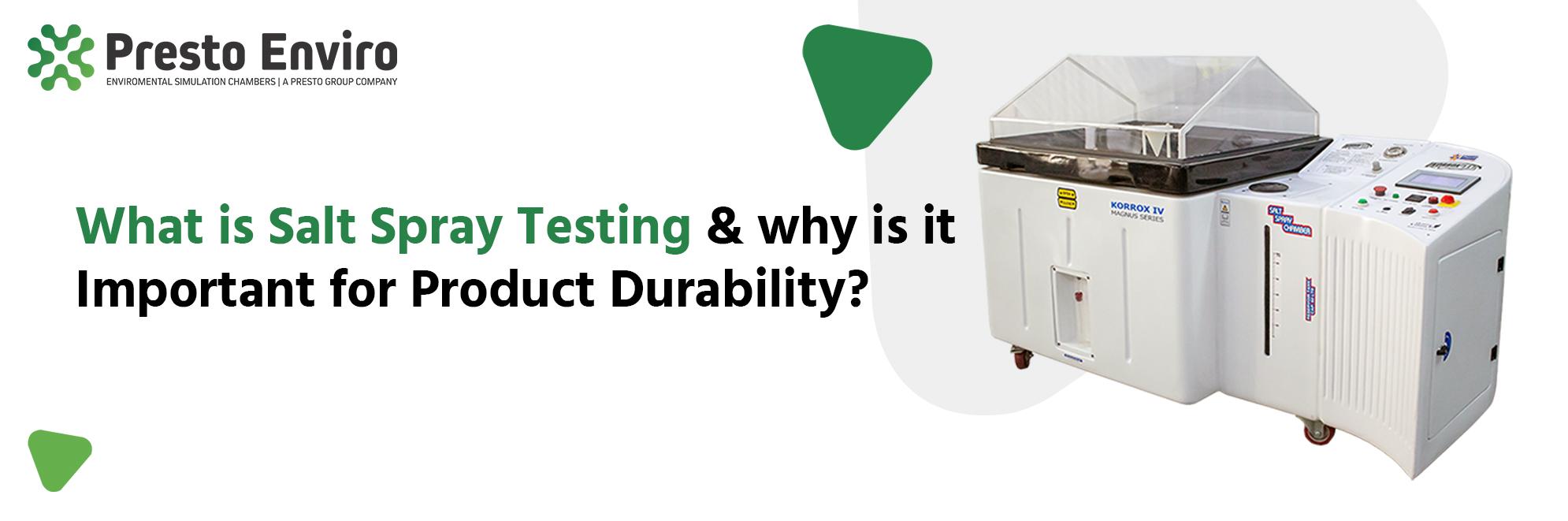
A salt spray test measures how long a material or protective coating can withstand salty moisture without developing rust, corrosion, or surface damage. If products are tested outdoors in real weather, manufacturers end up waiting years just to get basic durability data. Placing parts inside a salt spray test chamber lets you speed up that exposure safely. High salt levels combined with continuous warm fog quickly show whether a finish will peel, pit, or rust out in the field.
Engineers rely on a salt spray test chamber because surface flaws are difficult to see. An invisible gap in powder coating or zinc plating can spark deep structural rust down the road. Running parts through a salt spray tester highlights these coating defects early so you can fix your plating or paint formula before launching full production.
Getting clear results from a corrosion check requires steady sample prep, continuous mist exposure, and careful post-test checks. Messing up basic preparation distorts your final data and gives a false sense of security.
|
Step |
Action |
Key Focus |
|
1. Preparation |
Clean & seal edges |
Remove grease, oils, and fingerprints |
|
2. Loading |
Tilt at 15°–30° |
Stop salt water from pooling |
|
3. Setup |
5% NaCl solution at 35°C |
Keep fog density and pH steady |
|
4. Exposure |
Uninterrupted fog run |
Keep cabinet lid closed to retain heat |
|
5. Evaluation |
Warm rinse & check |
Record red rust, blistering, or flaking |
You must clean every sample thoroughly to strip off shop oil, grease, or stray fingerprints. Any dirt on the metal distorts how the salt fog hits the surface.
Technicians clean parts using solvent wipes or mild detergent. You should always wear clean gloves during this step because skin oils create a protective shield against rust, which ruins test accuracy. Once clean, any cut edges or untouched areas get sealed with heavy tape or wax.
Parts need to sit at specific angles inside the salt spray test chamber cabinet. Standard lab practice calls for a 15 to 30 degree tilt from vertical.
Angling is the part that ensures the salt fog flows evenly across the entire surface. If you lay parts completely flat, salt water accumulates and creates deep local corrosion spots that ruin the test run. You also need enough space between components so runoff from one sample never drips onto another.
The test fluid is a solution of 100% sodium chloride in distilled or deionized water. You maintain a 5% salt concentration (by weight) and a tightly regulated pH range.
The heater in the salt spray test chamber keeps the temperature at 35°C (95°F) with the use of atomizers to spray the salt into a thick fog. The main clock doesn’t begin ticking until lab workers double-check that fog collection rates stay within tight guidelines. It is easy to repeat your runs when air pressure and heat are constant.
Once the test starts, the chamber runs continuously without unnecessary stops. Opening the main lid lets heat and humidity escape, which slows down the corrosion process and skews your data.
Automated systems record cabinet conditions throughout the run. If technicians need to check progress visually, they keep the lid open for only a few seconds. Keeping the environment stable matters because sudden temperature drops can stall the rusting process on your test pieces.
When the time runs out, you can remove the specimens and rinse them gently with warm water. This washes away crusty salt buildup without stripping off loose rust deposits. This washes away crusty salt buildup without stripping off loose rust deposits.
Inspectors are looking for paint blisters, flaking, creep along scribed lines, or red rust spotting. They use normal visual scales to rate the damage. These results inform quality managers whether a batch satisfies customer standards or requires a process adjustment.
A test run can last anywhere from 24 hours to over 1,000 hours based on your material, coating thickness, and client requirements. Light rust-preventive oils might only face a 24-hour run, while heavy marine fittings sit inside for weeks.
|
Target Duration |
Suitable Materials & Applications |
|
24 – 48 Hours |
Temporary rust preventatives, light oils, bare metal parts |
|
96 – 240 Hours |
Standard electroplating, basic zinc coatings, commercial hardware |
|
500 – 1000+ Hours |
Marine fittings, thick powder coats, automotive primers |
The expected lifespan of your product dictates how long it stays in the salt spray test chamber. Hardware built for indoor office furniture needs only minimal test time compared to parts mounted under a truck chassis or on a sea dock.
Coating types also change the timeline. Thin zinc plating might show red rust after 96 hours, whereas multi-layer industrial paints or thick powder coats easily pass 1,000 hours without breaking down. The pass/fail rules written into your target standard determine when a test run is complete.
Salt spray test standards keep testing methods consistent across different labs and factories worldwide. They ensure the integrity of the solution, the air pressure, angles of sample taking, and the rate of fog fallout. The most important and most widely followed salt spray testing standards are:
Using a reliable salt spray tester gives labs tight control over fog density and cabinet heat. High-quality testing equipment cuts down test variance and gives you clear data every time.
The Presto Enviro salt spray test chamber gives consistent fog delivery and temperature controls for daily use in the lab. It is of non-corrosive design and will last for long runs, often a matter of several weeks, in harsh salt solutions. Quality teams use a salt spray tester to test raw materials and new paint mixes to improve the performance of existing products and to satisfy customer requirements.
The quality control process improves with reliable salt spray testing equipment. The air saturation, liquid feed and heat are kept uniform so each sample gets the same exposure. That helps engineering teams spot thin plating or poor paint adhesion early, saving time and preventing field returns.
Accelerated fog testing of product durability gives manufacturers real proof that their surface coatings perform. Controlled testing exposes unseen application flaws, helps you to fine-tune paint thickness, and proves your parts meet demanding industry requirements. Presto Enviro offers a high-quality and advanced salt spray test chamber that allows manufacturers to produce durable products that are designed to withstand rough environments without rusting prematurely.
If you are looking for a high-quality salt spray test chamber to test material conditions and improve productivity, contact us for a quote or to speak to our experts.
Elevate your quality assurance process to new heights
Related Blogs
15-Sep-2026
Presto Enviro
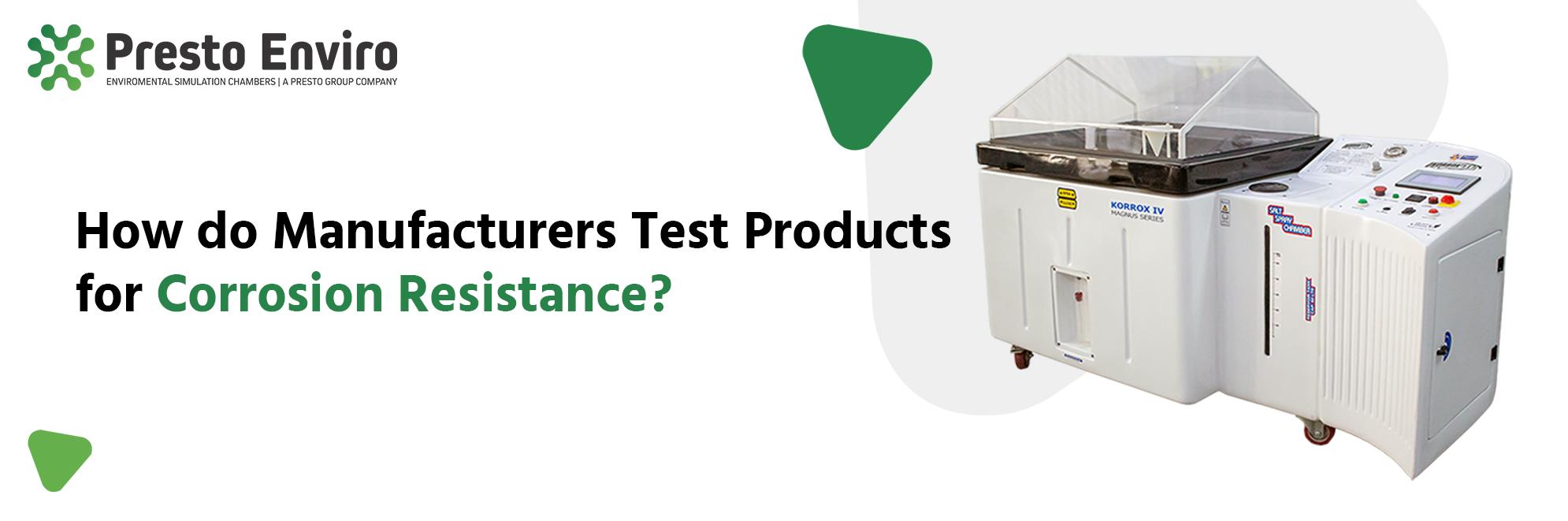
Corrosion is one of those problems that may appear mild at first and later turn costly. A metal part may leave the manufacturing facility appearing undamaged, yet suffer corrosion, stain formation or coating failure as a result of its contact with moisture, salts and changing weather conditions.

28-Aug-2026
Presto Enviro
Every day, EV batteries face harsh conditions. On the road, a high-voltage pack may deal with sudden freezing slush, extreme heat buildup during 350kW fast-charging stops, and continuous structural pounding from bad pavement.