© Copyright 2025. All Rights Reserved by Presto Stantest Pvt. Ltd.
15-Sep-2026
Presto Enviro
Corrosion is one of those problems that may appear mild at first and later turn costly. A metal part may leave the manufacturing facility appearing undamaged, yet suffer corrosion, stain formation or coating failure as a result of its contact with moisture, salts and changing weather conditions.
That is why corrosion resistance is tested before many products reach the market. Automotive parts, fasteners, painted metal sheets, electrical enclosures, coated components and several industrial products may all need some form of corrosion testing.
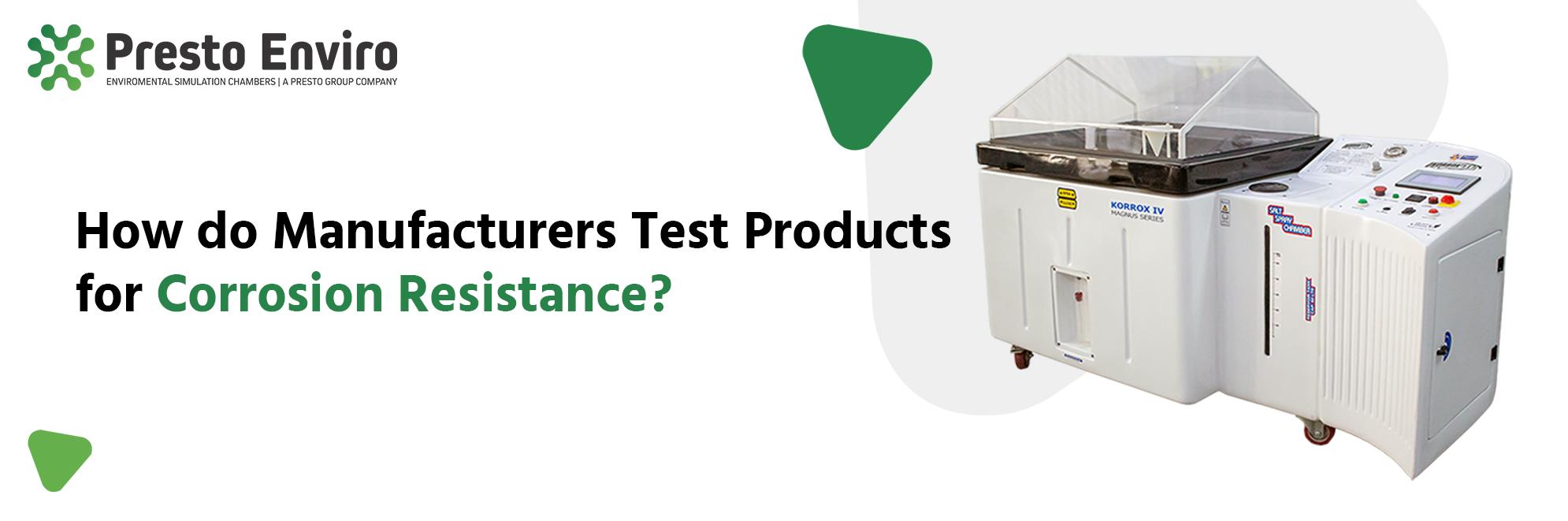
But how do manufacturers actually carry out these tests? They employ controlled laboratory techniques to expose samples to corrosive environments and then assess the material/coating response. In this article, we will examine the main corrosion testing methods, the standards most commonly used and the function of a salt spray chamber. We will also talk about the Presto Enviro Salt Spray Test Chamber and how it is used for laboratory corrosion testing.
Corrosion resistance is the ability of a metal or coated surface to withstand environmental decay caused by oxygen, moisture, and chemical exposure. When materials lack this defense, oxidation breaks down the surface, weakening the core structure over time.
Consider a steel bracket used in an outdoor application. It may come into contact with rain, humidity and road salt. If the protective coating starts breaking down, moisture can reach the metal underneath. Rust follows. Once corrosion gets established, the problem may spread beyond the surface.
Testing gives manufacturers a way to find these weaknesses before the product is exposed to real world conditions for a long period.
A salt spray chamber is commonly used for this purpose. The chamber produces a controlled salt fog and exposes test specimens to it for a specified amount of time. After the exposure period, the samples are inspected for visible corrosion and coating damage.
For example, a painted metal panel may be scratched before it is tested. The panel is then placed inside the salt spray chamber. After exposure, the technician checks whether rust has developed around the scratch and how far the corrosion has travelled beneath or along the coating.
The number of hours spent inside the chamber is often recorded as part of the test result. But it should not be read as a direct prediction of how many days or years the product will survive outdoors. Salt spray testing creates a controlled accelerated environment. Real service conditions are usually much more complicated.
Temperature changes, drying, sunlight, rain, humidity and pollutants can all affect corrosion. This is why the selected test method needs to match the purpose of the product and the requirement being checked.
Different products face different corrosion risks. A coated automotive component may need a different test from a metal part used in a chemical processing plant. Laboratories therefore use several methods rather than depending on one universal corrosion test.
Salt spray testing is one of the most familiar accelerated corrosion tests. It exposes specimens to a fine salt solution mist inside a controlled chamber and allows technicians to examine the resulting corrosion.
The test usually involves preparing the specimens according to the relevant procedure and placing them inside the salt spray chamber at a suitable angle. A salt solution is atomized to create a fine fog throughout the test area. Chamber temperature, solution concentration and spray conditions are controlled during exposure. After the required duration, the specimens are taken out and examined. Technicians may record rust, white corrosion, blistering, staining, coating peeling or corrosion spreading from a scribed area. Because the environment is controlled, the method is useful for comparing coatings and checking whether a production finish meets a specified requirement.
Cyclic corrosion testing changes the exposure conditions during the test instead of keeping the specimen under continuous salt fog. This makes the test useful when repeated wetting and drying are important to the application.
An ordinary cycle may involve passing through salt exposure, drying, high humidity and condensation. The cycle is repeated for a specific number of times. Such a process is closer to what many products face outside the laboratory. For instance, a component of a vehicle cannot be under constant exposure to a salt mist. It is exposed to moisture, dries, heats up, becomes wet again and so on. Such continuous changes are more relevant to coatings than continuous salt exposure. Thus, cyclical testing is commonly utilized when a manufacturer needs stringent environmental corrosion evaluation.
Electrochemical testing looks at the actual corrosion reactions taking place at a material surface. It is often used when engineers need numerical information rather than only a visual assessment after exposure.
In these tests, the material is placed in an electrolyte and connected to an electrochemical measurement system. Methods such as polarization testing can provide information related to corrosion potential and corrosion current. Electrochemical impedance spectroscopy can also be used to study protective coatings and changes in their resistance over time. These techniques are common in research, coating development and failure investigations because they can detect changes in corrosion behaviour without always waiting for obvious surface damage to appear.
Moisture alone can create serious problems for some materials and coatings. Humidity testing is used to see how a product behaves when it remains in a high moisture environment for an extended period.
Samples are placed inside a controlled humidity chamber. Depending on the test procedure, the environment may produce high relative humidity or condensation on the specimen surface. Technicians then inspect the samples for rust, blistering, discoloration, coating separation and other changes. This method is particularly relevant for products that will be stored or used in humid locations. It can also reveal weaknesses in protective coatings without the need for a salt solution.
Immersion testing is fairly direct. The test material is placed in a liquid and kept there for a specified period under controlled conditions.
The liquid is selected according to the environment being studied. It could be water, a chemical solution or another liquid relevant to the product's intended use. After exposure, the specimen is checked for surface corrosion, changes in appearance, weight loss or damage to its protective coating. The test is useful for parts that spend significant time in contact with liquids. Temperature and liquid composition need close attention because even small changes can influence the corrosion rate.
Natural exposure testing uses real outdoor conditions rather than an accelerated laboratory environment. It is slow but provides valuable information about long term behavior.
The test panels or components are installed at an outdoor location, where they are monitored for an extended period. Here, they are exposed to true rain, sunlight, humidity, variations in temperature and pollutants from the atmosphere. Due to the regular inspections on the samples, corrosion and deterioration can be monitored. The obvious limitation is time. A useful result may take months or years. For product development, natural exposure is therefore often supported by faster laboratory methods such as salt spray or cyclic corrosion testing.
A corrosion test needs a defined procedure. Without it, two laboratories could test similar samples under different conditions and reach results that are difficult to compare.
Several ASTM and ISO standards are commonly referred to when corrosion resistance is evaluated. The right standard depends on the material, coating, product and industry requirements.
• ASTM B117: Defines the operating conditions and procedure for salt spray or fog testing of metallic and coated specimens.
• ISO 9227: Specifies neutral salt spray, acetic acid salt spray and copper accelerated acetic acid salt spray tests.
• ASTM G85: Covers several modified salt spray procedures used for different accelerated corrosion testing requirements.
• ASTM G1: Gives procedures for cleaning, preparing and evaluating specimens after laboratory corrosion exposure.
• ASTM D1654: Provides methods for evaluating painted or coated specimens after corrosive exposure and scribe testing.
• ASTM G31: Covers laboratory immersion corrosion testing for evaluating materials exposed to selected liquids.
• ASTM G87: Describes procedures related to controlled atmosphere cabinet testing for cyclic corrosion evaluation.
• ISO 16701: Addresses cyclic corrosion testing using controlled humidity and temperature conditions.
• ISO 14993: Covers cyclic salt spray testing involving repeated salt spray, drying and wet conditions.
These standards are not simply a list of tests to pick from. The product specification or customer requirement normally determines what needs to be followed. A coating supplier, automotive manufacturer and fastener producer may have very different acceptance criteria even when they are all testing corrosion resistance.
The Presto Enviro Salt Spray Test Chamber provides a controlled environment for accelerated salt spray corrosion testing. It is designed for laboratories and quality control teams that need repeatable exposure conditions when evaluating materials and protective coatings.
During a salt spray test, consistency is important. The specimen needs to receive the intended salt fog under controlled chamber conditions throughout the exposure period. A suitable test chamber provides the enclosed environment needed for this work.
Manufacturers utilize the chamber to compare the effectiveness of varied coatings, assess incoming materials, analyze surface treatments, or perform regular competence checks. The chamber is also useful during product development when engineers want to investigate how different materials react to corrosive conditions.
The chamber itself does not decide whether a product passes or fails. That decision comes from the applicable test standard, customer specification or internal acceptance criteria. This distinction is important because the same exposure period may mean different things for different products.
For manufacturers, having a controlled salt spray testing setup can make routine coating and corrosion checks much easier to manage. Instead of relying only on long term outdoor exposure, a laboratory can obtain accelerated comparative results under defined conditions.
Corrosion resistance testing gives manufacturers a practical way to examine how materials, coatings and finished products respond to aggressive environments before they are put into service.
Salt spray testing remains a widely used method for coated metals and surface finishes. Cyclic corrosion testing can provide a tougher repeated exposure pattern. Electrochemical methods offer detailed data about corrosion reactions, while humidity, immersion and natural exposure tests are useful for other requirements.
The important point is that no single test tells the whole story. The material, coating, application and expected service environment all have a role in deciding how corrosion resistance should be evaluated.
A properly selected standard and controlled test setup make the results far more useful. For manufacturers carrying out salt fog corrosion testing, the Presto Enviro Salt Spray Test Chamber offers a dedicated laboratory environment for controlled exposure and evaluation.
Elevate your quality assurance process to new heights
Related Blogs
11-Sep-2026
Presto Enviro
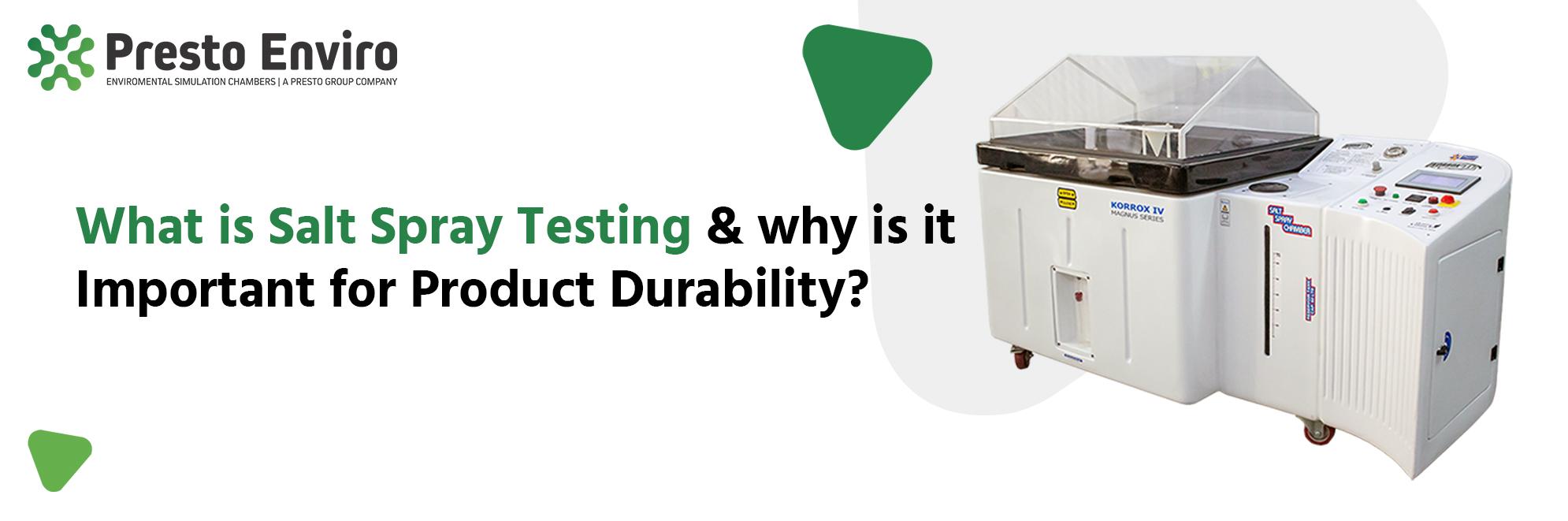
Metal parts exposed to environmental elements like rain, high humidity and saline air are subjected to quick degradation. Manufacturers don’t have years to wait to see long-term real-world durability with immediate shipping deadlines.

28-Aug-2026
Presto Enviro
Every day, EV batteries face harsh conditions. On the road, a high-voltage pack may deal with sudden freezing slush, extreme heat buildup during 350kW fast-charging stops, and continuous structural pounding from bad pavement.