© Copyright 2025. All Rights Reserved by Presto Stantest Pvt. Ltd.
25-May-2026
Presto Enviro
Vehicles are expected to work everywhere. In extreme summer heat, heavy rain, dusty roads, cold mountain regions, and long traffic hours. People rarely think about what happens behind the scenes before a vehicle reaches the road but every small component inside a car goes through pressure almost every day.
This is exactly why environmental testing has become such a significant part of automotive manufacturing now. A tiny failure in an electrical system or material can create bigger issues later. In this article, we will talk about what environmental testing actually is, how it works in practical situations, and why it plays a major role in improving vehicle reliability.
Environmental testing is a process used to check how a product behaves under different environmental conditions. In simple terms, in environmental testing, manufacturers simulate harsh real-life situations inside a controlled chamber before the product reaches the market.
Manufacturers test components before the vehicle reaches customers. They test wiring, dashboards, batteries, sensors, connectors, switches, and electronic systems under different conditions. Sometimes products are exposed to high temperatures for hours. Sometimes they go through humidity cycles or heavy vibration testing.
The noteworthy thing is that many products look completely fine during manufacturing. Problems start appearing only after repeated exposure to stress. A plastic part may slowly crack. A connector may weaken because of moisture. Electrical performance may start fluctuating after continuous heat exposure.
Environmental testing helps companies catch these issues early. This part matters because fixing a problem during development is much easier than handling customer complaints later.
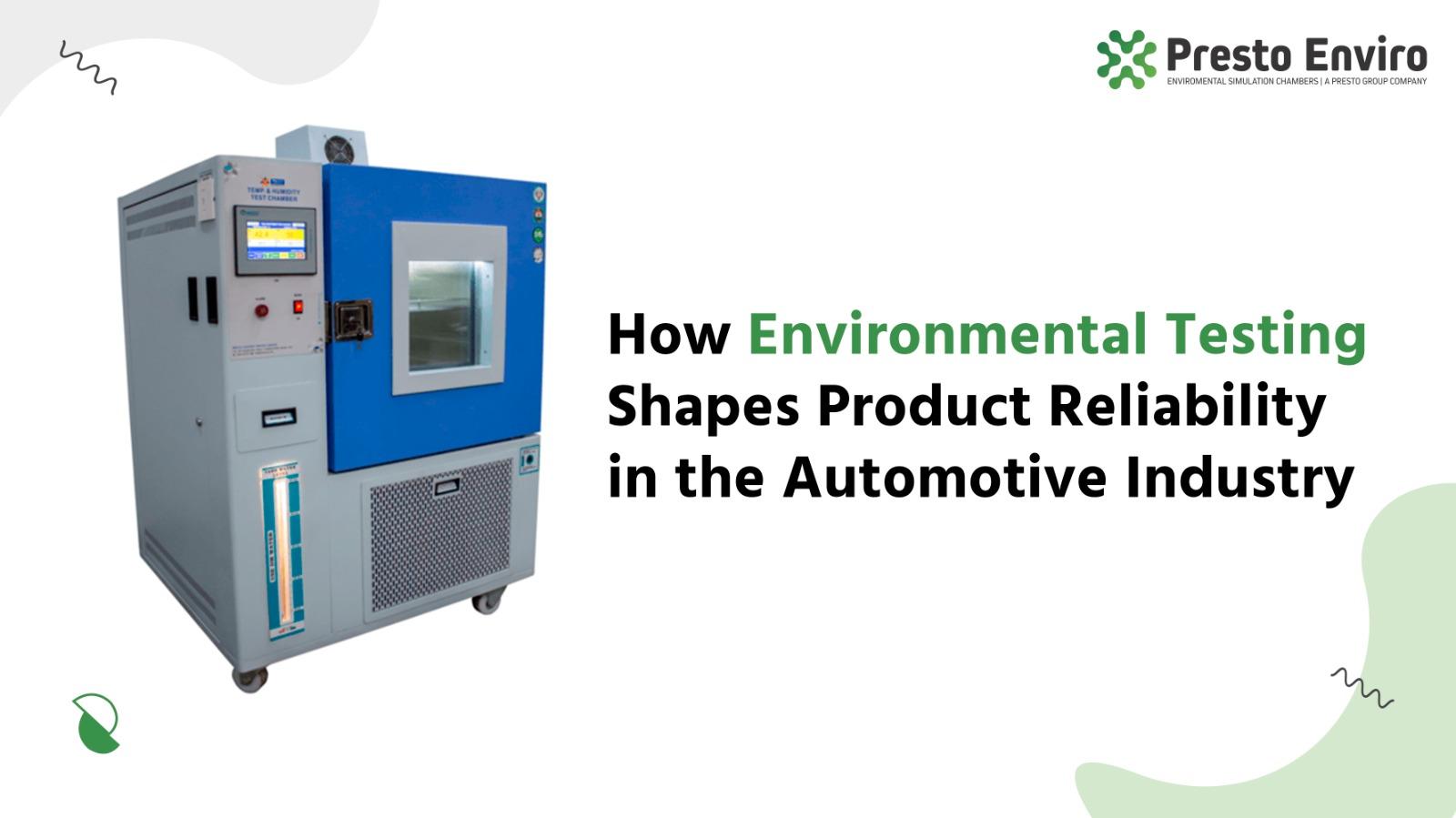
Environmental testing is conducted inside the environmental chambers. These chambers are designed to control temperature, humidity, vibration, dust, corrosion conditions, and even rapid climate changes. Depending on the requirement, the testing may continue for several hours or sometimes for days.
Let’s understand this with an example. Assume that an Automotive Control Unit is being tested. It can first be treated to extremely high temperatures in a chamber by engineers. The same product can then be suddenly exposed to freezing conditions after a certain time interval. This quick change verifies if the material expands too significantly, cracks from within or ceases to perform.
Another popular process used in automotive manufacturing is humidity testing. From the outside moisture can seem harmless but over time, it will slowly compromise the electrical systems and metal parts. During testing, engineers observe products' behavior under a stable humidity environment for extended periods of time.
Vibration testing is also a specific type of testing under environmental testing to test vibration in vehicles. Vehicles constantly experience vibration from rough roads, braking, engine movement, and speed variations. Small internal weaknesses slowly become bigger problems after continuous movement.
Many automotive companies now use advanced environmental chambers from manufacturers like Presto Enviro because modern vehicles contain far more electronics than older Vehicles did. Years ago, mechanical systems handled most functions. Now even basic vehicles depend heavily on sensors and electronic modules.
Environmental testing has become important in the automotive sector as vehicles today are expected to perform well almost everywhere. Customers may never think about testing procedures, but they definitely notice failures quickly.
Modern Vehicles are packed with electronics. Parking sensors, touchscreen systems, battery management units, braking controls, engine sensors, lighting systems, and climate control units all need stable performance. Even a small failure inside one system can affect the driving experience badly.
This becomes even more important in electric vehicles. Battery systems react strongly to environmental conditions. Excessive heat affects efficiency. Cold weather impacts charging and performance. If manufacturers ignore these factors during development, reliability problems start showing up very quickly after launch.
The other method of environmental testing is corrosion testing via salt spray test chamber which is a significant factor, particularly in high-humidity climates or coastal areas. Rusting is a more likely occurrence than usual with vehicles that are exposed to salty air.
The biggest problem for manufacturers is product recalls that are expensive. A single faulty component can damage customer trust and brand reputation within weeks. Nobody in the automotive industry wants that situation.
Environmental testing reduces those risks because companies get the chance to study product weaknesses before mass production begins.
Yes, Environmental testing improves the reliability of vehicles because it forces products to face stress before they reach actual customers. Without testing, manufacturers are basically guessing how a product will behave after years of usage. Testing removes a lot of that uncertainty.
For example, repeated vibration testing may expose loose solder joints inside an electronic assembly. Engineers can then redesign the structure before production begins. If not, customers may experience failures after a few months of driving on rough roads.
Thermal testing also assists companies in selecting materials that are more suitable. There are rubber seals that work well at first, but become weaker with prolonged exposure to heat. Some plastics become brittle under cold conditions. Environmental testing reveals these weaknesses much earlier.
Dust testing is just one of the examples that comes to mind. Fine dust particles penetrate into sensitive systems slowly over a long period of time, particularly in dry or construction-prone regions. Testing helps engineers fine-tune the design of seals and limit the potential for damage over time.
Automotive companies manufacture vehicles in huge numbers. Reliability is not only about one perfect vehicle. Every unit coming out of production should perform similarly under stress conditions.
Environmental testing supports that consistency. In simple terms, companies would rather fail products inside a testing chamber than fail publicly after launch.
Environmental testing quietly plays a massive role in automotive reliability. The testing process is not seen by most of the drivers, but they feel its effects in their everyday driving with safer, longer lasting and more reliable vehicles.
The need for appropriate environmental testing will continue to grow with the Auto industry's continued evolution in technology. These are especially areas in which today's vehicles are heavily dependent on electronics and intelligent systems.
For companies looking for dependable testing solutions, Presto Enviro is one of the leading Environmental Test Chamber manufacturers in India. Our testing equipment evaluates product durability and environmental performance across industries. Businesses aiming to improve product reliability and long-term quality can explore our advanced environmental testing solutions for accurate and consistent testing support.
Elevate your quality assurance process to new heights
Related Blogs
15-Oct-2026
Presto Enviro
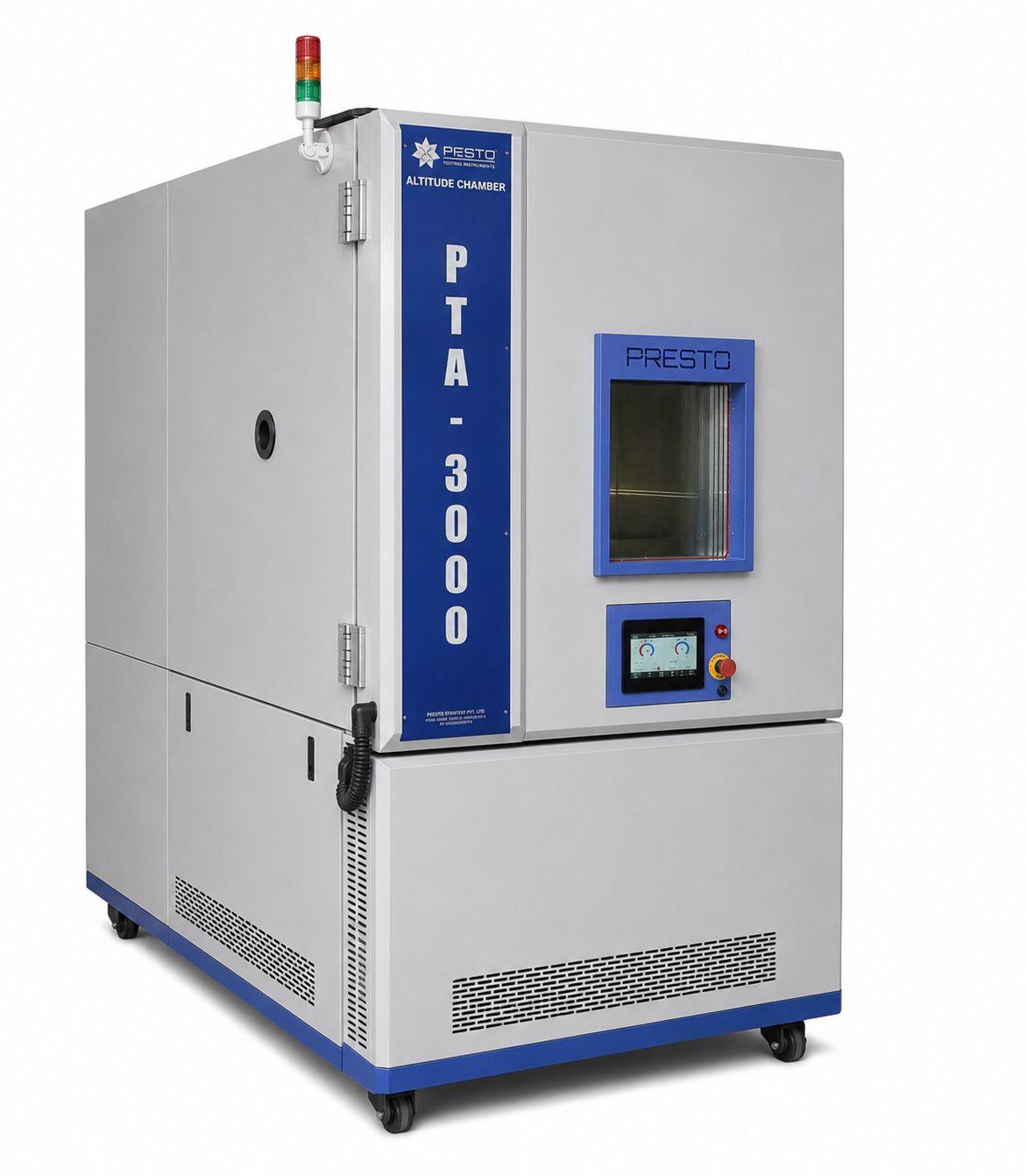
In environmental testing, vacuum chambers are also called altitude test chambers or low-pressure chambers. They lower air pressure inside a sealed chamber to simulate high altitude while controlling temperature and, in some configurations, humidity.

13-Oct-2026
Presto Enviro
An in-house lab can deliver results, give better control over product testing, and reduce testing costs in the long run. To make it work well, the lab space, equipment, utilities, and testing methods must be planned according to your needs.