© Copyright 2025. All Rights Reserved by Presto Stantest Pvt. Ltd.
28-Sep-2026
Presto Enviro
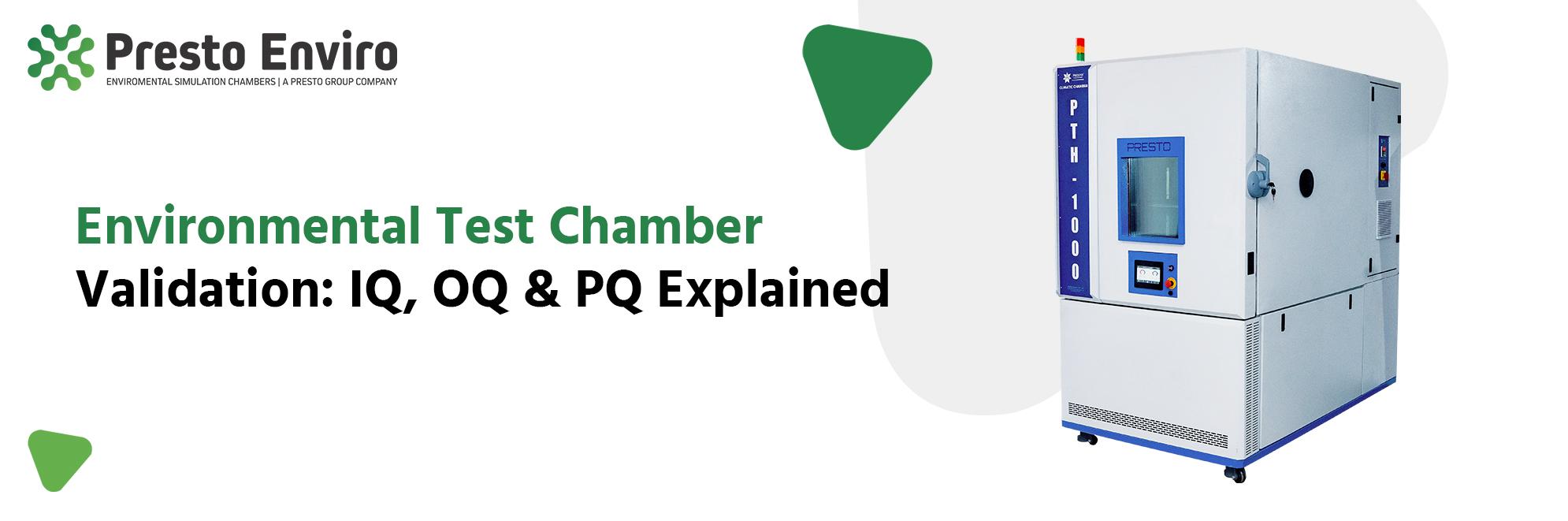
An environmental test chamber can reach a set temperature and still have a problem. The temperature near the control sensor may be correct, but readings from other parts of the chamber could be different. For laboratory testing of sensitive products, even a small variation can raise questions about the test results.
This is where environmental test chamber validation comes in. It checks whether the equipment is doing what it is supposed to do under the conditions for which it was purchased. The process involves four stages: DQ, IQ, OQ, and PQ. Each deals with a different part of the equipment, from its original design to its performance during actual testing.
Environmental test chamber validation is the process of verifying and documenting that a chamber can maintain the environmental conditions required for its intended testing application.
Simply checking the controller display is not enough. A chamber may show 50°C, for example, but that does not automatically mean every sample inside is exposed to 50°C. Air circulation, sample placement, and the chamber's condition can all affect the readings.
During validation, measurements are taken at selected locations and operating conditions. The results are compared with the limits specified in the test protocol. Depending on the chamber, this may involve temperature mapping, humidity checks, and tests of the control system.
The work is usually divided into Design Qualification (DQ), Installation Qualification (IQ), Operational Qualification (OQ), and Performance Qualification (PQ).
A test result is only useful when the testing conditions are under control. If the chamber temperature changes unexpectedly or varies from one location to another, it becomes difficult to know whether a product failed the test or the equipment affected the outcome.
For manufacturers, this can mean repeating tests, investigating unexpected results, or holding up a quality decision. Validation gives the laboratory a chance to identify such issues before the chamber becomes part of its regular testing routine.
It also has records of how the equipment performed during qualification. These records are useful for audits and for reviewing equipment after maintenance or repair.
Another point is product safety. Components used in vehicles, electrical equipment, and other applications may need to withstand specific environmental conditions. A chamber used for such testing needs to maintain the conditions stated in the test procedure. Validation provides evidence of its performance within the tested range.
Environmental test chamber validation follows four key stages: Design Qualification (DQ), Installation Qualification (IQ), Operational Qualification (OQ), and Performance Qualification (PQ). All these stages must be performed carefully, from making a purchase to its performance during usage.
1. Design Qualification (DQ)
Design Qualification takes place before the chamber is approved for purchase or manufacture. The proposed design is checked against the laboratory's requirements.
The review usually covers temperature range, humidity range, chamber capacity, and control features. A laboratory testing large components, for instance, needs enough usable space for the samples without blocking the circulation of air. If the selected model cannot meet the required conditions, the problem is better addressed before installation.
2. Installation Qualification (IQ)
Installation Qualification is concerned with the chamber as it arrives and is set up at the facility. The equipment is checked against the manufacturer's specifications and the approved installation requirements.
The model and serial number, electrical connections, utilities, and installation location are normally recorded. Ventilation and clearance around the equipment also deserve a look. Poor installation conditions can cause operating problems later. Equipment manuals, drawings, and available calibration certificates are reviewed as part of the documentation.
3. Operational Qualification (OQ)
Operational Qualification of the equipment is done according to the conditions defined in the qualification plan. The purpose of this step is to verify whether the installed equipment can achieve and hold specified temperature and humidity.
Commonly, temperature mapping is used for this test where properly calibrated devices collect information directly from inside the chamber for a limited period of time. After that, results of the test are analyzed, and temperature differences during the test are determined based on the readings obtained from the various locations. Depending on the scope, temperature recovery after door opening test or other tests to check the stability of humidity and alarms might be included in the OQ.
4. Performance Qualification (PQ)
A chamber that performs well when empty but may behave differently once samples are loaded. Performance Qualification looks at this part of its operation.
The chamber is tested with a representative load or under actual working conditions. Sample arrangement matters because trays and products can change the movement of air inside the chamber. The readings are reviewed against the specified acceptance limits. The resulting records support the use of the chamber under the conditions covered by the qualification.
Calibration checks whether a measuring instrument gives accurate readings while validation checks whether the chamber can perform its intended function.
|
Parameter |
Validation |
Calibration |
|
What is checked |
Overall suitability of the chamber |
Accuracy of measuring instruments |
|
Typical work |
Temperature mapping, operational and performance checks |
Comparison with a reference standard |
|
Coverage |
Equipment and its intended operating conditions |
Temperature or humidity sensors and other instruments |
|
Main record |
Qualification report |
Calibration certificate |
|
When performed |
Initial qualification and when requalification is required |
At scheduled intervals |
For example, a calibrated sensor may give an accurate reading at one point inside a chamber. Other locations could still be warmer or cooler. That is why calibration alone cannot establish temperature uniformity throughout the chamber.
The validation work should match the equipment and the purpose for which it is used. An environmental chamber for temperature testing may need a different test plan from one used for both temperature and humidity.
Presto Enviro offers solutions for industrial testing and quality assurance applications. Businesses that are considering chamber validation should first discuss the specifications of their equipment and the conditions that they need to validate.
It is important to ask about the temperature mapping process, the tools used in the measurement process and the documentation available after the testing. Clarifying the scope of the required service is also recommended. Requirements can include a full qualification process and requirements related to specific performance evaluations following the maintenance performed or relocation.
Environmental test chamber validation is about checking the equipment under the conditions it is expected to handle. DQ covers the design, IQ deals with installation, OQ checks operation, and PQ looks at performance with a representative load. The scope of each stage depends on the chamber and its intended use.
While calibration may help in accurate measurements, it does not tell everything about the performance of the chambers. In quality control, it is very important for laboratories and manufacturers to maintain proper qualification records of the equipment as well as operate the equipment after considerable changes.
Elevate your quality assurance process to new heights
Related Blogs

23-Sep-2026
Presto Enviro
Products are expected to work reliably for months or years, but manufacturers cannot always wait that long to find out how they will perform. Accelerated aging testing solves this problem by exposing products to controlled environmental conditions that speed up certain aging effects.
20-Sep-2026
Presto Enviro
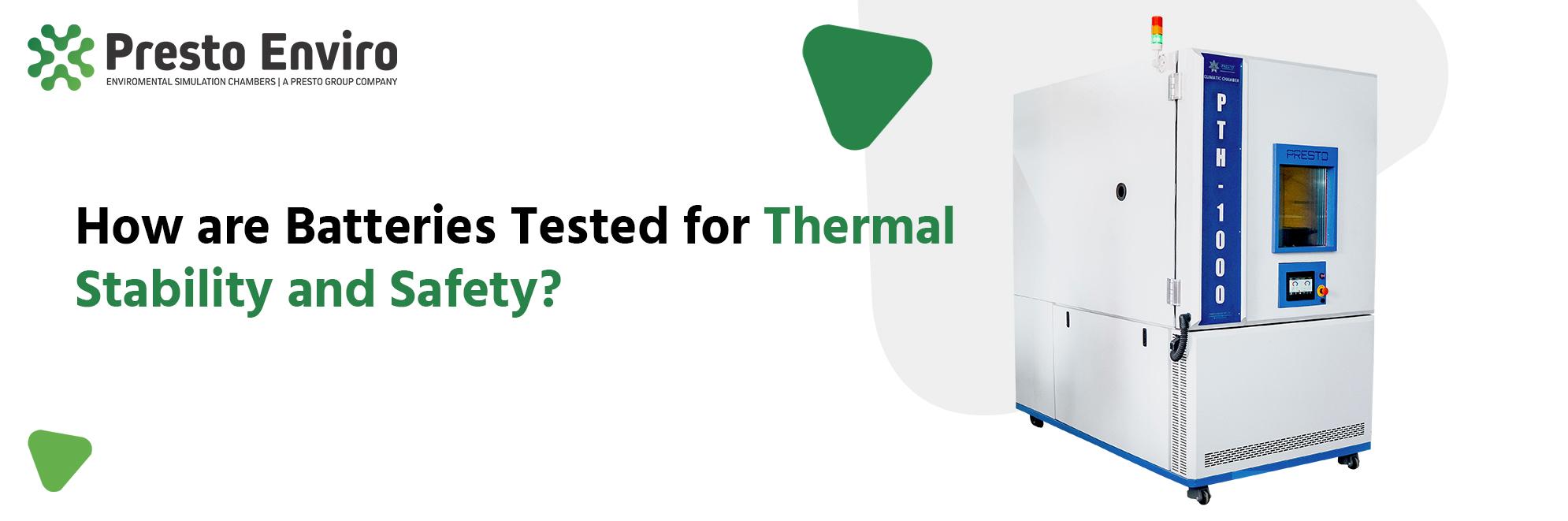
Battery safety is not something manufacturers can check only after a battery is ready for use. Temperature, charging conditions and repeated use can change the way a battery behaves. In some cases, excessive heat can cause permanent damage or create serious safety risks.
15-Sep-2026
Presto Enviro
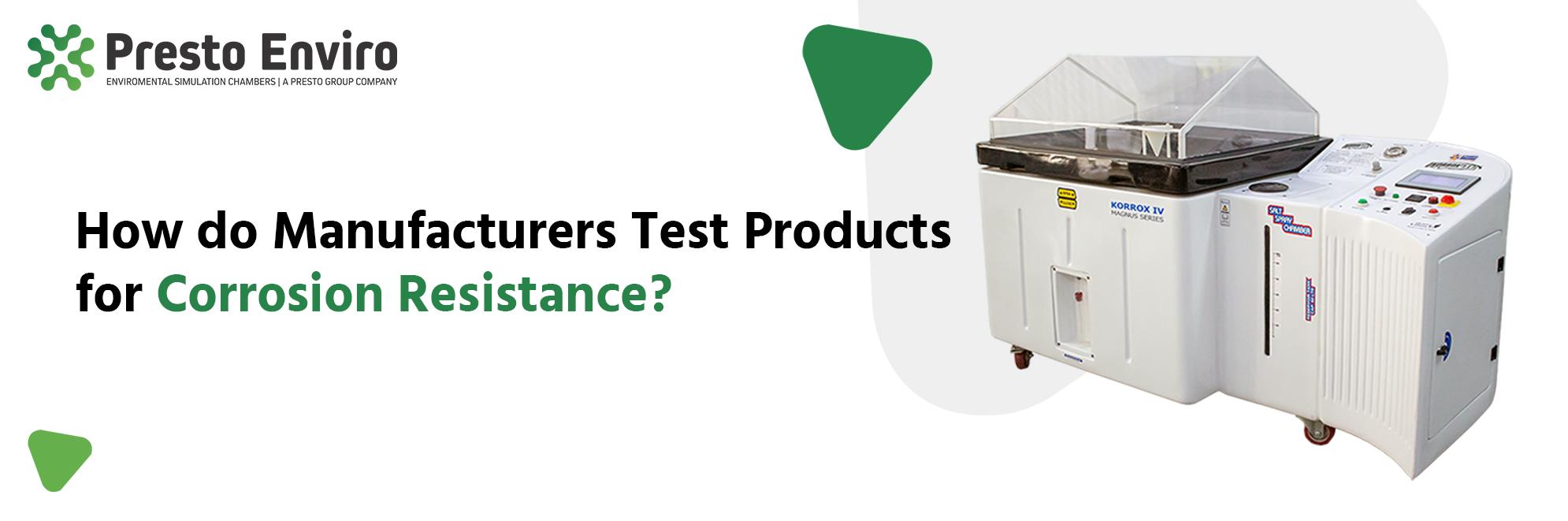
Corrosion is one of those problems that may appear mild at first and later turn costly. A metal part may leave the manufacturing facility appearing undamaged, yet suffer corrosion, stain formation or coating failure as a result of its contact with moisture, salts and changing weather conditions.