© Copyright 2025. All Rights Reserved by Presto Stantest Pvt. Ltd.
12-Aug-2026
Presto Enviro
A robust product is designed and tested for real operational conditions from the initial concept. Many engineering teams delay environmental testing until a physical prototype is nearly complete, only to discover fundamental flaws at a late stage. This article discusses how early environmental stress testing protects development budgets, improves reliability and speeds up product launches.
Testing for thermal and mechanical limits, if deferred to the final engineering phase, creates unnecessary project risks. When a circuit board or structural housing fails testing right before production, fixing the root cause means massive redesigns.
In this article, we will discuss the mechanics of early environmental stress testing in product development. We will see how early thermal cycling and shock testing can expose weak points. We will examine the cost differences between early problem fixes and later recalls. We’ll also discuss choosing the right test hardware and developing a culture where reliability is the foundation of every design decision from the start.
Environmental stress testing applies extreme thermal, mechanical, and climatic conditions to identify physical design limits before production begins. Starting this process early allows engineers to uncover structural and electrical vulnerabilities during initial layout iterations.
Product designers often confuse environmental stress testing with standard compliance testing. Compliance testing is the verification that a finished product meets specific regulatory requirements under normal conditions of use. Stress testing involves components operating beyond their normal limits and intentionally breaking them. Running these tests while the design is still under development gives you immediate feedback on the compatibility of materials and tolerances of components.
In simple terms, early stress testing acts like a stress monitor for your engineering decisions. If an early prototype microcontroller overheats because adjacent power traces generate excess thermal energy, finding that out on a temporary breadboard or revision A layout saves massive headaches. You can adjust copper weight, reconfigure ventilation, or select higher rated components before committing to expensive production tooling.
Early environmental stress testing helps establish realistic design margins. Engineering teams sometimes over-engineer products by selecting unnecessarily expensive rugged components out of caution. Stress testing functional prototypes reveals the exact points of strength in the design as well as the areas that need reinforcement. This clarity lets engineers reduce bill of materials costs without compromising the long-term durability of the product.
Fixing a design vulnerability during initial drafting costs a fraction of fixing the same issue after tooling is finalized. Early testing catches flaws when modifications only require updating software parameters or adjusting board layouts.
Every step forward in product development increases the cost of design modifications by roughly a factor of ten. An issue resolved on a schematic drawing takes a few hours of engineering time. The same issue found during pilot production requires scrap materials, new injection molds, re-spun circuit boards, and delayed shipping schedules. If the flaw reaches customers, the costs explode into warranty claims, brand damage, and potential recall expenses.
This part matters because financial budgets stay predictable when teams find weaknesses early. Early stress testing shifts failure discovery to the left on the project timeline. When an early aluminum housing warps during thermal exposure, changing wall thickness in CAD software is simple. The design team updates the digital model, sends new files to the rapid prototyping shop, and tests again within days.
Products encounter far more severe conditions in the real world than neat laboratory environments suggest. Early environmental testing simulates extreme temperature swings, humidity, and physical vibration to ensure consistent real world performance.
Environmental stress is always acting on a device installed outside or inside industrial machines. Due to the daily temperature variations, materials will expand and contract at different rates, stressing solder joints, fasteners and adhesives. High humidity causes moisture ingress that leads to corrosion and electrical short circuits over time. If engineers do not evaluate these factors during early component selection, field failures become inevitable.
Practical experience shows that standard operating specifications on component datasheets are not always enough. A capacitor rated for high temperatures might perform well on paper, but its proximity to an inductor inside a tight enclosure could push local temperatures past safe limits. Subjecting early functional models to combined thermal and mechanical stress reveals these localized interactions quickly.
Testing early mechanical prototypes to realistic vibration profiles is an important part of designing for harsh environments. Internal connectors are subject to continual low frequency movement during transport of goods by freight trucks or when operating equipment around heavy machinery. If loose ribbon cables or cracked joints are detected during early prototype testing, locking clips or structural ribs can be added before the mechanical drawings are frozen.
Early environmental stress testing reduces the risk of unexpected field failures that destroy customer trust and drain company profits. Identifying weak links before volume manufacturing protects market reputation and long-term business growth.
Field failures are one of the most damaging events a manufacturing company can face. Product recalls have direct financial impacts, such as the cost of replacement units and customer service operations, and they can also damage brand credibility. In competitive markets, customers will readily jump over to alternatives if a newly launched product is found to have reliability problems in everyday use.
Most failures in the field are the result of insidious design weaknesses that only show up after multiple exposures to the environment. After cycling through ambient temperatures for months, the connector housing may degrade, causing intermittent power loss. As it gets cold, the glass seal around a display may become less flexible and allow water vapor to enter. Standard production line testing rarely catches these time-dependent degradation modes.
Stress testing early functional prototypes accelerates aging processes safely in the lab. Rigorous testing takes months of field usage and compresses it into days by throwing prototype hardware at extreme environmental profiles. Detecting component fatigue or seal degradation in the design phase enables engineers to swap out materials before the mass production lines come online.
Actually, early-stage environmental testing reduces total development timelines by eliminating late-stage redesign cycles. Proactive reliability engineering will keep projects on schedule and help avoid costly schedule slips near the product launch.
Engineering project managers often worry that adding stress testing to early development phases will delay product release dates. In practice, the opposite is true. A critical structural or electrical problem discovered late in validation can halt production, delay marketing campaigns and cause loss of target release windows. It takes a lot longer to fix a late failure than the small amount of time it takes to do early stress testing.
This structured workflow reduces project management friction and builds team confidence. The designs are handed over to production teams that have already demonstrated their durability in harsh thermal and mechanical environments. Launch dates are predictable, manufacturing ramp-ups happen without sudden stops, and executive teams can make commitments to market delivery timelines with a high degree of certainty.
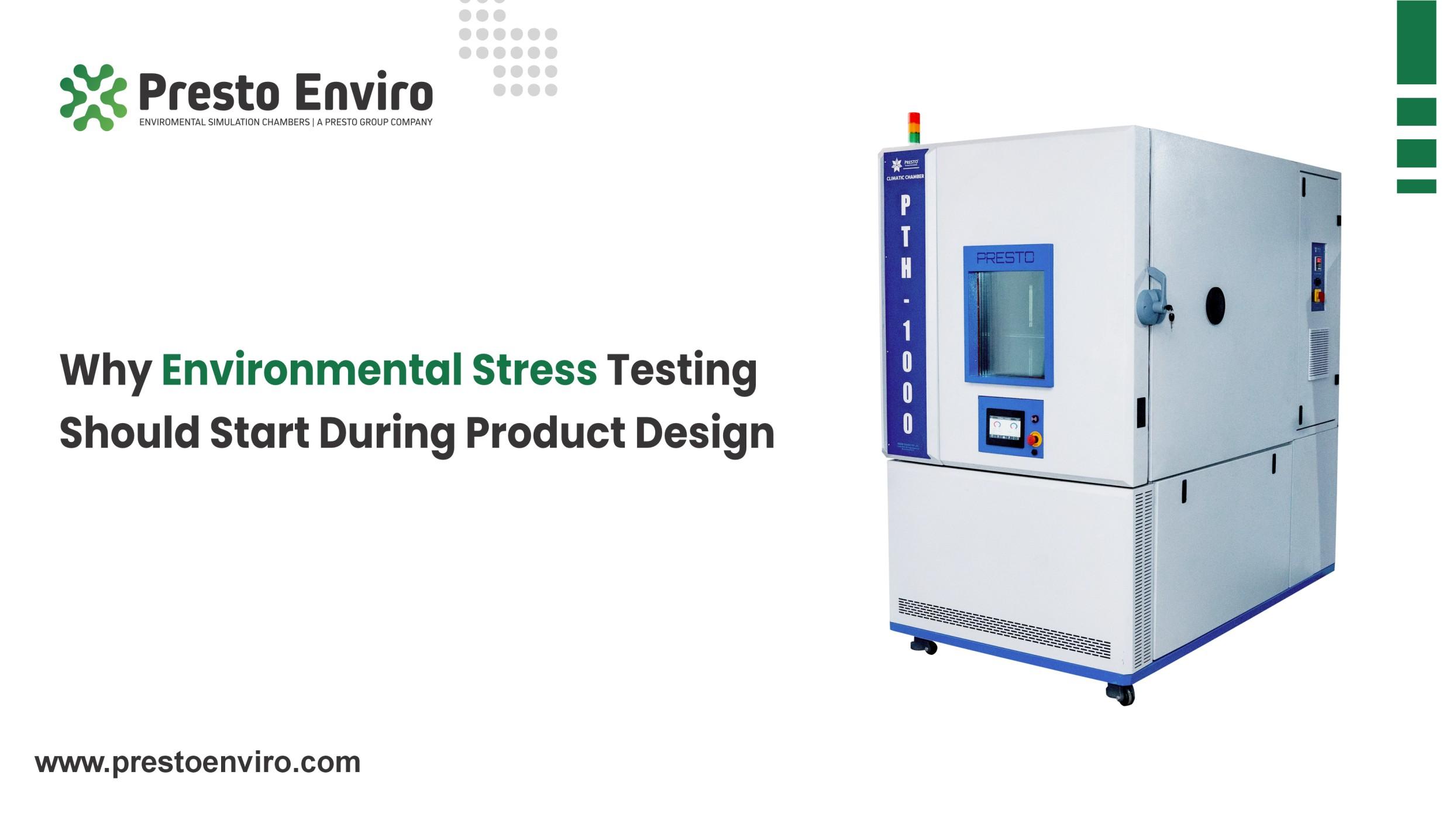
Accurate environmental testing relies on high-quality environmental chambers that can rapidly shift temperatures and maintain precise humidity levels. Using reliable environmental chambers from Presto Enviro gives manufacturers confidence in their test data during early prototype runs.
The right choice of test equipment is critical to getting repeatable results. Modern stress testing requires tight control of temperature ramp rates, airflow, and humidity levels within the test volume. In many climate chambers, the temperature changes too slowly to produce the thermal shock necessary to show material strain. High-performance chambers simulate rapid climate shifts that highlight micro cracks and material separation in early revisions.
Presto Enviro environmental chambers during early development let you run highly accelerated life testing profiles on subassemblies. Our chambers allow precise programming of thermal profiles ranging from deep sub-zero conditions to high-temperature extremes within minutes. Subjecting prototype modules to fast temperature transitions highlights marginal solder joints and uneven thermal expansion across different materials quickly.
Buy reliable test equipment so you don’t get false passes and confusing failure data. By comparing test equipment to specific environmental conditions, manufacturers can differentiate between true product design problems and test artifact anomalies. That accuracy speeds root cause analysis so teams can deploy permanent engineering fixes more quickly.
Incorporation of environmental stress testing into early product design takes reliability engineering from a last verification task to an active design tool. Identifying material mismatches, thermal limits and mechanical shortcomings early can save significant engineering costs and avoid expensive delays in production. To be able to design products that last, you need to understand how components are going to behave in harsh real-world conditions well before you go into mass production.
By proactively stress testing with the right environmental chamber from Presto Enviro, you can ensure all of your products that hit the market will be of long-lasting quality and uncompromised performance.
Elevate your quality assurance process to new heights
Related Blogs
23-Sep-2026
Presto Enviro
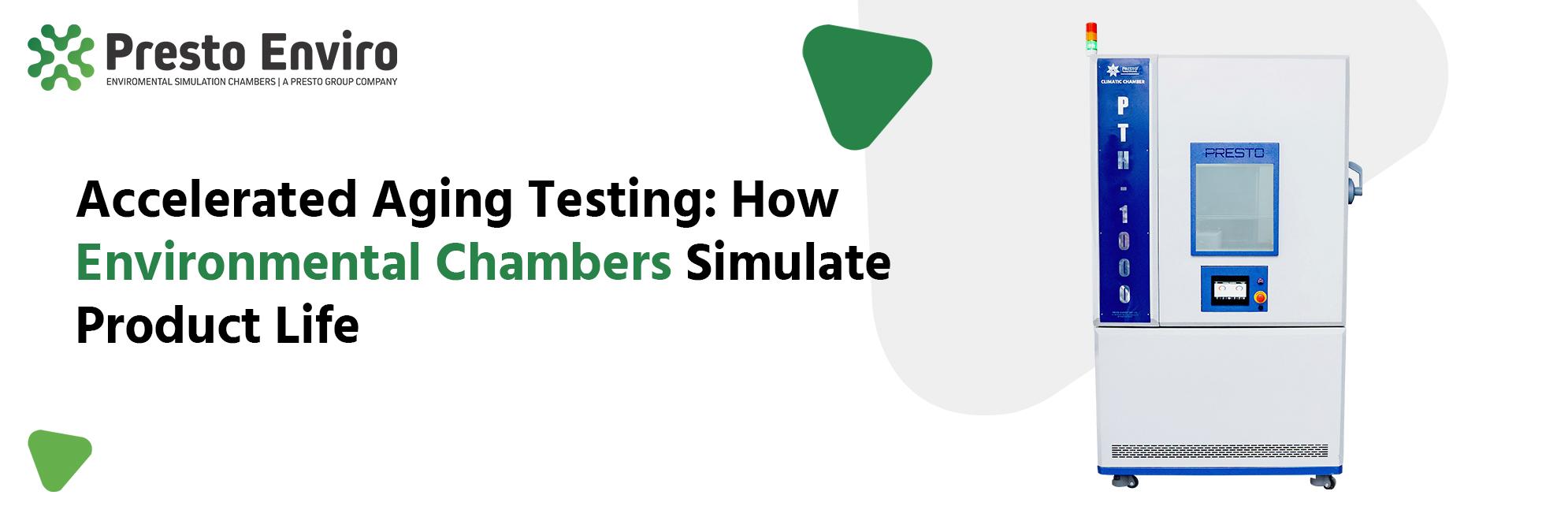
Products are expected to work reliably for months or years, but manufacturers cannot always wait that long to find out how they will perform. Accelerated aging testing solves this problem by exposing products to controlled environmental conditions that speed up certain aging effects.
20-Sep-2026
Presto Enviro
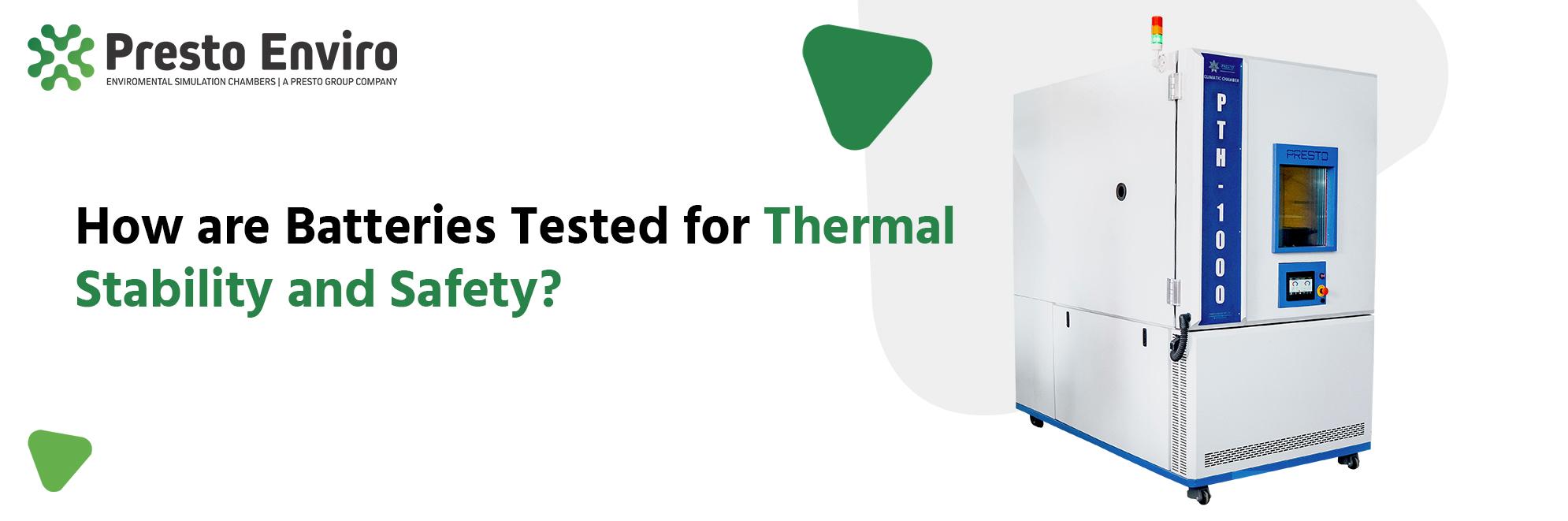
Battery safety is not something manufacturers can check only after a battery is ready for use. Temperature, charging conditions and repeated use can change the way a battery behaves. In some cases, excessive heat can cause permanent damage or create serious safety risks.