© Copyright 2025. All Rights Reserved by Presto Stantest Pvt. Ltd.
29-Mar-2026
Presto Enviro
Climatic testing mainly involves testing how a given product reacts to different climatic conditions such as temperature and humidity. When products are used in real-life situations, there are situations where the climatic conditions keep on changing. Such variations can lead to inefficiency in the products used.
As time passes on, product efficiency becomes one of the greatest challenges facing manufacturers in maintaining the quality of products. This challenge has been addressed through climatic testing, where products are tested under such conditions to identify any possible problems that can be addressed to improve efficiency.
Climatic testing can be defined as the process of testing products under various climatic conditions like temperature and humidity. This helps to check the efficiency of the products. This method guarantees the efficiency of the products.
The main aim of this process is to evaluate the efficiency of products under real-life situations. This helps manufacturers to understand the efficiency of products under different climatic conditions.
Climatic testing helps identify various issues such as product weakening, efficiency reduction, and overall weakness. As an illustration, the physical destruction of electronics can take place if they are subjected to excessive heat; similarly, packaging materials can weaken when exposed to excessive moisture. In this regard, some products can be assessed for effectiveness under representative climate conditions.
Climatic testing is very important for various products like electronic devices, automobiles, pharmaceuticals, and packaging materials. This way, products can be ensured to be efficient under climatic conditions. This helps in delivering products that can be used efficiently without any failure.
Climatic testing includes different types of tests depending on the environmental factors like temperature, humidity, and the combination of these factors.
Temperature testing is performed to understand the product's performance in extreme hot and cold conditions.
Humidity testing is performed to understand the performance of the product in the conditions of moisture and humidity.
Thermal testing is done to assess the materials' stress and fatigue from product expansion and contraction.
Combined Temperature and Humidity testing is the combination of both (Temperature and Humidity) tests that are performed to understand the performance of the products in the conditions of both hot and humid temperatures.
Environmental stress testing is performed to understand the performance of the products in different conditions of the environment.
Industries require climatic testing when the products are exposed to different environmental conditions like heat, cold, or humidity. This is required to check the efficiency and performance of the products.
In this stage, an item or material needed for testing is selected and prepared. The item that is tested must not contain any unwanted contaminants such as dirt, moisture, and any other environmental harms. Proper preparation of the item is necessary to produce accurate results during climatic testing. Proper preparation for testing will promote the integrity and accuracy of climatic testing.
In this step, various parameters such as temperature, humidity, and test time are fixed for climatic testing. Parameters depend on the type of product and its actual use. Proper selection of parameters is essential to test products in actual climatic conditions. Proper selection of parameters helps to enhance the efficiency of climatic testing.
In this step, the prepared sample is kept inside the climatic test chamber. The sample is arranged properly to test climatic conditions. Proper arrangement is essential to avoid erroneous results during climatic testing. Proper arrangement helps to achieve accurate results during climatic testing.
In this step, a chamber is used to apply various conditions such as temperature, low temperature, or humidity. The conditions are kept for a certain period. This step is based on simulating different environments that may be encountered by the product in real-life situations.
In this step, the product is constantly monitored. Any changes in the structure, functioning, or appearance of the product are noted. Various instruments help in recording precise data. This step is important for better analysis of the product's behavior.
In this step, the product is carefully examined after the test is over. The product is examined to see if it is damaged or deformed in any way. The results obtained help in identifying the weaknesses in the product.
In this step, all observations are documented and results obtained from the test in a proper format. The results obtained from this test will help in improving the product's quality and design.
Proper planning and setup of conditions are essential for performing efficient climatic testing. The use of appropriate procedures is vital to ensure that there is efficiency in the products.
It is vital to ensure that the equipment is properly calibrated for climatic testing. Calibration is vital to ensuring that temperature and humidity levels are maintained. Calibration is vital to ensure that there is efficiency in products.
It is vital to ensure that stable conditions are maintained during climatic testing. This is vital to ensure that there is efficiency in products. Stable conditions ensure that there is efficiency in products.
Efficient preparation of samples is essential for conducting effective climatic testing. The use of clean samples is vital to ensure that there is efficiency in products.
It is essential to avoid overloading the chamber with too many samples at a time. This helps in ensuring that all the samples are equally exposed to the environmental factors. This helps in the achievement of the expected results.
Continuous monitoring helps in the tracking of changes in the performance of the product. This helps in the early detection of problems during the testing phase. Continuous monitoring helps in the accurate recording of results.
It is essential to adopt standard procedures for testing the product. This helps in the consistency of results obtained from the testing phase. The adoption of standard procedures helps in the elimination of errors during the testing phase.
The regular maintenance of climatic testing equipment is essential for the efficient use of the equipment. The equipment, when in good condition, helps in the achievement of the expected results.
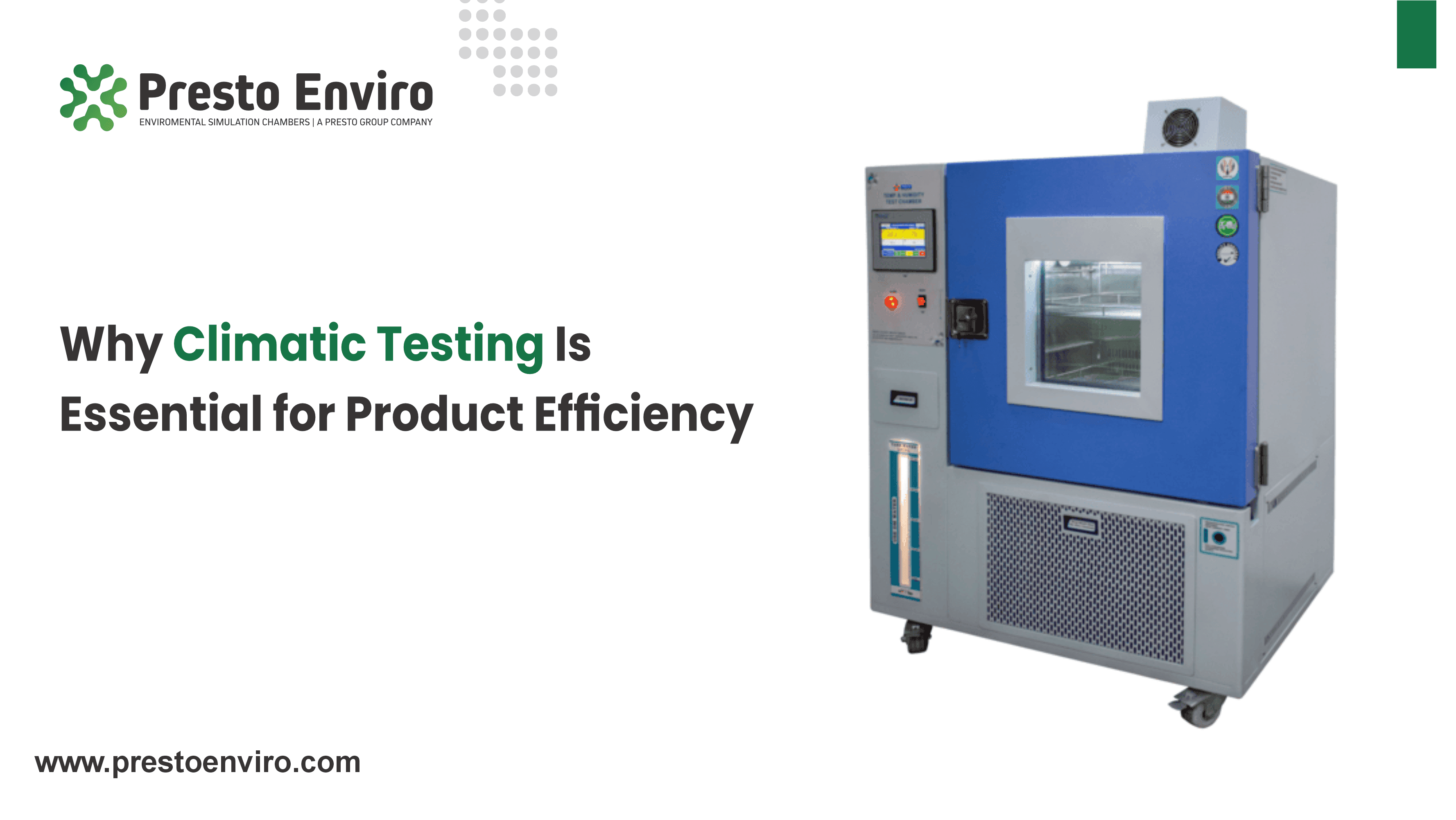
Presto Enviro climatic test chambers assist in improving the efficiency of products by simulating real-time conditions. This helps in accurate testing of temperature and humidity to improve the performance of products. Our climatic test chambers ensure improved product effectiveness and execution by replicating both common and severe environmental conditions including thermal extremes (heat and cold) and high humidity.
In doing so, this form of rigorous testing allows for enhanced reliability of a product since items tested using controlled climatic testing will perform consistently under differing operational conditions. In addition, this type of equipment also serves as an incredibly valuable tool for quality control via the provision of a reliable and consistent testing platform.
Ultimately, climatic testing is not merely a procedural step; it is the critical determinant of a product's real-world success. By rigorously validating performance under simulated environmental extremes, manufacturers gain the foresight needed to proactively eliminate vulnerabilities, ensuring the end-user receives a reliable and durable solution. Leveraging advanced equipment, such as modern climatic test chambers, transforms product quality from a goal into a guaranteed outcome, setting a non-negotiable standard for industry reliability and efficiency.
Ready to guarantee product reliability and efficiency? Contact us today for a quote on the Presto Enviro Climatic Test Chamber
Elevate your quality assurance process to new heights
Related Blogs
23-Sep-2026
Presto Enviro
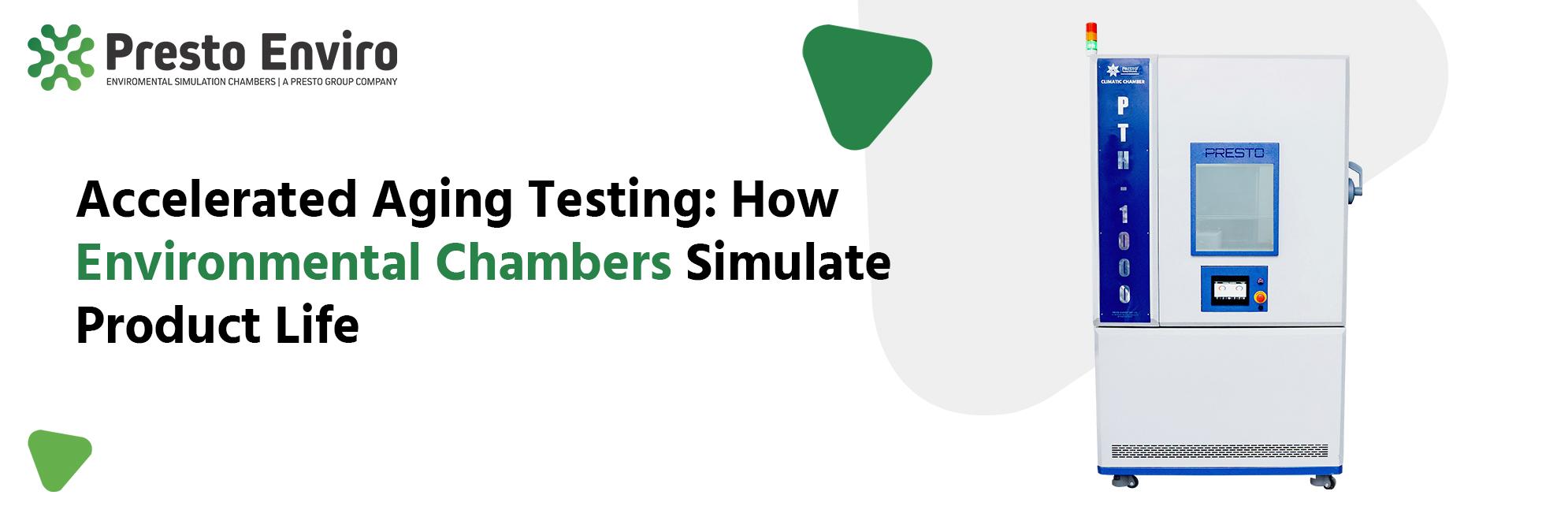
Products are expected to work reliably for months or years, but manufacturers cannot always wait that long to find out how they will perform. Accelerated aging testing solves this problem by exposing products to controlled environmental conditions that speed up certain aging effects.
20-Sep-2026
Presto Enviro
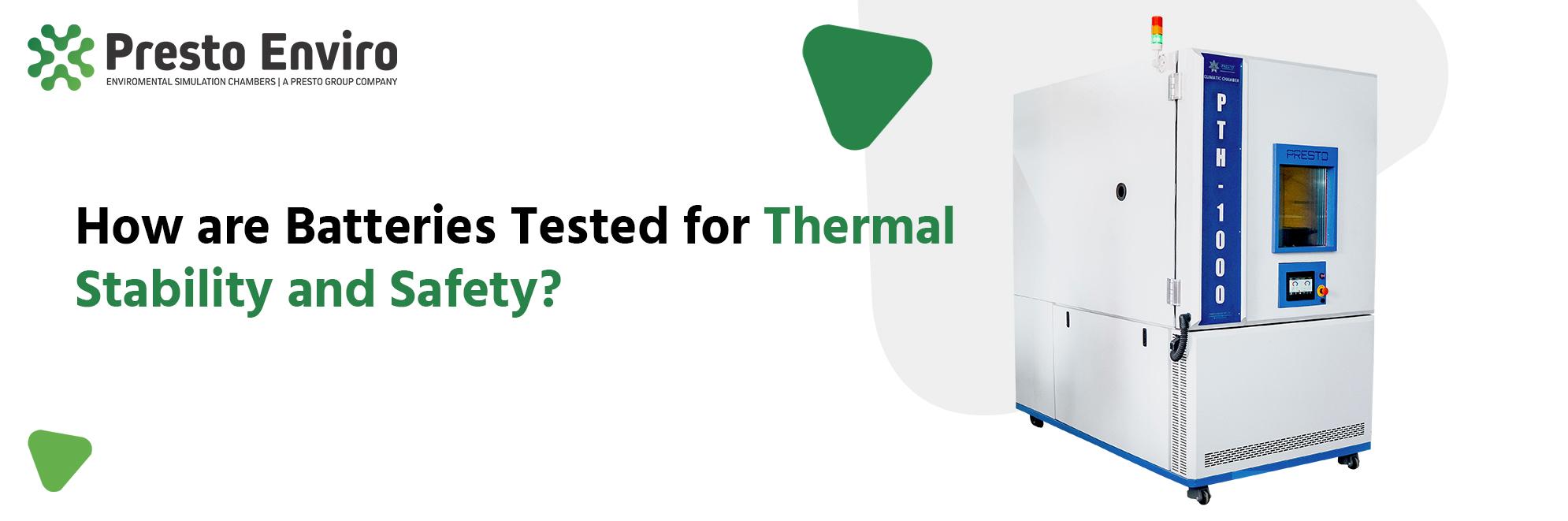
Battery safety is not something manufacturers can check only after a battery is ready for use. Temperature, charging conditions and repeated use can change the way a battery behaves. In some cases, excessive heat can cause permanent damage or create serious safety risks.
15-Sep-2026
Presto Enviro
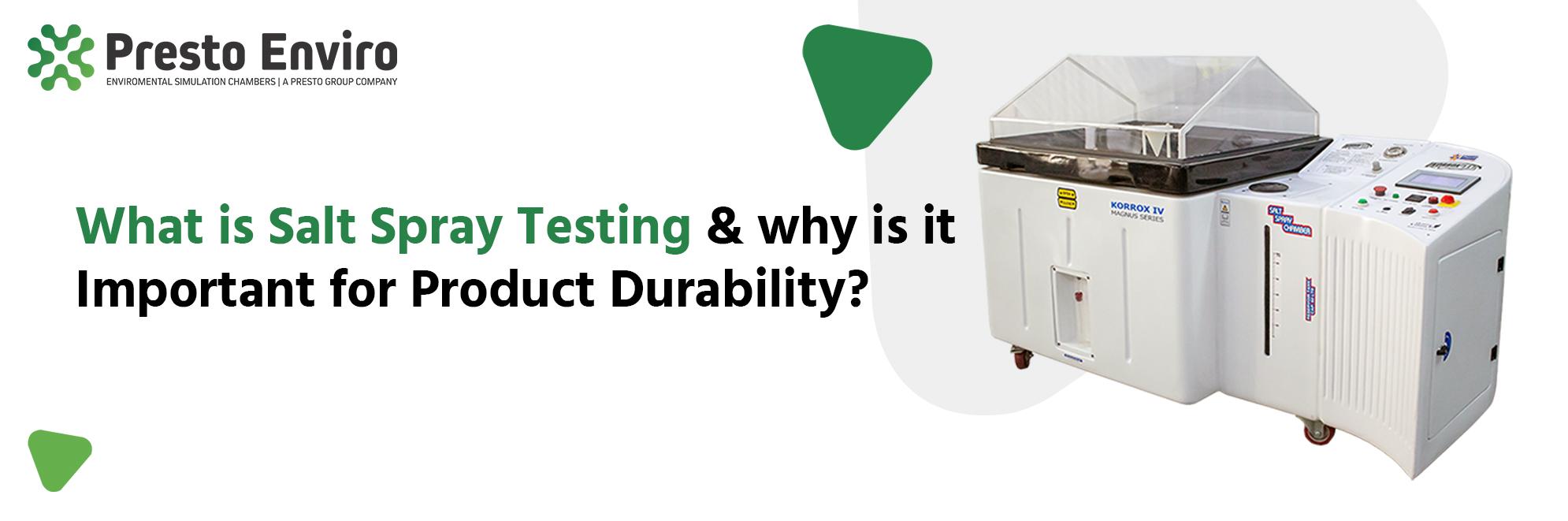
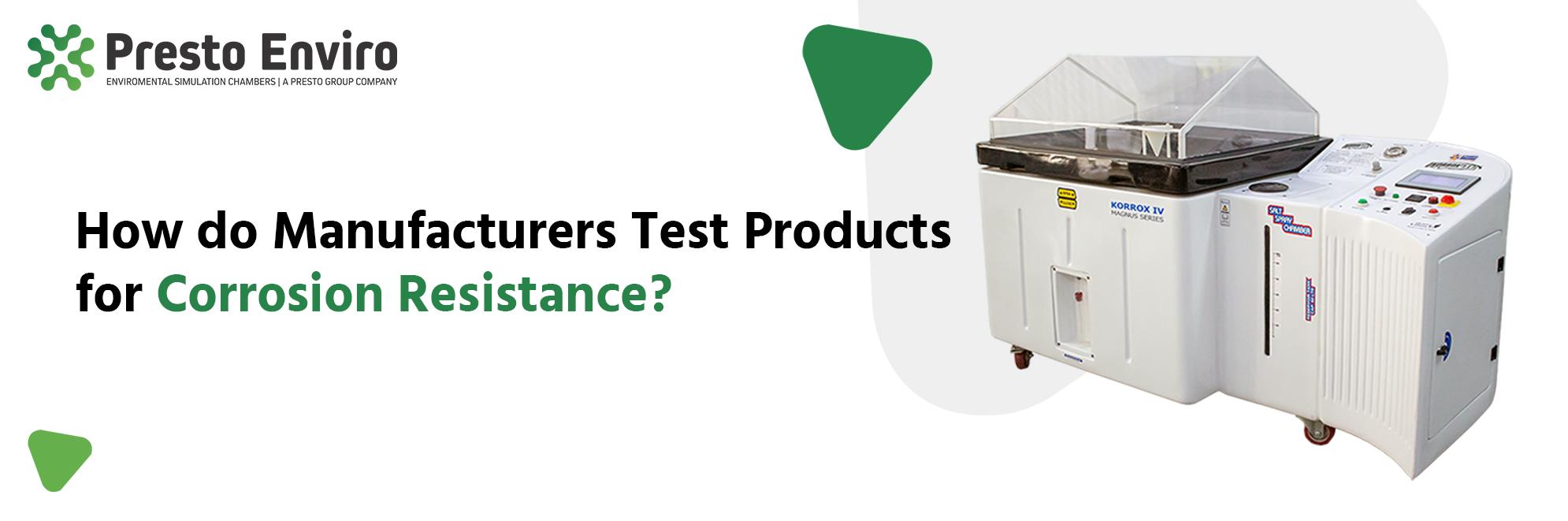
Corrosion is one of those problems that may appear mild at first and later turn costly. A metal part may leave the manufacturing facility appearing undamaged, yet suffer corrosion, stain formation or coating failure as a result of its contact with moisture, salts and changing weather conditions.