© Copyright 2025. All Rights Reserved by Presto Stantest Pvt. Ltd.
05-Dec-2025
Presto Enviro
Do you ever wonder what happens inside an electric vehicle battery when the weather shifts in seconds? Are you aware how fast temperature swings can push a battery cell into stress?
Most people never see these moments, yet they shape the future of every EV on the road today.
EV makers across India, Africa, Europe, and the Middle East regions now deal with a jump in demand. More cars run on lithium-ion packs. More brands enter the market. The push for safe and stable battery packs grows each month. One small thermal slip can lead to swelling, leakage, or even a runaway event. This is where a rapid temperature chamber steps in. It gives engineers a space to check how a battery reacts when the heat rises or drops in sudden jumps.
Presto Enviro has created chambers shaped for these fast shifts. Battery makers use them to pick the right cell designs and judge long-term pack health.
EV batteries act like living systems. They move ions, push current out, heat up during load and cool down during rest. These swings look harmless from the outside, yet inside the cell, many tiny changes take place.
A rapid temperature chamber allows teams to speed up this cycle. Instead of waiting months to see how a pack behaves, they can see its reaction in hours. This helps them catch weak points early. A small drop, a sudden spike, or a tight humidity rise can reveal how strong the cell chemistry truly is.
Most EV failures happen when the cell faces stress. Heat rises inside the pack, pressure builds and parts expand. A rapid test chamber recreates these moments in a controlled box. This helps the teams to pick safer pack materials.
A rapid temperature chamber brings all these conditions inside one machine. Engineers move between heat, cold, and room climates with short gaps. They watch how the pack reacts in that small window.
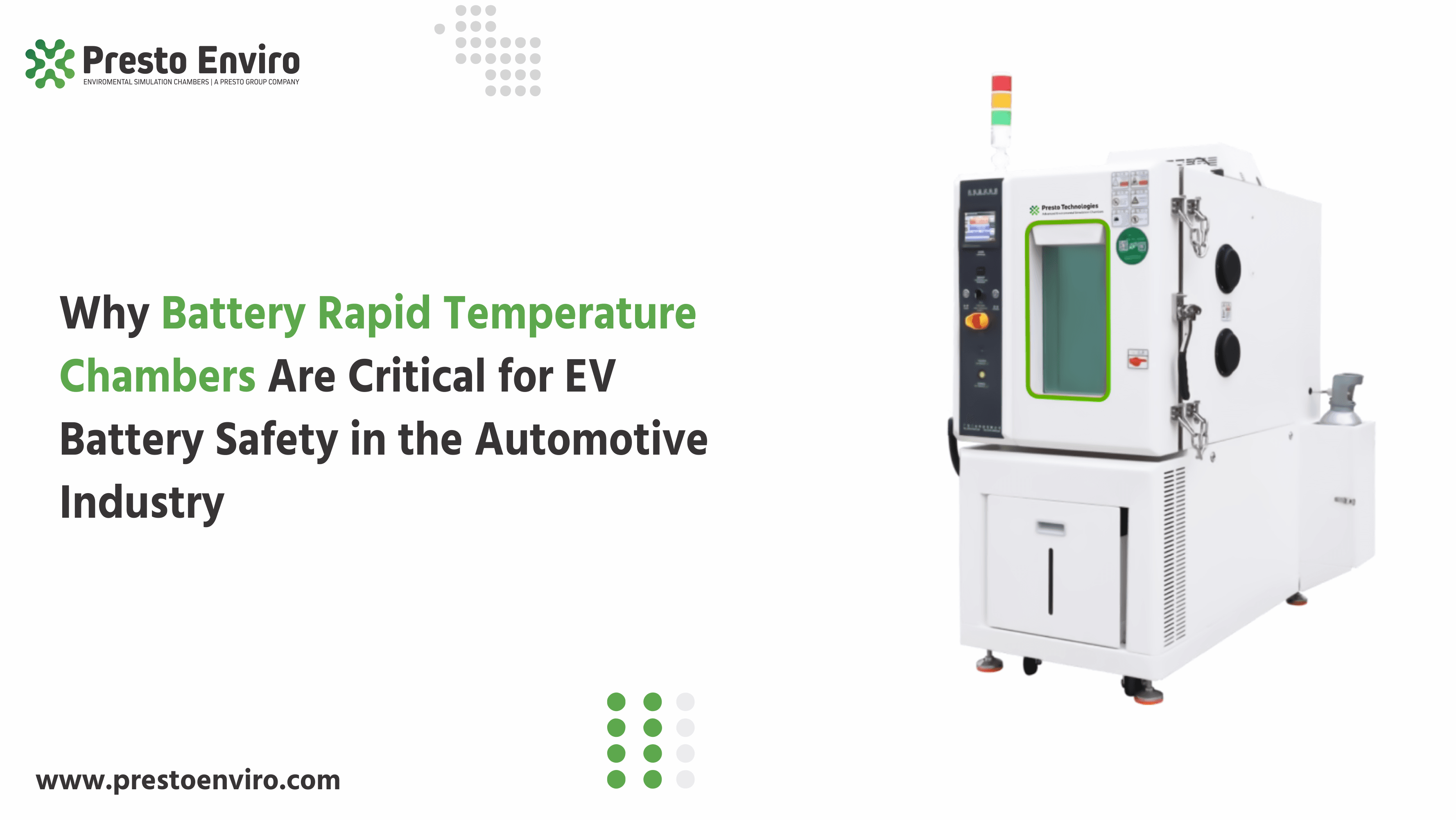
Presto Enviro builds chambers that spread heat and cold in a uniform way. The airflow pattern keeps the battery sample in a stable zone. The cooling system pulls down the heat at speed. The heating system raises the temperature with a short delay. This mix helps to test sudden jumps that often stress lithium-ion cells.
The chamber body holds thick insulation. This keeps the climate steady. The gasket on the door blocks outside air. Clear viewing windows help the user to watch the test without opening the door.
Inside, sensors track temperature, humidity, and time. These readings appear on a user screen. Engineers collect the data as the battery goes through each cycle. This gives them a picture of the shifting of the pack with each jump.
The test gives answers to questions that would take months in the field:
1. Reaction to heat
Most lithium-ion packs face swelling when exposed to high heat for long hours. The rapid chamber shows this swelling pattern early.
2. Cell chemistry change
Some chemistries lose power when exposed to repeated heat and cold shifts. The chamber test uncovers this drift.
3. Seal strength
Pouch cells and cylindrical cells use seals. These seals may loosen when the pack expands and contracts. Rapid shifts reveal the weak seals.
4. Electrolyte behavior
Electrolytes become thick in cold and thin in heat. Their movement affects battery stability.
5. Outer case strength
Battery cases face expansion during heat. A weak case may deform. A quick cycle test shows this break point.
6. Pack design
Engineers can tweak spacing, cooling channels, and insulation layers based on test results.
EV makers want long-lasting, stable packs. They want cars that fulfill new safety norms. They also want to cut risk before the product reaches the user. Rapid temperature tests help them:
1. Cut early failure
Most early failures come from thermal drift. The chamber checks this before the pack goes into a car.
2. Match global travel conditions.
Cars shipped to Gulf areas, African regions, or hilly zones face different climates. Rapid tests cover these ranges.
3. Follow global norms
Many markets ask for thermal cycle tests. The chamber supports these cycles.
4. Improve pack lifespan
Short temperature swings affect long-term battery age. Testing helps teams pick better materials.
5. Help suppliers match specs.
EV makers work with many cell suppliers. They can use the same test to check the quality of each batch.
Presto Enviro builds chambers with long service life and steady performance. The chamber design focuses on safety and smooth handling.
1. Stable cabinet body: The body keeps the inner climate steady. A strong build reduces heat leak.
2. Fast cooling: The cooling system drops the temperature with a short delay. This is vital for rapid cycle tests.
3. Fast heating: The heating coil gives uniform heat. Temperature rises fast without hotspots.
4. Touch display: The user’s screen shows readings clearly. Operators can track cycles without confusion.
5. Data tracking: Cycles can be saved and viewed later. This helps teams to compare samples.
6. Smooth airflow: Air moves in a balanced pattern. This helps to keep samples in a steady zone.
Battery safety teams across labs, research centers, and EV plants use these chambers to pick the right designs before scaling up production.
1. Pack design labs: They run thermal cycle tests before clearing a new pack layout.
2. Cell development labs: They check new chemistries during early study.
3. Charging system tests: They track how packs behave during fast charging heat.
4. Supplier checks: They compare cell lots from different sources.
5. Common findings from rapid temperature testing: Thermal drift
Internal parts shift shape after many cycles.
6. Seal wear: Seals open slightly when exposed to heavy expansion.
7 Electrolyte movement: Chemistry becomes less steady after fast shifts.
8. Capacity drop: Some cells lose output after harsh cycles.
9. Case deformation: Outer bodies show bends at high heat.
These signs help EV brands to pick safer parts.
Why do EV labs use rapid temperature chambers?
EV labs use rapid temperature chambers to watch how a cell responds during fast heat and cold shifts. These swings happen on real roads more often than people think. A chamber lets the team catch stress, swelling, or shape change early.
What happens to a battery during sudden temperature jumps?
A pack expands when it heats up. It contracts when it cools. These changes look small, yet they push the seals, the case, and the inner layers. Sharp jumps can reveal weak points in the pack that do not appear during slow changes.
How do rapid cycles help to pick safer battery materials?
Each material reacts in its own way. Some coatings hold firm during heat. Some shrink during cold. Fast cycles show which mix fits the pack better. This helps the engineers to pick parts that behave more steadily during long road use.
Do these tests help with fast charging systems?
Yes. Fast charging creates a sudden heat rise inside the cell. A rapid chamber recreates this heat jump. The team can watch how the pack handles this rise and adjust the pack layout or cooling parts based on the results.
Why should EV brands check every supplier with the same chamber?
Cell lots from two suppliers may not behave the same way. One may swell more under heat. One may lose shape during a cold. Using the same chamber helps the brand judge each lot under the same conditions, which reduces the chance of weak packs entering production.
Elevate your quality assurance process to new heights
Related Blogs
15-Sep-2026
Presto Enviro
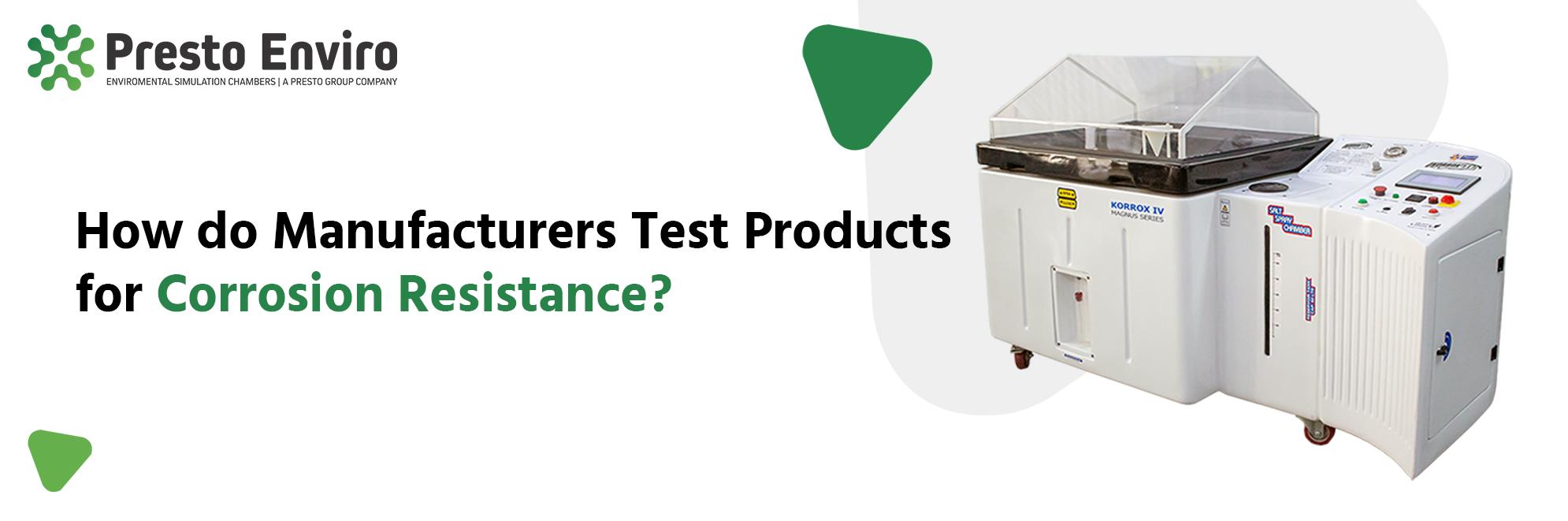
Corrosion is one of those problems that may appear mild at first and later turn costly. A metal part may leave the manufacturing facility appearing undamaged, yet suffer corrosion, stain formation or coating failure as a result of its contact with moisture, salts and changing weather conditions.

11-Sep-2026
Presto Enviro
Metal parts exposed to environmental elements like rain, high humidity and saline air are subjected to quick degradation. Manufacturers don’t have years to wait to see long-term real-world durability with immediate shipping deadlines.