© Copyright 2025. All Rights Reserved by Presto Stantest Pvt. Ltd.
21-Jan-2026
Presto Enviro
Do you wonder why the products can endure extreme weather, temperatures, and cold, excessive moisture variations until they reach the actual world?
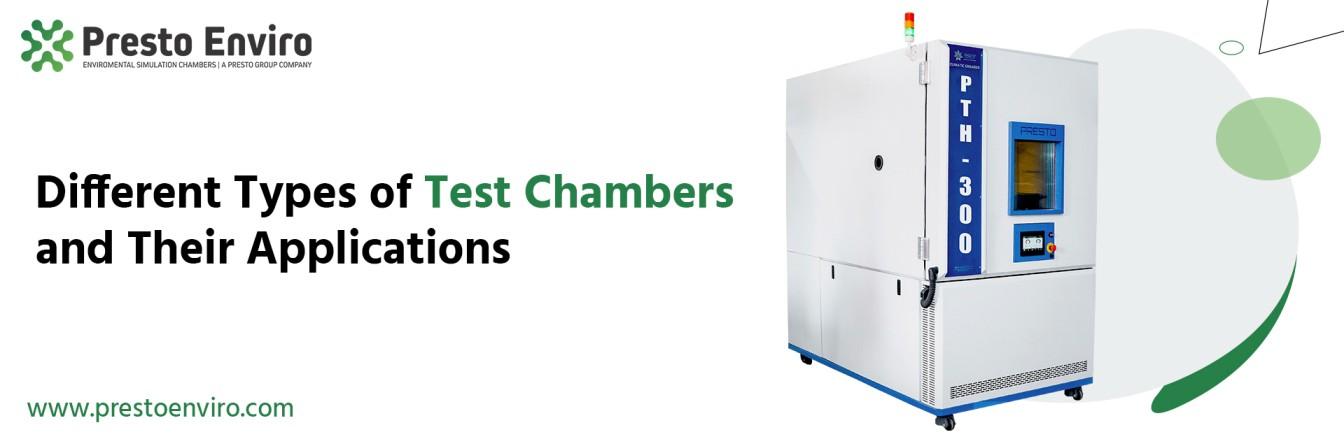
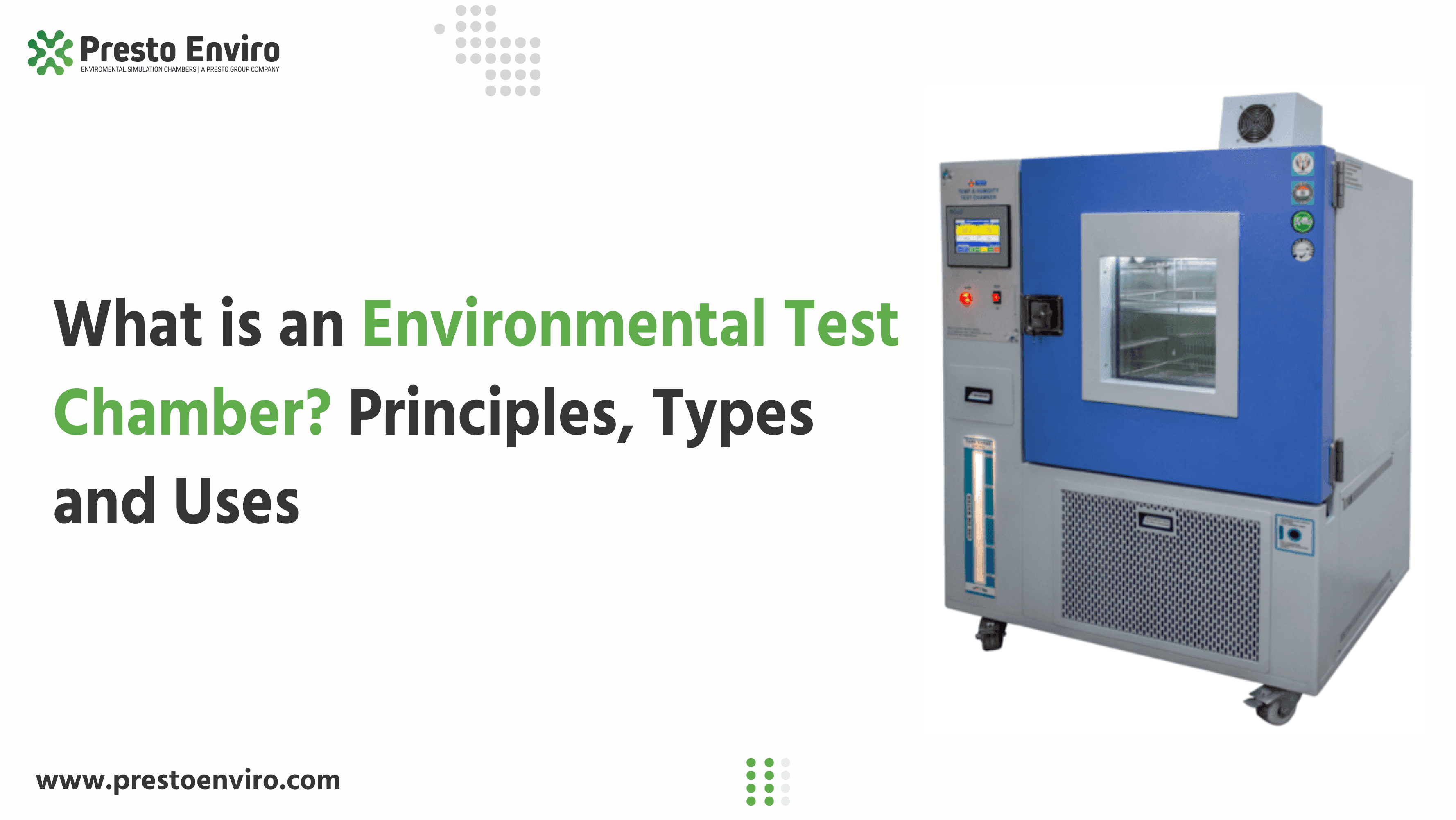
A controlled testing chamber is an environmental testing chamber that attempts to mimic the natural and extreme environment. It enables products, materials, and components to be subjected to temperature, humidity, pressure, exposure to light, and other factors that occur during actual application. These chambers assist industries in knowing the behaviour of a product before it is offered to the customers.
Instead of waiting for years to see wear and damage, testing teams simulate months or even years of exposure in a short time. This makes the chamber an essential part of product testing, research, and quality tests.
Different products need different testing conditions. That is why environmental chambers come in many forms.
Environmental testing plays a role in many industries:
Chambers assesses the stability of drug packaging, packaging safety, and the performance of the device in controlled storage conditions.
Testing verifies the safety, packaging strength, and quality of the product at the shipping and storage stages.
What is the primary objective of an environmental testing room?
It is primarily used to simulate real and extreme environments in order to test the products in terms of strength, safety, and long-term behaviour before releasing them in the market.
Does the environmental test chamber test multiple conditions simultaneously?
Yes. The chambers have many chambers that include temperature, humidity, light, vibration, or salt exposure in a test cycle.
What industries require environmental tests the most?
Environmental testing is very important to the sectors of electronics, automotive, aerospace, pharmaceuticals, and food industries as a way of ensuring safety and quality inspection.
What is the average time of environmental testing?
The time spent on the test is dependent on the type of test. A few of them take hours, and aging studies can take days or weeks.
Where will I find the price of environmental test chambers?
Contact us through email to respond@prestpenviro.com or call at +91 977366011 to get details and instructions on product information.
Elevate your quality assurance process to new heights
Related Blogs
21-Oct-2026
Presto Enviro
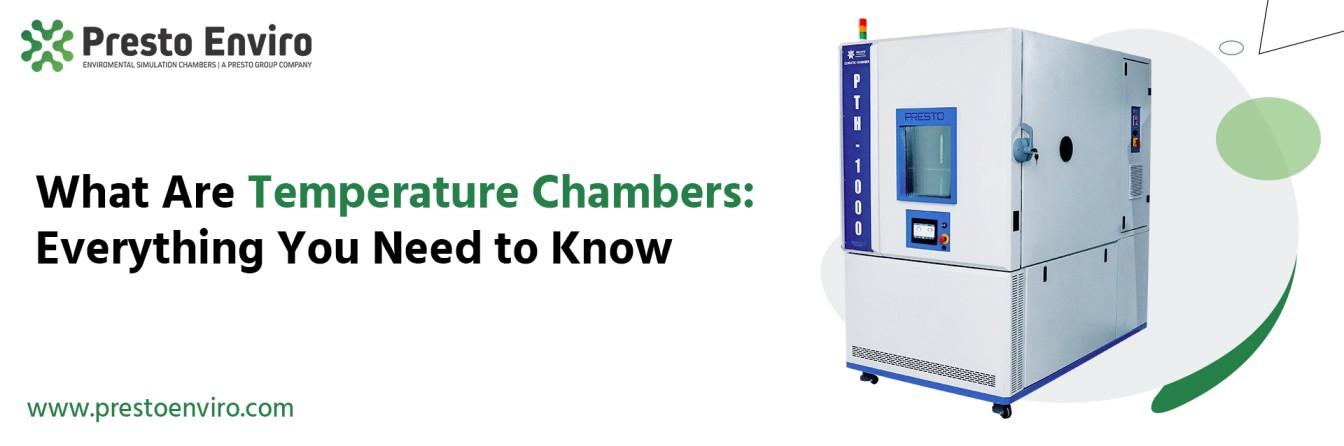
Temperature chambers are insulated boxes. They keep a product at a specific temperature. They can move it through different temperature levels in a set pattern. This lets people test how the product behaves when it's hot or cold.
15-Oct-2026
Presto Enviro
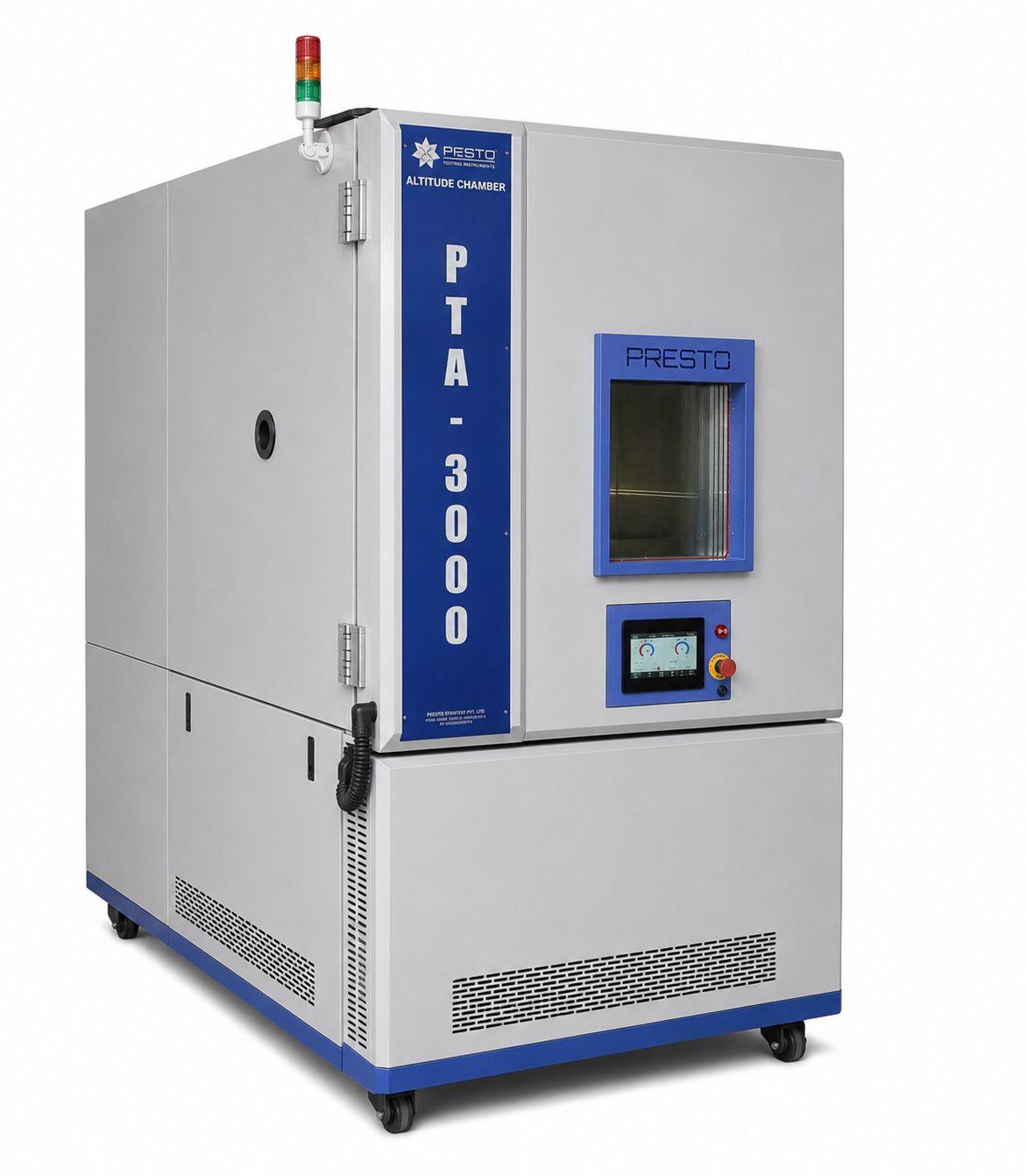
In environmental testing, vacuum chambers are also called altitude test chambers or low-pressure chambers. They lower air pressure inside a sealed chamber to simulate high altitude while controlling temperature and, in some configurations, humidity.
13-Oct-2026
Presto Enviro
An in-house lab can deliver results, give better control over product testing, and reduce testing costs in the long run. To make it work well, the lab space, equipment, utilities, and testing methods must be planned according to your needs.