© Copyright 2025. All Rights Reserved by Presto Stantest Pvt. Ltd.
20-Jan-2026
Presto Enviro
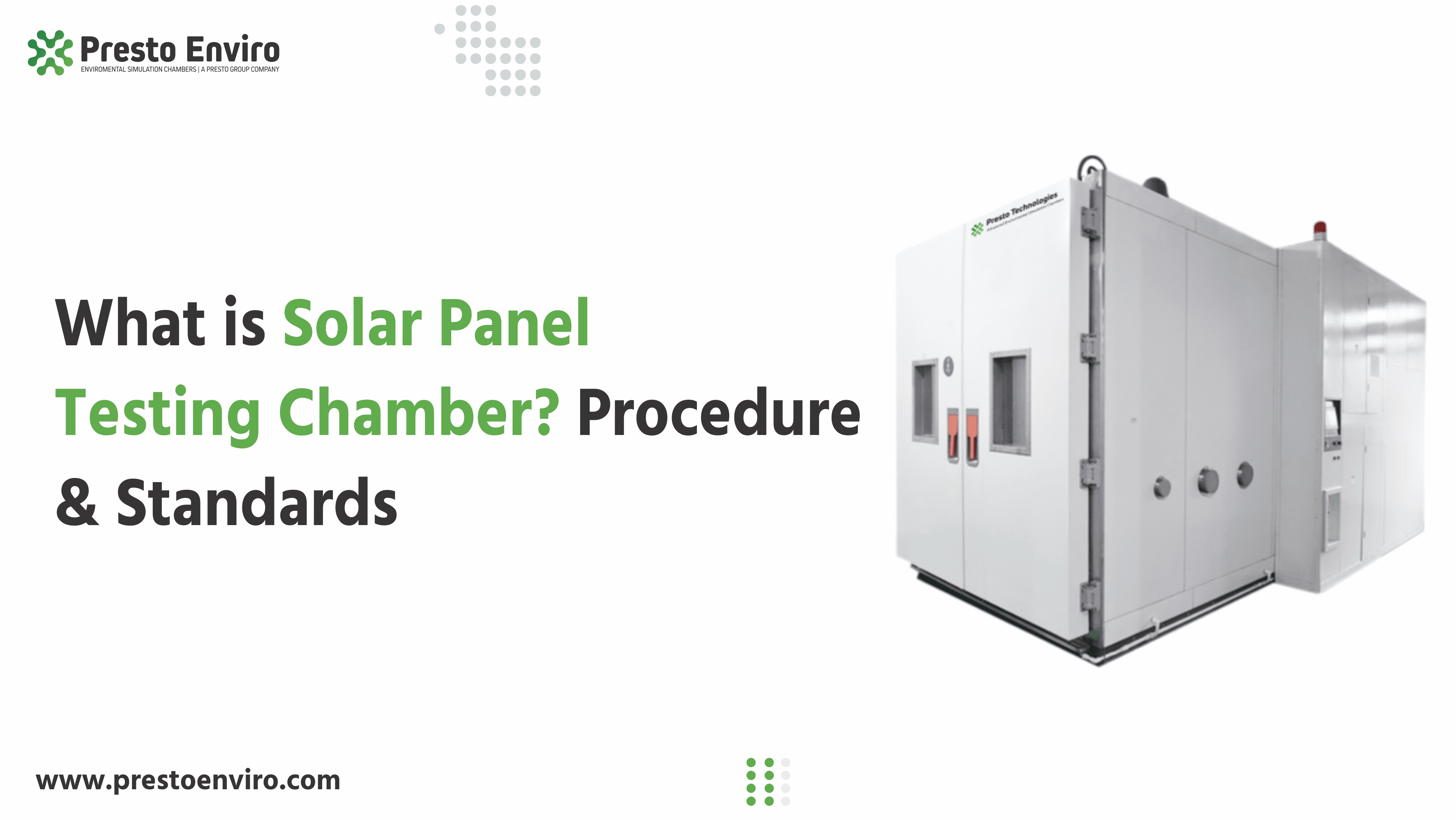
Solar panels stay outside every single day. Peak summer heat pushes materials to their limit. Cold nights cause contraction, humidity creeps inside seals, dust settles on surfaces, and sunlight keeps working on the outer layers. Once panels are fixed on rooftops or open fields, fixing defects is not simple. Quality teams know this risk well. Waiting for failures in real locations often leads to customer complaints and delayed projects.
A solar panel testing chamber brings years of outdoor stress into a short testing window. Instead of waiting through seasons, teams watch how panels react within days or weeks. This shift saves time during development and reduces surprises after installation.
A solar panel testing chamber is a space designed to apply stress in a controlled way. The humidity, temperature, and light are turned on in accordance with a test requirement. Panels are kept inside the chamber and are attached to sensors that monitor the changes during testing. Due to the constant conditions under which the chamber operates, there are no changes in results. This makes it easier to compare different panel types, coatings, or production batches. Outdoor testing cannot offer the same level of control.
Testing follows global standards, so results are accepted worldwide. These solar panel testing standards define test conditions and duration.
It emphasizes the performance and durability of crystalline silicon solar panels. It consists of thermal cycling, damp heat, humidity freeze, and UV exposure tests.
This standard highlights safety aspects of solar panels. It checks insulation, mechanical strength, and protection against electrical hazards after environmental testing.
This criterion is applicable to thin-film solar panels. It has environmental stress tests that are appropriate for thin-film materials.
UL standards are often required for panels used in certain regions. These standards focus on safety, fire resistance, and stability in the long term.
Solar panels are considered assets for a long-term duration. Most buyers expect stable output for decades. Even a minor defect can slowly cut energy generation. Over months, that loss adds up. Missed power targets lead to disputes. Service calls increase. Rework drains budgets.
Solar PV Module Test Chamber exposes weak points early. Heat and moisture show where seals fail. Repeated temperature changes reveal solder cracks. Intense light highlights surface aging. All of this happens under controlled observation. As a result, design teams gain clarity before panels reach the field.
Solar panels go through different kinds of stress during their lifetime. A testing chamber can perform multiple tests, each of which highlights a specific risk.
This test checks how solar panels react to repeated temperature changes. Panels move between high heat and low cold over many cycles. Expansion and contraction can weaken joints and solder points. Thermal cycling helps reveal cracks and electrical faults caused by temperature swings.
A Combination of humidity and heat may spoil the insulation and minimize the electrical safety. In this test, panels are kept for a long time in a hot and humid environment. It has a stable temperature and moisture level in the chamber to examine the penetration of moisture and breakdown of materials.
This test combines moisture exposure with freezing temperatures. Panels absorb moisture and then face freezing conditions. The cycle repeats several times. This helps identify damage caused by trapped moisture expanding inside the panel structure.
Ultraviolet radiation present in sunlight gradually wears out surface materials. In UV testing, the panels are placed in excessive light in the chamber. This test turns yellow, cracks, or loses protective layers after some time.
Although mechanical load testing is usually performed independently, panels are ready in environmental chambers before load testing by exposing them to heat and moisture. This is an indication of the stress response of panels following environmental aging.
Panels to be tested are put under inspection and cleaned. All damage present is noted, and then testing is started. Measures of electrical quantities like voltage and current are used to establish a baseline.
The chamber is programmed, based on the requirements of the test. The set points are temperature, humidity, cycle time, and exposure time, depending on the standard that is chosen. The accuracy of the sensors is verified.
Panels are placed inside the chamber on proper supports. The test runs automatically. During the cycle, conditions are held constant, and the information is continuously documented in order to monitor change.
During testing, teams observe surface changes, electrical shifts, and physical defects. Any abnormal behavior is noted without disturbing the test cycle.
Once testing ends, panels are removed and allowed to return to room conditions. Electrical performance is measured again. Visual inspection checks for cracks, delamination, corrosion, or discoloration.
Pre-test and post-test data are compared. This reveals performance loss, safety risks, or design weaknesses. Panels that meet limits move forward. Others return for redesign or improvement.
Solar panel testing chambers support better product development. They help manufacturers understand how materials behave under stress before large scale production begins.
Testing reduces the risk of early field failures. It also improves customer confidence and supports certification requirements.
For research teams, testing chambers allow controlled experiments. Small changes in design can be tested without waiting for outdoor exposure.
A solar panel testing chamber plays a vital role in modern solar development. It helps panels to prove their strength before facing real weather conditions. Through established standards and procedures, manufacturers are able to have an idea of the performance, safety, and durability.
These chambers turn unpredictable outdoor stress into controlled testing cycles that support better design choices. In a growing solar market where trust and longevity matter, testing chambers remain a quiet but essential part of delivering panels that perform well year after year.
What is a Solar panel testing chamber used for?
It is used to expose solar panels to heat, moisture, light, and temperature changes under controlled conditions so that durability and safety issues appear earlier.
Can solar panel testing testing chambers support research work?
Yes. Research teams use them to study material behavior, compare designs, and evaluate new coatings under fixed conditions.
What is the solar panel testing chamber price?
For pricing details, please email response@prestoenviro.com or call 9773666011.
Elevate your quality assurance process to new heights
Related Blogs
21-Oct-2026
Presto Enviro
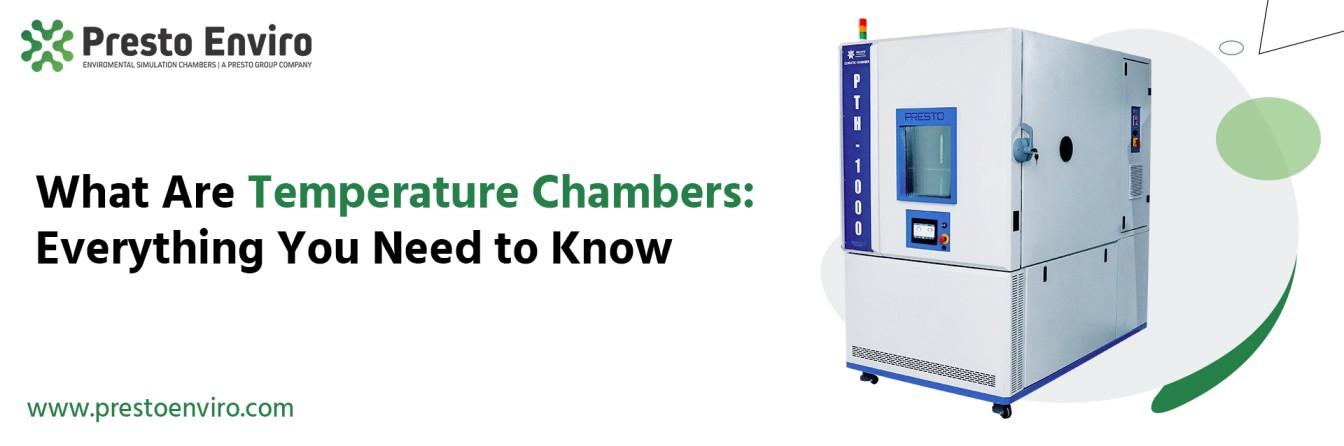
Temperature chambers are insulated boxes. They keep a product at a specific temperature. They can move it through different temperature levels in a set pattern. This lets people test how the product behaves when it's hot or cold.
15-Oct-2026
Presto Enviro
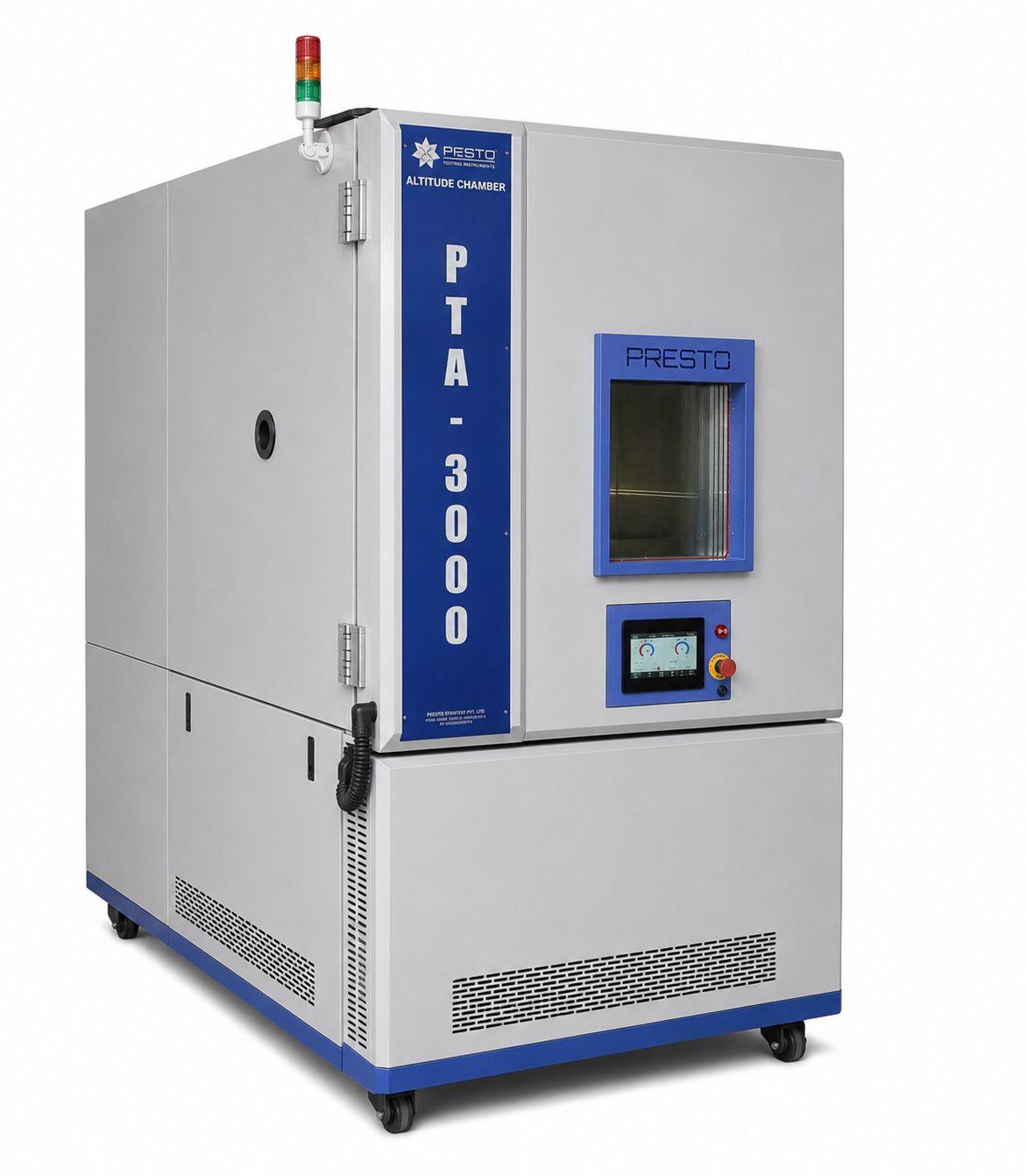
In environmental testing, vacuum chambers are also called altitude test chambers or low-pressure chambers. They lower air pressure inside a sealed chamber to simulate high altitude while controlling temperature and, in some configurations, humidity.
13-Oct-2026
Presto Enviro
An in-house lab can deliver results, give better control over product testing, and reduce testing costs in the long run. To make it work well, the lab space, equipment, utilities, and testing methods must be planned according to your needs.