© Copyright 2025. All Rights Reserved by Presto Stantest Pvt. Ltd.

22-Jan-2026
Presto Enviro
Have you ever tested a product that passed every check at first, yet failed after a few weeks in storage? This happens more often than people expect. Moisture does not create sudden damage. It works slowly. It seeps in, settles, and changes how materials behave over time. Because of this, humidity testing has become a regular part of laboratory and industrial testing work.
A Humidity Test Chamber allows products to face controlled moisture conditions before they reach real use. It helps teams understand how materials react when exposed to damp air, changing humidity, or long periods of moisture stress. Selecting the right chamber matters. A poor match can lead to confusing data and repeated testing.
Moisture affects more products than most people realize. Electronics may corrode, packaging may lose strength, coatings may peel, and plastics may soften. These changes do not always appear immediately. Often, the damage becomes visible only after days or weeks.
Humidity testing recreates these conditions in a controlled environment. Instead of waiting for problems to show up in the field, laboratories expose products to moisture inside a chamber. Observations from these tests help predict product behavior during storage, transport, or regular use. This makes humidity testing a practical step rather than a precaution.
A Humidity Test Chamber is a testing enclosure designed to control moisture and temperature at specific levels. Products or material samples are placed inside the chamber. The system then holds the humidity selected at a particular time.
The principle of a humidity chamber is a very straightforward but accurate one. Water is also heated or atomized to increase humidity, and constant sensors test the level of moisture. A control system is used to adjust heating, cooling, and moisture added to maintain constant conditions. It is a balance that enables the chamber to have a uniform humidity during the test session.
The humidity chamber in the laboratory setting is meant to imitate the conditions of storing and using a product in the real world. It favors long-hour tests and short exposure research. The outcome of these tests is useful in forecasting the life of the product and performance in the presence of moisture stress.
There are various types of humidity test chambers depending on the range of testing and usage.
Choosing the right Humidity Test Chamber requires attention to several practical factors.
A humidity test chamber laboratory setup supports quality checks, research studies, and product validation. In labs, chambers are used for coating tests, packaging studies, electronic component checks, and material stability tests.
Controlled humidity allows labs to isolate moisture effects from other variables. This clarity helps teams identify root causes of product issues. Recorded data supports reports, certifications, and development decisions.
A humidity test chamber supplier does more than deliver equipment. Experienced suppliers understand common testing challenges such as condensation control, airflow balance, and sensor drift.
Good suppliers guide users during selection, installation, and routine use. They help match the chamber to real testing conditions rather than offering standard models without assessment.
Reliable supplier support reduces downtime and helps keep test data consistent over prolonged periods.
Humidity testing by Presto Enviro helps to reveal how products react to moisture long before problems appear in real use. A Humidity Test Chamber creates conditions that support careful observation and reliable data. Choosing the right chamber requires attention to testing range, chamber size, control stability, and supplier support. When the chamber suits the application, testing becomes smoother, and results become easier to interpret.
What is the primary purpose of the Humidity Test Chamber?
It is applied in order to investigate the reactions of products and materials to the conditions of humidity and temperature.
What is the principle on which the humidity chamber works?
Sensors also monitor the levels of moisture and automatically adjust the systems to ensure there is no change in conditions.
Where is the humidity chamber used in laboratory settings?
It is applied to packaging, electronics, coating, material, and product stability testing.
What is the significance of the choice of suppliers of the humidity test chambers?
An excellent supplier provides counsel, service assistance, and calibration assistance that ensure testing remains the same.
What is the most popular method of humidity chamber test?
The use of constant humidity exposure and temperature humidity cycling is common, depending on product requirements.
Elevate your quality assurance process to new heights
Related Blogs
23-Oct-2026
Presto Enviro
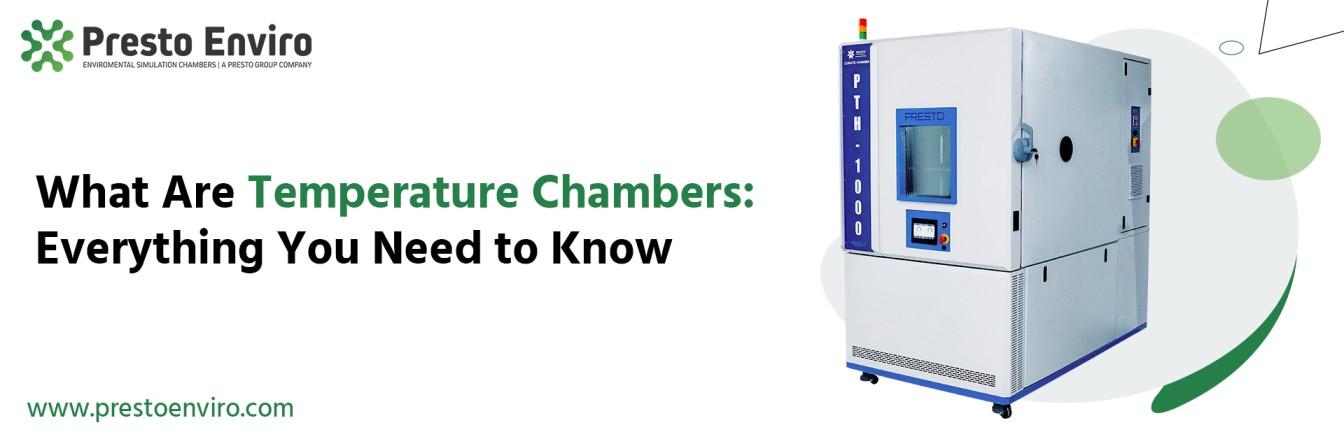
A walk-in climatic test chamber is a room-sized chamber that an operator can enter to load, position, and instrument large products or many samples. A drive-in chamber is a type of chamber. It has a reinforced floor and wide doors. This design lets a vehicle be driven or rolled inside.
21-Oct-2026
Presto Enviro
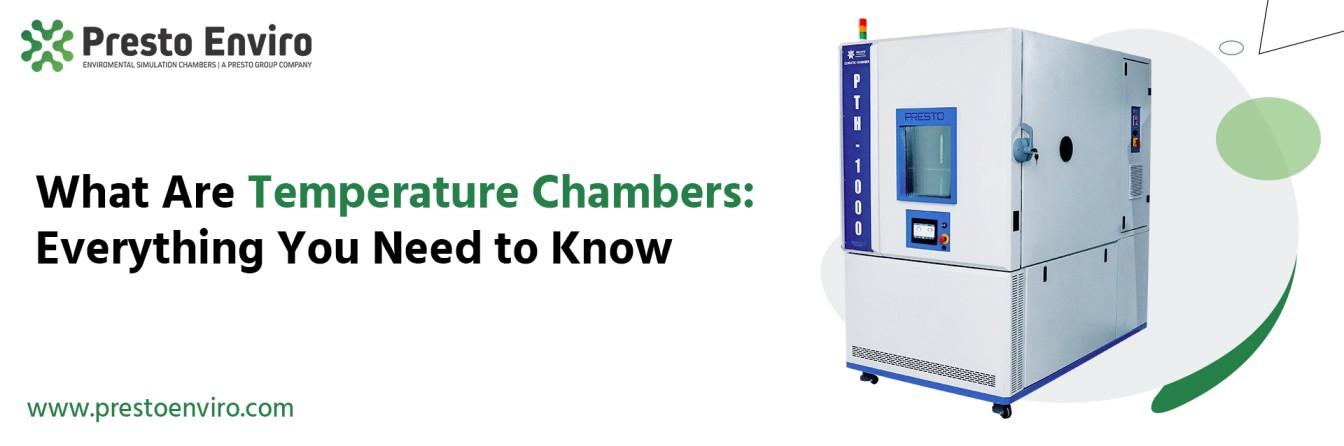
Temperature chambers are insulated boxes. They keep a product at a specific temperature. They can move it through different temperature levels in a set pattern. This lets people test how the product behaves when it's hot or cold.
15-Oct-2026
Presto Enviro
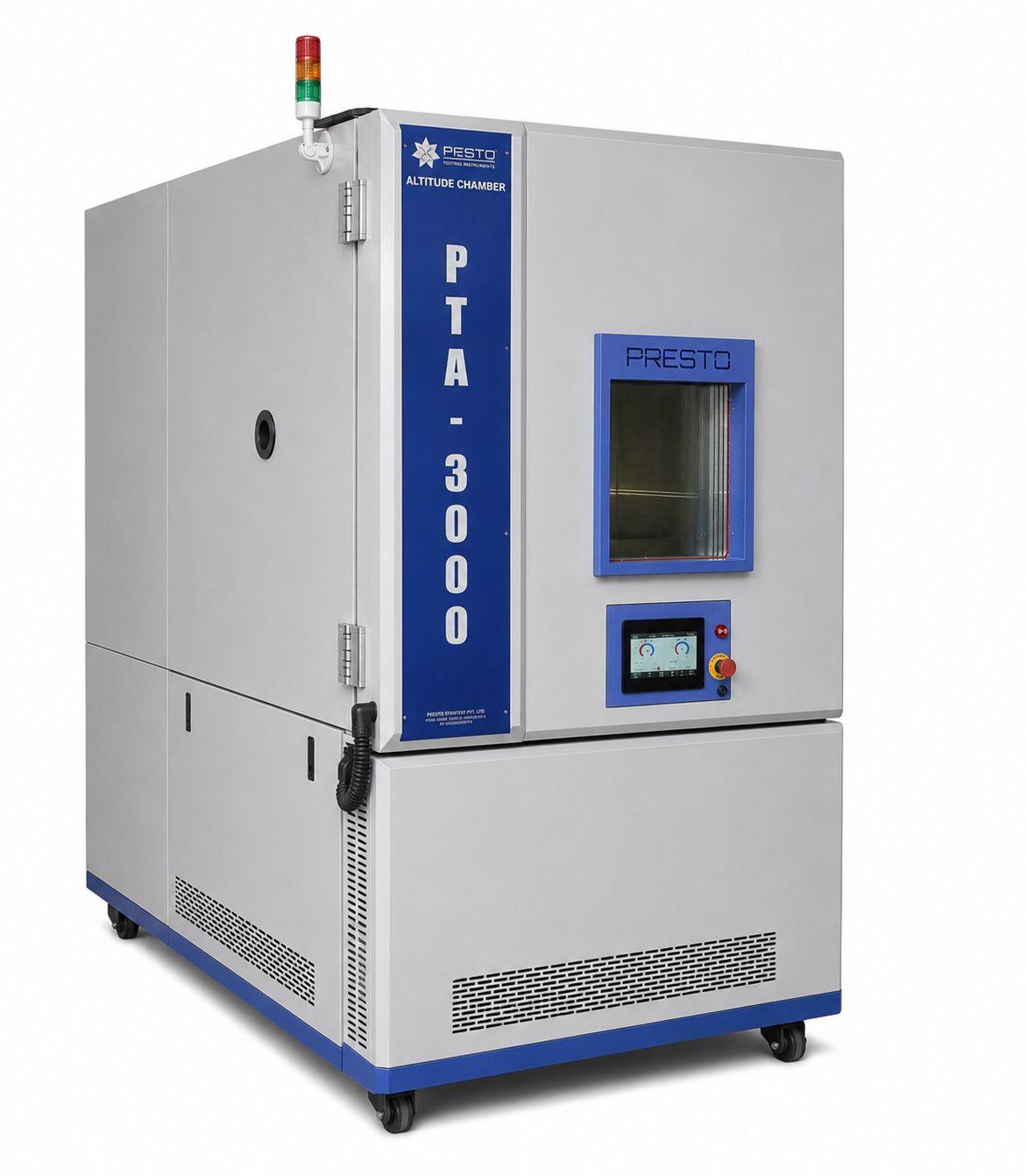
In environmental testing, vacuum chambers are also called altitude test chambers or low-pressure chambers. They lower air pressure inside a sealed chamber to simulate high altitude while controlling temperature and, in some configurations, humidity.