© Copyright 2025. All Rights Reserved by Presto Stantest Pvt. Ltd.
25-Nov-2025
Presto Enviro
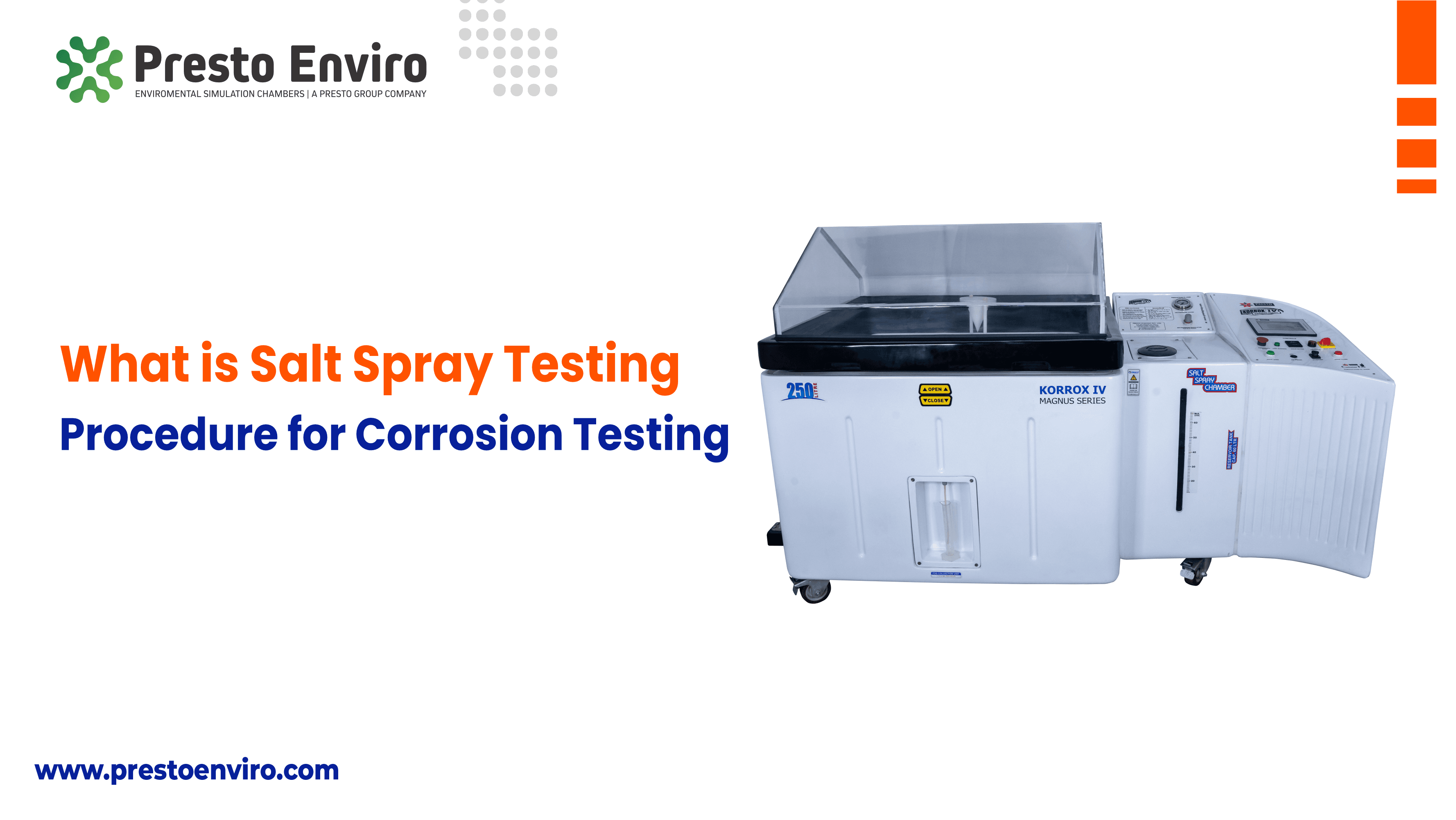
The Salt Spray test which is also known as the Salt Fog test, evaluates how well a material or coating resists rust. To conduct this test, an enclosure in which the sample is placed and regularly sprayed with 5 percent saline solution (as mist or fog) will provide a simulated accelerated corrosive environment. Hence, estimate the time required for a product when placed in extreme conditions, including salt, water and chemicals. In the subsequent sections, we will go through how the salt spray testing procedure follows the industrial standards and how salt spray testing is beneficial in corrosion testing.
Salt spray testing involves several procedural steps such as preparation of test specimens, preparation of the salt solution, assembly and calibration of the chamber, conducting and monitoring the test, post-test evaluation, and documentation.
The test specimens are cleaned to eliminate oil, dust, and other contaminants. Their condition is recorded first for comparison purposes. They are then mounted on the holders at an angle and exposed to a continuous salt fog in the corrosion test.
Salt solutions are made by dissolving sodium chloride in purified water and mixing and adjusting their pH to be stable while conducting tests for the mist produced by the salt solution.
This source contains information on salt solutions prepared at a ratio of 5% NaCl to purified water (100% water). Salt solutions made from NaCl are also produced with many different concentrations.
The test chamber is then filled with the prepared salt solution, which is adjusted for temperature, pressure, and fog collection rate. Calibration ensures the uniform distribution of salt mist for the provision of accurate and repeatable corrosion test conditions for the materials or coatings under evaluation.
The chamber provides a continual fog or mist of salt with controlled temperature and humidity. Technicians monitor spray rate, pressure, and environmental stability during the test without disturbing samples for reliable and consistent corrosion exposure throughout the period of the test.
Once testing is concluded, the specimens are washed and dried, then thoroughly vetted visually for any visible signs of rust or blisters, or other failures of the coating itself. The results are reported and tabulated in accordance with established standard specifications; photographic documentation of all tests performed is included. This final evaluation determines corrosion resistance and verifies coating or material performance.
Salt spray testing offers several benefits, such as accelerated corrosion assessment, early failure detection, quality assurance, comparison of coatings and materials, and material validation. Here are the benefits explained in detail:
Under constant exposure to salt fog, the manufactured goods go through an extreme environment in less time. It also assists manufacturers in predicting how their goods will perform in a real-world situation over an extensive period (multiple months/years) by hastening the initial corrosion of the products due to the extreme environment.
By using the salt spray test during product development, manufacturers can quickly find corrosion problems and their causes such as issues with coatings, not cleaning surfaces well enough, and material weaknesses in harsh environments. Such early detection avoids expensive product failures and allows for timely improvement before large-scale production begins.
The purpose of this test is to confirm that the coatings and treatments applied to surfaces function properly in adverse conditions. Through corrosion resistance testing, a manufacturer will be able to verify conformity with generic standards, meet customer expectations and satisfy certification requirements. This process also establishes a baseline of stability and uniformity for long-term service as an essential step in the production of industrial products.
Salt spray test data can be used to compare the types of coating, materials, or finishes that are exposed to a similar corrosion environment to find out which coating, material, or finish provides the most corrosion protection to the manufacturer, and hence, serves as a valuable tool to come up with a good selection choice of materials in the automotive, marine, construction, and industrial product markets.
The test verifies that the materials, paints, or coatings are actually able to withstand long-term protection. It will measure how well they can resist continuous salt exposure and allow manufacturers to confirm durability claims, ensure compliance with standards, and choose materials fit for higher demands in order to ensure high performance throughout the life cycle of a product.
The salt spray test is an easy, efficient way for manufacturers to assess product resistance to corrosion. The test involves exposing products to a controlled salt mist created from a 5% solution of salt. Salt spray testing is widely used in the automotive industry, metal finishing, hardware products and industrial applications to ensure that products are able to remain rust-free and dependable when exposed to harsh environments. For accurate salt spray testing, purchase a high-quality salt spray tester from Presto Enviro that truly aligns with international standards and meets your budget as well.
Elevate your quality assurance process to new heights
Related Blogs
15-Sep-2026
Presto Enviro
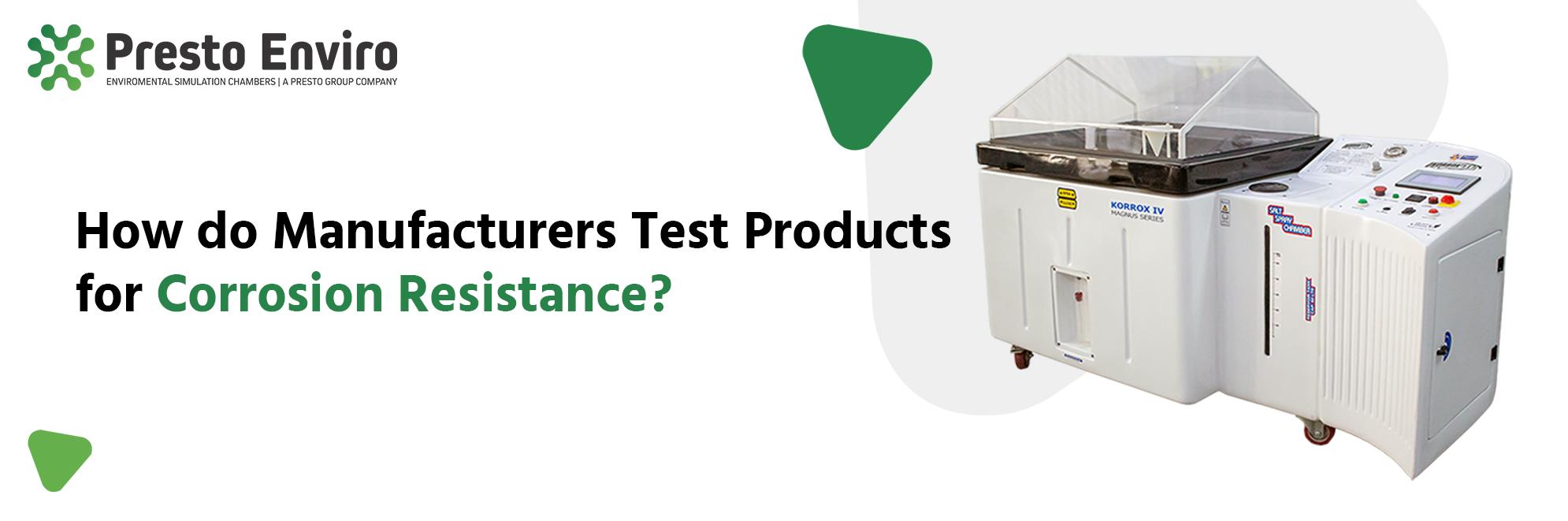
Corrosion is one of those problems that may appear mild at first and later turn costly. A metal part may leave the manufacturing facility appearing undamaged, yet suffer corrosion, stain formation or coating failure as a result of its contact with moisture, salts and changing weather conditions.
11-Sep-2026
Presto Enviro
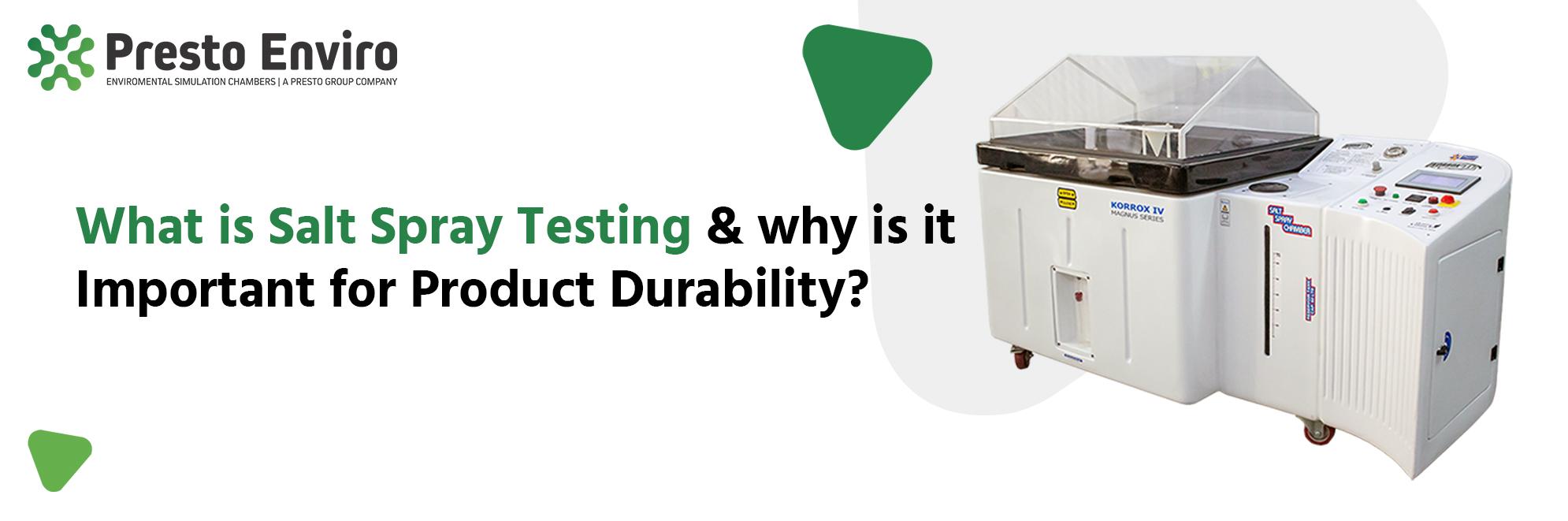
Metal parts exposed to environmental elements like rain, high humidity and saline air are subjected to quick degradation. Manufacturers don’t have years to wait to see long-term real-world durability with immediate shipping deadlines.