© Copyright 2025. All Rights Reserved by Presto Stantest Pvt. Ltd.
07-Jan-2026
Presto Enviro
Have you ever wondered how cars are tested before they reach the road? What makes auto pieces work when conditions are hard, not easy? The answer lies in a field called environmental testing. This type of testing checks how parts and complete cars behave when they face nature at its extremes.
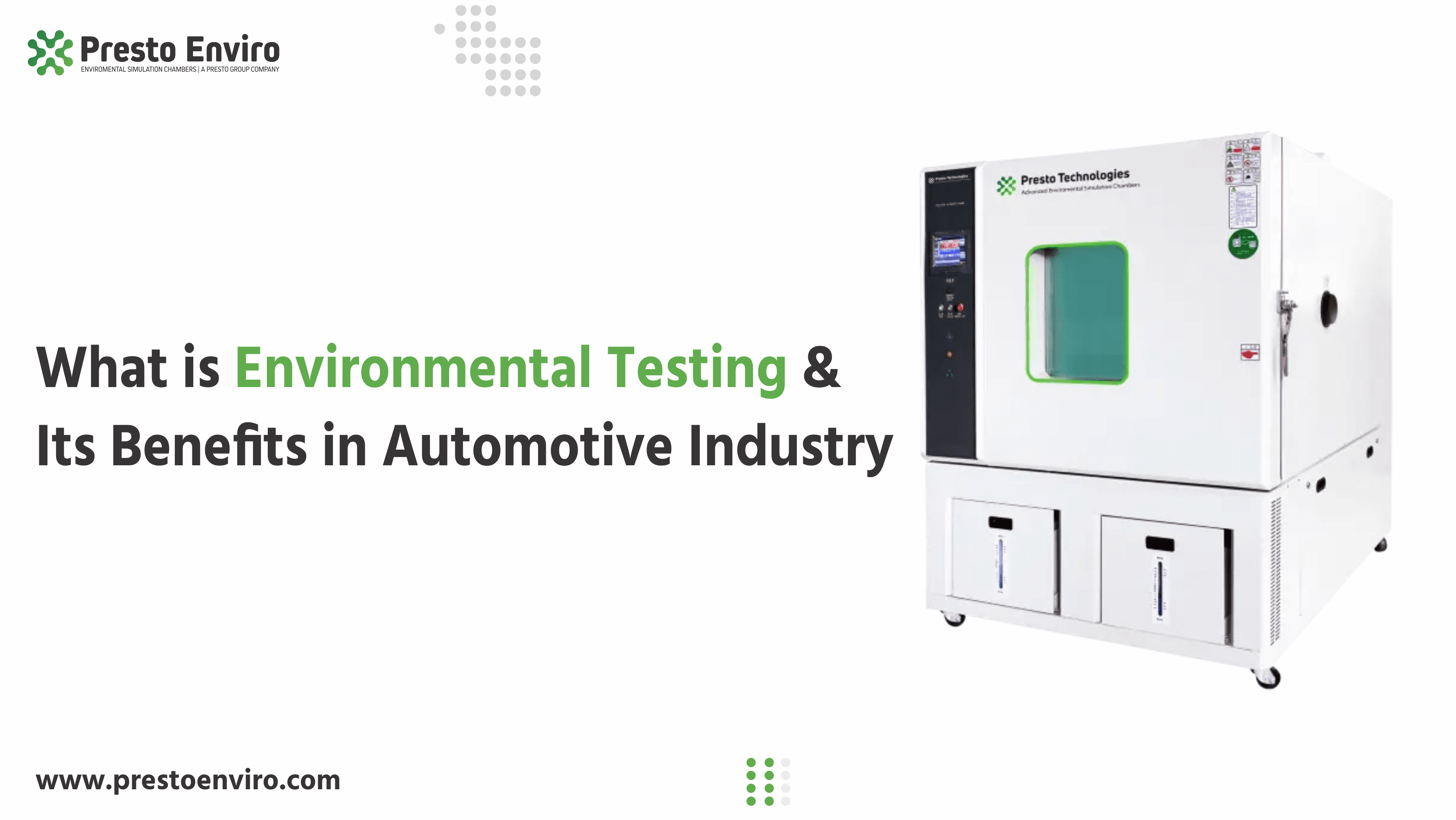
Environmental testing is a group of checks that see how a part or a vehicle reacts to physical factors like heat, cold, vibration, moisture, pressure, and more. This testing places samples inside controlled chambers. Inside the chamber, different conditions take place, like shifts in temperature, changes in humidity level. Dust, water, salt mist, and vibration are the critical variables. Each condition copies what a product may face during daily use. This testing displays the weak spots and design gaps early. Teams get a clear picture of how long a product can last.
Environmental testing is an extremely important step before launching the vehicle in the market. The vehicle stays in direct contact with the environment in all seasons. Vehicles move through heat, rain, cold nights, rough roads, and polluted air. These factors can affect the functioning of the car internally as well as externally. One failure can affect safety and comfort.
With the help of environmental testing, industries can examine the reaction of their vehicle in various environmental conditions. This will help them to know the breaking points and innovate the vehicle accordingly.
Every vehicle part must follow strict rules before it reaches the road. Environmental testing helps the automotive industry check if parts stay stable under extreme use. Brakes, lighting systems, batteries, and electronic controls must perform the same in heat, cold, or moisture. These tests help teams to confirm parts to fulfill the standards of the industry. When parts pass these checks, safety risks drop. It also helps automotive industries avoid legal trouble, product recalls, and damage to brand trust. Environmental testing becomes a silent guard that supports safer driving experiences.
Problems appear when it is expensive to fix them. Early environmental testing helps automotive industries find weak points during design stages. Small changes made early save time, material, and money later. Testing during development reduces repeated redesign work. It shortens launch timelines and avoids last-minute delays. Automotive industries also reduce warranty claims and service issues after launch. Early testing keeps projects moving smoothly and supports better planning across teams.
Presto supports many environmental testing tests for the automotive industry. Have a look at the following tests performed by Presto:
Corrosion tests analyze: rust formation on metals and fasteners. Dust ingress tests study the sealing strength of enclosures and connectors.
Water spray tests check: leakage resistance in lamps, doors, and wiring zones.
Vibration tests: study fatigue and loosening caused by road movement.
Thermal shock tests: expose parts to sudden climate changes. These tests help the automotive industry study failure patterns early and make safer design choices.
Presto knows the pressure that the automotive industries have on the quality and strict requirements. The machines have a design to achieve stable performance and repeatability of results. The controls are in simple form and consequently assist teams in carrying out tests without lengthy training. Chambers are designed in such a way that they are capable of undergoing continuous testing cycles without a common shutdown.
The custom test size can be used to accommodate small parts and also large automotive assemblies. Assistance teams provide guidance, establish support, and provide technical enlightenment. This assists the automotive industry testing at a better speed, minimizes delays, as well as maintains development schedules. Presto Enviro helps the automotive industry study durability, safety, and consistent performance with the help of its focused testing solutions.
Environmental testing works as a gate before parts leave the lab for assembly lines. If a part fails a test, it goes back to design. Engineers change the material, or shape or how it is made until it passes a test. These checks help car teams make choices that keep cars safe and strong in daily use.
Testing also helps with legal rules. Many nations need manufacturers to fulfill required standards. These tests are a way to show parts that meet these rules. Sending a vehicle to market without these checks is often not allowed.
Environmental testing is a heart part of modern auto work. It checks parts and the complete vehicle under tough conditions. This helps makers pick parts that last and work where people live. It cuts waste, cuts breakages, and brings trust to drivers. For firms that want cars that last under heat, cold, rain, shake, and dust, this testing is a step they take every day. For more insight on tests that help auto makers make vehicles consistent and reliable, learn how Presto Enviro helps teams fulfill these checks and more.
What does environmental testing check in a car part?
Environmental testing looks at how a part deals with heat, cold, water, dust, shock, and pressure. It shows if the part fails or stays strong.
Why do auto teams use environmental testing?
Car makers use these checks to find weak spots before parts reach the road. This means fewer breaks and happier drivers.
When should a party face environmental testing?
A part faces these checks during design and before it goes to the line. Some tests run many times to copy long years of use.
Does environmental testing affect the safety of cars?
Yes. Parts that fail on the road can hurt drivers. These tests help find weak parts and fix them first.
Can small suppliers do these tests too?
Yes. Even small part makers run tests to match car maker rules and win buyer trust.
Elevate your quality assurance process to new heights
Related Blogs
23-Sep-2026
Presto Enviro
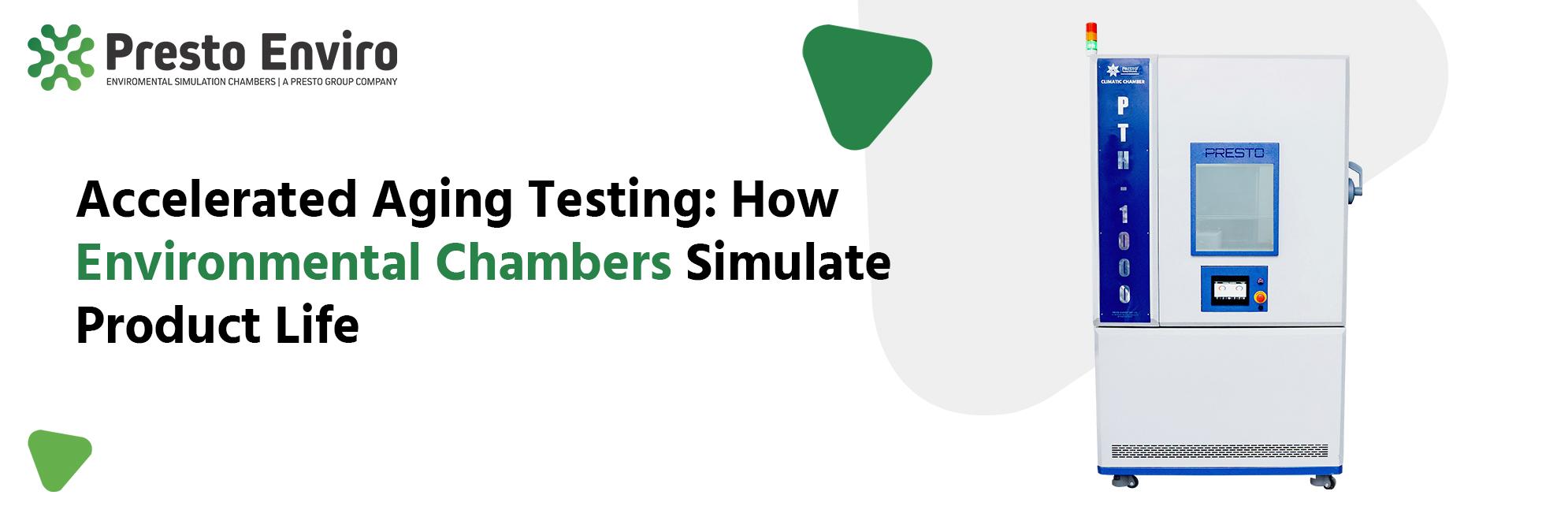
Products are expected to work reliably for months or years, but manufacturers cannot always wait that long to find out how they will perform. Accelerated aging testing solves this problem by exposing products to controlled environmental conditions that speed up certain aging effects.
20-Sep-2026
Presto Enviro
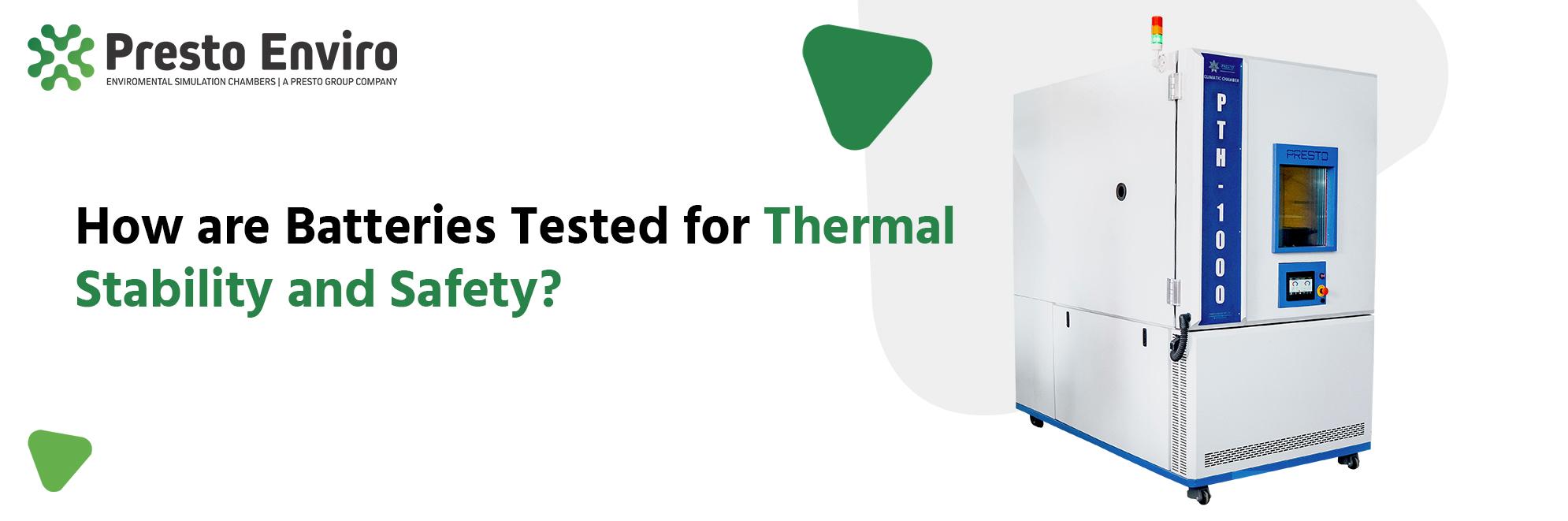
Battery safety is not something manufacturers can check only after a battery is ready for use. Temperature, charging conditions and repeated use can change the way a battery behaves. In some cases, excessive heat can cause permanent damage or create serious safety risks.