© Copyright 2025. All Rights Reserved by Presto Stantest Pvt. Ltd.
18-Feb-2026
Presto Enviro
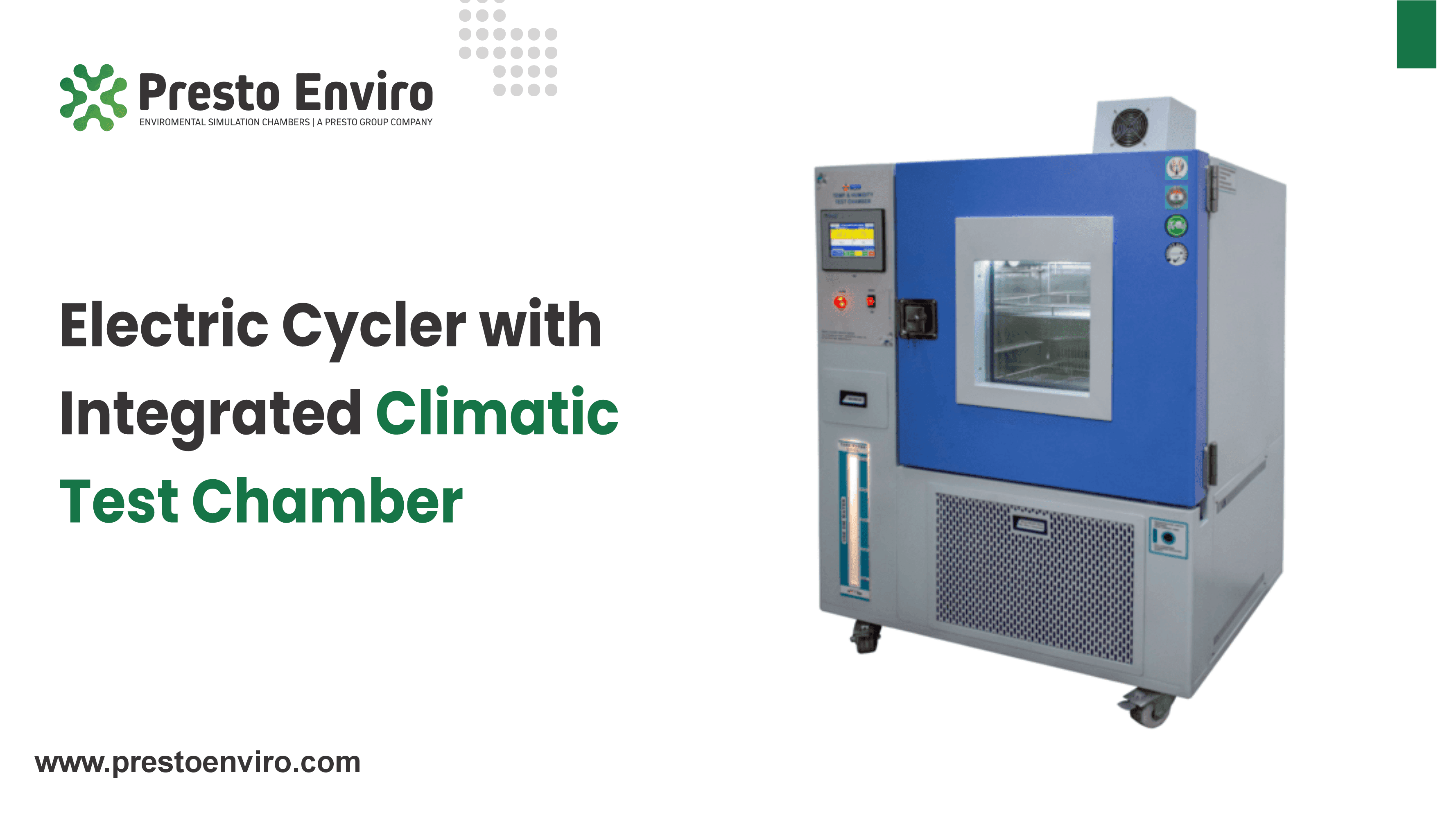
Products rarely fail under one condition alone. In actual use, electrical load, heat, cold, and moisture often act together. A component may perform well during electrical cycling, but once temperature or humidity enters the picture, problems begin to surface. Many failures only appear after weeks or months in service, when repairs are costly, and trust is already affected. This is why combined testing has become so important. An electric cycler with an integrated climatic test chamber brings multiple stresses together in one place. It allows teams to observe how products behave when electrical operation and environmental conditions overlap, not separately, but at the same time.
A testing system that involves electric cycling and controlled exposure to the environment is an electric cycler with an in-built climatic test chamber. Electrical cycling is a process of repeatedly switching a product on and off, loading it, or changing the current to recreate the actual operating conditions. Its climatic chamber regulates the temperature, the humidity, and, in some cases, condensation.
This system is used concurrently with the testing of electrical performance and environmental resistance, as opposed to testing electrical performance first and environmental resistance later. Components are used when they are either exposed to heat or cold, or moisture. Such a mixture exposes vulnerabilities that are usually not detected by single tests. The response of wiring insulation, connectors, solder joints, and electronic assemblies to the simultaneous occurrence of electrical stress and climate stress varies.
In real environments, electrical products do not rest inside air-conditioned rooms. They operate outdoors, inside machinery, near heat sources, or in humid surroundings. Electrical load generates heat. The surrounding environment adds more stress. Over time, this combination causes gradual degradation.
Testing these factors separately may give a false sense of security. A product might pass electrical cycling in room conditions and pass climatic exposure without load, yet fail once both occur together. Integrated testing shortens this learning curve. It exposes hidden failure points early, when design changes are still manageable.
For manufacturers, this means fewer surprises after installation. For quality teams, it provides clearer insight into long-term behavior under realistic use conditions.
The cycler has an electric controller that regulates the electricity flow. It uses repeated cycles of power, load variation, or switching patterns according to the test requirement. These cycles may take hours or days. Meanwhile, temperature and humidity are regulated in the climatic chamber. Conditions can either increase or decrease gradually or be stepwise.
Sensors are used to monitor the electrical parameters, temperature response, and the stability of the environment. Since it is in a single enclosure, all of it is exposed equally and repeatable. The system is not based on a manual interchange between different test configurations, which minimizes errors in handling.
One of the most valuable features is synchronized control. Electrical cycling and environmental conditions follow the same test profile. This coordination reflects real use patterns more closely than separate testing stages.
Wide temperature and humidity ranges allow simulation of varied climates. The products can be tested in dry heat, cold, or high humidity conditions when in operation.
The construction of Stable chambers facilitates testing in the long-term without drift. Such stability enables the teams to compare the results between various test runs or product versions.
The safety systems safeguard equipment as well as the operators themselves. Extended operational risks are minimized in terms of over-temperature protection, electrical protection, and emergency shutoffs.
The data kept is in favor of good analysis. Electrical behavior may be tracked with conditions of the environment, and this assists the engineers in locating failures at certain points in the test cycle.
This combined testing approach supports many sectors where electrical reliability matters.
In automotive development, electronic control units, sensors, and wiring assemblies face electrical load while exposed to temperature changes. Combination testing is used to identify problems in connections and breakages in insulation.
In renewable energy systems, inverters, controllers, and power modules are used outdoors for a duration of a few years. Combined electrical and climatic stress testing is closer to the real service conditions.
Manufacturers of industrial equipment use them to test control panels, drives, and automation components, which operate round-the-clock in severe industrial settings.
It is also beneficial for consumer electronics testing. The devices that are likely to be able to work in the regions that have a different climate are tested in the conditions of active use, and not under idle exposure.
Combined testing is frequently employed by the Aerospace and defense suppliers in order to confirm the performance in the high-demand conditions when failure is not an option.
The electrical and climatic tests are run independently and require more time. In most cases, they lack interaction. Integrated systems reduce total test duration while increasing realism.
They also reduce sample handling. Products remain installed in one setup throughout the test, minimizing damage or variation caused by movement.
Because failures appear sooner under combined stress, development cycles shorten. Design improvements can be validated quickly before scaling production.
This approach also improves confidence in field performance. When products survive combined testing, they are more likely to handle real environments without unexpected breakdowns.
Without combined testing, some failures remain hidden until deployment. Electrical connections may loosen only under heat. Moisture may affect insulation only when voltage is present.
When such issues appear in the field, repairs are expensive and disruptive. Customer confidence suffers. Investigations take time and often require product recalls or redesigns.
Integrated testing reduces these risks by exposing interaction effects early, when fixes are still practical.
Test requirements should guide system selection. Electrical load range, cycling patterns, temperature limits, and humidity control all matter.
Chamber size must match product dimensions and future testing needs. Choosing a system with limited capacity may restrict later development work.
Ease of operation matters during long tests. Clear controls, reliable monitoring, and straightforward maintenance support smoother testing schedules.
Service support and system reliability also influence long term value. A well supported system stays productive over years of use.
A climatic test chamber is built into an electric cycler. This setup allows the laboratory to stimulate real-world stress. It combines electrical operation with controlled exposure. As a result, failure modes not visible in isolated tests are revealed. This strategy facilitates robust designs, quick development, and more confidence in the performance of the product. In the case of industries where both electrical reliability and environmental resistance are crucial, the integrated testing systems offer transparency even before the products are put in the actual service environment.
How can I know the price of this product?
Customers can reach out to us at +91 9773666011. You can also connect with us at response@prestoenviro.com.
Can temperature and humidity change while the product is operating?
Yes. The system allows environmental conditions to shift while electrical cycling continues, closely matching real operating scenarios.
Is this system suitable for long-duration testing?
It is designed for extended operation. Stable controls and safety features support continuous testing over days or weeks.
Does combined testing reduce development time?
Often yes. Failures appear earlier under combined stress, allowing faster design improvements and validation.
Is operator safety considered during testing?
Safety systems are built in to manage temperature, electrical load, and emergency conditions during long test cycles.
Elevate your quality assurance process to new heights
Related Blogs
23-Sep-2026
Presto Enviro
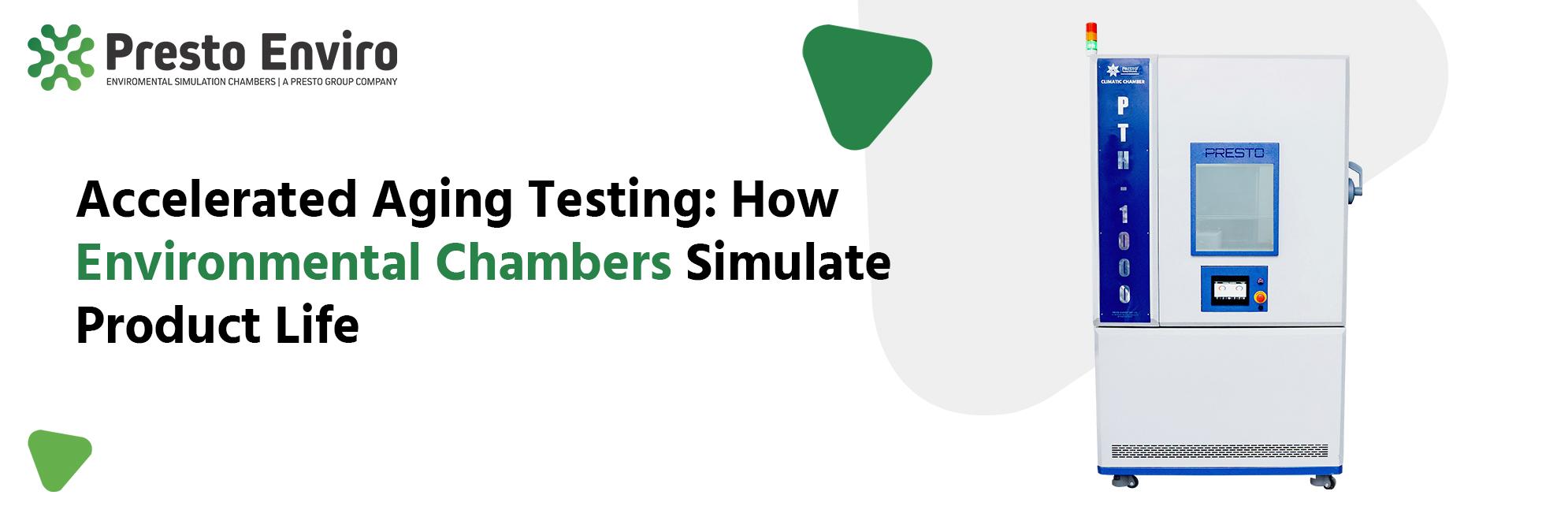
Products are expected to work reliably for months or years, but manufacturers cannot always wait that long to find out how they will perform. Accelerated aging testing solves this problem by exposing products to controlled environmental conditions that speed up certain aging effects.
20-Sep-2026
Presto Enviro
Battery safety is not something manufacturers can check only after a battery is ready for use. Temperature, charging conditions and repeated use can change the way a battery behaves. In some cases, excessive heat can cause permanent damage or create serious safety risks.