© Copyright 2025. All Rights Reserved by Presto Stantest Pvt. Ltd.
21-Feb-2026
Presto Enviro
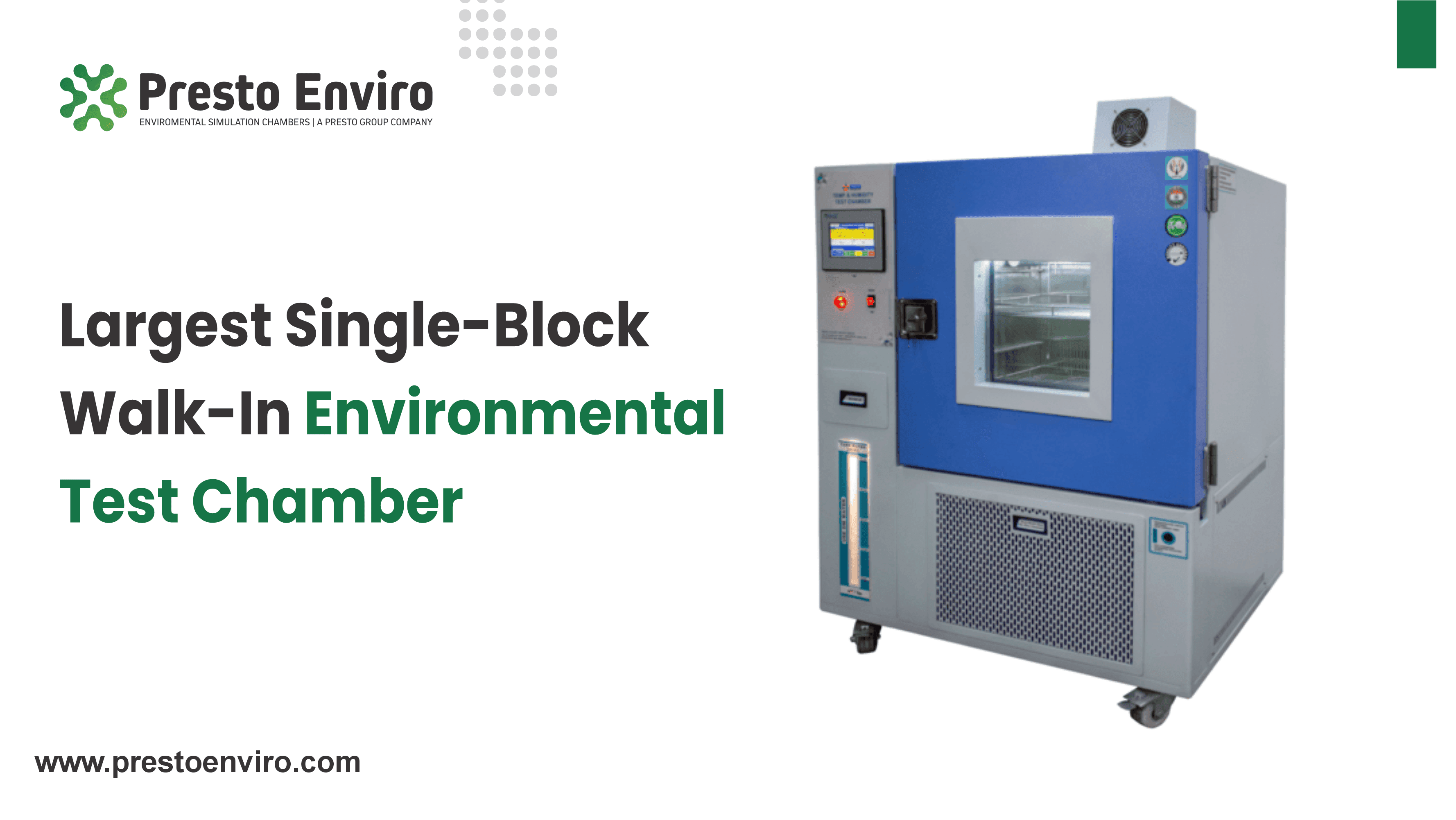
Have you ever tried testing something that simply refuses to fit into a small chamber?
Big products change the rules, heat moves differently, and air settles in odd pockets. Moisture behaves in ways no small sample can predict. When testing ignores scale, surprises wait outside the lab. That is where the largest single block walk-in environmental test chamber earns its place.
Some equipment is too large to be sliced into parts. Some systems only make sense when tested as a whole. Think of full assemblies, large enclosures, or equipment that works only when everything is connected. Testing pieces in isolation may look fine on paper, yet real problems appear later in the field. A large walk-in environmental chamber solves this gap. It allows manufacturers to test products exactly as they exist during actual use. No shortcuts. No assumptions. Just controlled exposure inside a space built for serious evaluation.
This type of chamber is built as one solid structure. It is not assembled from panels joined together on site. The entire enclosure forms a single continuous body. This design matters more than it sounds. Fewer joints mean fewer weak points. Temperature and humidity stay steady from wall to wall.
The chamber creates controlled conditions such as heat, cold, moisture, and gradual temperature cycling across a large internal area. People can walk inside comfortably during setup. Large products can be placed in working positions. Cabling, fixtures, and supports fit naturally without forced adjustments.
These chambers are often chosen when products cannot be divided or when testing must show how different parts behave together over time.
In large spaces, even small inconsistencies add up. Panel based chambers may introduce slight variations at joints or corners. Over long test cycles, those variations can influence airflow, condensation patterns, or heat zones.
A single block structure removes most of these risks. With fewer seams, internal conditions stay steady. This stability matters during long tests that run for weeks or months. Results reflect the environment inside the chamber, not limits caused by construction style.
For industries that depend on repeat data, this consistency brings confidence. What fails or survives inside the chamber tells a clear story.
Conditioned air moves evenly through the chamber. Heating and cooling systems follow the programmed test profile. Sensors placed at various locations track temperature and humidity continuously.
The control system reacts in real time. If one area shifts, adjustments follow quickly to restore balance. Because the internal volume is large, changes happen gradually. This slow transition mirrors outdoor exposure more closely than sharp swings in small units.
During setup, operators can enter the chamber to check placement, connections, and clearances. Once testing begins, the chamber runs independently for long periods with minimal intervention.
Testing the whole assembly reveals interactions that isolated parts never show:
Walk-in chambers capture these details naturally. There is no need to dismantle products repeatedly. This saves time and reduces handling damage. Test setups remain closer to real installation conditions. Single block construction improves uniformity. Results from one test cycle align better with the next. Comparing designs becomes easier. For teams running multiple tests, fewer setups mean smoother schedules and faster progress.
Without access to large chambers, teams often rely on partial testing. Individual parts may pass. The full system may not. Failures then appear after deployment, when fixes cost far more.
Delays follow. Redesigns begin. Approvals may be paused. In regulated sectors, this can stop progress entirely.
Finding issues early inside a controlled chamber saves time, effort, and reputation. Large-scale testing shifts problems from the field back into development, where they belong.
The largest single block walk-in environmental test chamber brings realism back into testing. Full scale products face heat, cold, and moisture together, inside one continuous space. Single-block construction supports steady conditions, repeatable data, and long-term confidence. For industries dealing with large, complex equipment, this type of chamber offers clarity before products meet the real world.
What sets a single block walk-in chamber apart from panel-based designs?
It is built as one continuous structure, which reduces joints that may affect temperature or humidity balance.
Can heavy equipment be tested safely inside these chambers?
Yes. Reinforced flooring allows safe testing of heavy industrial systems.
Does temperature stay even throughout such a large space?
Advanced airflow design and control systems help keep conditions steady from corner to corner.
Is special training needed to operate a walk-in chamber?
Basic training helps operators manage controls, safety features, and test setups with confidence.
Can these chambers support future product sizes?
When planned correctly, they allow room for both current and upcoming testing needs.
Are long duration tests practical in these chambers?
Yes. They are designed for extended operation with stable conditions over weeks or months.
Elevate your quality assurance process to new heights
Related Blogs
23-Sep-2026
Presto Enviro
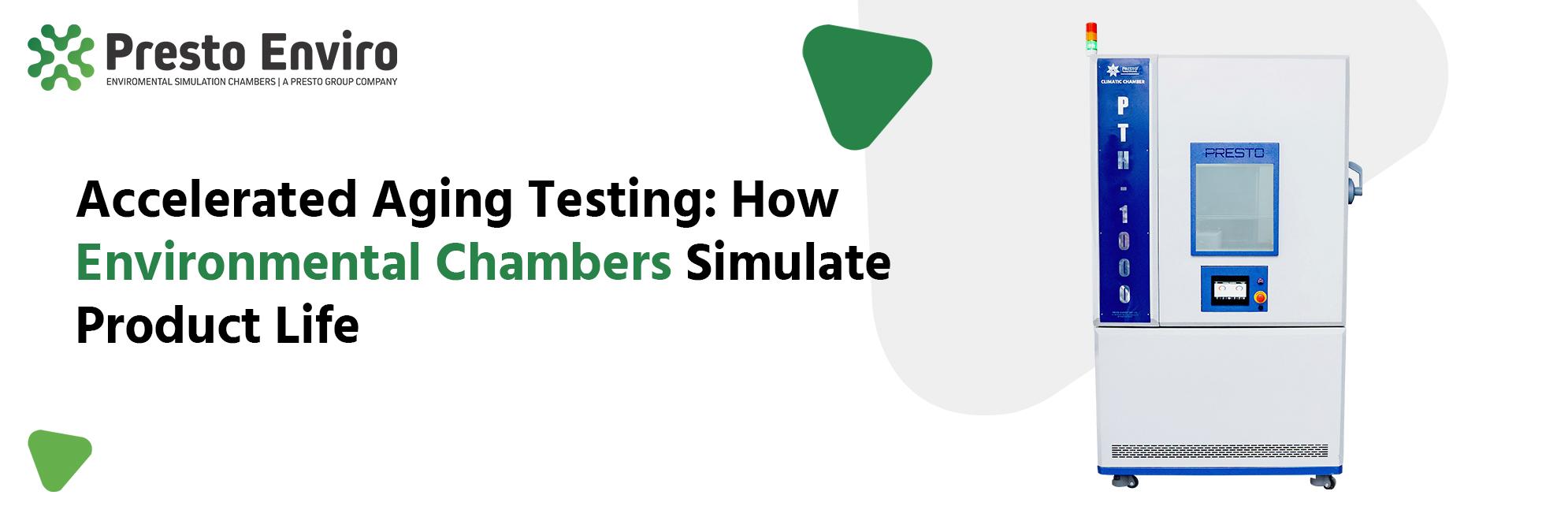
Products are expected to work reliably for months or years, but manufacturers cannot always wait that long to find out how they will perform. Accelerated aging testing solves this problem by exposing products to controlled environmental conditions that speed up certain aging effects.
20-Sep-2026
Presto Enviro
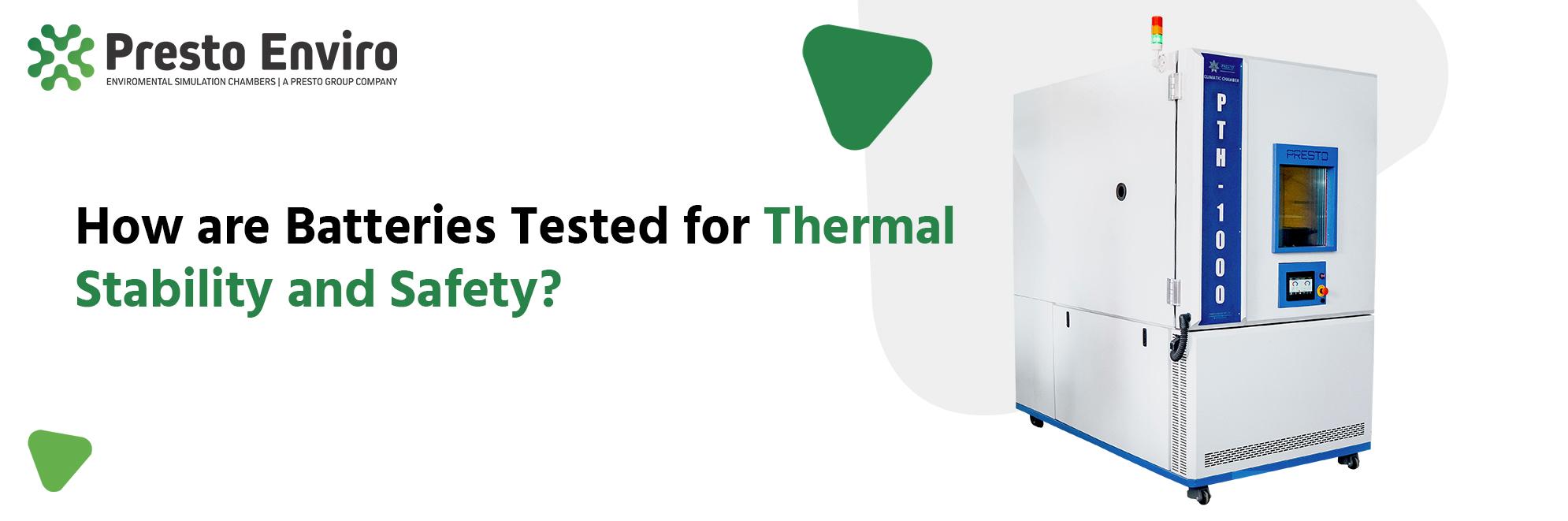
Battery safety is not something manufacturers can check only after a battery is ready for use. Temperature, charging conditions and repeated use can change the way a battery behaves. In some cases, excessive heat can cause permanent damage or create serious safety risks.