© Copyright 2025. All Rights Reserved by Presto Stantest Pvt. Ltd.
23-Feb-2026
Presto Enviro
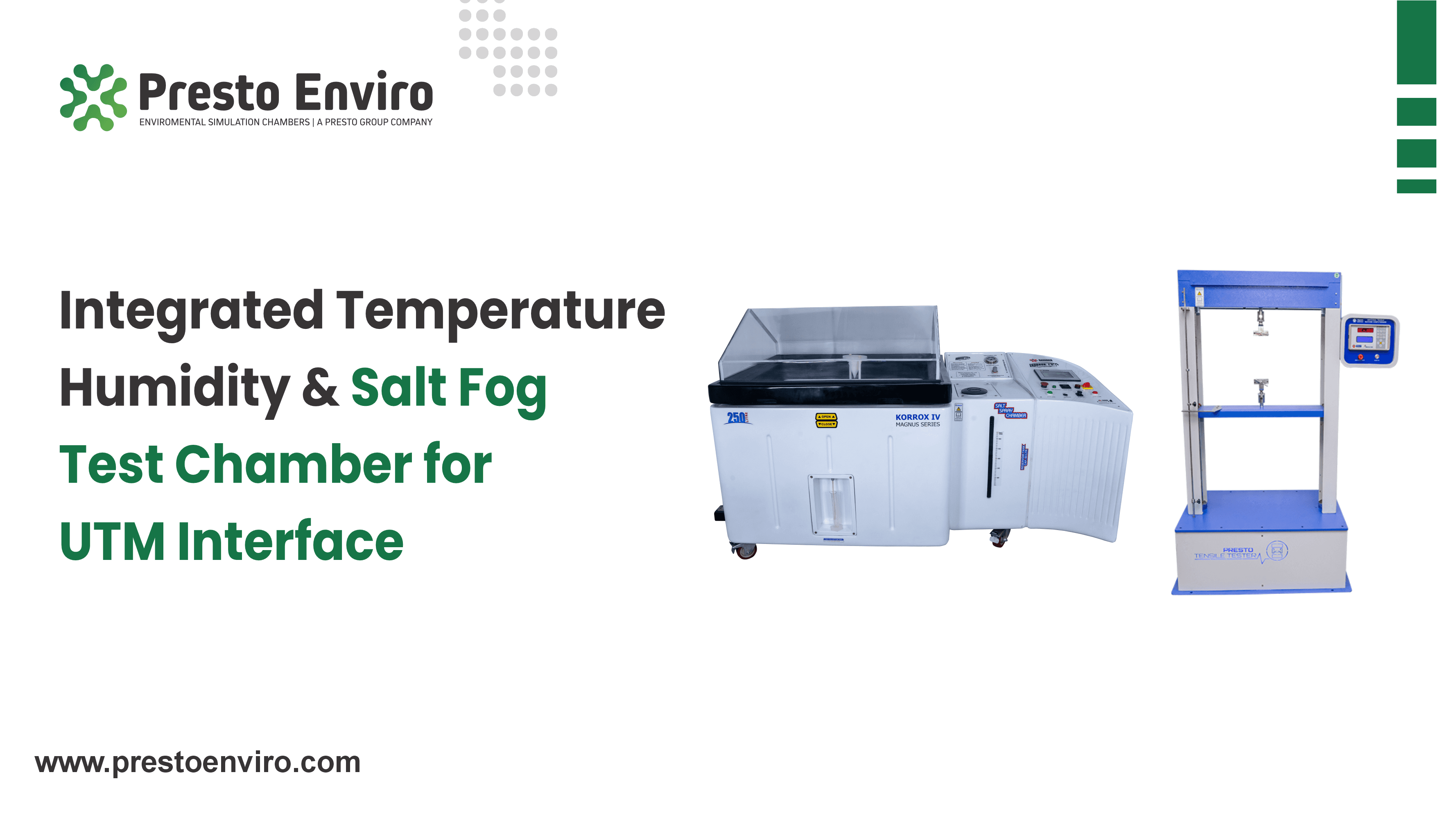
A UTM chamber with an integrated temperature, humidity, and salt fog test is used to simulate a combination of conditions within a controlled chamber. It enables teams to observe the behavior of materials under stress that is similar to that of daily operations. Weak points become visible. Such testing helps to make smarter design decisions and have a reduced number of surprises in the future, particularly with products that are supposed to be used in harsh or coastal conditions.
Outdoor or other products in hard environments are not subjected to temperature, humidity, or salt alone. Coastal facilities are exposed to salty air, which is highly humid. Industrial areas have heat, as well as moisture and corrosive particles. When these factors are separated by tests, not all patterns of failure are observed.
The integrated chamber permits the interaction of stress factors to take place naturally. The cracking of coatings in heat, which is then followed by the absorption of moisture and the subsequent acceleration of corrosion in salt fog. This chain of sight is a time saver and helps avoid expensive surprises in the future.
This chamber is a single enclosure designed to simulate multiple environmental conditions in sequence or combination. It can shift from temperature cycling to humidity exposure and then to salt fog without removing the test sample.
All these stages run under controlled settings, allowing clear observation of material response.
The UTM interface adds another layer of insight. Universal testing machines study mechanical strength such as tensile, compression, or flexural performance. When environmental chambers connect with UTM systems, testing moves beyond surface observation.
Samples exposed to temperature, humidity, and salt fog can be tested mechanically without long delays. This shows how environmental aging affects strength, bonding, and structural integrity. Cracks that seem harmless visually may cause major strength loss under load.
For engineers, this connection helps link environmental exposure directly to mechanical performance.
The chamber operates in controlled phases. Test parameters are set based on product requirements or standards.
First, temperature cycles may cause stress in materials through heating and cooling.
Then the exposure to humidity gives an opportunity for moisture to react with stressed surfaces.
Then, salt fog preconditions corrosive conditions, increasing the speed of metal degradation.
The room has smooth changes between the periods. Sensors are devices that monitor the internal conditions. This consistency ensures that the result of tests is comparable between samples and batches.
Such testing chambers are used in industries where environmental reliability is important.
Components such as fasteners, brackets, and connectors face heat, moisture, and road salt. Combined testing helps detect corrosion-driven failures early.
Electrical and electronic housings rely on coatings and seals. Integrated testing shows how sealing performs after thermal aging and salt exposure.
Aerospace and defense components require strict durability checks. Combined stress testing highlights long-term risks that single condition tests may miss.
Infrastructure hardware used near coastal or industrial zones benefits from corrosion and humidity evaluation under temperature variation.
Using one chamber for multiple conditions reduces handling errors. Samples remain undisturbed, which improves test reliability.
For quality teams, this approach supports better decision-making during product validation.
When temperature, humidity, and salt fog tests are run separately, results often feel incomplete. A coating may pass salt spray alone but fail after heat exposure. A seal may survive humidity, but weaken after corrosion sets in.
Without combined testing, these interactions appear only in real use. At that stage, fixes become expensive, and reputation suffers. Integrated chambers reduce this risk by showing how stresses interact before products leave the lab.
Choosing the right system depends on sample size, test cycles, and control accuracy. Stable temperature range, precise humidity control, uniform salt fog distribution, and smooth transitions matter.
Compatibility with UTM systems should also be considered. When environmental exposure and mechanical testing work together, test data become more meaningful.
A combined temperature, humidity, and salt-mog test chamber provides a more realistic perspective of real stress. It allows failure to be identified where individual tests may fail to notice because of the combination of the various environmental conditions in a single space, and the correlation of results with UTM testing. In industries where reliability is important, this arrangement aids in the discovery of deeper insights, improved design choices, and reduced unexpected developments following implementation.
What sets a single block walk-in chamber apart from panel-based designs?
It is built as one continuous structure, which reduces joints that may affect temperature or humidity balance.
Can heavy equipment be tested safely inside these chambers?
Yes. Reinforced flooring allows safe testing of heavy industrial systems.
Does temperature stay even throughout such a large space?
Advanced airflow design and control systems help keep conditions steady from corner to corner.
Is special training needed to operate a walk-in chamber?
Can these chambers support future product sizes? Basic training helps operators manage controls, safety features, and test setups with confidence.
When planned correctly, they allow room for both current and upcoming testing needs.
Are long duration tests practical in these chambers?
Yes. They are designed for extended operation with stable conditions over weeks or months.
Elevate your quality assurance process to new heights
Related Blogs

23-Sep-2026
Presto Enviro
Products are expected to work reliably for months or years, but manufacturers cannot always wait that long to find out how they will perform. Accelerated aging testing solves this problem by exposing products to controlled environmental conditions that speed up certain aging effects.
20-Sep-2026
Presto Enviro
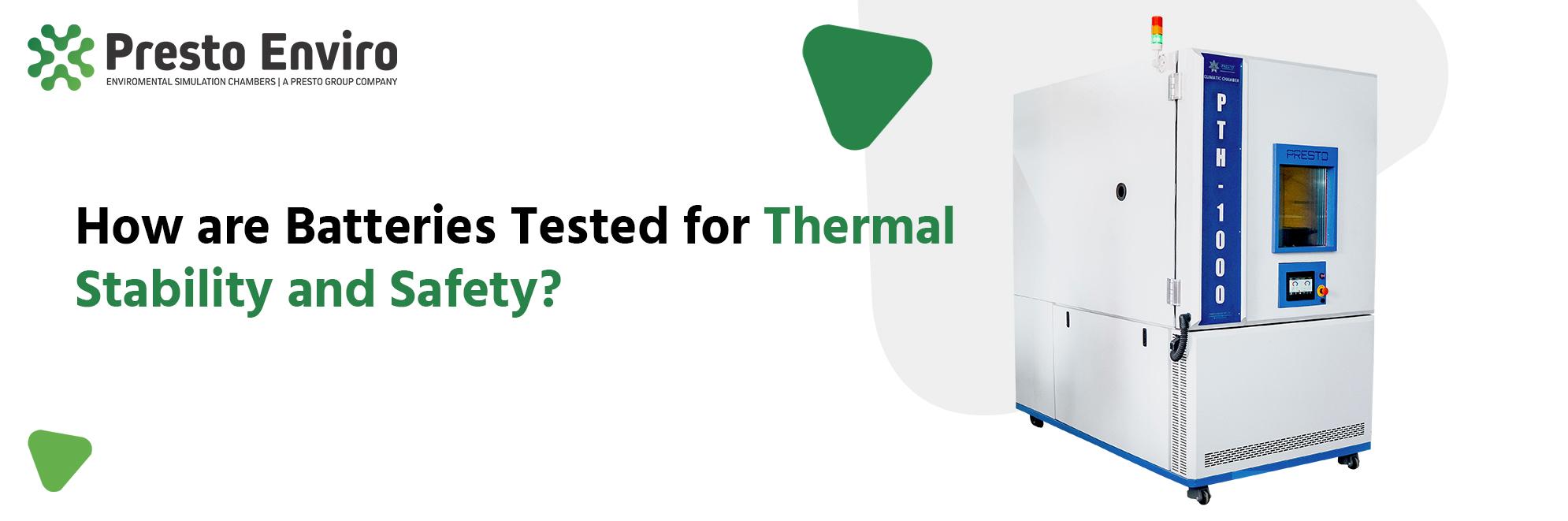
Battery safety is not something manufacturers can check only after a battery is ready for use. Temperature, charging conditions and repeated use can change the way a battery behaves. In some cases, excessive heat can cause permanent damage or create serious safety risks.