© Copyright 2025. All Rights Reserved by Presto Stantest Pvt. Ltd.
16-Feb-2026
Presto Enviro
Corrosion problems rarely appear overnight. In many industries, damage starts quietly. A metal surface looks fine during inspection, but months later, rust spots show up, coatings peel, or joints weaken. When this happens after installation, fixing it becomes expensive and disruptive. For products used in coastal zones, industrial sites, or outdoor environments, salt in the air is often the hidden cause. This is why salt fog test chambers exist. They help manufacturers to see corrosion risks early, before products leave the facility and face real service conditions.
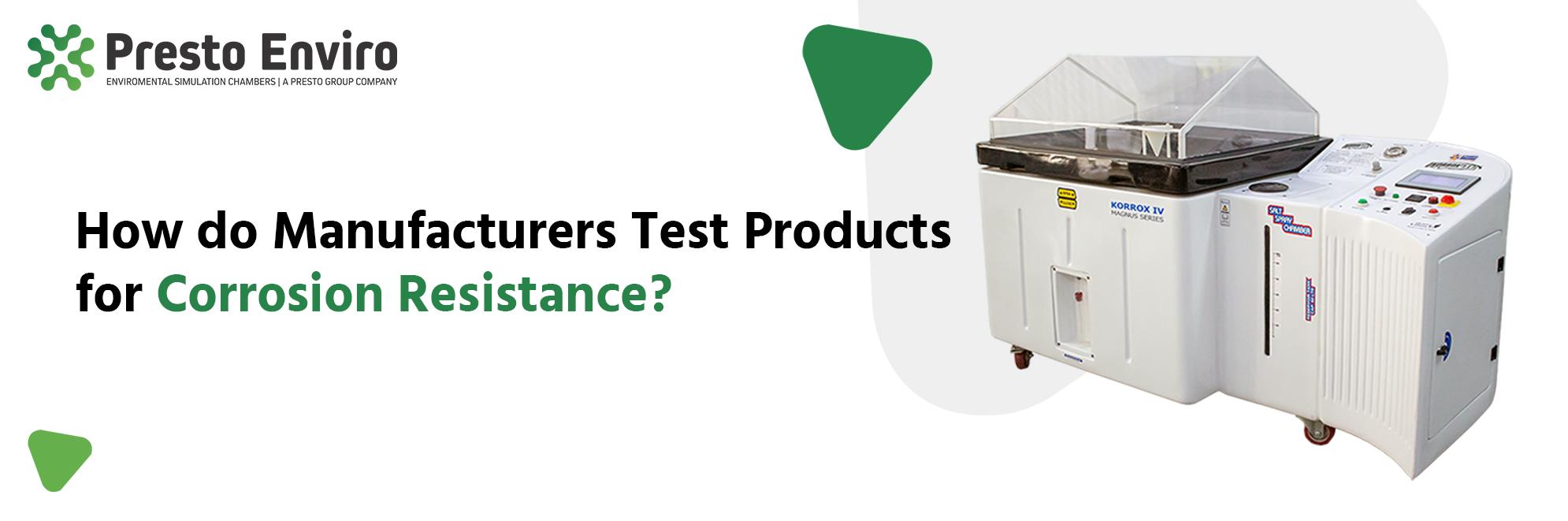
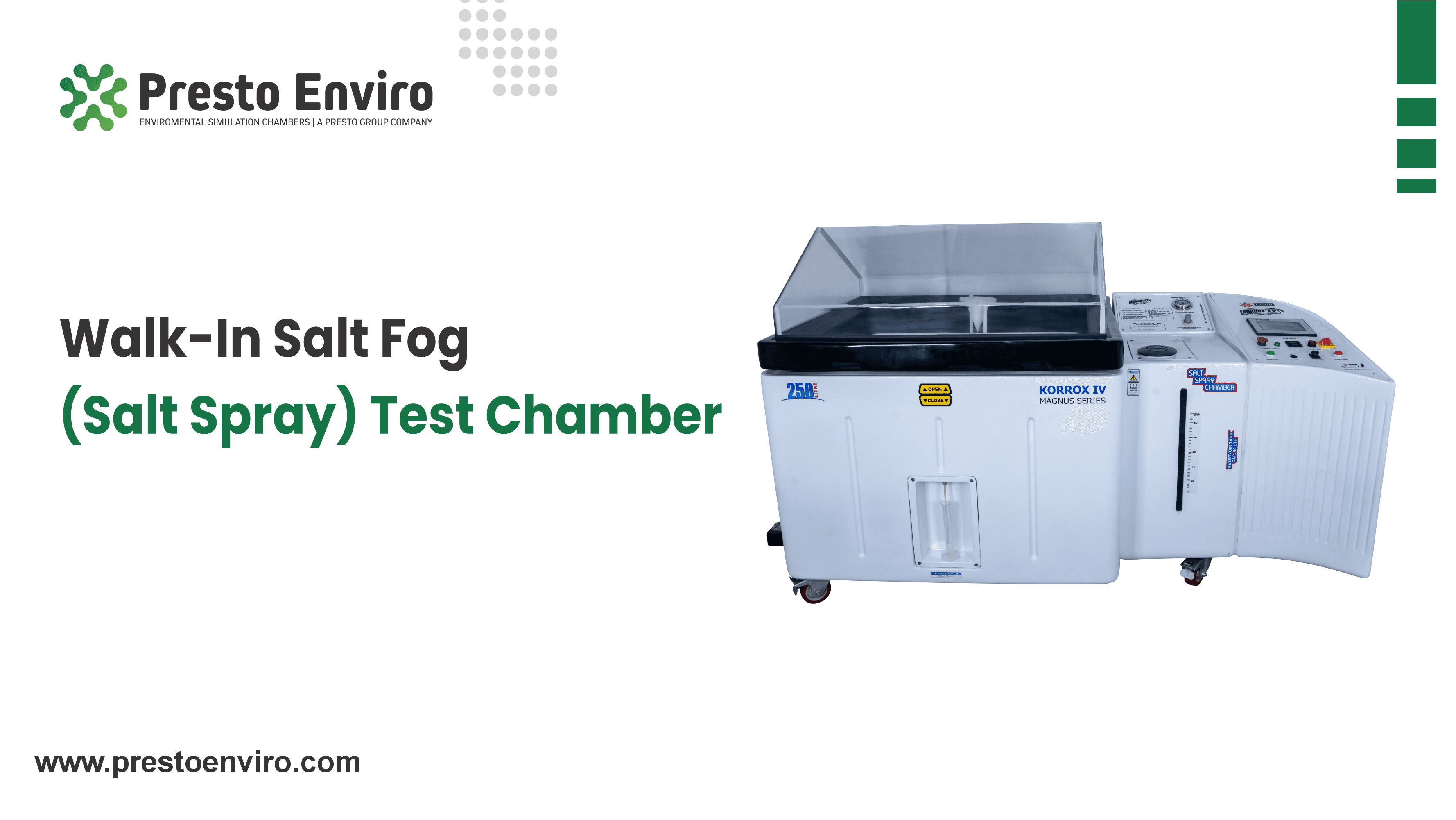
A walk-in salt fog test chamber is a huge enclosed area that is used to expose products to a controlled salty mist. These units differ as compared from small bench-top chambers in the sense that the operators can physically enter them and test full-size parts, assemblies, or several items simultaneously.
The atomized salt solution inside the chamber will be sprayed in a fine mist all over the surfaces, just like salty air at the sea. The temperature and exposure time are maintained constant in such a way that comparisons of results are made possible.
These chambers are normally applied where the components are oversized or too numerous to be fitted in normal chambers. Factory cabinets, pipelines, panels, and large fabricated structures are typical examples.
The principle of working is quite simple, yet the execution should be constant. Salt solution is kept in a reservoir in a mixture with a certain concentration of salt solution. This solution is forced through spray nozzles by compressed air, resulting in a fine spray within the chamber.
The fog is uniformly spread across and on all the exposed surfaces. The temperature remains in a certain range, thus evaporation and condensation are predictable. To eliminate pooling, drainage systems eliminate excess solution.
Since the chamber operates over long periods, there is a steady state of affairs. This consistency enables teams to compare the results between batches, material, or suppliers without having to guess whether the environmental variation influenced the result.
The most evident feature is the huge internal space. Walk-in chambers are also used with bulky goods or large volumes without affecting the uniformity of the exposure.
The room interiors are corrosion-resistant to aid the chamber in withstanding salt over time. This maintains the test conditions of repeated use.
The programmable controls enable the operators to adjust the spray cycles, temperature levels, and the duration of the test according to the requirements. When it is on, the chamber needs minimal manual control.
The non-slip flooring, good lighting, and easy access doors are safety features that ensure that personnel enter the chamber during setup or inspection.
Proper drainage and mist distribution systems are used to ensure the level of mist always remains the same throughout the testing area.
Most industries with sensitivity to corrosion use walk-in salt fog chambers.
Automobile frame, suspension components and assemblies, the frame of the vehicle is tested to see rust development after being subjected to a long term exposure to salt.
In the case of construction materials, panels, fasteners, railings, and structural parts, are tested, and only after approval they are allowed to be used outdoors.
These chambers are used in the electrical and electronics industries to test cabinets, enclosures, and connectors that work in areas near coastlines or industries.
Salt fog testing is essential to marine and offshore equipment manufacturers because their products are constantly exposed to salt-laden air in the course of service.
Paints and coatings manufacturers use walk-in chambers to compare coating performance over extended exposure periods.
Smaller salt spray chambers serve their purpose, but they come with limits. Walk-in chambers remove those limits.
This enables testing on real assemblies rather than small samples. This exposes the corrosion tracks that will only be observed at joints, welds, or edges.
A benefit of testing more than one item simultaneously enhances consistency and is time-saving. The same conditions are applied to all the samples at the same time.
Bigger chambers also minimize the necessity to chop or alter products only to fit in a test unit.
Omissions or under-carrying out of corrosion testing will come back to haunt one later with unpleasant surprises. Products can be inspected initially, but break down in the field prematurely.
After the corrosion has been seen, it becomes complicated to repair. Substitutes interfere with processes.
In industries where proper testing is required, the absence of proper testing may hold up approval or cause non-compliance agendas. These failures can be more expensive than the tests.
Space availability is essential. Walk-in chambers need to be properly planned in terms of floor area and ventilation.
Chamber dimensions should be on the test volume and product size. The decision to use small limits is a limitation in future testing.
Operation and maintenance must be considered easy. Low-level controls and easy-to-access components bring about less downtime.
The availability of support and services keeps the chamber running well during years of usage.
Even long-term corrosion danger can be seen with a walk-in salt fog test chamber. Manufacturers can understand the behavior of materials in extreme conditions by subjecting large products and assemblies to controlled salt mist successfully. This testing will facilitate improved design, enhanced finishes, and prolonged products. Walk-in salt fog testing is not an option, but rather a necessity in industries where corrosion failures are too expensive and endanger human safety.
What is unique about a walk-in salt fog chamber compared to normal salt spray chambers?
The key distinction is that of size and capacity. Full-scale components and large batches can be tested in Walk-in chambers rather than on small-scale samples.
Is salt fog testing only for metal products?
While metals are commonly tested, coated surfaces, painted parts, and assemblies with mixed materials are also evaluated using salt fog chambers.
Does a walk-in chamber need maintenance?
Regular cleaning, nozzle checks, and solution monitoring help keep performance steady. Maintenance frequency depends on usage intensity.
Does salt fog testing guarantee corrosion-free products?
No, tests cannot guarantee complete immunity. Salt fog testing helps identify weaknesses early so designs and materials can be improved before real-world exposure.
Elevate your quality assurance process to new heights
Related Blogs

23-Sep-2026
Presto Enviro
Products are expected to work reliably for months or years, but manufacturers cannot always wait that long to find out how they will perform. Accelerated aging testing solves this problem by exposing products to controlled environmental conditions that speed up certain aging effects.
20-Sep-2026
Presto Enviro
Battery safety is not something manufacturers can check only after a battery is ready for use. Temperature, charging conditions and repeated use can change the way a battery behaves. In some cases, excessive heat can cause permanent damage or create serious safety risks.