© Copyright 2025. All Rights Reserved by Presto Stantest Pvt. Ltd.
05-Mar-2026
Presto Enviro
Solar power is one of the fastest-growing sources of renewable energy globally. Solar panels are becoming common for residential and commercial buildings, industries and major utility scale solar parks. High-quality solar modules are on the rise in demand due to the clean energy programs by the government and the desire of companies to lower their carbon footprint. The biggest worry of any person who invests in a solar system is whether these solar panels will remain as efficient and reliable as they were when initially installed.
A big majority of the solar panels are extensively tested in laboratories and in the field to be reliable and last long before they are released into the market. The paper will describe how solar panels can be tested in terms of performance and reliability.
At the industry level, when a solar module is referred to as "durable," it means that the panel can deliver consistent performance under extreme outdoor conditions for 20–25 years without major degradation. Below, we explore these factors in detail from both a technical and industrial perspective.
A key determinant of the overall durability of any solar module is the quality of the materials utilized. A standard solar photovoltaic (PV) module has several different layers - each one plays an important part in the performance of the module itself.
a. Silicon Solar Cells
Silicon solar cells are usually made from either monocrystalline (single-crystalline) or polycrystalline silicon (multiple crystalline). With high-quality or "high-purity" silicon, the solar cell has stability and should not degrade much over time. When cells are manufactured at an industrial level, three significant factors influencing the lifespan of a solar module are the cracking of the cell, micro-cracking on the cell surface, and the thickness of the wafer.
b. Strength of Front Glass
Solar panels use tempered glass for their front glass layer. The front glass is not only transparent, but it also provides mechanical support to protect the solar cells contained within.
c. Encapsulation Material (EVA)
The ethylene vinyl acetate (EVA) is used as a covering on solar cells. This type of layer keeps the solar cells dry and prevents oxygen exposure and low-end EVA will turn yellow with time thus reducing the light penetrating through the EVA that will make the solar cells less efficient.
d. Frame Material
The majority of panels use an anodized aluminum frame. The frame must be corrosion-resistant to hold up to the level of salt in coastal waters. Poor quality frames will result in significant reductions in the average lifespan of the modules.
The solar panels are placed outside and are subject to constant effects of the environment including the forces of gravity, wind, snow and rain. Solar modules have to survive temperatures up to -40 C to +85 C with repeated contraction and expansion and solder joints within the module are weakened.
The constant exposure of solar module polymer components to UV radiation can degrade the UV polymer materials. The breakdown of the UV polymer material can lead to brittleness of the encapsulation layer.
Moisture entering the inside of the solar panel is frequently an issue in areas that have a high humidity level; improper sealing will allow water to enter the inside of the solar panel and result in some degree of internal corrosion.
Solar panels are not static, and they are constantly exposed to a variety of external forces that can have an impact on their mechanical strength and structural integrity.
a) Frame Rigidity:
The frame is principally constructed to ensure that vibration and stress are evenly distributed throughout; provided, however, that the overall structural design is inadequate (i.e., not designed with appropriate tolerances), the frame will be warped.
b) Hail Impact Resistance:
A panel is tested under simulated hail impact by subjecting it to high-speed projectile ice balls. The hail impact test determines if the glass and internal cells can withstand the hail impact.
c) Micro-Crack Resistance:
Micro-cracks develop when the mechanical bounds of a panel are exceeded and do not appear at the time of initial inspection. However, as they develop, micro-cracks will significantly reduce power output. Micro-cracks can be detected at an industrial level using electroluminescence testing.
PID is a type of degradation seen in high-voltage systems where their performance declines due to various leakage currents. To enhance durability, manufacturers are utilizing anti-PID technologies.
In addition to the design of an industrial product, the actual manufacturing of it also plays a role in determining the durability of that product.
High-quality control during production can significantly lower the failure rate of products.
The industry is fairly standard in terms of giving a 25-year performance warranty on a solar panel. However, the actual durability of a solar panel will depend on the manufacturer's credibility and the manufacturer's testing standards.
If a panel is manufactured by a reputable manufacturer, they should provide the consumer with a performance guarantee that depicts the expected degradation curve of the product over time.
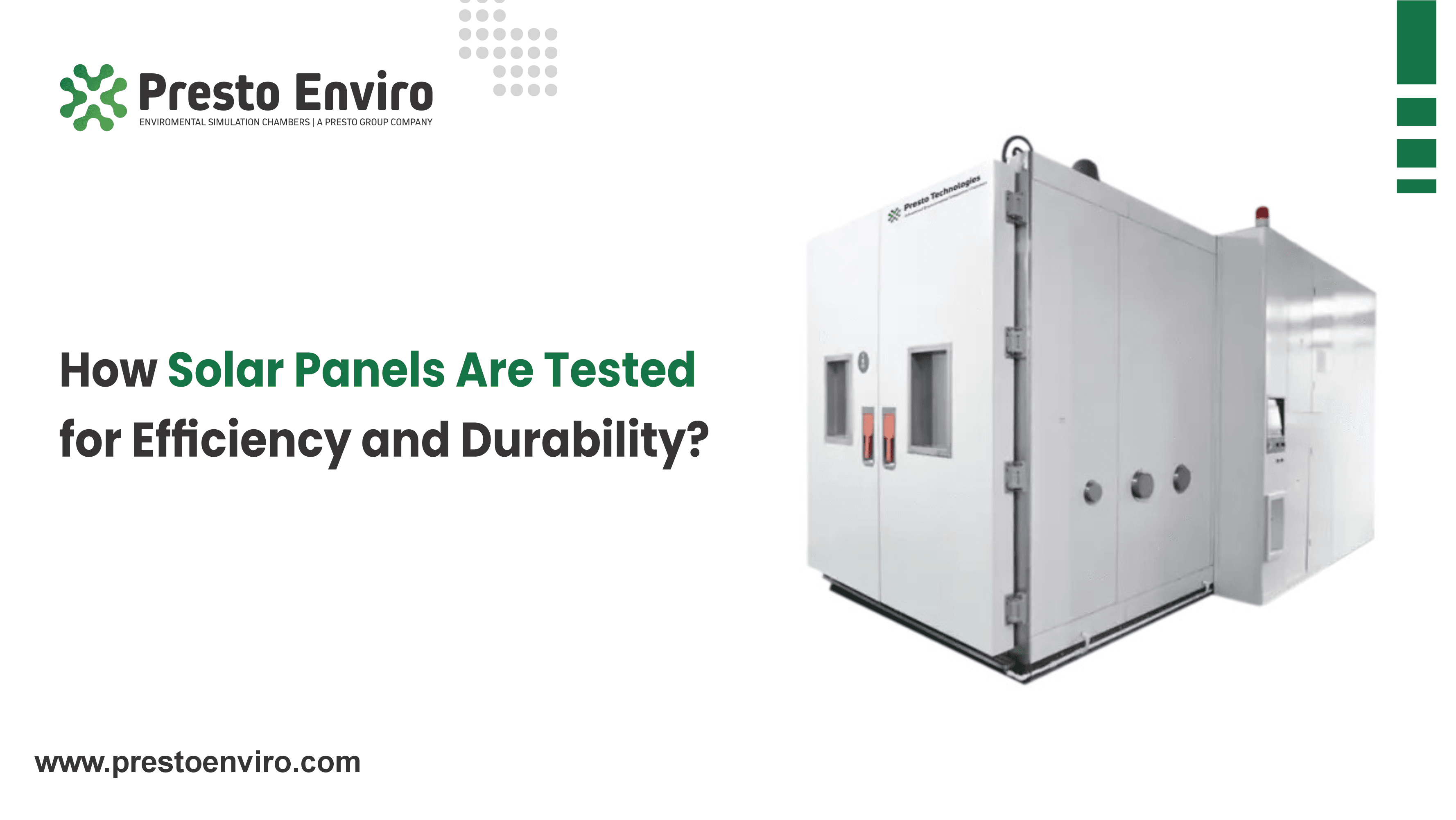
Solar panels are subjected to various types of performance evaluation before they are marketed. Solar panel test chambers are frequently used to test the panels to ensure stable performance under numerous environmental stresses, as would be experienced by an end-user.
Efficiency Testing is the main performance measure of the electrical performance of Solar Panels.
Industrial Process:
The panel is tested under STC (Standard Test Conditions ) :
Calibration and controlled artificial sunlight is typically used for Solar Panel Testing.
Technical Measurement:
Method of Measurement during the testing period
Efficiency is calculated as follows:
(Electrical Output Power ÷ Incident Solar Power) × 100.
The performance of high-efficiency panels should remain constant and not show significant performance variances.
Industrial Significance:
If the test results show that a panel fails to meet the STC rating for output performance, it raises questions about the panel's commercial feasibility. This testing step is a requirement of Factory Acceptance Testing (FAT).
Solar Panels Are Engineered To Endure Thousands of Thermal Expansion and Contraction cycles during their lifetimes.
Testing Range:
For thermal cycling tests, panels are subjected to thermal cycling by repeated exposure to temperatures between -40° C through +85° C. The standard qualification for this test requires testing of panels for 200 cycles or more.
Technical Focus:
Thermal Cycling Test will also evaluate the following:
1. Solder joint integrity
2. Cell interconnections
3. Bond integrity of the lamination
4. Creation of micro-cracks.
Rapidly changing temperatures will create stress in the internal structure of the solar panel, resulting in its long-term degradation.
Industrial Importance
If the thermal stress exceeds the limits of the solar panel, there could be internal electrical faults in a brief time span. This is extremely important in the deserts and in cold climates.
Solar installations are also found in coastal and tropical environments, where they are subject to high levels of humidity.
a) Damp Heat Test
The panel is subject to a temperature of 85 degrees Celsius and a relative humidity of 85% for 1000 hours.
Goal:
Humidity Freeze Test
The panel goes from a high humidity environment to a freezing environment.
Purpose:
Solar panels must withstand and endure both static and dynamic mechanical loads.
Testing Procedures for Mechanical Load Testing on Panels
Mechanical Load Testing on panels uses the following standards.
Industry Importance of Mechanical Load Testing on Solar Panels
Structural Integrity in High Wind Areas; Areas of Heavy Snow Fall;/or Rooftop Structures of Solar Panels is Extremely Important.
When hail occurs, it is a larger concern due to extreme weather conditions.
Hail Impact Testing Method
Hail Impact Testing uses artificial Ice Balls that are approximately 25mm in diameter.(Hail) has an impact on solar panels traveling at a speed of 23 M/Sec.
Hail Impact Testing Evaluation of Panels Includes:
Ultraviolet Radiation causes Degradation of Polymers. UV testing is conducted by placing samples in an accelerated UV exposure chamber that simulates high-intensity UV light exposure.
Technical Observations
Degradation of polymers due to UV exposure can lead to decreased light transmission and, hence, decreased efficiency.
A solar panel must go through certification according to globally accepted standards before it can be sold on the market as a tradeable product.
There are four reasons why this is so important:
The primary purpose of the IEC61215 standard is to establish the suitability of a particular PV module for testing solar panels so that outdoor products can survive in a long-term environment.
An IEC 61215 certification does not guarantee that a photovoltaic module will have a useful life of 25 years or more, but it does confirm that the module has undergone extensive stress testing in a laboratory environment.
To ensure that solar panels manufactured in India comply with the BIS Standards (Bureau of Indian Standards), manufacturers need to ensure that these solar panels comply with the guidelines of India’s Ministry of New and Renewable Energy (MNRE). Manufacturers must register with the BIS to manufacture and provide solar panels for government projects.
Choosing the appropriate testing partner is essential for achieving the longevity and performance of solar panels. The right manufacturer of solar panel testing equipment doesn't just run your panels through the motions; it helps you build something that lasts.
Presto Enviro brings accredited labs, IEC 61215 and IEC 61730 certifications, and genuine technical expertise to every project. Whether you are scaling production or entering international markets, their team understands the compliance pressures you are facing and works alongside you to meet them.
With Presto Enviro, you are not just getting test results. You are getting a partner genuinely invested in your product's long-term reliability and success.
The durability of solar panels should be determined by their capacity to last long as sources of energy rather than relying on the initial threshold of efficiency at the start of their operation. In order to establish the capacity of a solar panel to be actually reliable, one must consider the module resistance to the environmental factors (temperature), mechanical force (wind and snow), electrical strains (short circuit/overload), and the external factor (rain, snow and ice).
As such, rigorous testing is conducted prior to releasing any solar module into the marketplace. Each category of testing validates that the solar panels have met the requirement for delivering reliable performance over time.
Elevate your quality assurance process to new heights
Related Blogs
15-Oct-2026
Presto Enviro
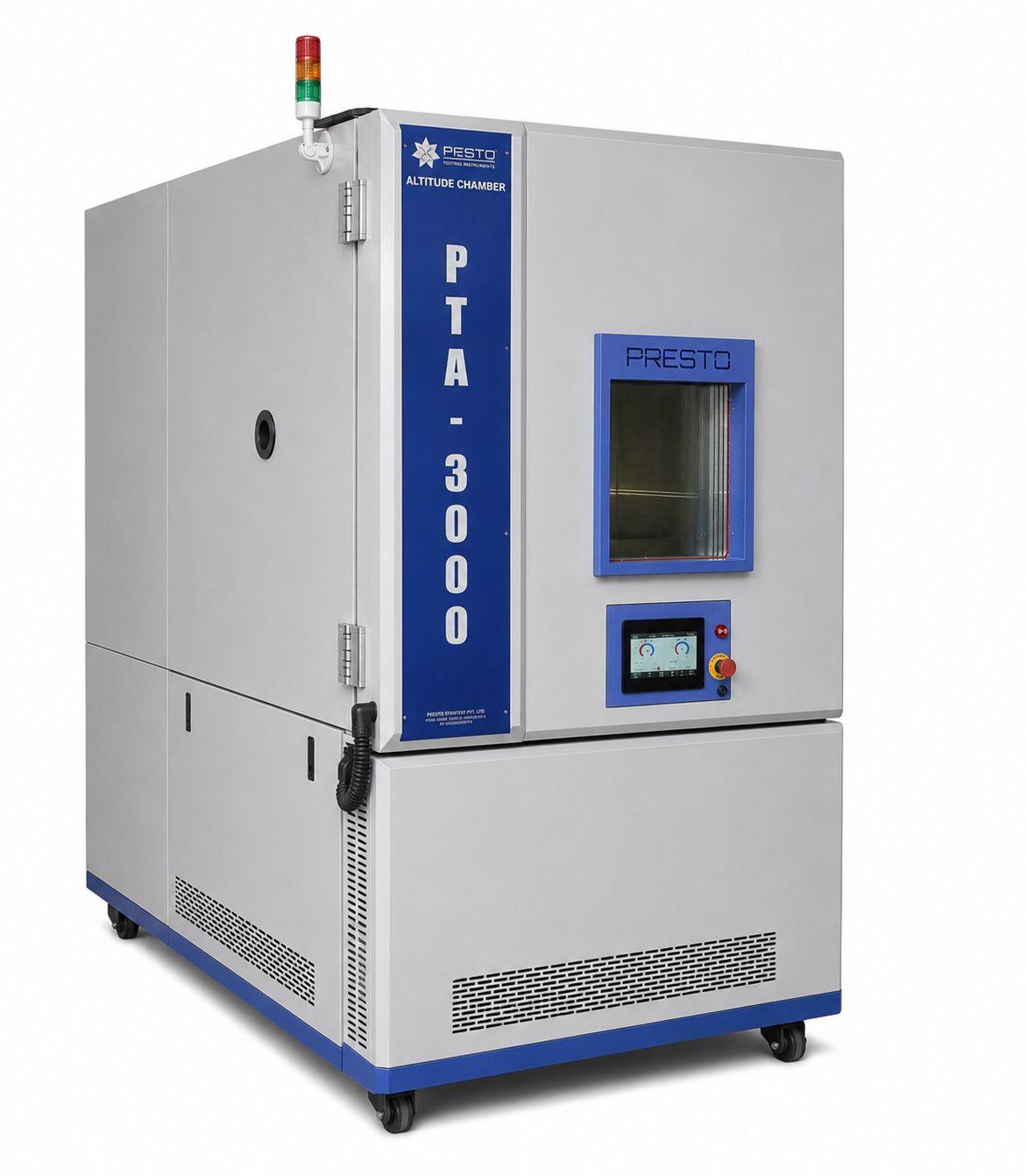
In environmental testing, vacuum chambers are also called altitude test chambers or low-pressure chambers. They lower air pressure inside a sealed chamber to simulate high altitude while controlling temperature and, in some configurations, humidity.
13-Oct-2026
Presto Enviro
An in-house lab can deliver results, give better control over product testing, and reduce testing costs in the long run. To make it work well, the lab space, equipment, utilities, and testing methods must be planned according to your needs.