© Copyright 2025. All Rights Reserved by Presto Stantest Pvt. Ltd.
19-Jan-2026
Presto Enviro
Have you ever seen a product fail not because of load or heat, but simply because dust found its way?
In many industries, dust is not just a housekeeping issue. It quietly settles into enclosures, switches, joints, and seals. Later, it interferes with movement, blocks airflow, and damages sensitive parts. By the time the issue shows up in the field, repairs are expensive, and customer trust takes a hit. This is why dust testing becomes part of product checks long before items reach real working conditions.
Dust chambers help manufacturers see these problems early, under controlled settings, without waiting for months of outdoor exposure.
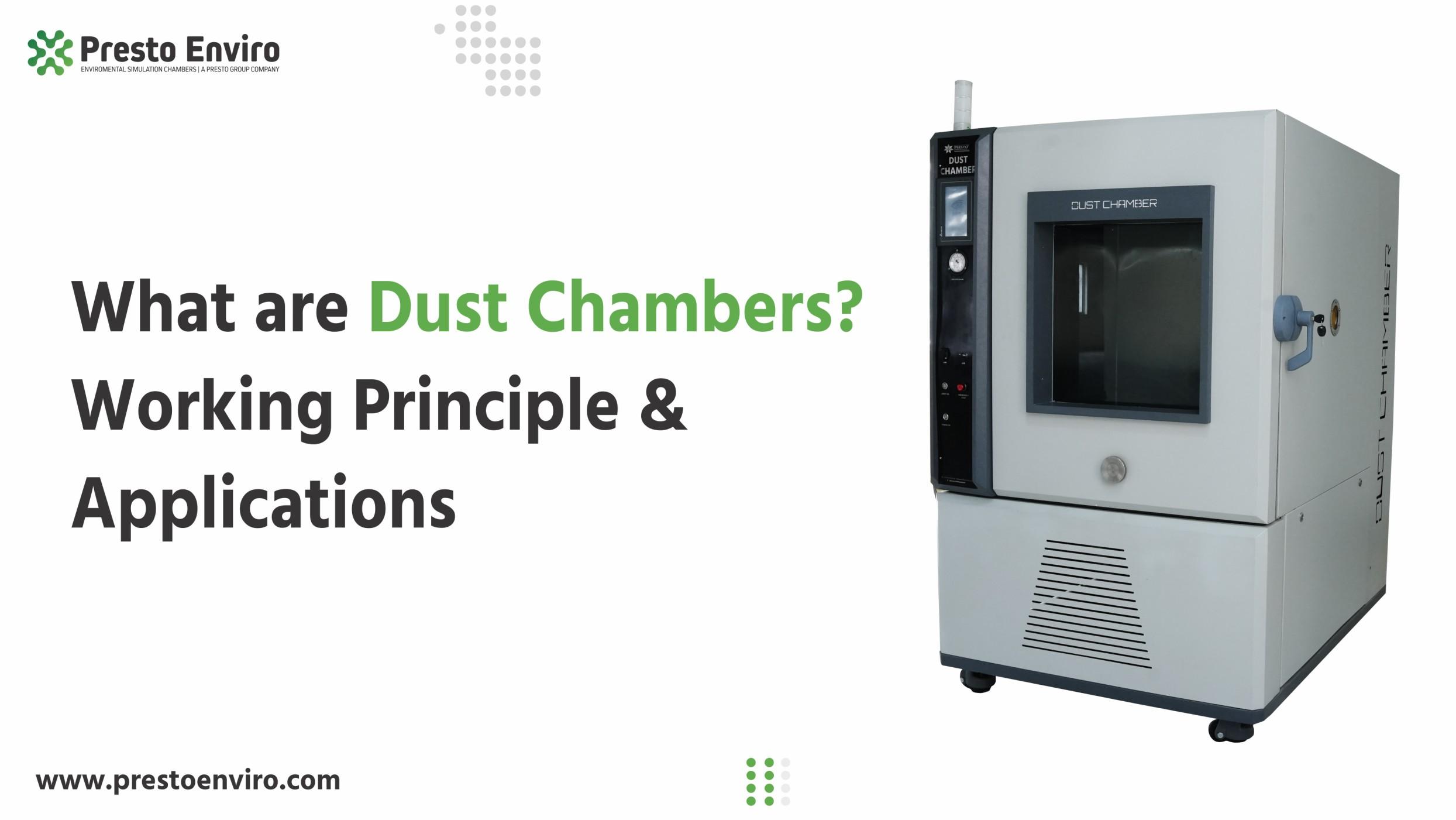
Dust chambers are enclosed testing spaces designed to display products to airborne dust. Instead of guessing how dust might affect a product during service life, testing teams recreate dusty conditions within the chamber. The idea is simple. If a product struggles in a controlled dust environment, it is likely to struggle even more in real use.
Many products look sealed from the outside. In practice, fine particles slowly find entry points. Gaskets age. Joints loosen. Openings meant for ventilation become pathways for dust. Dust chambers bring these weaknesses into focus before products leave the factory.
Industries working in mining areas, construction zones, deserts, or heavy manufacturing zones rely heavily on this type of testing. Even indoor equipment can suffer when dust circulates through ventilation systems.
The working principle of a dust chamber follows a controlled circulation method. The samples to be tested are put into a chamber. A measured amount of test dust is added. Blowers do not allow the dust to settle at once in the air.
Airflow in the chamber stays controlled, so dust particles circulate evenly. This helps all sides of the test sample receive similar exposure. The chamber can be used either at normal pressure or with a little vacuum, depending on the requirements of the test. A Vacuum test is used to verify the entry of dust into the enclosure during the extensive different internal pressures.
The test is carried out over a specified period of time. In this period, dust enters the gaps, joints, and openings. After the test cycle ends, samples are inspected. Dust deposits, internal contamination, and functional issues get documented.
Unlike outdoor testing, these conditions remain repeatable. Each test cycle follows the same parameters, which helps quality teams compare results with confidence.
Dust chamber testing usually follows international standards, so results remain accepted across regions. Among the common standards is the IEC 60529 standard that defines ingress protection levels. IP ratings such as IP5X and IP6X come from this protocol.
IP5X checks protection against limited dust ingress. A certain amount of dust can get in; however, it should not disrupt the operation. IP6X checks are the ones that are fully sealed, and not a single particle of dust can enter the tests.
Depending on the industry requirements and type of product, other standards can be used. Following these standards helps manufacturers avoid disputes during audits and certification reviews.
A dust chamber includes several elements working together:
At Presto, dust chambers are designed to keep these elements balanced, so tests remain stable and repeatable across multiple cycles.
Dust testing does not follow a single fixed routine. Methods change depending on product type and protection level.
In a typical IP5X test, dust circulates inside the chamber for several hours while the product operates or remains powered off, depending on test requirements. After exposure, internal inspection checks whether dust interferes with performance.
For IP6X testing, products face a heavier dust concentration under vacuum conditions. This test focuses on sealing strength. Even fine dust penetration counts as failure here.
Some tests include functional checks during exposure. Others focus only on post-test inspection. The method depends on how the product works in real life.
Dust chambers find use across many sectors.
In most instances, testing cost remains significantly lower compared to the recall cost or warranty cost.
Dust-related failures rarely show up during initial inspection. Once products reach customers, fixing these issues becomes complicated.
Dust chambers allow manufacturers to test designs early. Weak seals become visible. Vent placements get reviewed. Material choices improve.
Quality teams gain clarity. Engineers make informed adjustments. Production moves forward with fewer surprises.
For certification processes, dust testing supports compliance requirements. Test data helps during audits and approval checks.
In many cases, the cost of testing stays far lower than the cost of recalls or warranty claims.
Dust might not appear dangerous, but when working conditions are considered in reality, dust gradually destroys products internally. Once the failures begin to be noticed, the damage is usually already done.
Dust chambers provide manufacturers with an opportunity to visualize these dangers at an early stage. In reproducing dusty environments under controlled conditions, teams can have an understanding of the behavior of products with time. Dust testing may be a silent yet indispensable part of responsible product development when dealing with industries in which reliability is important.
1. What is the main purpose of a dust chamber?
A dust chamber checks how well a product resists dust entry under controlled conditions. It helps identify sealing weaknesses before products face real environments.
2. Chamber testing works under which standard?
Dust chamber testing commonly follows IEC 60529, which defines IP protection levels such as IP5X and IP6X.
3. What is the time duration of testing in this chamber?
The time spent on a test should be based on the level of protection and type of product. There are tests that take a few hours and those that are sustained depending on the standard requirements.
4. Can products be powered on during dust testing?
Functional testing during dust exposure helps check whether dust affects the operation. This depends on the test plan.
5. What is the price of a dust chamber?
Kindly send us an email at response@prestoenviro.com. Customers may also call us at +91 9773666011.
Elevate your quality assurance process to new heights
Related Blogs
15-Oct-2026
Presto Enviro
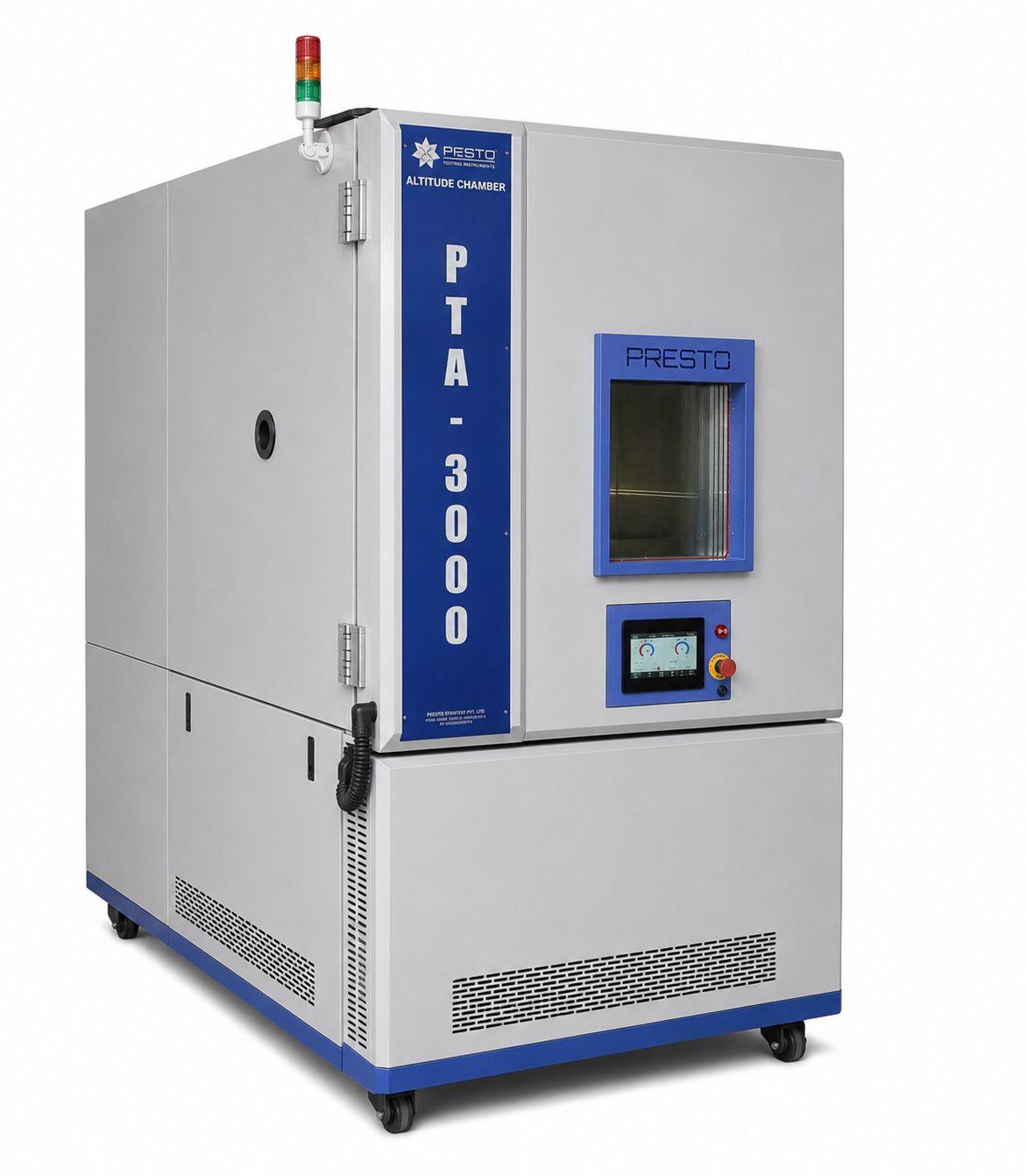
In environmental testing, vacuum chambers are also called altitude test chambers or low-pressure chambers. They lower air pressure inside a sealed chamber to simulate high altitude while controlling temperature and, in some configurations, humidity.
13-Oct-2026
Presto Enviro
An in-house lab can deliver results, give better control over product testing, and reduce testing costs in the long run. To make it work well, the lab space, equipment, utilities, and testing methods must be planned according to your needs.