© Copyright 2025. All Rights Reserved by Presto Stantest Pvt. Ltd.

10-Jul-2026
Presto Enviro
Environmental testing requires precision, irrespective of the material being tested because small variations in temperature or humidity can change material behavior. Manufacturers rely on these tests to predict how products perform in the real world. However, minor laboratory oversights frequently lead to inconsistent data. This article covers the practical steps needed to eliminate those hidden testing errors and stabilize your results.
Getting precise data requires more than just buying a high-end machine and turning it on. In laboratories, it is common to encounter certain problems such as poor positioning of sensors, blocking airflow, and not keeping up with calibration schedules. In this article, we will discuss five key changes that you can make immediately to resolve these problems.
A minor deviation of even 0.001% during a test can cause a product to pass in the lab but fail miserably in the hands of a consumer. Reliable environmental testing acts as your insurance policy against expensive product recalls and structural failures. If the data in the testing chamber fluctuates, you may get wrong data that eventually destroys the complete purpose of precision testing. Manufacturers are unable to accurately analyze whether their products actually survive harsh environments.
It is also important to note that when you represent the test results to clients, they expect accuracy and consistency across testing. Inaccurate results waste valuable engineering time since you will chase the unknown culprit and try to fix product designs that were actually fine. Precise environmental testing gives you the confidence that your materials will perform exactly as engineered, protecting your brand reputation and saving massive amounts of money in development cycles.
Achieving highly accurate data requires strict control over how you set up your chamber, handle samples, and maintain your equipment. Even advanced labs struggle with consistency if they overlook the physical dynamics inside the testing space. The following five practical tips will help you eliminate common testing errors and achieve highly dependable results.
Do not fill your testing chamber with excessive samples at the same time. If the space is filled properly, the fresh air cannot circulate freely, and there will be microclimates in the chamber. This situation leads to some samples getting affected by the predetermined temperature while others remain untouched.
Leave plenty of space between each test specimen and keep them away from the chamber walls. Air needs to move freely around every single item to ensure uniform heat and moisture distribution. If you notice wide variances in your data, simply reducing the batch size inside the chamber often fixes the problem immediately.
You cannot trust a sensor that has drifted away from its original factory settings over months of heavy use. The temperature-sensitive and humidity-responsive detectors are very effective devices but they lose their precision gradually when they undergo different thermal conditions. Not knowing that you are utilizing an uncalibrated chamber, you may receive misleading data.
It is advisable to create a rigid system of calibrations that depends on how often you conduct the tests but not on the fact that you do it once a year. Use certified reference devices to conduct the checks of the readings in more than one testing point. This part matters because a probe might read perfectly at 25°C but show significant errors when you push the system up to 80°C.
A degrading door seal allows outside ambient air to leak into your controlled environment continuously. This subtle leakage forces the chamber heating and cooling systems to work twice as hard to maintain the set points. It creates temperature gradients near the door that ruin your test accuracy.
Inspect the rubber gaskets around the chamber door every week for cracks, brittle sections or visible gaps. Wipe down the sealing surfaces regularly to remove dirt and residue that might prevent a tight close. Replacing a worn-out gasket is a cheap fix that instantly removes an aggressive source of test data instability.
Humidity chambers need to have a continuous supply of high purity water to produce clean steam or moisture without clogging the internal parts of the chamber. Tap water can contain mineral deposits that are deposited directly onto your humidity sensors and heating elements. With time, this accumulation acts as insulation and disrupts the sensors' readings.
Always feed your equipment with distilled or demineralized water as specified by the manufacturer. Keep an eye on your electrical supply voltage too, since sudden power fluctuations can cause temporary drops in compressor or heater performance. Clean utilities guarantee that the internal environment responds exactly how your test profile commands.
Human error during the setup phase ruins many otherwise perfect testing cycles. If a technician opens the chamber door frequently to check on samples, they introduce massive spikes in humidity and temperature. Samples also need proper pre-conditioning before the test even starts, so they begin at a uniform baseline.
Create clear, simple checklists for your laboratory team that spell out exact handling procedures. Ensure everyone understands the necessity of leaving the chamber closed throughout the entire duration of the profile. In simple terms, consistency in how humans interact with the machinery is just as vital as the quality of the machinery itself.
Using high-grade testing equipment makes implementing these accuracy tips much easier for your laboratory team. Presto Enviro environmental test chamber is designed specifically to eliminate the common variables that distort test data. With advanced airflow dynamics and highly responsive control systems, our machinery keeps your environmental parameters incredibly stable throughout long testing cycles.
This chamber uses highly accurate digital sensors that resist drifting, giving you clean data you can actually trust for regulatory filings. The structural design features robust insulation and high-quality door seals, preventing any thermal transfer with the outside room. Investing in a reliable system like the Presto Enviro chamber removes the uncertainty from your workflow that allows engineers to focus entirely on product development rather than on troubleshooting equipment errors.
Environmental testing is an important procedure for modern manufacturing units and laboratories. Other than purchasing a reliable vendor, performing preventive maintenance of the environmental chamber and disciplined laboratory habits also matter. By managing airflow, tracking calibration, and checking seals, you protect your data from the hidden fluctuations that ruin product analysis.
Partnering with a trusted environmental test chamber manufacturer like Presto Enviro ensures you have the baseline precision required for demanding industrial standards. High test accuracy ultimately saves time, reduces manufacturing waste and ensures your products survive the real-world conditions they were designed to face.
Elevate your quality assurance process to new heights
Related Blogs
15-Oct-2026
Presto Enviro
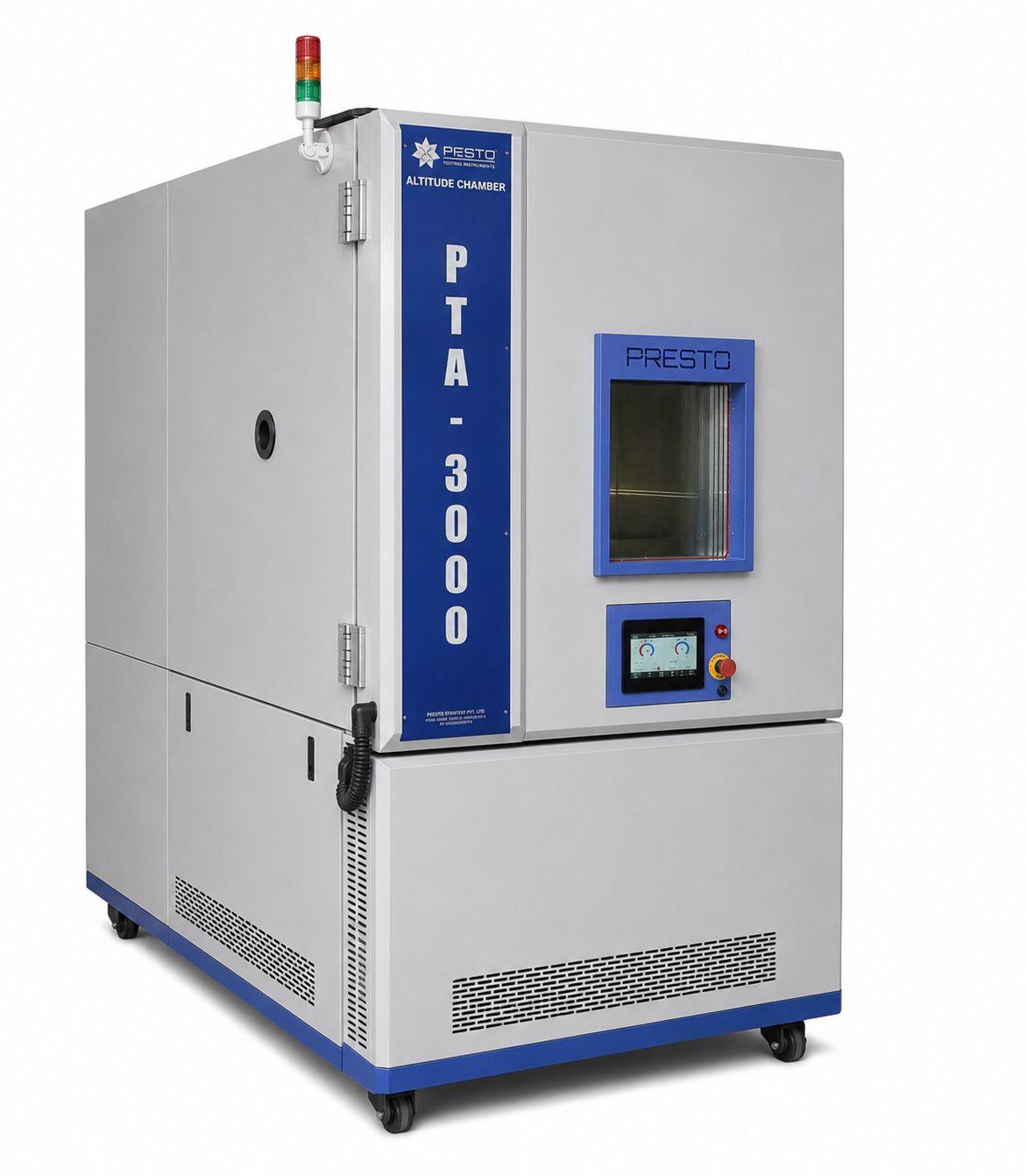
In environmental testing, vacuum chambers are also called altitude test chambers or low-pressure chambers. They lower air pressure inside a sealed chamber to simulate high altitude while controlling temperature and, in some configurations, humidity.

13-Oct-2026
Presto Enviro
An in-house lab can deliver results, give better control over product testing, and reduce testing costs in the long run. To make it work well, the lab space, equipment, utilities, and testing methods must be planned according to your needs.