© Copyright 2025. All Rights Reserved by Presto Stantest Pvt. Ltd.
24-Mar-2026
Presto Enviro
The usage of solar panels for generating clean energy is becoming more common; however, the performance and safety of solar panels rely heavily on the proper performance testing of these modules. Panel failure can occur for various reasons, such as extreme weather conditions or failure to comply with a number of safety standards.
Due to a lack of testing standards, many manufacturers face difficulties providing durable and compliant products that comply with international standards.
Reduced efficiency and failure of product(s) post-sale would be an important consideration for a manufacturer when trying to market a product.
Internationally accepted testing standards are used to address these challenges and provide a way to test solar modules. Manufacturers use international testing standards, such as IEC 61215 and IEC 61730, to establish a product’s reliability and durability, as well as its accuracy for long-term safe use.
Solar panels are evaluated under various weather and operational conditions to determine their ability to function properly and safely for their entire life. Solar panels are affected by many factors in their environment, such as:
Testing is a part of ensuring the long life of your solar panel system because it:
Solar panel testing standards establish a systematic method for evaluating photovoltaic modules. This standard outlines the methods and procedures used to test solar modules. including environmental conditions during the testing process and how to protect the tester’s safety while performing the testing.
By having uniform testing procedures defined by these standards, manufacturers can provide the industry with reliable results, which will support consistent performance when installing solar panels in various locations around the world.
Examples of solar panel testing standards and purposes include:
All of the above solar module-related standards are critical to ensuring solar modules perform and meet international safety and quality standards.
IEC 61215 is a key guideline for conducting detailed evaluations of solar panel performance and longevity. The primary goal of the IEC 61215 standard is to evaluate and validate that solar panels will perform adequately under typical environmental conditions encountered throughout their expected lifespan. This standard primarily applies to crystalline silicon-based PV modules.
The IEC 61215 standard is a recreation of real world environmental conditions in which PV modules are to be employed during their lifetime. This is a guideline that manufacturers use in checking whether their product is strong enough to work effectively in the harsh weather conditions and to prove effectiveness even after years of being in use.
1. The Thermal Cycling Test
It is used to expose the photovoltaic panel to a number of thermal cycles simulating the effects of extreme high and low temperatures. This is performed to test the durability of the materials and the electrical connection points on the photovoltaic module.
2. The Humidity Freeze Test
It exposes the photovoltaic rectifier enclosure to extremely high humidity followed by freezing conditions to determine whether or not the enclosure provides adequate protection against moisture and condensation.
3. A Mechanical Load Test
It determines if a photovoltaic module has the structural integrity of being able to support heavy loads (wind and/or snow pressures).
4. A UV Exposure Test
It determines if the photovoltaic module can withstand the long-term effects of exposure to UV radiation from sunlight.
5. A Performance Measurement Test
It measures the electrical output of the module both prior to and after testing. This is done to ensure that the performance of the photovoltaic system will continue to be within allowable limits.
The test procedures help manufacturers to ensure that their respective photovoltaic systems will last long at a tolerable level.
Standard IEC 61730 addresses safety-related concerns with respect to PV systems. IEC 61730 certifies solar panels as safe for use and will assess the electrical, fire, and mechanical hazards associated with these products.
The primary objectives of the standard are:
1. To protect PV module users from electrical shock.
2. To prevent electrical fires from occurring as a result of faulty PV modules.
3. To ensure PV modules remain in safe working conditions under various conditions.
The IEC 61730 standard plays a vital role in the certification of the product and the approval of the product-market of PV modules. It is carried out by making sure that these products satisfy high standards of safety when used safely and efficiently.
1) Electrical Insulation Test
This test verifies that the insulation level of a solar panel is sufficient to prevent anyone from being electrocuted.
2) Leakage Current Test
This is an indication of how much current has leaked out of the solar panel, if any.
3) Fire Resistance Test
Fire resistance tests determine whether the solar panel can resist and withstand different types of fire-related hazards (e.g., burning).
4) Mechanical Safety Test
Determines if the solar panel has been manufactured with sufficient structural integrity and support.
5) Impact Resistance Test
Determines the level of resistance that a solar panel has against physical damage (i.e., hail, debris, etc.) caused by storms.
The above testing processes allow manufacturers to determine whether the solar panels they sell to consumers can be installed and operated without risk of injury to the consumer.
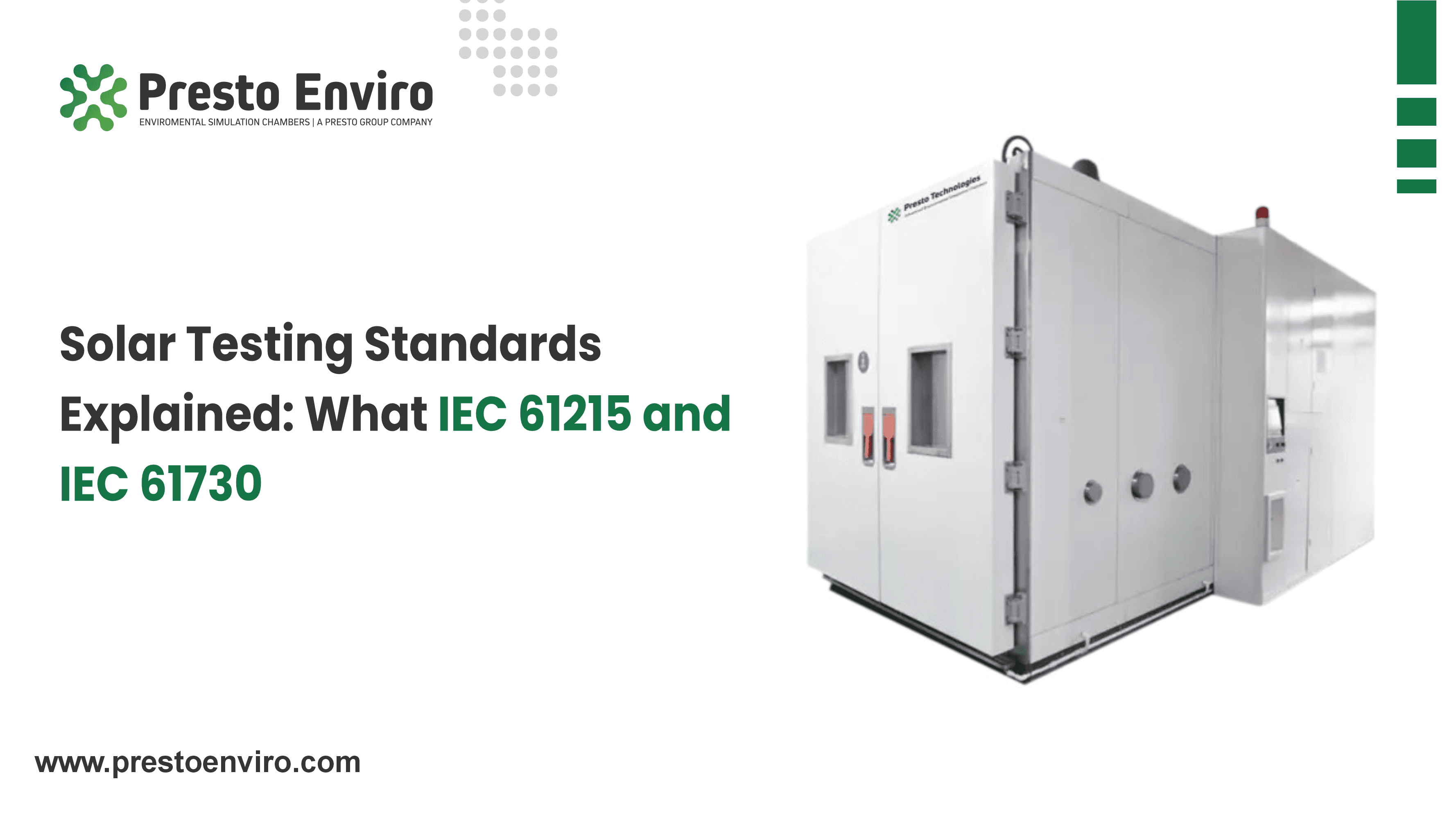
To carry out precise tests, businesses or laboratories require high-tech tools and controlled environments. Presto Enviro offers solar panel testing instruments that meet all of the manufacturer's requirements.
With Presto Enviro's advanced products, manufacturers can improve their productivity through accurate product testing and compliance with global standards. We specifically design these test instruments to replicate real-world conditions and measure accuracy in all aspects.
With the knowledge gained from utilizing sophisticated test equipment, manufacturers of solar panels can:
Testing of solar panels is essential in determining their performance and safety. The IEC 61215 and IEC 61730 standards offer a universal standard of measuring durability and safety in the form of a test procedure. The standard IEC 61215 is related to the performance of solar panels in the environmental situation.
These standards combined are required in product certification, product lifetime reliability and risk mitigation. Manufacturers will be able to offer quality solar panels to their consumers by offering them the right tests.
To help simplify the process of testing solar products correctly and consistently, suppliers like Presto Enviro provide innovative products for efficient solar equipment testing.
Elevate your quality assurance process to new heights
Related Blogs
23-Sep-2026
Presto Enviro
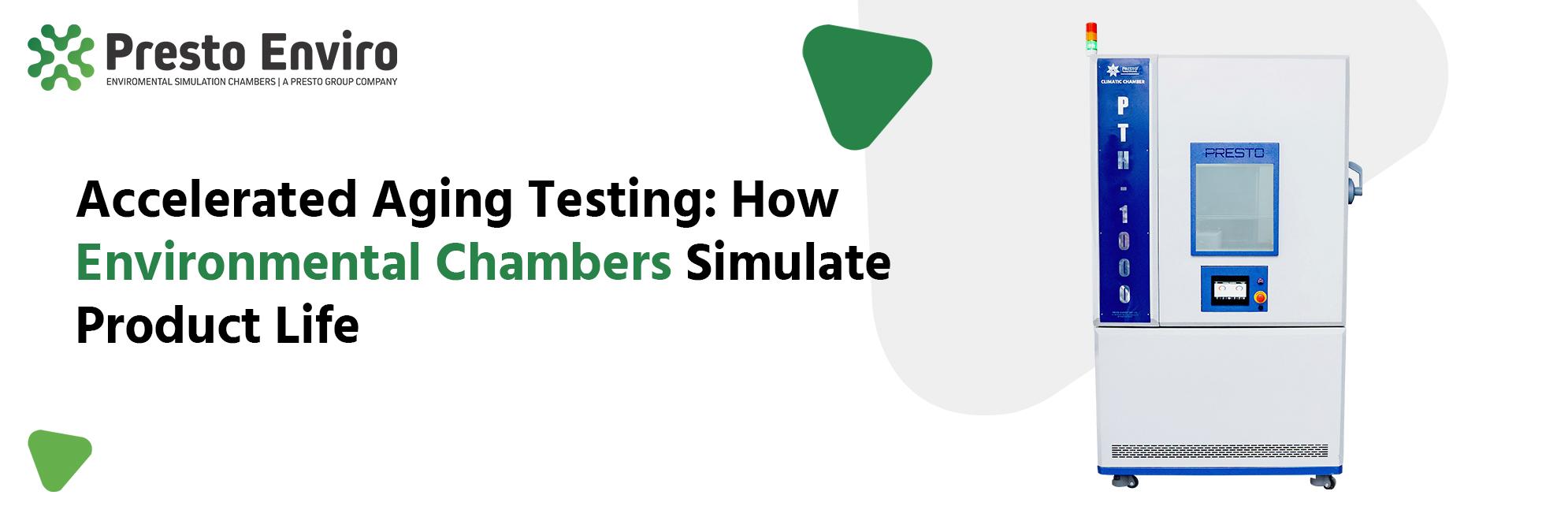
Products are expected to work reliably for months or years, but manufacturers cannot always wait that long to find out how they will perform. Accelerated aging testing solves this problem by exposing products to controlled environmental conditions that speed up certain aging effects.
20-Sep-2026
Presto Enviro
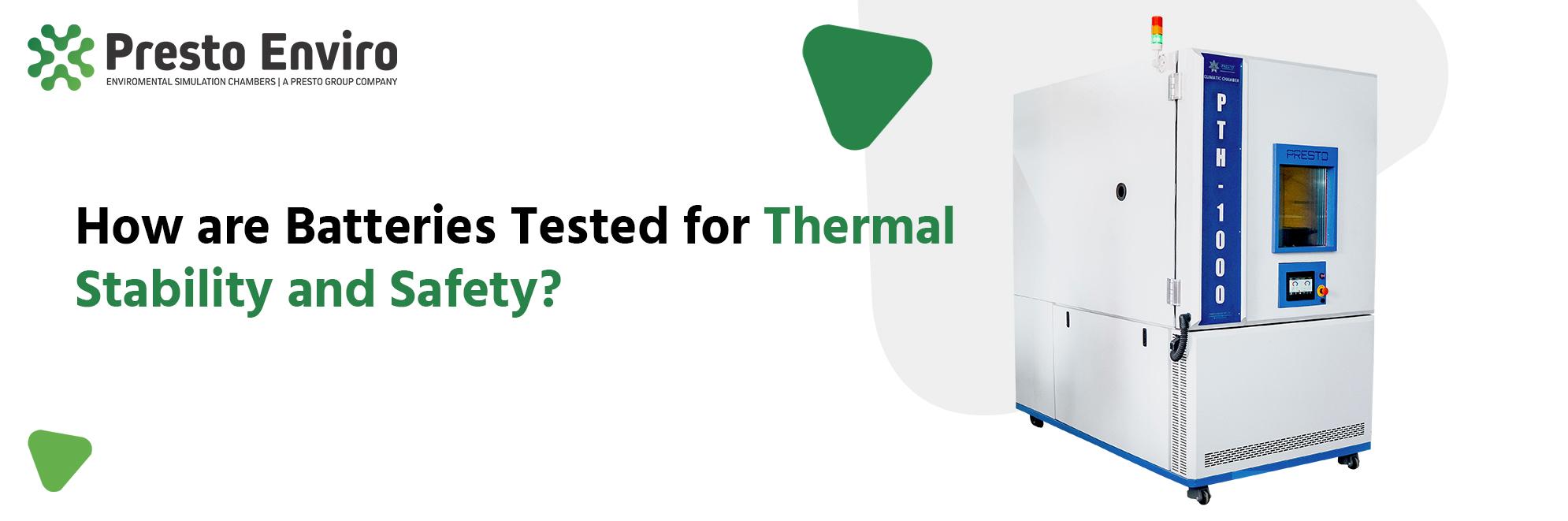
Battery safety is not something manufacturers can check only after a battery is ready for use. Temperature, charging conditions and repeated use can change the way a battery behaves. In some cases, excessive heat can cause permanent damage or create serious safety risks.

15-Sep-2026
Presto Enviro
Corrosion is one of those problems that may appear mild at first and later turn costly. A metal part may leave the manufacturing facility appearing undamaged, yet suffer corrosion, stain formation or coating failure as a result of its contact with moisture, salts and changing weather conditions.