© Copyright 2025. All Rights Reserved by Presto Stantest Pvt. Ltd.
24-Nov-2025
Presto Enviro
The demand for alternative sources of energy that are credible and reliable has increased in recent years worldwide. Solar technologies are emerging as one of the biggest increments in their applications worldwide as a renewable energy source. The photovoltaic module is the centerpiece of every solar system, and it transforms sunlight into energy, which can be utilized to generate energy.
In order to guarantee the functionality of PV modules in a real setting, PV manufacturers, installers, and quality control verifiers should conduct numerous test programs to assess their functionality, safety, and stability. Through these testing standards to test PV modules, manufacturers and installers can be confident that all modules are in line with all international standards with respect to performance, safety, and reliability.
The testing of PV (photovoltaic) modules for solar panels is a method used to simulate environmental conditions to evaluate the durability and efficiency of the PV panel throughout its lifespan. The quality of PV modules is checked by testing to assure the buyers of the quality of performance and the safety of the PV modules to make a sound decision in purchasing.
Products can be tested in different ways, such as laboratory tests involving the simulation of temperature and humidity and testing to simulate how they would perform in electrical, indoor, and outdoor testing over a period of time, as a way of verifying their life span.
Testing of solar modules includes different electrical, performance, material & component, safety, and stress tests to ensure safety, durability, and long-term performance in various environmental conditions.
Solar module testing studies a solar module's function and performance (power output, efficiency, and electrical behavior) under regulated examination conditions. The tests also include voltage, current, maximum power rating (Pmax), fill factor, and the I-V curve to provide a means to observe the performance of the solar panels as they are intended to be. Each of these tests is designed to allow for consistent energy output and to detect any electrical irregularities.
The purpose of testing is to replicate long-period outdoor performance through a series of thermal cycles, humidities, UV exposures, and mechanical loadings. It is applied to test the anti-cracking, anti-delaminating, anti-corrosive, and finally degradation properties of products/parts with regard to time. This testing is vital to the manufacturers and end customers, as it enables them to come up with products of a high level of quality, reliability, and long performance.
This defines the long-term degradation of a solar module's performance due to heat, humidity, voltage stress, and other environmental exposure factors. It normally uncovers problems such as PID, LID, and long-term material degradation that could hamper the stability of the power output that a module should deliver during its lifetime.
Material and component testing is the act of checking the raw materials and individual components to make sure that they are of the appropriate quality, strength, and performance specifications. It assists in the detection of defects, the determination of resistance, and compatibility before actual large-volume manufacturing. This testing will result in reliable end products, fewer failures, and consistency in manufacturing quality.
Safety testing determines the safety of products in normal and extreme conditions of use. It traces the possible risks, verifies the adherence to standards of safety, and eliminates possible risks of electrocution, fire, or mechanical breakdown, providing safe and consumer-friendly products.
Some of the key procedures involved in PV module testing for performance, safety, and durability are as follows:
A solar simulator flashes the panel at standard test conditions to record electrical output, including voltage, current, and power. It verifies rated power and efficiency against actual performance from the manufacturer.
Visual inspection is a careful examination of various physical defects in the panel such as micro-cracks (usually with electroluminescence imaging), delamination, bubbles, misaligned cells, or any damage to the frame or glass.
A safety test is conducted with a megohmmeter (megger), which runs high voltage to ensure that there is sufficient electrical resistance between the internal components and the metal frame to prevent electrical hazards.
Panels are cycled between extreme hot and cold temperatures rapidly, normally from -40°C to +85°C. They simulate daily and seasonal changes to test the fatigue of materials and the integrity of solder joints.
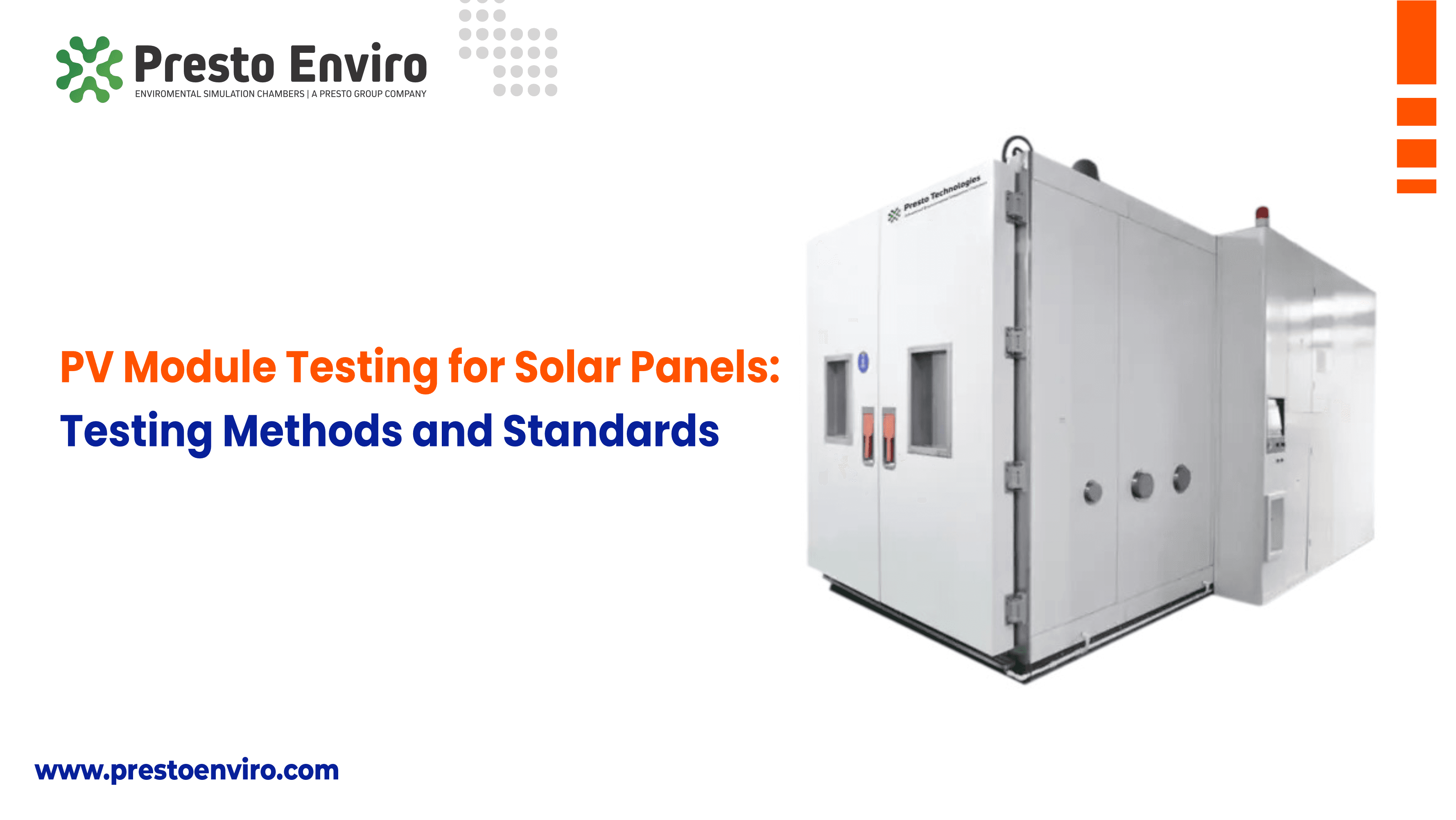
Modules placed in a climate chamber experience excessive heat and humidity during a test (in this case, 85° C and 85% relative humidity) for a period of 1000 hours. It is to assess how well modules can withstand the damaging effects of moisture infiltration, rusting and deterioration in their physical prime.
The test applies physical pressure on the panel surface to simulate wind and snow loads. It serves to verify the structural integrity of the panel and mounting points under expected environmental stressors.
An example of accelerated testing is firing ice balls at the panel to validate that tempered glass is capable of withstanding extreme temperatures without affecting its strength or lowering the amount of power.
Some of the standards that will be used to test the solar panels are IEC 61215, IEC 61730, and IEC 61853. There are other standards, such as UL 1703, which are safety and performance standards, and IEC 61701 is the standard that specifically measures salt mist corrosion resistance.
Key standards are described as follows:
IEC 61215: Gives the design qualification and the long-term performance assessment of crystalline silicon terrestrial photovoltaic modules.
IEC 61730: The standard concerns the safety of photovoltaic modules and covers electrical, mechanical, thermal, and fire risks.
IEC 61853: It provides definitions of the measurement of the energy output of panels in different conditions to give more precise estimates of performance.
IEC 61701: Tests the resistance to salt mist corrosion of the solar panels, one of the most sensitive tests of the solar panels used in coastal or high moisture regions.
UL 1703: an American consensus standard of safety and performance of flat plate PV modules that is very common in certification and acceptance by local inspectors.
Photovoltaic module (PV) testing is also a critical process used to determine quality assurance, safety, and reliability, and their functioning in actual field conditions. In order to enhance design and warranty support of PVs, manufacturers apply electrical measurements and man-made environmental and mechanical stress. Testing solar panel modules or standardizing the test methods, consult with Presto Enviro, and get the best service in the industry.
Elevate your quality assurance process to new heights
Related Blogs
21-Oct-2026
Presto Enviro
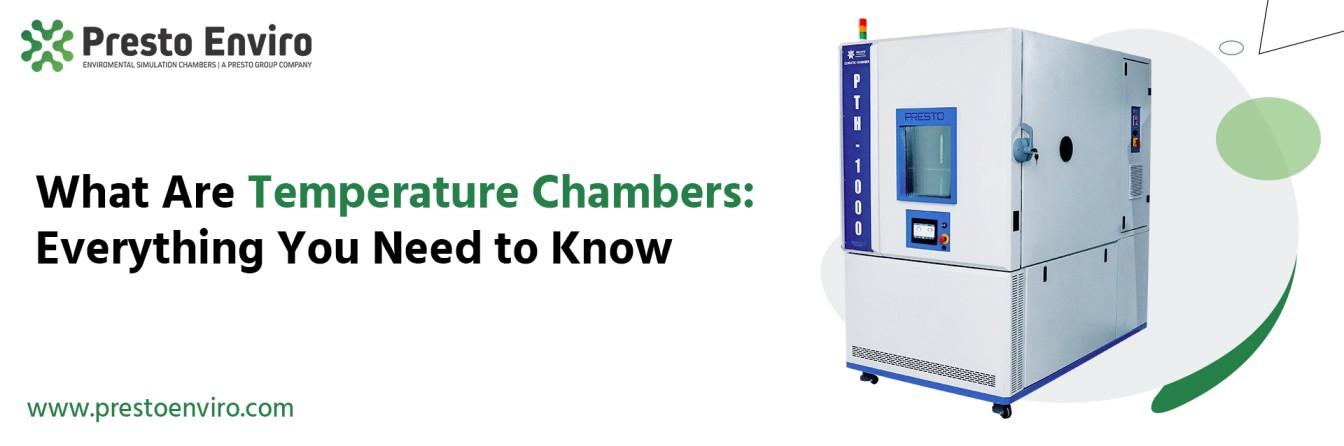
Temperature chambers are insulated boxes. They keep a product at a specific temperature. They can move it through different temperature levels in a set pattern. This lets people test how the product behaves when it's hot or cold.
15-Oct-2026
Presto Enviro
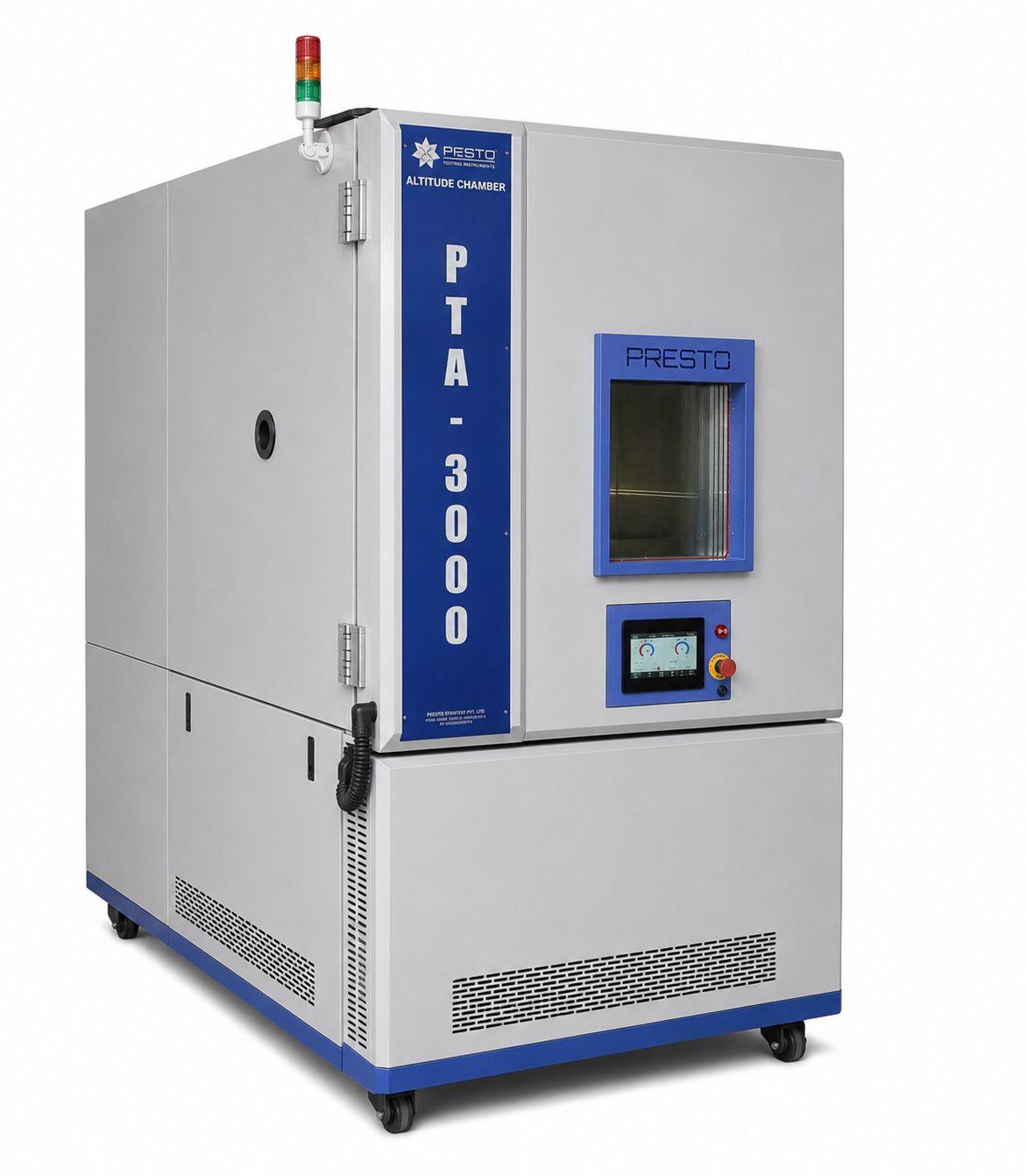
In environmental testing, vacuum chambers are also called altitude test chambers or low-pressure chambers. They lower air pressure inside a sealed chamber to simulate high altitude while controlling temperature and, in some configurations, humidity.
13-Oct-2026
Presto Enviro
An in-house lab can deliver results, give better control over product testing, and reduce testing costs in the long run. To make it work well, the lab space, equipment, utilities, and testing methods must be planned according to your needs.