© Copyright 2025. All Rights Reserved by Presto Stantest Pvt. Ltd.
11-Feb-2026
Presto Enviro
Have you ever wondered how oversized components get tested under harsh conditions before they leave the factory floor?
Large assemblies do not fit into standard chambers. Moving them piece by piece also changes how stress behaves. That gap led to the rise of drive-in type environmental test chambers.
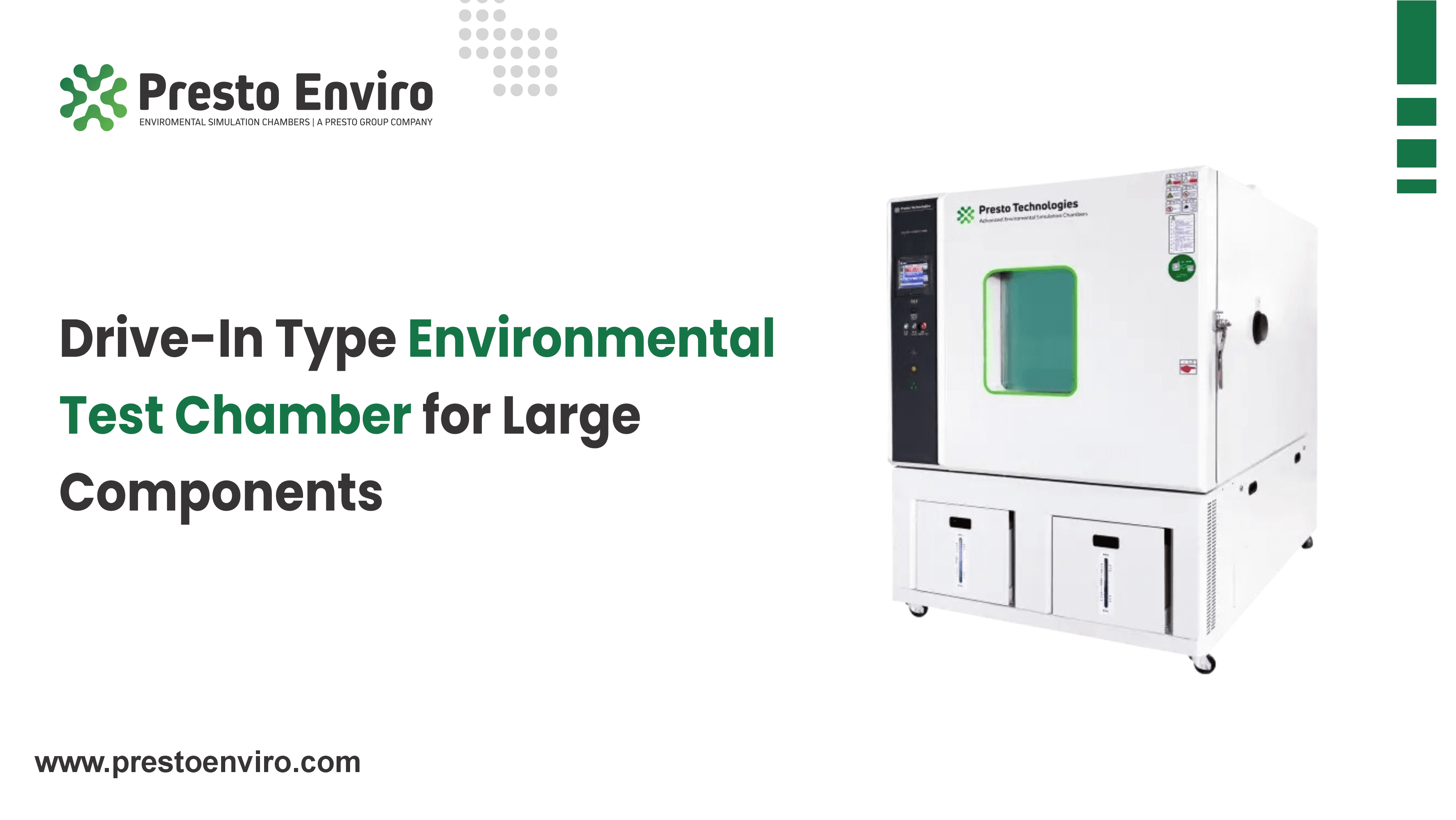
These chambers allow full-scale components to roll directly inside for testing. No dismantling. No shortcuts. Just real exposure under controlled conditions. For industries handling heavy or bulky products, this setup has become part of daily validation work.
A Walk and drive-in type environmental test chamber is a huge case that is used to test full-size parts with controlled humidity and temperature. Components are loaded into the chamber on trolleys, pallets, or wheeled platforms, rather than being loaded by hand.
When the items are placed inside the chamber, the test cycle begins from this point. Everything happens with the product in its actual assembled form.
This type of chamber suits products that cannot be broken down without changing their behavior during testing.
Large components behave differently from small samples. Heat spreads unevenly, and moisture settles in corners and joints.
Testing only small sections may miss these effects. A housing might pass lab tests but fail in real service due to internal stress buildup. Drive-in chambers help reveal these issues early.
They allow engineers to observe how size, mass, and structure influence performance during extreme conditions.
These chambers operate using high-capacity airflow systems and precise control units. Once the component is positioned inside, sensors track internal conditions continuously.
Temperature cycles simulate hot and cold exposure. Humidity control adds moisture stress where required. Some tests run for days or weeks without interruption.
Uniform airflow is critical. Large volumes demand steady circulation to avoid hot spots or cold pockets. Well-designed chambers handle this with reinforced insulation and balanced air distribution.
Car manufacturers have assemblies, battery packs, and powertrain components that are tested. These components are exposed to extreme temperatures.
The structural sections, enclosures, and support systems are tested in the aerospace and defense industries. This is of importance when it comes to reliability in extreme conditions.
Control panels, cabinets, and huge housings are tested in the electrical and energy industries. Heat and moisture are safety and life-span factors.
Ahead of construction, tests of prefabricated units, enclosures, and heavy-duty assemblies are performed by their suppliers.
Full assembly testing eliminates guesses. The components are subjected to stress, as in an actual application.
Management of risk is minimized because components are not lost.
Test data becomes more meaningful. Results reflect real-size behavior rather than scaled assumptions.
Choosing the right system starts with understanding component size and weight. Floor load capacity matters. Door clearance matters.
Test range matters too. Temperature limits, humidity control accuracy, and cycle duration should match real requirements.
Long-term usage patterns also matter. Chambers used daily need stronger construction than that used occasionally.
Proper installation and routine checks support steady operation over time.
Drive-in environmental testing supports informed decisions. It shows how real products behave under stress.
This information is used by design teams to improve materials and layouts. It is used by quality teams to accept production runs.
This testing may never be visible to the customers, but they experience its effect in less failures and product longevity.
Environmental test chambers in the form of drive-in type introduce realism in environmental testing. With large components, they will show problems that small tests are usually unable to indicate.
In the case of industries dealing with heavy or oversized products, the method helps to make a better design and be more confident prior to implementation. Where size is the new variable behavior, full scale testing is not only useful but essential.
What makes a walk and drive-in type environmental test chamber different from standard chambers?
A walk and drive-in chamber allows full-size components to be tested as complete units. Standard chambers usually handle small samples or subassemblies. Testing the full component shows how size, weight, and structure affect performance under environmental stress.
Which types of components are best suited for driving in environmental testing?
Large assemblies that cannot be dismantled easily work best. Examples include vehicle sections, battery enclosures, control cabinets, and prefabricated units where internal heat and moisture distribution is significant.
What is the duration of the tests?
The time of the test is based on the product and test objective. Some of the cycles take a few hours, and some take a number of days or weeks to observe the long-term exposure effects.
Are the temperatures homogeneous in such a large room?
Properly designed rooms incorporate regulated air movement and insulation to maintain the conditions within the room. This would prevent hot or cold spots that would interfere with the accuracy of the tests.
What is to be put into consideration before installing an environmental test chamber drive?
The first thing that should be reviewed is floor load capacity, door clearance, power availability, and ventilation. Knowing the size of the components and the range of tests will also allow choosing the suitable chamber that fits the everyday requirements.
Elevate your quality assurance process to new heights
Related Blogs
23-Sep-2026
Presto Enviro
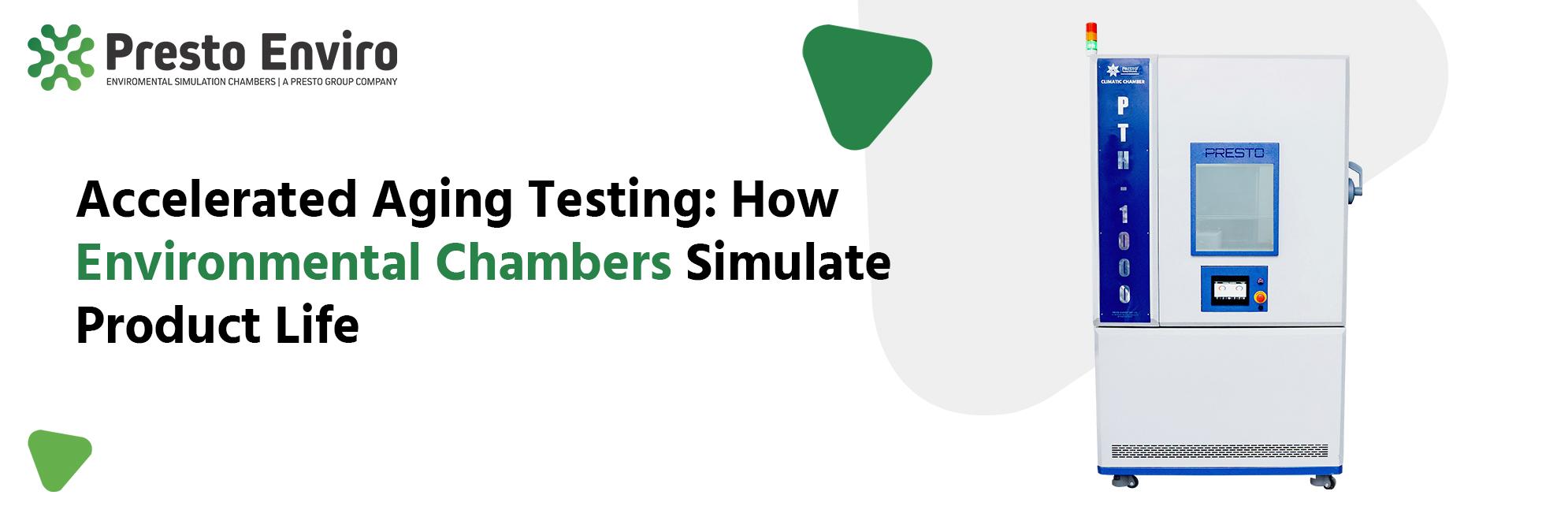
Products are expected to work reliably for months or years, but manufacturers cannot always wait that long to find out how they will perform. Accelerated aging testing solves this problem by exposing products to controlled environmental conditions that speed up certain aging effects.
20-Sep-2026
Presto Enviro
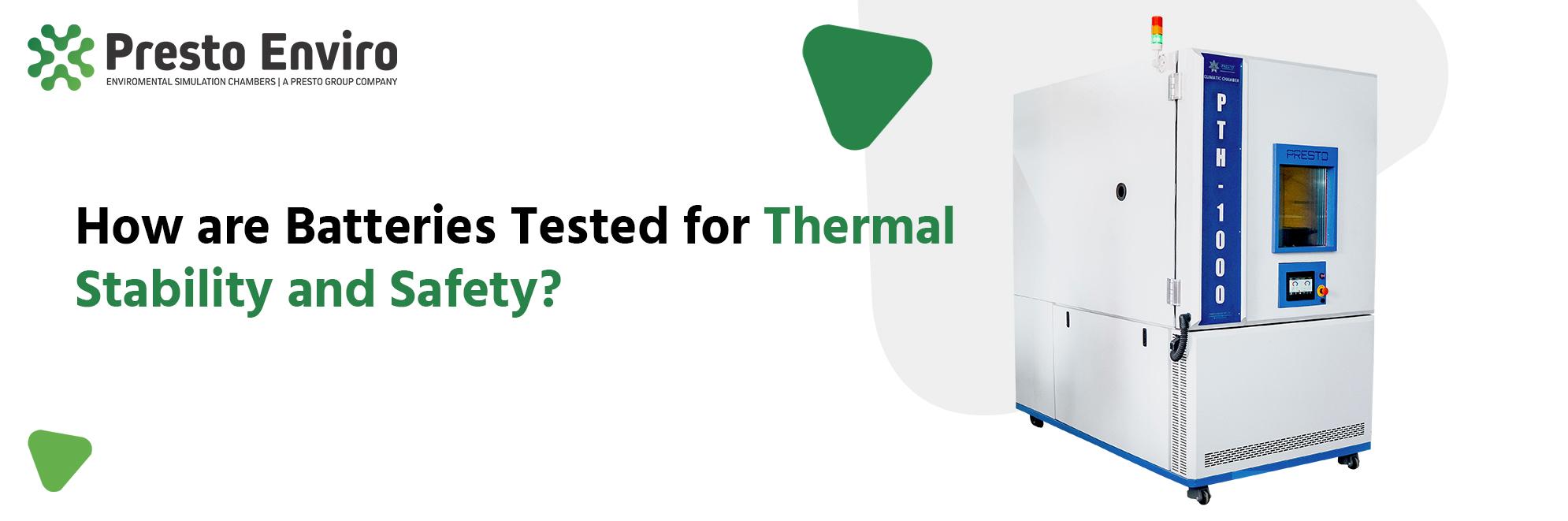
Battery safety is not something manufacturers can check only after a battery is ready for use. Temperature, charging conditions and repeated use can change the way a battery behaves. In some cases, excessive heat can cause permanent damage or create serious safety risks.