© Copyright 2025. All Rights Reserved by Presto Stantest Pvt. Ltd.

10-Aug-2026
Presto Enviro
Environmental test chambers are sophisticated instruments to measure different climatic conditions like temperature, pressure, humidity, etc., before products are ready to launch. Temperature control is one of the most important challenges to be performed but have you ever thought why temperature uniformity is so important?
Maintaining tight thermal control inside an environmental chamber isn't just about reaching a target setpoint. It is done to test whether each cubic inch of that interior workspace remains at that same temperature throughout the entire length of a test cycle.
If you are using an environmental test chamber for your laboratory, it is important to understand what is temperature uniformity and how you can maintain this uniformity across the testing process. In this article, we will discuss everything about temperature uniformity in environmental test chambers.
Temperature uniformity is simply the measure of how even the temperature remains across every single corner of an environmental chamber. If you set a chamber to eighty degrees Celsius, every shelf, corner, and center point should read eighty degrees Celsius.
Take a real example from the lab. Assume that you have a collection of automotive sensors that you want to run on an 85°C high-temperature soak test. A spatial variation of 3.6°C” means that a sensor placed near the top air vent is at 85.1°C while a sensor placed in the lower back corner is at 81.5°C. That difference means that identical sensors in two separate shelves have different thermal stress profiles during exactly the same test run.
Temperature uniformity matters because uneven heat distribution distorts component degradation rates, invalidates test repeatability, and causes immediate non-compliance with strict quality standards. Without flat temperature profiles across the entire workspace, your test results are basically just a roll of the dice.
If there are any temperature differences within a work area, components will heat up or cool down at varying rates. A circuit board that is located in a dead zone generally takes a lot longer to reach thermal equilibrium than one that is directly in the flow of the primary air stream. This causes distortion of the thermal resistance tests; "fatigue" of the solder joints is not uniform, and the plastic housings will result in totally inaccurate outgassing rates.
Compliance standards such as MIL-STD-810, IEC 60068 and ASTM environmental profiles require critical spatial control within the entire volume of the payload. Your test logs are not valid if you are over the allowed tolerances. That forces engineering teams to throw away weeks of screening data and re-run expensive qualification cycles from scratch.
Active payloads make this problem even worse. Powered electronics dump extra heat right into the cabinet, disrupting normal airflow and creating hot pockets around specific assemblies. Manufacturers like Presto Enviro tackle this by designing high-volume air recirculation loops into their cabinets, neutralizing localized heat build-up even when testing high-wattage active boards.
Improving temperature uniformity comes down to fixing internal air circulation, keeping test item density under control, and protecting cabinet seals from ambient room air. Simple changes to how you load and maintain a cabinet usually give you immediate improvements in thermal balance.
Conditioned air must move continuously through every section of the workspace to keep temperatures flat. Dedicated plenum channels direct conditioned air around all shelves using high-static blowers to blow the air across all of the units before returning to the cooling coils or heaters. As air speed decreases anywhere in that loop and buoyancy sets in, warm air rises to the ceiling, and cold air drops to the floor.
How you stack parts inside the chamber plays a massive role too. Cramming shelves too full or jamming large solid boxes right against the return ducts starves downstream specimens of air, creating hot zones in minutes.
A few basic operational habits will help keep conditions flat:
Your airflow functions at maximum capacity for years of daily testing with regular maintenance. Fan impellers can be cleaned, heater element resistance is checked and refrigeration valves are checked to prevent small mechanical wear and tear from becoming large temperature fluctuations.
Besides compliance, accurate temperature uniformity is a key enabler of operational efficiency and risk mitigation:
When uniformity is compromised, test batches are often invalidated. This forces teams to discard weeks of work and restart testing, wasting energy, expensive raw materials, and high-value staff hours.
Testing components in "thermal dead zones" gives false-positive results. The warranty claims and brand damage that can result when a product passes quality assurance due to an inaccurate test environment but then fails in the hands of a consumer can far outweigh the cost of chamber maintenance.
Consistent, reliable test data reduces the need for "re-testing" cycles. By trusting your chamber’s uniformity, you can expedite product validation and move confidently toward production, avoiding the bottleneck of waiting on inconclusive data.
Chambers struggling with poor airflow or worn-out seals often run their compressors and heaters longer than necessary to stabilize conditions. Regular maintenance for uniformity effectively optimizes energy usage, lowering utility costs over the equipment’s lifecycle.
Maintaining a uniform temperature throughout the chamber is essential for getting repeatable and clean environmental test data. Addressing airflow issues, maintaining load spacing and routine maintenance preserve your entire testing system from the hidden airflow variations that could spoil reliable data.
Working with experienced equipment builders makes hitting those tight tolerances a lot easier over the long haul. Presto Enviro has established itself as a top environmental chamber manufacturer, engineering rugged chambers with optimized ducting and tight control loops that deliver rock-solid thermal stability even under heavy industrial workloads.
Elevate your quality assurance process to new heights
Related Blogs

23-Sep-2026
Presto Enviro
Products are expected to work reliably for months or years, but manufacturers cannot always wait that long to find out how they will perform. Accelerated aging testing solves this problem by exposing products to controlled environmental conditions that speed up certain aging effects.
20-Sep-2026
Presto Enviro
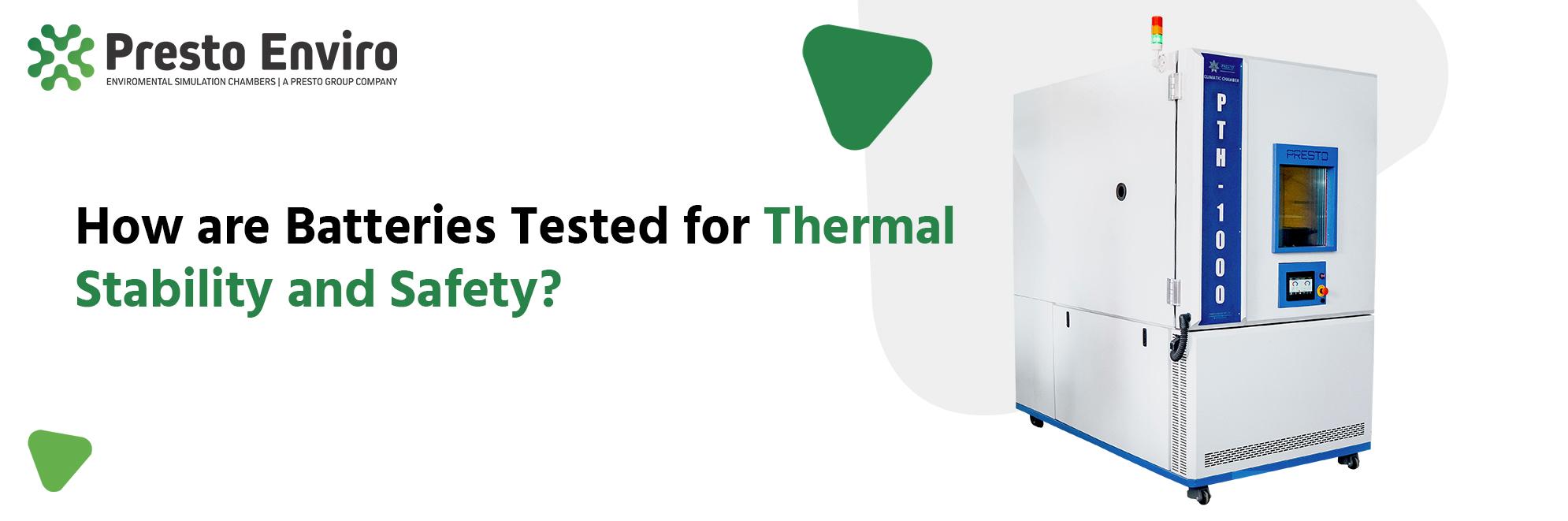
Battery safety is not something manufacturers can check only after a battery is ready for use. Temperature, charging conditions and repeated use can change the way a battery behaves. In some cases, excessive heat can cause permanent damage or create serious safety risks.
15-Sep-2026
Presto Enviro
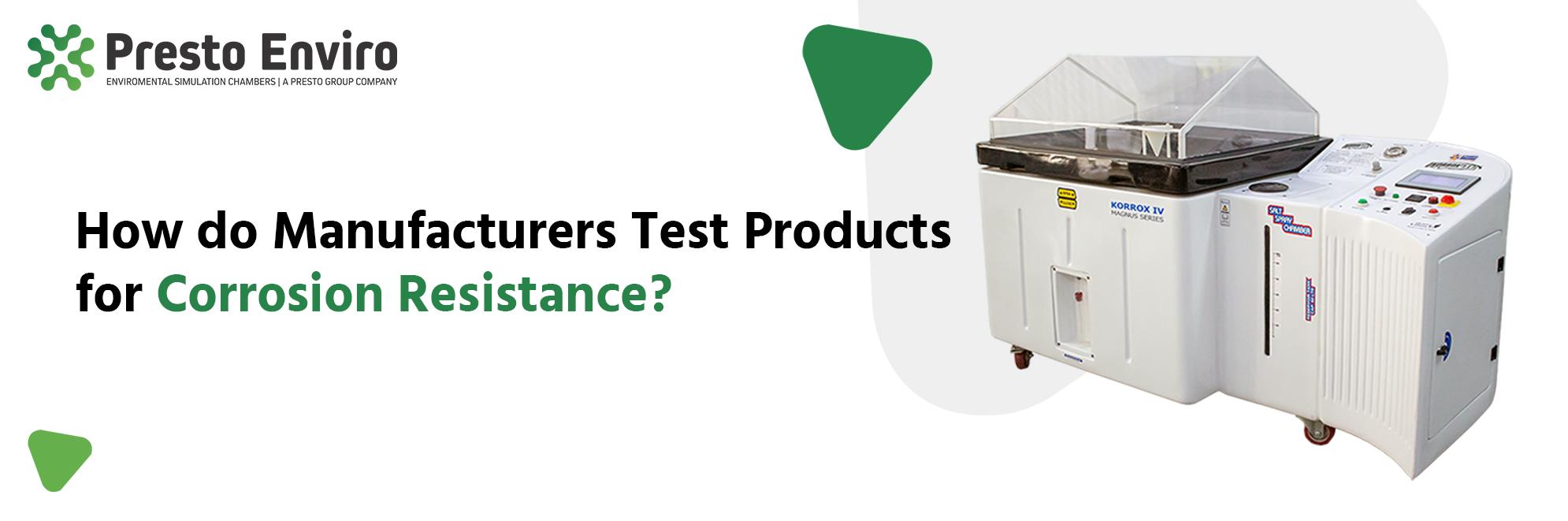
Corrosion is one of those problems that may appear mild at first and later turn costly. A metal part may leave the manufacturing facility appearing undamaged, yet suffer corrosion, stain formation or coating failure as a result of its contact with moisture, salts and changing weather conditions.