© Copyright 2025. All Rights Reserved by Presto Stantest Pvt. Ltd.
15-Aug-2026
Presto Enviro
Circuit boards often fail when moisture creeps into tiny gaps and triggers short circuits or corrosion. Engineers need to test how boards handle humid conditions long before sending them to full production.
Modern electronics operate everywhere from humid coastal towns to sweaty industrial facilities. Moisture remains one of the quietest killers of circuit board components. Water vapor settles on trace surfaces, reacts with small traces of residual flux, and triggers unwanted microscopic connections. Understanding how your board behaves when moisture builds up saves millions in product recalls down the line.
In this technical breakdown, we look directly at why humidity causes circuit failures and how testing reveals design weak spots. We will examine common failure modes, look into test procedures step by step, and examine the machinery needed to carry out accurate testing.
Humidity stress testing pushes electronic assemblies into controlled high-moisture environments to accelerate physical and electrical degradation. It forces hidden flaws to appear within days instead of taking years in the field.
Think of it as fast-forwarding the aging process of a circuit board. A controller board inside a smart washing machine works in warm, damp air for years. Instead of waiting years to discover if solder joints erode, technicians place the board inside a sealed chamber. They set the humidity level to something high like eighty-five percent relative humidity while cranking the temperature up. If moisture causes delamination or electrical leakage, you see it inside the chamber within two weeks.
Take an automotive sensor unit mounted near an engine bay. Moisture mixed with road salt residue slowly creates tiny copper whiskers across tight pin spacing. Humidity stress testing exposes this precise issue by combining damp air with continuous voltage. The applied electrical field accelerates ion movement across tiny PCB gaps, causing artificial failures fast enough for engineers to fix trace layouts before release.
Testing boards under extreme moisture reveals structural weaknesses, component degradation, and insulation failures early in production. It guarantees that finished hardware survives harsh real-world operating environments.
Printed circuit boards rely on thin insulating layers separating closely spaced copper traces. Moisture destroys this insulation capability through electrochemical migration. Tiny metal dendrites grow across traces like micro-tree roots, causing sudden short circuits that clear themselves as soon as current burns them away. These ghost failures are terrible to debug after products ship.
Moisture leads to physical delamination in multi-layer boards as water trapped in small internal voids expands with temperature change. There are chemical processes happening between moisture and the coating that cause oxidation of pads and thus weaken the solder points. Regular humidity testing allows engineers to check the conformity of the coatings, select better laminates for the boards, and approve the extent of cleaning before the production process starts.
Humidity stress testing can be different types depending on whether you want to measure long-term atmospheric resistance or sudden thermal-moisture shocks. Choosing the right method depends on your end application environment.
Steady-state humidity testing keeps temperature and dampness fixed for extended periods. The standard profile holds conditions at eighty-five degrees Celsius and eighty-five percent relative humidity. This eighty-five setup runs anywhere from two hundred to one thousand hours to measure steady moisture absorption into board materials.
Cyclic humidity testing swings temperature up and down while maintaining elevated moisture levels. As temperature drops inside the chamber, water condenses directly onto circuit boards. This condensation action pulls moisture deeper into tiny cracks and capillary paths along component leads. Highly Accelerated Temperature and Humidity Stress Testing, often called HAST, raises chamber pressure to push steam into board materials even faster, cutting test timelines from weeks down to hours.
A humidity stress test requires careful preparation, strict baseline measuring, precise chamber setup, continuous electrical monitoring, and thorough post-test failure evaluation. Skipping any stage corrupts test data.
Finally, cool the system down in a controlled manner to avoid thermal shock at completion. Extract the boards, allow them to stabilize at standard room temperature, and perform final functional testing alongside microscopic inspection to catalog solder joint corrosion or board blistering.
Standard protocols for testing determine the specified test duration, temperature, and humidity in each industry. These protocols allow the creation of reproducible tests that customers and regulators can trust.
Most standards for moisture testing methods in microelectronics and circuit boards are established by the IPC and JEDEC authorities. The JEDEC JESD22-A101 standard describes steady-state temperature and humidity bias testing of semiconductor packages. The IPC-TM-650 standard provides a thorough description of testing procedures.
The AEC-Q100 standard addresses the reliability of automotive electronics and sets higher requirements for stress cycles because of the extreme operating conditions of vehicles. The military MIL-STD-810 standard describes real-life working conditions which include high levels of moisture and fungus as well as salt exposure.
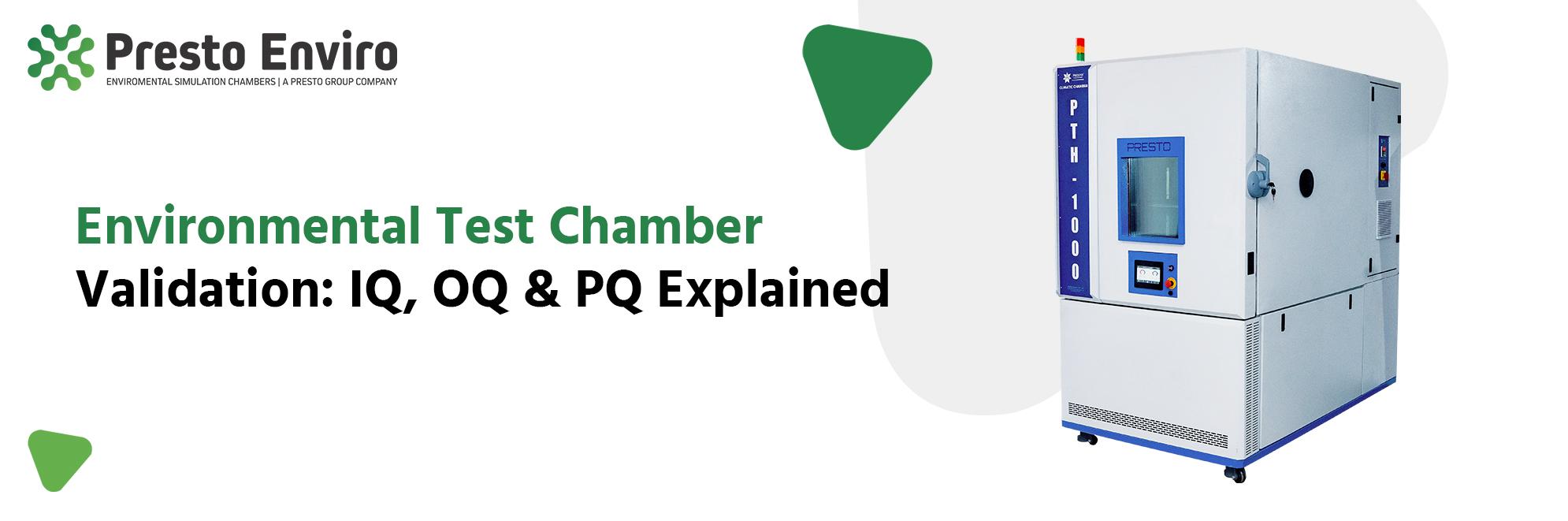
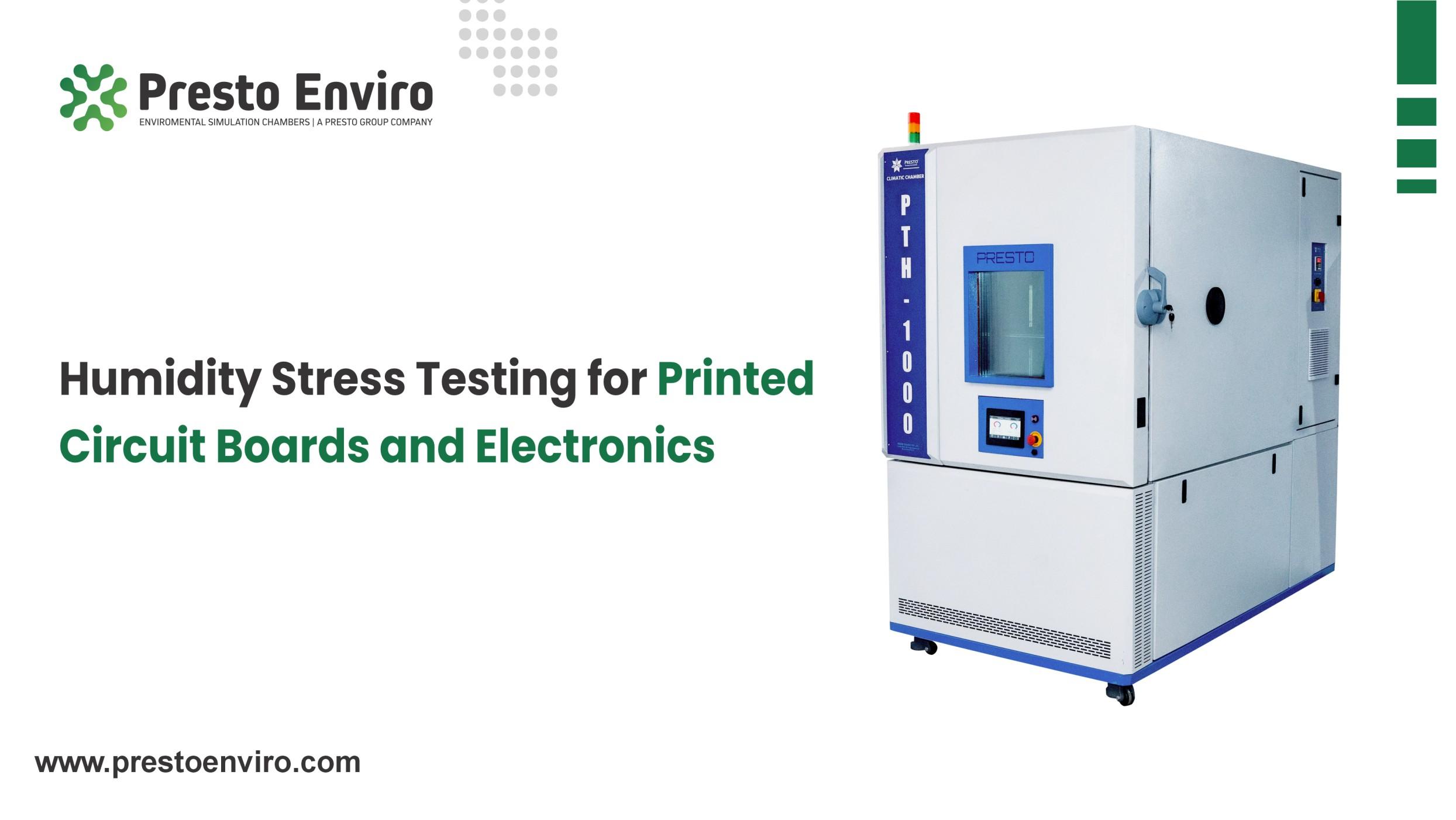
Executing reliable humidity stress tests requires precise chamber hardware capable of maintaining tight environmental tolerances. It should also be without dry spots or uncontrolled condensation. Specialized equipment ensures consistent test repeatability.
The Presto Enviro Humidity Chamber offers circuit board manufacturers a sophisticated environment in which to conduct rigorous damp heat and cyclic moisture testing. The unit is constructed of high-grade stainless steel in an inner chamber to prevent internal corrosion during years of continuous high-moisture operation. Its digital PID microprocessor ensures consistent thermal levels and relative humidity percentage levels.
Equipped with glass observation windows and sealed cable access ports, engineers run bias voltage lines directly into test samples while monitoring board conditions visually. Continuous reliability runs of several weeks' duration have been conducted with no localized air stagnation and even humidity using air circulation fans.
Humidity stress testing is essential for catching hidden electronics failures before products reach customer hands. Selecting test hardware of the right quality will guaranty that your reliability data correlates to real-world performance.
Moisture damage is a silent killer of electronic hardware, causing unpredictable field failures that drain warranty budgets and damage the brand's image. The use of structured moisture testing early in the design cycle can help identify layout errors, poor conformal coating coverage and bad assembly practices. Presto Enviro Humidity Chamber delivers the precision hardware teams need to validate complex circuit assemblies to tough standards worldwide.
Elevate your quality assurance process to new heights
Related Blogs

23-Sep-2026
Presto Enviro
Products are expected to work reliably for months or years, but manufacturers cannot always wait that long to find out how they will perform. Accelerated aging testing solves this problem by exposing products to controlled environmental conditions that speed up certain aging effects.
20-Sep-2026
Presto Enviro
Battery safety is not something manufacturers can check only after a battery is ready for use. Temperature, charging conditions and repeated use can change the way a battery behaves. In some cases, excessive heat can cause permanent damage or create serious safety risks.