© Copyright 2025. All Rights Reserved by Presto Stantest Pvt. Ltd.
23-Sep-2026
Presto Enviro
Products are expected to work reliably for months or years, but manufacturers cannot always wait that long to find out how they will perform. Accelerated aging testing solves this problem by exposing products to controlled environmental conditions that speed up certain aging effects.
This article explains what accelerated aging testing means, how the science behind it works, and how environmental test chambers are used during testing. We will also look at the basic testing process and some important global standards used for accelerated aging work.
Accelerated aging testing is a controlled test method used to estimate how a product or material may perform after long term environmental exposure by increasing selected stress conditions.
In normal use, a product may experience temperature changes, humidity, light, oxidation, and other environmental stresses over a long period. Waiting several years to study these effects is not practical for most manufacturers. Accelerated aging brings some of these conditions into a shorter laboratory test period.
The important point is control. The product is not simply placed in a very hot room and left there. Test conditions are selected based on the material, product application, expected service environment, and the type of aging being studied.
As another example, a polymer may become brittle after being exposed to high heat for a long period of time. A packaging material may lose its strength when exposed to heat and humidity. Surfaces coated with certain substances may change in color after certain amounts of time have passed when exposed to light and water.
Accelerated aging testing gives manufacturers a practical way to study such changes before products reach the market. It is also useful during product development. If there’s a change in the formulation of a material, tests can show if the new formulation behaves differently under an environmental stress. This part matters because small material changes can sometimes have a noticeable effect on long term performance.
Accelerated aging works by increasing environmental stresses so certain physical or chemical changes happen faster than they normally would.
One of the most common factors is temperature. It is well known that many chemical reactions go faster with increasing temperature. The Arrhenius relation is widely used to estimate the effect of temperature on the rate of a temperature dependent reaction. Simply put, some of the mechanisms of aging can be sped up at higher temperatures.
A commonly used form of the relationship is:
AF = exp [Ea/R × (1/Tuse − 1/Ttest)]
Here AF represents the acceleration factor. Ea is the activation energy. R is the gas constant. Tuse represents the normal use temperature in Kelvin and Ttest represents the elevated test temperature in Kelvin.
This calculation can be useful, but it should not be treated as a universal answer for every product. Real products can have several aging mechanisms happening at the same time.
Humidity is another major factor. Depending on the product, high humidity can cause corrosion, absorption of moisture, swelling, electrical leakage and other changes to occur more rapidly. Temperature and humidity are often combined because their effects may interact.
Light exposure is also important for outdoor products. Ultraviolet radiation can cause fading, cracking, chalking, loss of mechanical strength, and surface degradation. A suitable light source can be used to reproduce controlled exposure conditions in a laboratory.
The key is to reproduce the important aging mechanism rather than simply making the environment extreme. If the test conditions create a completely different failure mechanism from normal use, the result may not give a useful picture of product life.
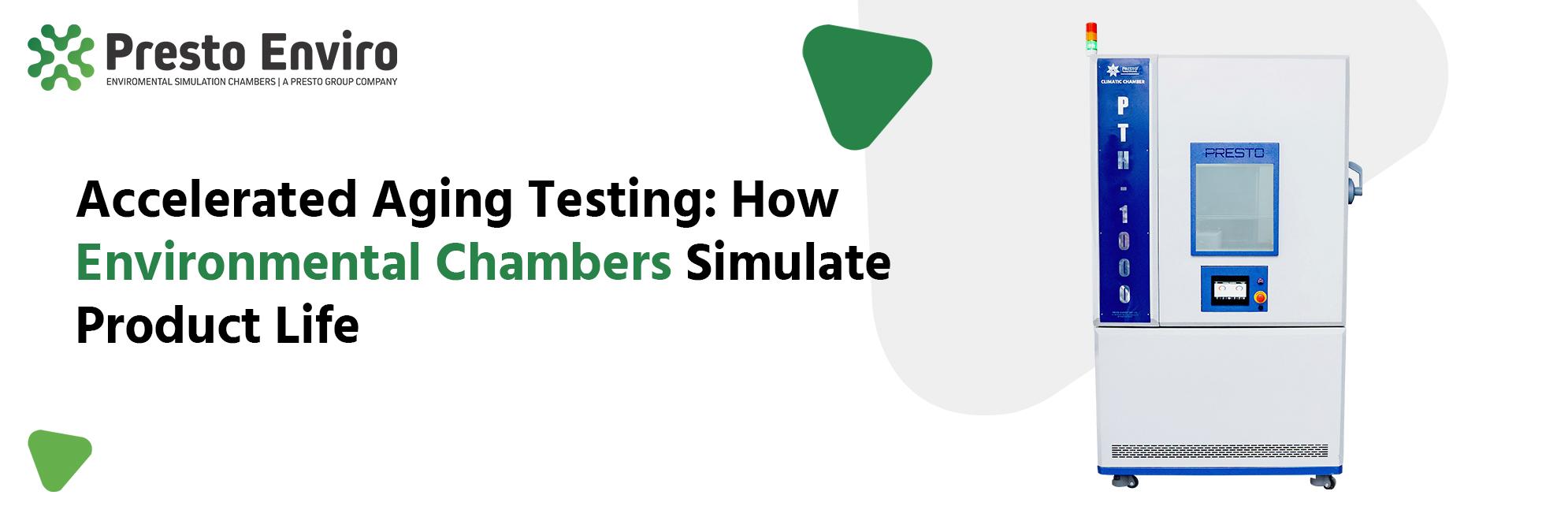
An environmental test chamber provides the controlled space where temperature, humidity, light, and other environmental conditions can be maintained for a defined test period.
The chamber gives testers much better control than ordinary room conditions. Temperature can be programmed, humidity can be regulated, and test cycles can be repeated with much better consistency. Depending on the chamber design, other environmental factors can also be introduced.
For accelerated aging applications, chamber stability is especially important. A small variation may not matter for a short basic test, but long exposure testing requires reliable control over the selected conditions.
Presto Enviro environmental test chambers are among the best choices for accelerated aging applications because they are designed for controlled environmental testing and repeatable test conditions. Laboratories and companies that have to put their samples through specific temperature and humidity conditions will find that these chambers can help them achieve this.
However, the chambers are only one part of the testing process. The final result depends on the test method, sample preparation, monitoring equipment, time of exposure and evaluation criteria.
Accelerated aging testing usually starts with a clear understanding of the product's expected service conditions and the type of degradation being studied. From there, the test conditions are selected, samples are exposed, and their performance is checked before and after aging.
Starting with the process of assessment, first you must determine what aspect you will examine. It might be color stability, mechanical robustness, corrosion resistance, performance of the package, electrical behavior, and etc. Parameters should be specific when performing tests. Without a clear goal, results may produce lots of information but no answers.
Samples need to reflect the real item or material very closely. Their size, production method, surface treatment and materials used can have an impact on aging patterns. In case of making comparisons of different versions of the actual product, the samples must be similar in their preparation conditions.
The next step is selecting temperature, humidity, light exposure, or other environmental factors. These conditions should be based on the expected application and the relevant testing standard. Extremely aggressive conditions are not automatically better. They can sometimes cause unrealistic failures.
The selected conditions are entered into the environmental test chamber. Some tests use a constant temperature and humidity level. Others use cycles with changes in temperature or humidity. The chamber should reach stable conditions before the actual exposure period is counted.
The samples remain inside the chamber for the required test duration. During this period, chamber conditions are monitored. Depending on the test, records may include temperature, relative humidity, exposure time, light intensity, or other parameters.
After exposure, the samples are evaluated against their original condition. Measurements may include tensile strength, weight, color, dimensional stability, surface appearance, electrical properties, leakage, cracking, or other product specific characteristics.
Visual inspection can also be useful. Sometimes a physical change is obvious even before detailed laboratory measurements are completed.
The final results are compared with those of the original measurements as well as the acceptance criteria. If the performed tests show that the product meets the required performance, the data can be used for further steps in development or qualification activities. If the measurements indicate a significant degradation, possible changes to a material, design, or technology will be taken into account.
Global standards provide defined methods for different types of accelerated aging and environmental exposure testing. The right standard depends on the product, material, and aging mechanism being investigated.
ASTM F1980 is widely associated with accelerated aging of sterile barrier systems and medical device packaging. It provides a framework for using elevated temperatures to accelerate aging and estimate the effects of time on packaging materials.
ASTM D3045 is used for heat aging of plastics without applied load. It provides guidance for evaluating the effects of elevated temperature on plastic materials.
ISO 4892 series standards cover methods for exposing plastics to laboratory light sources. These methods are relevant when light and weathering effects need to be evaluated.
IEC 60068 is a major environmental testing standard series used for electrical and electronic equipment. Different parts address environmental stresses such as dry heat, cold, damp heat, and other conditions.
ASTM G154 is commonly used for fluorescent ultraviolet exposure of nonmetallic materials. It provides controlled laboratory exposure using fluorescent UV lamps along with moisture and temperature conditions.
The standard should always match the actual test objective. A manufacturer should not select a standard simply because it is commonly used. Product requirements and expected service conditions need to be considered first.
Accelerated aging testing gives manufacturers a practical way to study long term product behavior without waiting for years of natural exposure. Laboratories use controlled temperature, humidity, light and other environmental stresses to observe how materials and products change over time.
The process is based on environmental test chambers. They provide controlled conditions for reproducible exposure and comparison of reproducibility between samples. The test method is still very important. Good sample preparation, suitable standards, accurate monitoring, and sensible exposure conditions are all important.
Presto Enviro environmental test chambers can support this type of controlled testing by providing a dedicated environment for temperature and humidity based exposure studies. For manufacturers and testing laboratories, the combination of a suitable chamber and a properly planned test method can make accelerated aging testing a useful part of product development and quality evaluation.
Elevate your quality assurance process to new heights
Related Blogs
20-Sep-2026
Presto Enviro
Battery safety is not something manufacturers can check only after a battery is ready for use. Temperature, charging conditions and repeated use can change the way a battery behaves. In some cases, excessive heat can cause permanent damage or create serious safety risks.
15-Sep-2026
Presto Enviro
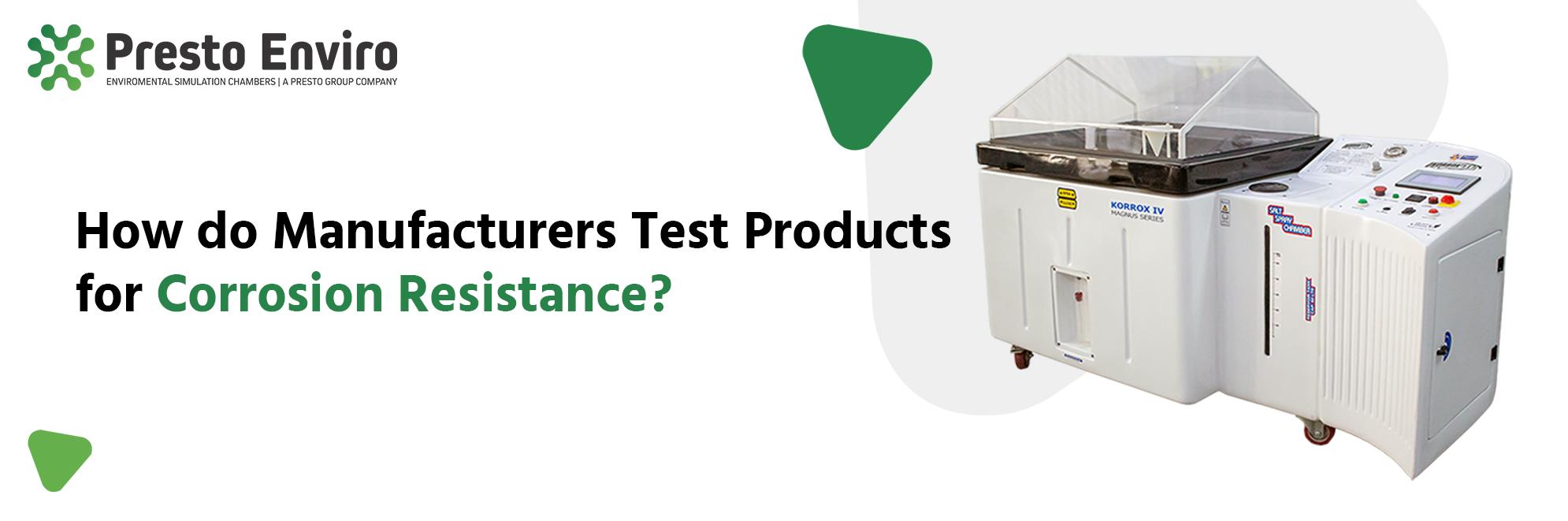
Corrosion is one of those problems that may appear mild at first and later turn costly. A metal part may leave the manufacturing facility appearing undamaged, yet suffer corrosion, stain formation or coating failure as a result of its contact with moisture, salts and changing weather conditions.
11-Sep-2026
Presto Enviro
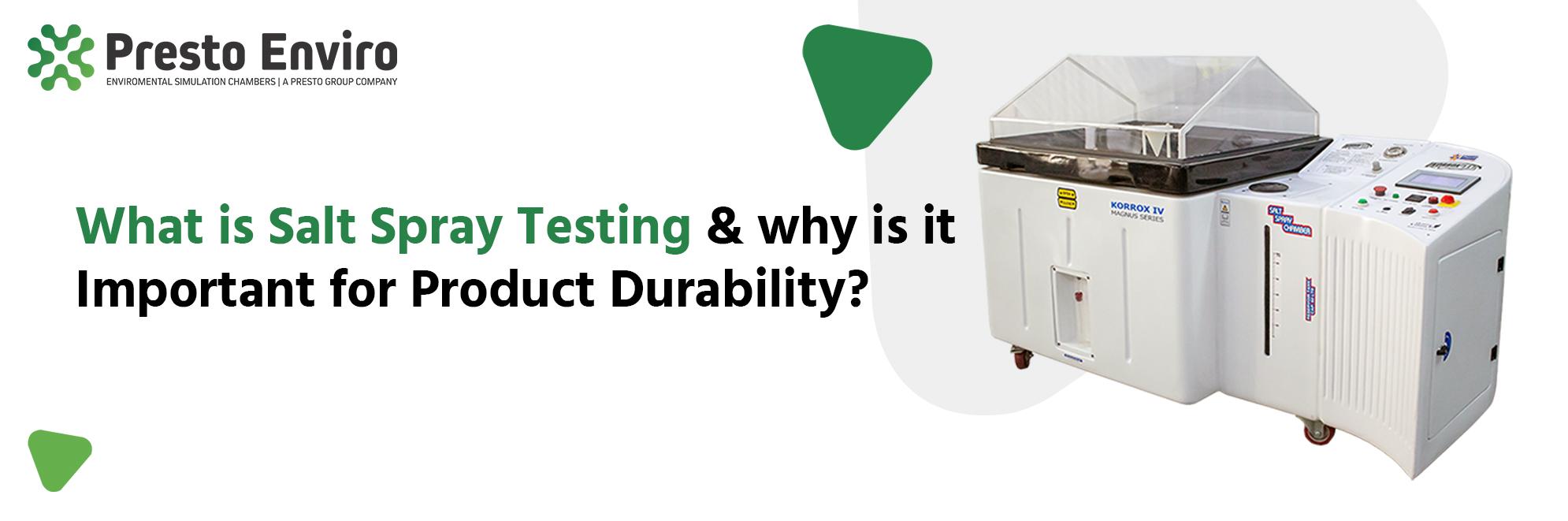
Metal parts exposed to environmental elements like rain, high humidity and saline air are subjected to quick degradation. Manufacturers don’t have years to wait to see long-term real-world durability with immediate shipping deadlines.