© Copyright 2025. All Rights Reserved by Presto Stantest Pvt. Ltd.
15-Jul-2026
Presto Enviro
Batteries face several challenges when facing harsh weather conditions, such as too hot or freezing cold but the real issue is often the control electronics. If a Battery Management System (BMS) gets too cold or cooks in high heat, its sensors start reading values incorrectly. If you don’t know, BMS acts as the brain of battery packs, monitoring individual battery cells and their charging and discharging to prevent overheating.
But to test the battery management system correctly, climatic testing plays a critical role. Climatic testing forces these boards into extreme conditions inside a chamber so you can catch failures in the lab instead of out in the field. Here is a practical look at how environmental testing works for a BMS and how to set up these tests properly.
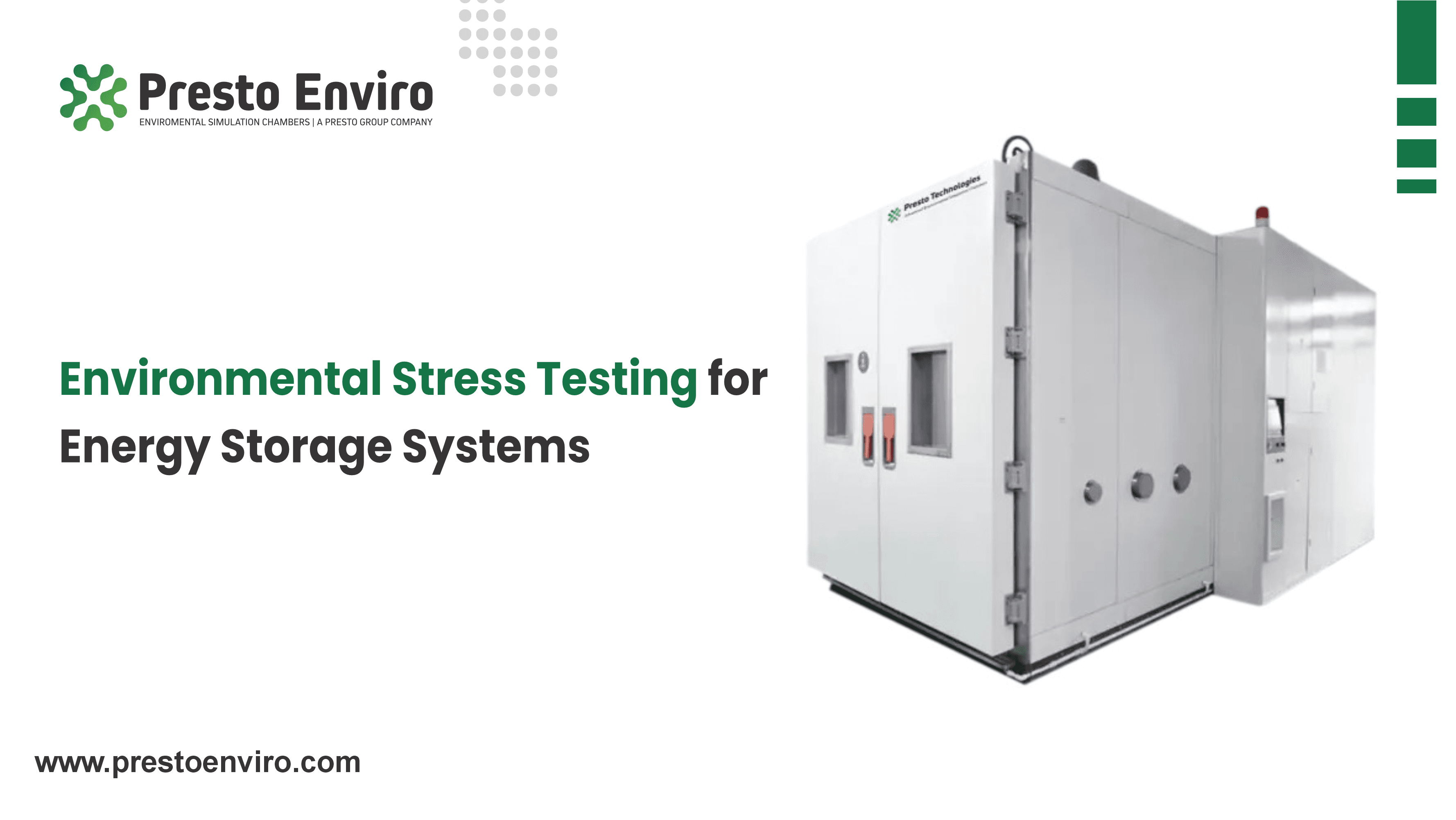
Climatic testing is an environmental testing method that simulates harsh environmental conditions like extreme temperature, moisture, and heat conditions inside a controlled chamber. It lets manufacturers observe how electronic systems and battery cells behave when exposed to weather extremes without waiting for real-world seasonal changes.
The climatic testing is a very simple process in general. The hardware is fixed in an isolated compartment, which is referred to as a climatic test chamber and programmed to change the environment instantaneously. The compartment can cool to -40°C and increase to +85°C with 90% humidity in the air. Generally speaking, when you implement thermal cycling to BMS, it can demonstrate whether solder joints are cracking, if the voltage readings start deviating from the given path, and if the circuit boards fail due to the presence of thermal cycling.
Lithium cells generate plenty of their own heat, and extreme outdoor weather makes managing that heat twice as hard. If the BMS board misbehaves during a heatwave or a hard freeze, the whole pack is in danger.
Cold weather slows battery chemistry and causes lithium plating if you charge too fast, while high heat degrades cells and pushes them toward thermal runaway. The BMS has to constantly monitor these limits and shut down power if things get risky. Testing the BMS board under thermal stress proves that its microcontrollers, cell balancing circuits, and temperature thermistors still trigger safety cutoffs when the ambient air turns hostile.
Testing a BMS means wiring the control board to cell simulators or actual battery modules inside the chamber, then cycling the temperature while pulling live diagnostic data.
Mount the BMS board securely in the chamber and run your test leads through the side access ports. Pass your wiring, power, CAN bus lines, and temperature sensors through rubber grommets on the chamber port. Plug those lines into external load banks and cell simulation gear sitting outside the chamber. Use high-temp and cold-rated wire insulation inside the box, or cracked wire insulation will throw off your readings halfway through a run.
Run a full bench test at normal room temperature before turning on the chamber heating or cooling cycles. Log initial readings for current draw, cell voltage accuracy, CAN message timing, and relay response speeds. Having these baseline numbers gives you a clean reference point. It makes it obvious when cold or heat starts pulling the sensor calibration off by a few millivolts.
Soak the chamber at low and high temperature limits to verify circuit stability and cutoff logic. Pull the chamber down to your lowest operating temperature target first. Check that the BMS recognizes the freezing state and correctly blocks low-temp charge commands. Next, ramp up to your upper heat limit. Keep an eye on the balancing resistors on the board to make sure they do not overheat adjacent logic chips when the ambient air is already hot.
Ramp the temperature back and forth between hot and cold while pumping moisture into the chamber. Rapid drops in temperature create instant condensation on exposed circuit boards. This step proves whether your conformal coating actually protects fine-pitch IC pins from shorting out. The physical expansion and contraction from cycling thermal stress also pulls on solder joints, exposing weak connections before boards go to assembly.
Pull event logs off the BMS and compare logged internal temperatures against your calibrated chamber probes. Look for dropped CAN messages, false fault flags, or delayed safety trips. This part matters because an overly nervous BMS will shut down a working vehicle unnecessarily, while a sluggish BMS misses a real thermal spike until it is too late.
Climatic tests come with a wide range of benefits and putting a BMS board through a chamber saves time and money by surfacing design flaws early when PCB layouts are still easy to change. Instead of guessing how the board holds up in real-world environments, you get hard data on component limits.
Testing high-energy battery systems inside a chamber carries real safety risks if something shorts or thermal runaway occurs. Presto Enviro builds climatic test chambers designed specifically to handle these harsh battery testing conditions safely.
Our chambers deliver precise temperature ramp rates and steady humidity control, letting you run repeatable test profiles without drift. Presto Enviro builds in critical safety features like pressure relief vents, nitrogen purge lines, and automatic gas detection. That gives lab technicians proper protection when pushing high-voltage BMS units and test packs to their actual breaking points.
Climatic testing is not just an enclosure to check at the end of a project; it is how you build reliable battery electronics by testing them in the early production stage. Forcing a BMS through severe environmental stress helps engineers dial in safety algorithms and fix hardware weaknesses early. Working with reliable chamber setups from suppliers like Presto Enviro ensures you get accurate, repeatable environmental data while keeping your test lab safe. To purchase the best quality climatic chamber for your battery management system, contact us to get a quote today!
Elevate your quality assurance process to new heights
Related Blogs

21-Oct-2026
Presto Enviro
Temperature chambers are insulated boxes. They keep a product at a specific temperature. They can move it through different temperature levels in a set pattern. This lets people test how the product behaves when it's hot or cold.
15-Oct-2026
Presto Enviro
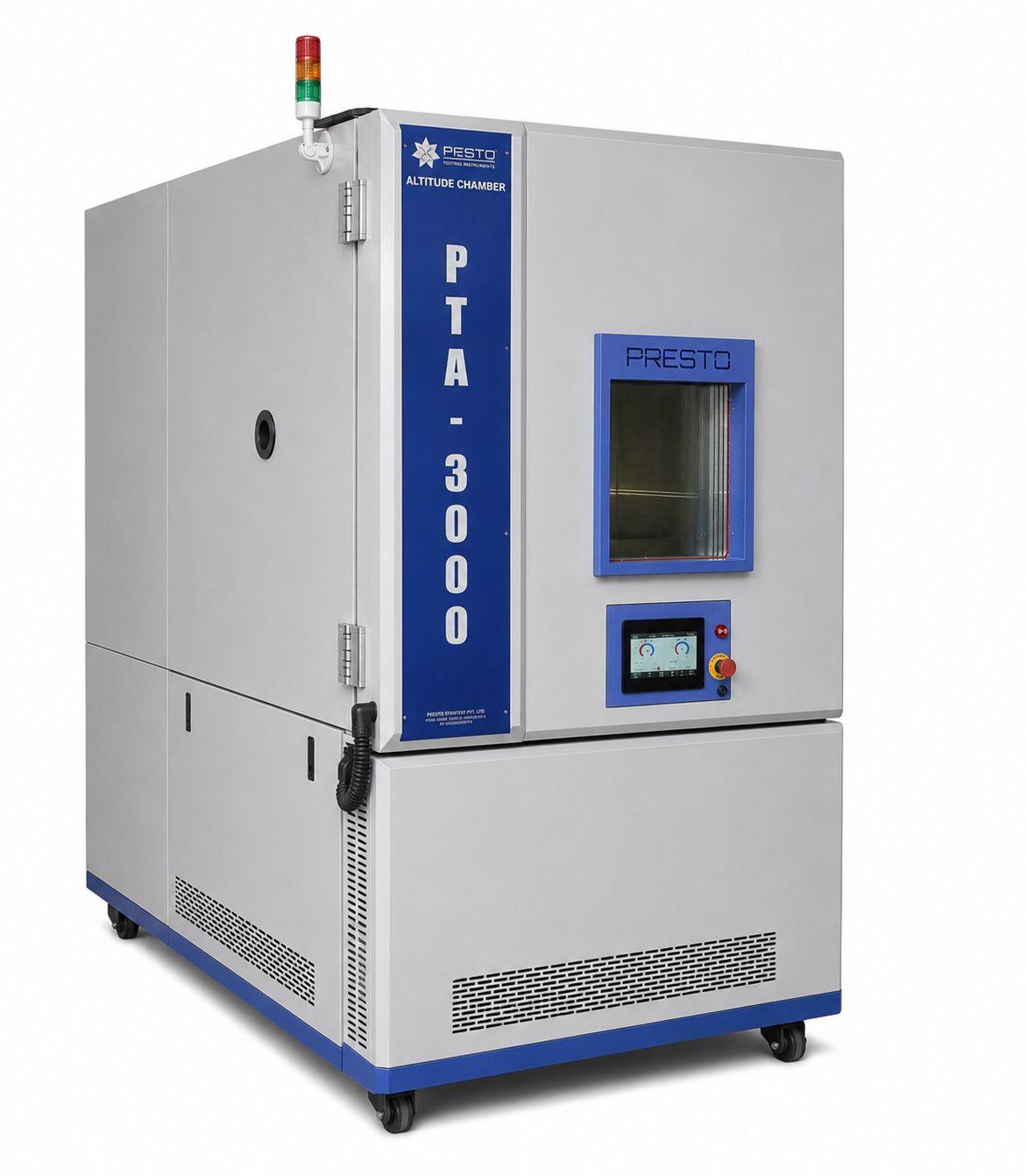
In environmental testing, vacuum chambers are also called altitude test chambers or low-pressure chambers. They lower air pressure inside a sealed chamber to simulate high altitude while controlling temperature and, in some configurations, humidity.

13-Oct-2026
Presto Enviro
An in-house lab can deliver results, give better control over product testing, and reduce testing costs in the long run. To make it work well, the lab space, equipment, utilities, and testing methods must be planned according to your needs.