© Copyright 2025. All Rights Reserved by Presto Stantest Pvt. Ltd.
23-May-2026
Presto Enviro
Most of the packaging problems happen when the product travels outside the warehouse such as during transportation or shipping, instead of in the warehouse itself. house. A product may be packed properly, sealed correctly, and loaded carefully, yet still arrive damaged. The reason is often constant vibration during shipping.
Trucks vibrate on rough roads, conveyor systems keep cartons shaking for long periods, and products stacked inside containers rub against each other during transit. After hours or days of movement, weak packaging starts showing problems.
This is why vibration testing has become a regular part of packaging evaluation today. Companies want to know if their packaging can actually survive real shipping conditions before products reach the market. In this article, we will talk about vibration testing, why it matters in packaging, ISTA standards used for testing, and the common test procedure followed in the industry.
Vibration testing is a laboratory test to evaluate how packaging performs under repetitive forces during transportation and shipping. The test simulates real shipping conditions such as truck, rail, and conveyor vibrations. It assists in detecting packaging failure, product shift, and potential product damage prior to distribution.
Products are in constant motion as they are transferred from trucks, moved by rail, handled in warehouses and loaded by systems during the transportation process. Even small vibrations become a problem when they continue for long hours. Sometimes the outer box remains intact while the product inside suffers damage.
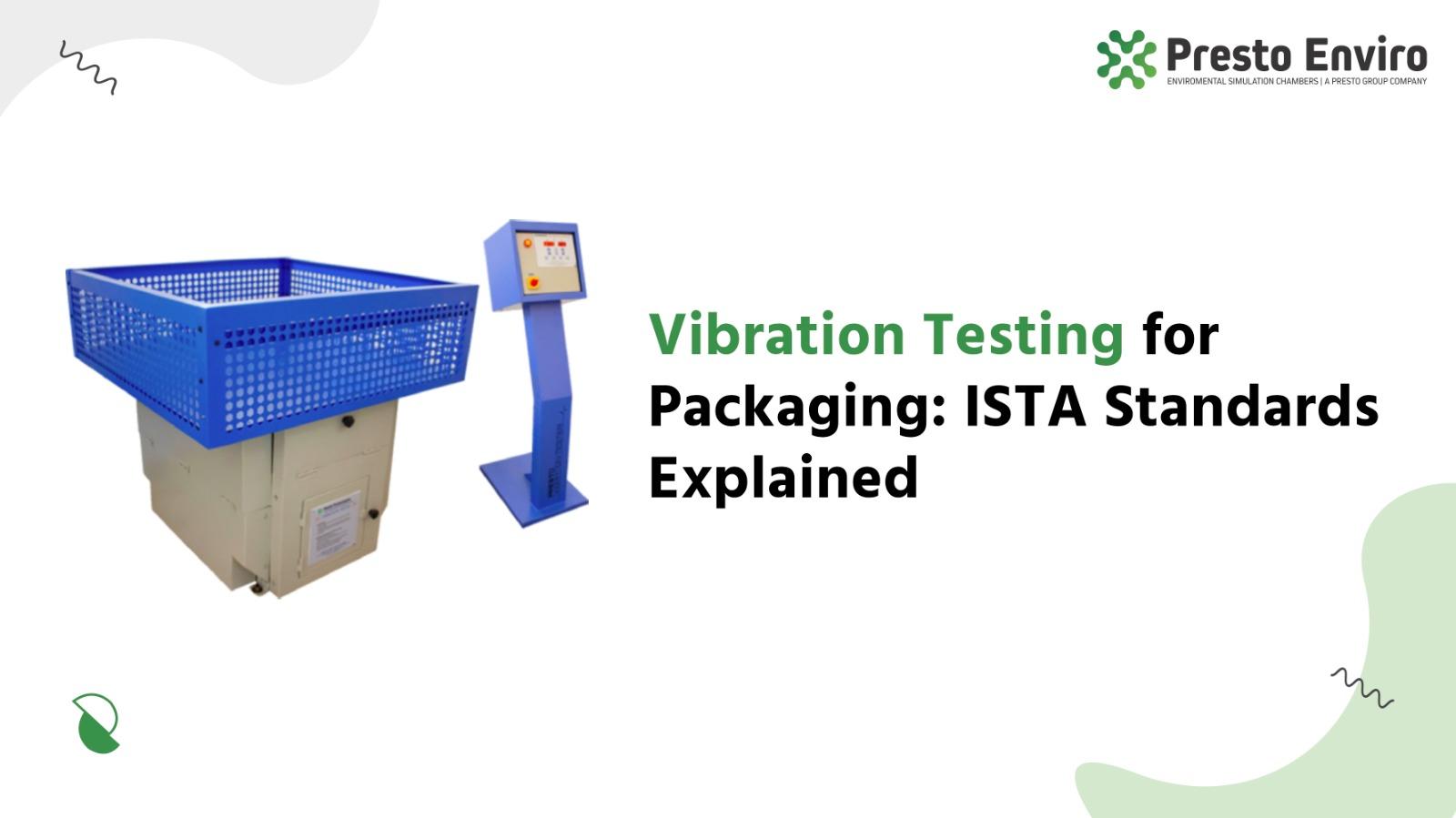
A vibration testing machine creates controlled vibrations using fixed or random motion patterns. The packaged product is placed on the vibration platform for a specific duration. Once the test is complete, the package and product are inspected for damage, shifting, leakage or structural weakness.
The idea behind the test is practical which is faced by the packaging industry. If packaging performs well during simulation, there is a much better chance it will handle actual shipping without failure.
ISTA standards are widely used packaging test methods that evaluate how products behave during transportation. Instead of testing packaging randomly, these standards provide proper guidelines for simulation testing.
ISTA stands for International Safe Transit Association. The organization developed several testing procedures based on shipment type, product weight, handling conditions, and distribution environment.
Some standards mainly focus on vibration performance while others combine vibration with drop testing, compression testing, and impact simulation.
|
ISTA Standard |
Uses |
|
ISTA 1A |
Basic testing for packaged products under 150 lb |
|
ISTA 1B |
Testing for packaged products over 150 lb |
|
ISTA 1C |
Extended integrity testing with vibration and compression |
|
ISTA 1D |
Testing for palletized and unitized loads |
|
ISTA 2A |
Partial simulation testing for individual packages |
|
ISTA 2B |
Combination testing for products and pallets |
|
ISTA 3A |
General simulation testing for parcel delivery systems |
|
ISTA 3B |
Testing for less than truckload shipments |
|
ISTA 3E |
Simulation testing for unitized pallet loads |
|
ISTA 3F |
Distribution testing for e-commerce shipment systems |
|
ISTA 6 Amazon SIOC |
Validation testing for Amazon Ships in Own Container packaging |
|
ISTA 6 Amazon Over Boxing |
Testing for packages requiring additional Amazon overboxing |
The selected standard depends on how the product moves through the supply chain. A heavy industrial shipment will not follow the same testing conditions as an e-commerce package.
Vibration testing procedure usually follows a fixed sequence so the results stay consistent and reliable. The exact settings may change depending on the selected ISTA standard.
Before the test starts, the package is prepared exactly the way it would be shipped in actual market conditions. Testing is achieved using real products, inserts, tapes, labels and cushioning materials. The package is checked visually prior to testing. Weight, dimensions, sealing condition and quality of the packages are noted.
The product is packaged with the final packaging layout. If any items were included with the actual shipping conditions, these will also be supplied as foam supports, dividers, wrapping material or pallets.
The step is to set up the vibration testing machine and ISTA standards are strictly followed for this setup. Operators need to adjust frequency range, intensity of vibrations, displacement level and length of test to ensure correct test results.
Now comes the most important step of vibration testing according to ISTA standards. The sample packaged product is set on the vibration table and the machine then generates the pattern of motions. These patterns are exactly similar to those in practical cases of transportation and shipping that reflect real conditions.
Random vibration is used in some tests for a more realistic simulation of transport. In other procedures, the displacement settings are fixed based on the needs.
The package is monitored while the test is running. Engineers monitor leakage, product movement, seal opening, or even any visible damage to the packaging.
The package is rechecked at the end of the vibration cycle. The team verifies that there are no crushed edges, any weak areas or sections that have shifted, or any product damage.
The observations are recorded in a report. Based on the results, the manufacturers will determine if the packaging has to be improved before it is approved for shipment.
Programmable vibration systems are now the more preferred option at many testing labs, as accurate simulation will yield more reliable packaging outcomes.
Packaging is not only meant for storage or branding anymore. It also needs to protect the product throughout the distribution cycle. A package may travel through multiple cities before reaching the customer. During that journey, vibration continues to act on the carton. Weak corners may collapse. Products may shift from their original position which includes a loose cap, and fragile items may crack without visible damage on the outer surface.
Many companies only discover these issues after customer complaints begin. By that time, they already face return costs, product replacement expenses, and damage to brand reputation. Vibration testing helps manufacturers identify weak packaging areas before large-scale shipment starts. Sometimes the cushioning material is insufficient and other times, the internal product arrangement is incorrect. In some cases, the corrugated box itself cannot handle long transportation cycles.
Industries like electronics, pharmaceuticals, cosmetics, automotive parts, and e-commerce depend heavily on packaging testing today. Online shipments especially face rough handling because products pass through several transportation and sorting stages.
Retailers and logistics companies also prefer suppliers who follow recognized packaging standards. Because of these factors, vibration testing is now treated as a preventive step rather than an optional one.
Companies using testing systems from Presto Enviro often perform transport simulation during the packaging development process itself. It helps reduce shipment failures later and saves redesign costs.
Transportation vibration may look like a small issue but over long shipping cycles, it can seriously affect packaging performance. Continuous movement weakens packaging materials slowly and increases the risk of product damage during transit.
That is why vibration testing has become an important part of modern packaging validation. ISTA standards help companies evaluate packaging strength under practical shipping conditions before products move into the market.
Businesses in the packaging industry are constantly seeking to enhance the reliability of their products. Also, investing in suitable transport simulation equipment is usually a part of the product development process. Presto Enviro is a producer of vibration testing systems for packaging and transport simulation applications. They can help packaging teams assess the resilience of the packaging, minimize transit damage risks and develop robust packaging solutions for today's distribution landscape.
Elevate your quality assurance process to new heights
Related Blogs
15-Oct-2026
Presto Enviro
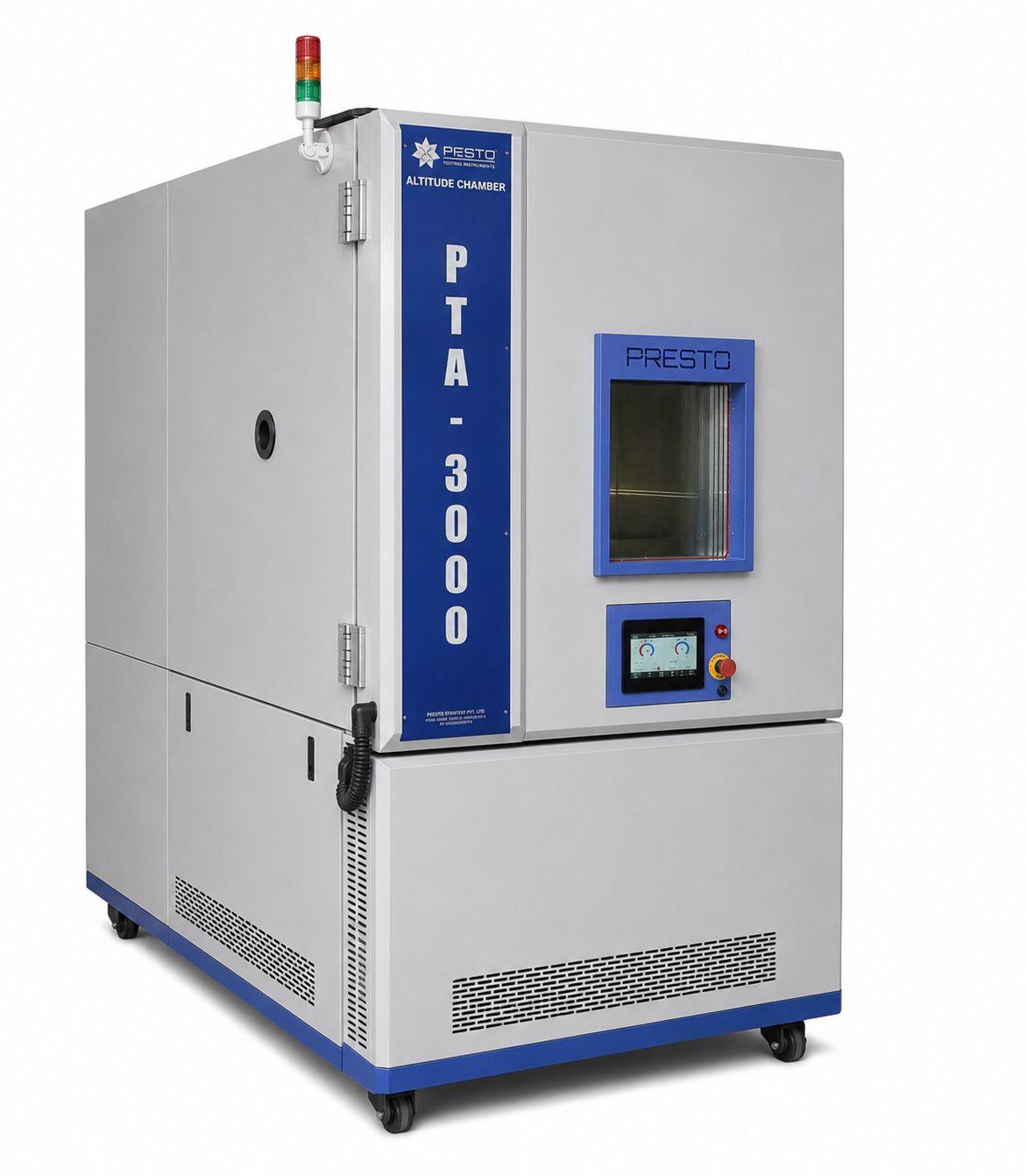
In environmental testing, vacuum chambers are also called altitude test chambers or low-pressure chambers. They lower air pressure inside a sealed chamber to simulate high altitude while controlling temperature and, in some configurations, humidity.
13-Oct-2026
Presto Enviro
An in-house lab can deliver results, give better control over product testing, and reduce testing costs in the long run. To make it work well, the lab space, equipment, utilities, and testing methods must be planned according to your needs.