© Copyright 2025. All Rights Reserved by Presto Stantest Pvt. Ltd.
13-Mar-2026
Presto Enviro
The quality of products is one of the most influential factors that define the success of a brand to compete in the current global economy. Due to this reason, companies in various industries like electronics, pharmaceuticals, automobiles, packaging and consumer goods must make sure that their products are reliable under diverse environmental circumstances.
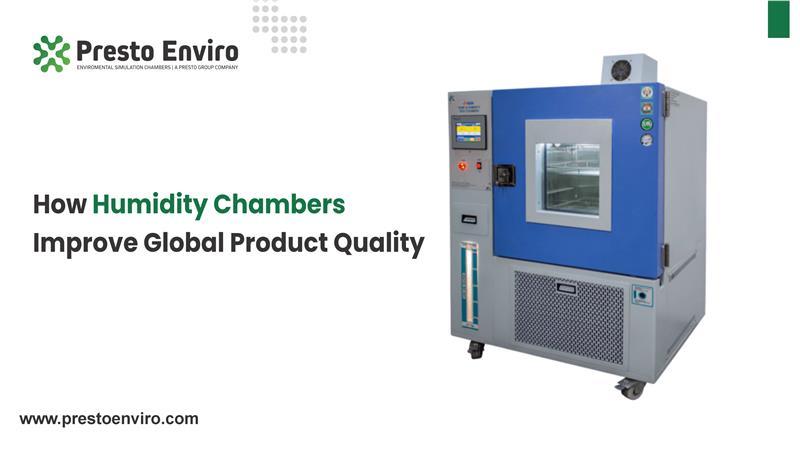
Manufacturers utilize specialized testing equipment called humidity chambers to assess how their products will perform in these environmental conditions.
Humidity chambers provide manufacturers with the ability to simulate specific temperature and humidity conditions, thereby enabling manufacturers to perform durability and reliability tests using the material or finished product.
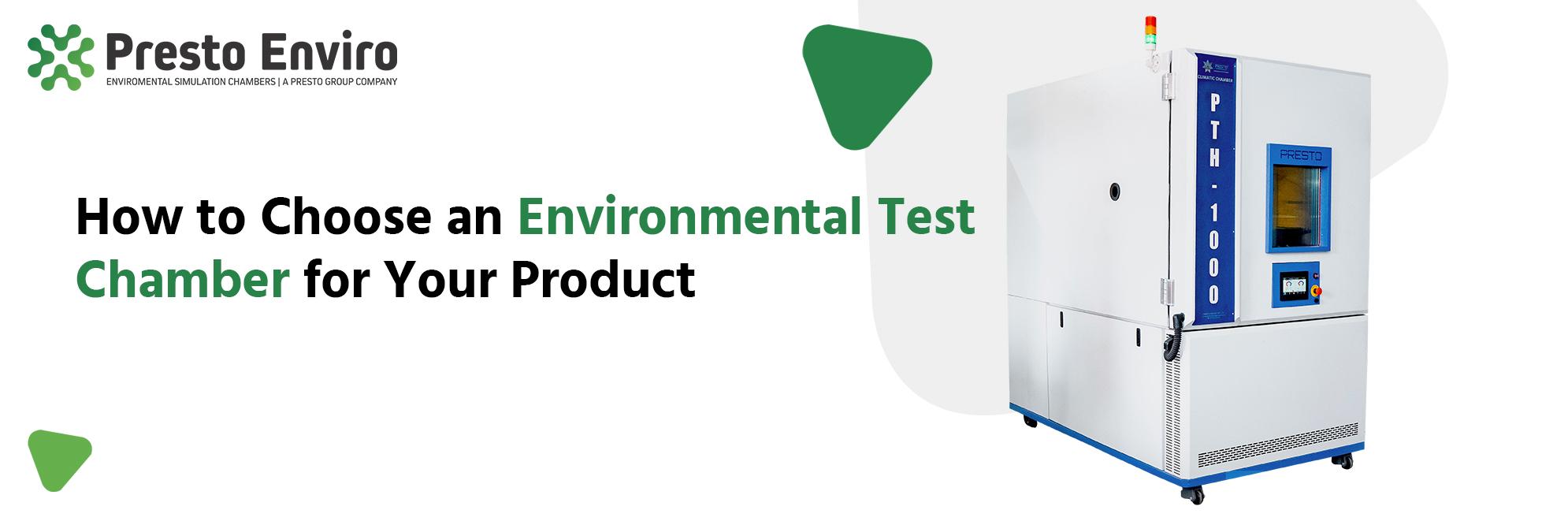
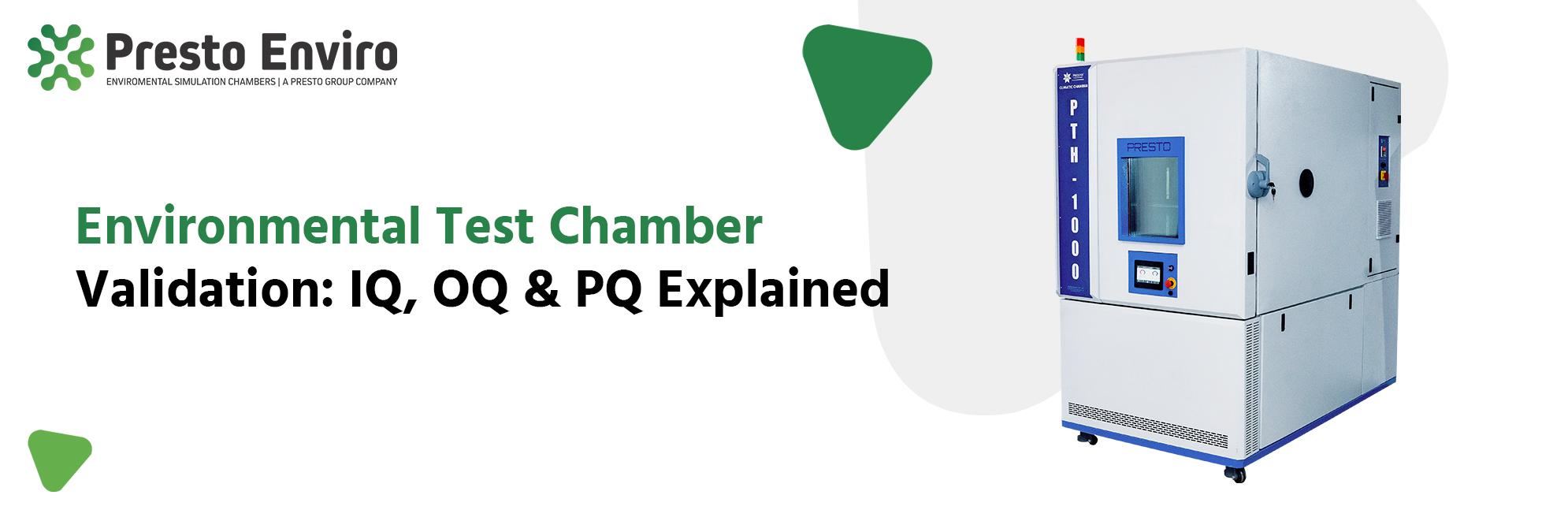
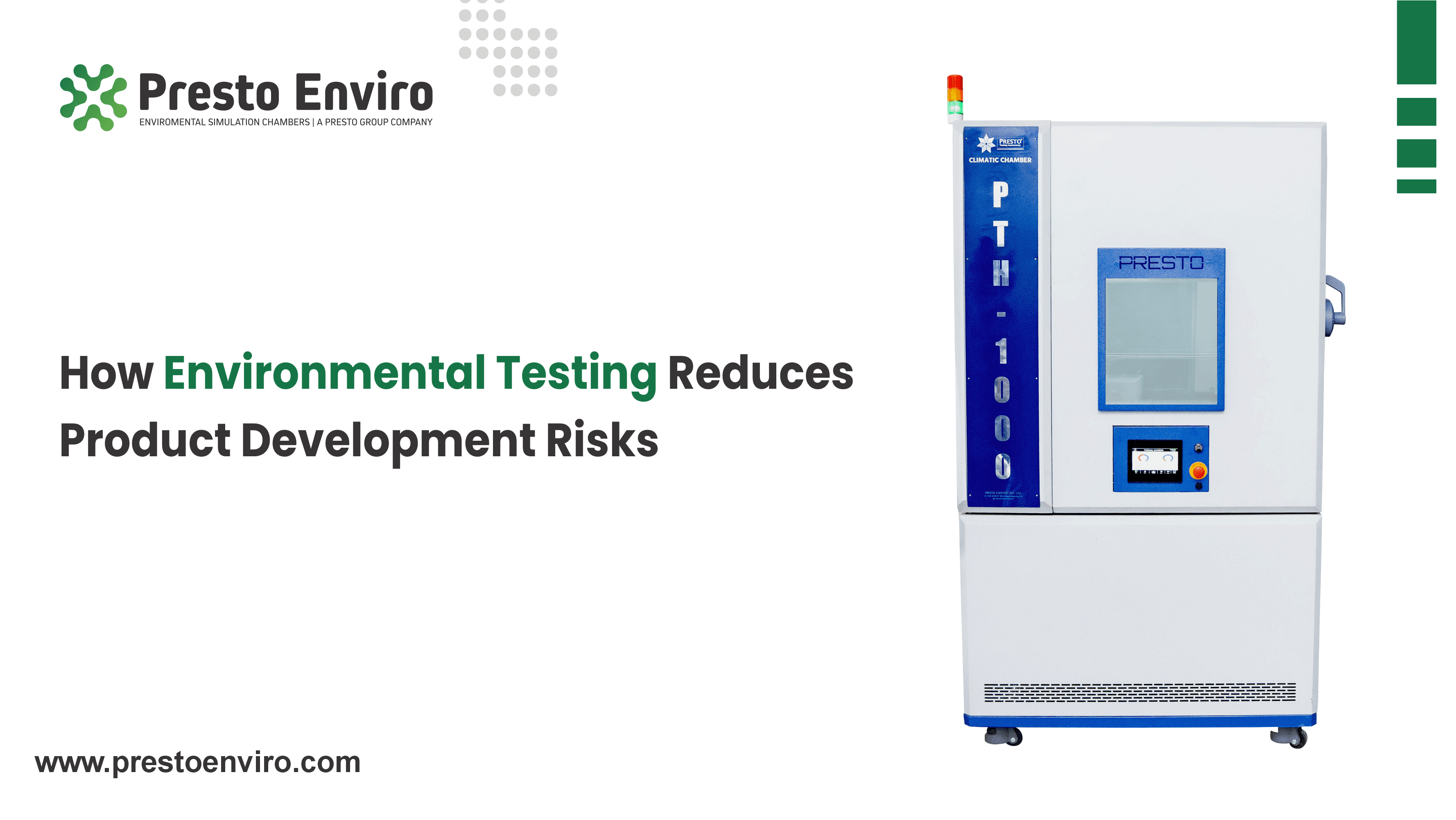
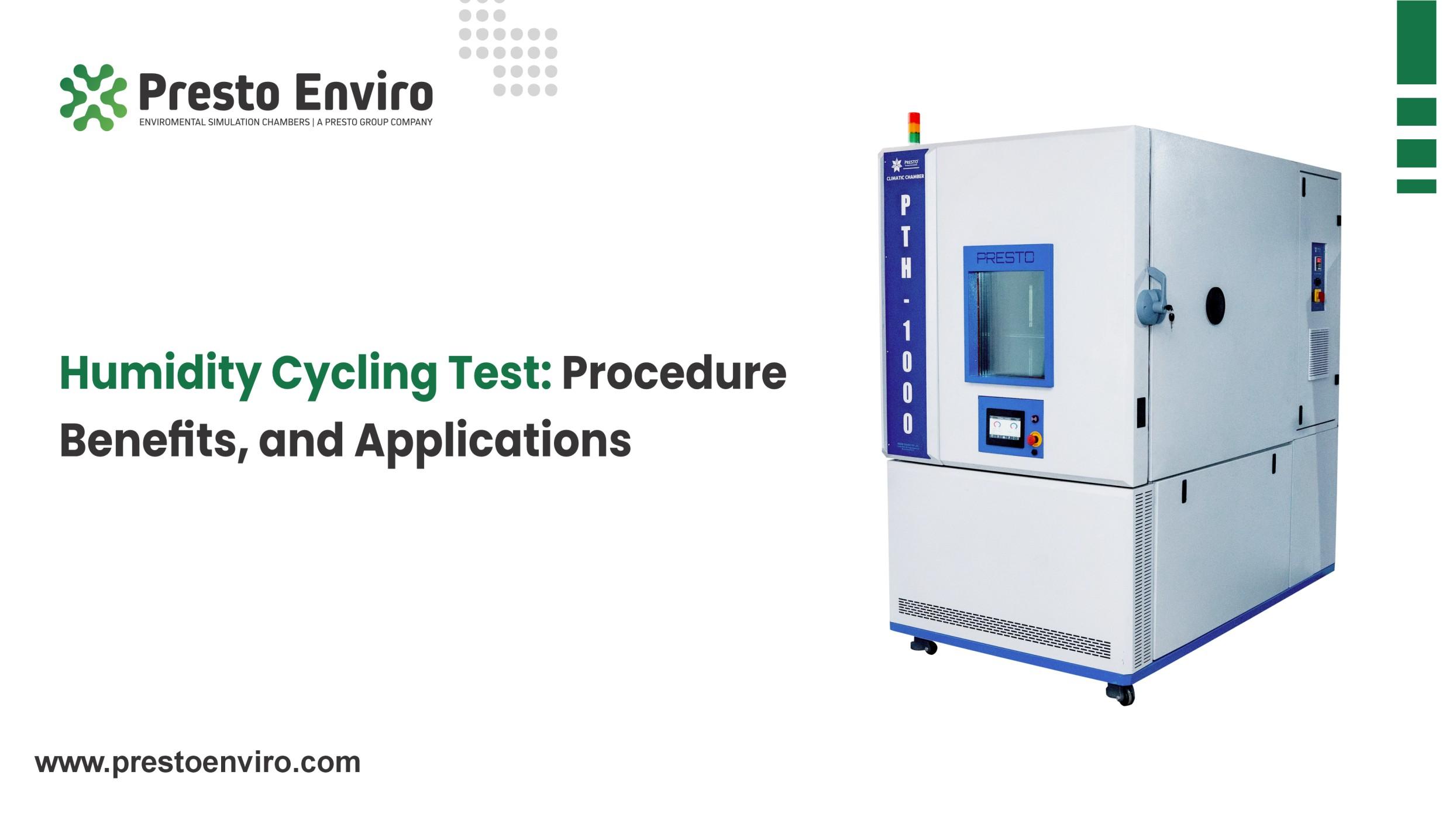
A humidity chamber, also referred to as a humidity testing chamber, is an instrument that simulates a specific relative humidity and temperature to test the ability of products to maintain their functionality and durability.
The main application of a humidity chamber is to replicate environmental parameters that may exist like high relative humidity or low relative humidity or different levels of moisture stored, shipped, or used to determine the impact of moisture on the materials (product) stability, strength, and functions.
These environmental chambers are commonly used in product testing laboratories and in quality control laboratories to assist engineers and quality experts. They help industries to determine if products can withstand the effects of environmental stress before they are tested for failure due to those stresses. The importance of testing products prior to shipping internationally has increased significantly, as products destined for international markets often pass through different environmental climate zones before reaching their final destination.
Modern humidity chambers utilize very sophisticated control systems to maintain both temperature and relative humidity levels very precisely. With outdoor environmental conditions being simulated in a controlled and repeatable manner, manufacturers are able to conduct tests with accurate test data.
Because environmental elements greatly influence product performance and quality, humidity chambers are used by manufacturing industries. There are several things that can happen to a product because it has been exposed to moisture, such as the material losing strength, the packaging becoming compromised, and, in some instances, the safety of the product being affected.
Industries rely heavily on humidity testing to ensure that their products are reliable. For example, electronic components may fail after being subjected to high humidity levels, and if pharmaceutical products were to be stored in a manner that was considered satisfactory, they would lose their effectiveness. If manufacturers conduct humidity testing on products, they will know if the product will retain strength under different humidity conditions.
Humidity chambers, or environmental temperature chambers, are also important for quality assurance and for meeting accepted international testing standards. Many manufacturing businesses are required to abide by regulatory requirements that mandate businesses conduct environmental testing prior to releasing their product. Conducting humidity testing will allow a manufacturer to meet regulatory compliance while at the same time supporting the manufacturer's global quality standards.
By conducting humidity testing, the manufacturer has the ability to improve product design. During the environmental testing, an engineer identifies weaknesses, and the engineer may be able to improve the product through material, surface treatment, or package design, thereby reducing the potential for failure once the product is distributed and therefore improving customer satisfaction.
Humidity testing has had a huge impact on the ability of manufacturers in international markets to maintain and improve product quality. Humidity chambers allow for manufacturers to simulate environmental stressors and how they affect the performance of a product in its final end-use environment.
Accurate and reliable testing results require the proper operation of humidity chambers; Standard Operating Procedures (SOPs) also provide consistency in how tests are performed and how safe they are to perform.
Presto Enviro humidity chamber range offers dependable options for carrying out environmental testing of the manufacturer’s products or materials through modern-day manufacturing processes. The chambers are designed with advanced technology and meet or exceed the accuracy specifications of 0.03% for relative humidity at temperatures from 0°C to 25°C. While the humidity chambers are intended for use in an R&D capacity, they may also be used in a quality control capacity if the manufacturer chooses.
Manufacturers benefit from having a user-friendly and advanced humidity chamber from Presto Enviro, which simplifies operations and reduces the risk of operational error due to the ease of use of the controls. They are built to comply with internationally accepted test standards, which makes them suitable for companies involved in exporting their products worldwide.
Many industries heavily rely on the environment in which they manufacture and use their products for their durability and performance. Of particular concern with respect to material strength and the integrity of packaging materials is humidity. Additionally, manufacturers who sell products around the world must assess how their products respond to varying levels of humidity since manufacturers can be affected by the humidity present in the worldwide marketplace.
The use of humidity chambers allows manufacturers to create simulated climatic conditions in a controlled environment so that they can test how products will perform based on these conditions. By conducting tests on their products while using humidity chambers, manufacturers can identify any weaknesses in their products, as well as enhance product design, ensure compliance with international regulatory standards and maintain product quality.
Elevate your quality assurance process to new heights
Related Blogs
28-Aug-2026
Presto Enviro
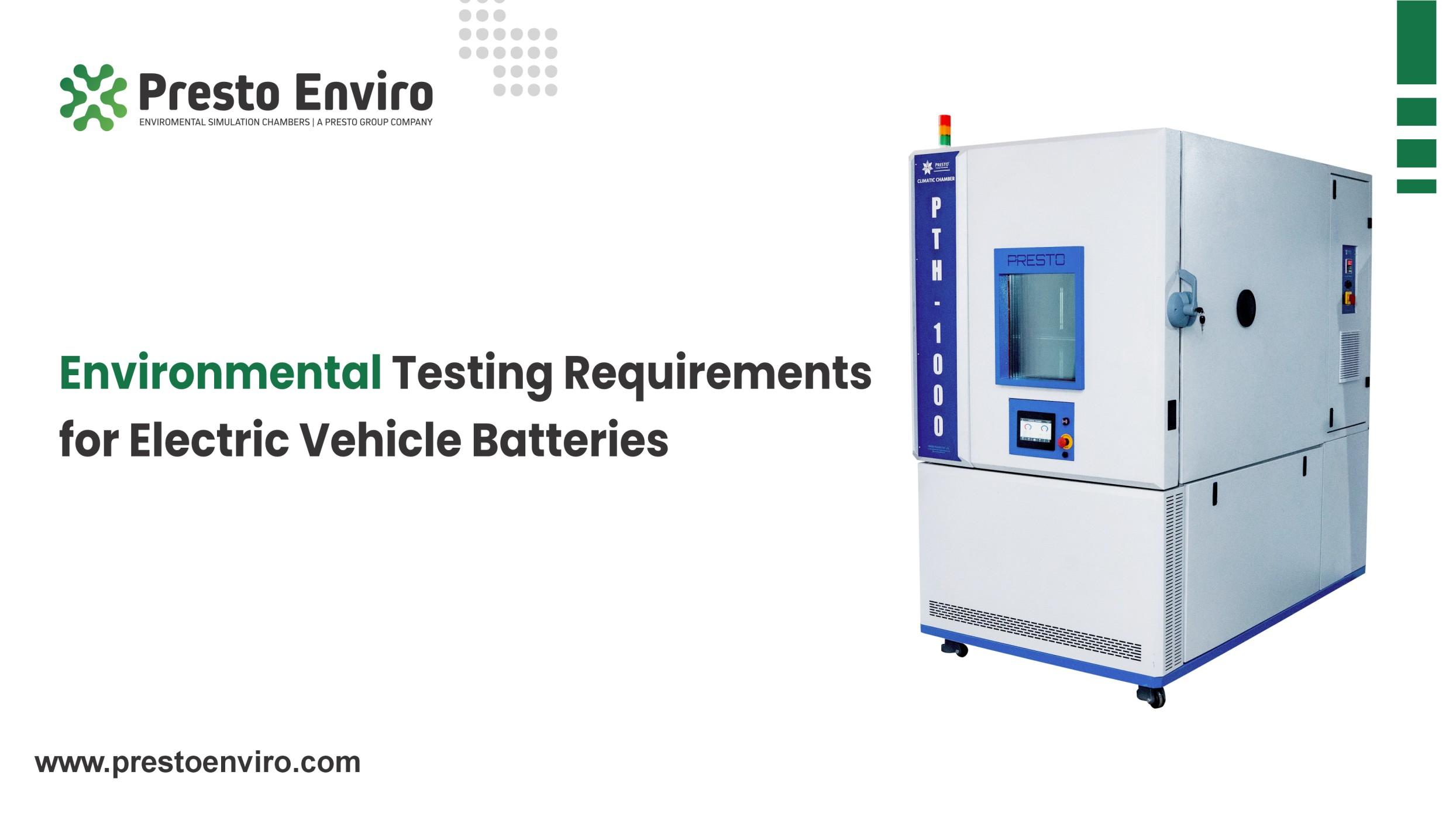
Every day, EV batteries face harsh conditions. On the road, a high-voltage pack may deal with sudden freezing slush, extreme heat buildup during 350kW fast-charging stops, and continuous structural pounding from bad pavement.