© Copyright 2025. All Rights Reserved by Presto Stantest Pvt. Ltd.
27-Feb-2025
Presto Enviro
An Environmental test chamber replicates challenging surroundings like temperature, humidity, and pressure to test product reliability and accuracy. These challenges can lead to product failures, high-cost withdrawals, and safety risks.
Problems include technical failures and security risks while solutions involved are enhanced automation and regular maintenance to help in improving testing reliability and effectiveness for stable product functionality.
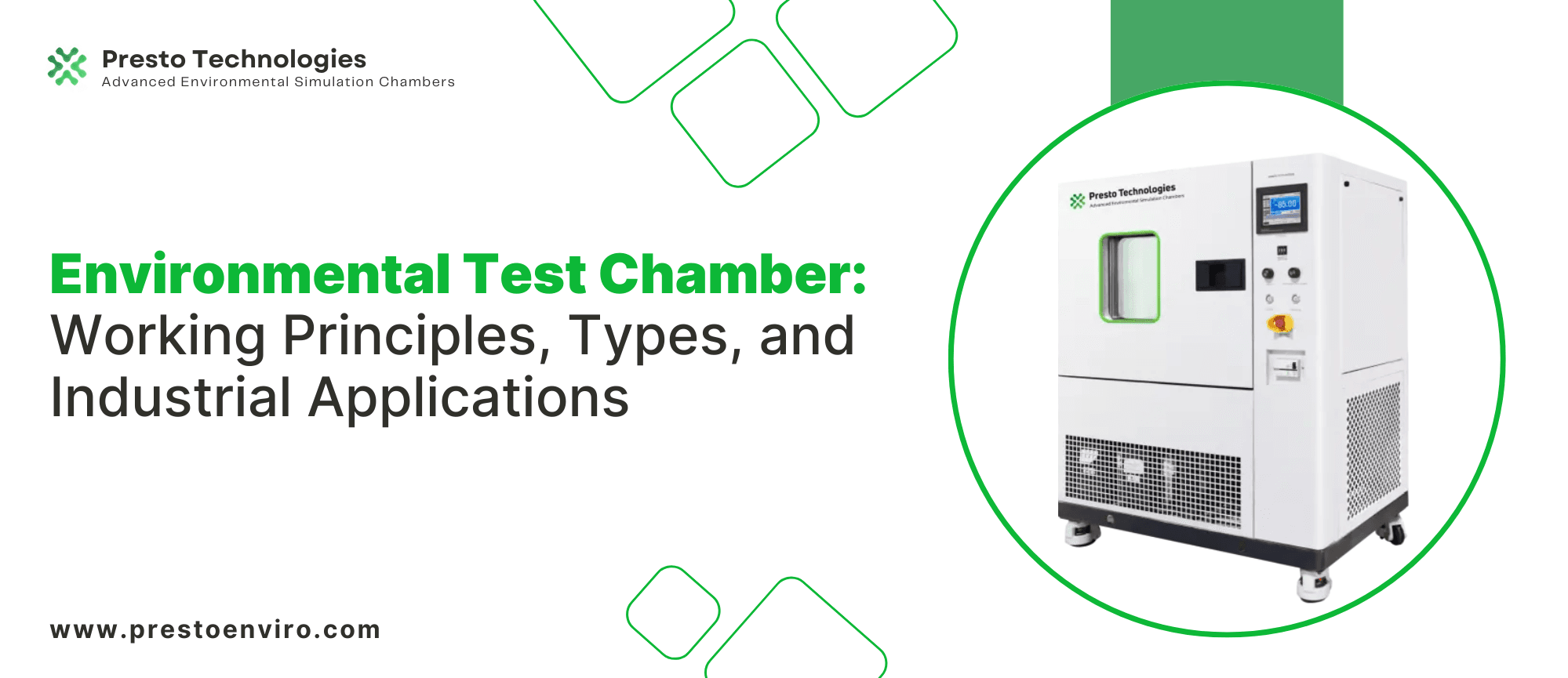
An Environmental Test Chamber simulates conditions like temperature and humidity to test product durability and performance. These chambers offer a managed environment that helps producers, analysts and testing team evaluate how a product reply to different ecological pressures. They allow reliable and stable testing by ensuring consistent conditions allowing engineers and researchers to examine product performance under changing circumstances.
An environmental test chamber works by accurately managing temperature, moisture level, compression, and other additional elements to mimic actual environments. It uses heating, cooling, humidification, and sensors to maintain stability, ensuring accurate product testing for durability, reliability, and performance under extreme environments.
They are developed to provide accurate control over humidity, temperature, and other climatic factors. The following is the step-by-step working process of an environmental test chamber-
Step 1. Thermal Regulation Systems: Heating elements and refrigeration units work together to maintain and control temperature.
Step 2. Humidity Management: Steam generators and moisture control humidity.
Step 3. Air Circulation: Fans and ventilation systems evenly distribute temperature and humidity.
Step 4. Supervision and control systems: Sensors and automated controllers enable accurate adjustments to environmental conditions.
An environmental Test chamber works on the principle of controlled environmental simulation, where particular conditions such as temperature, humidity, and pressure are designed and maintained to test product performance and reliability.
Industries use various Environmental test chambers such as Climatic test chambers, Temperature and humidity chambers, Thermal shock chambers, Cryogenic chambers, Benchtop test chambers, and many more to simulate real-world environments. Some of its types are explained below:
The climatic test chamber produces unique climatic or environmental conditions to analyze the impacts on the product. They can also make a product for testing later by producing different situations. Climatic chambers contain essential components to reproduce different environmental conditions.
Key Features:
Accurate temperature regulations
Moisture control
Programmable configurations
Temperature Chambers are the most common type of Environmental chamber. They produce various chambers to reproduce the type of temperatures a product will come across and analyze the product’s reaction to unique temperatures.
On the other hand, humidity chambers are developed to reproduce unique levels of humidity to test the performance of a product at different levels of humidity.
Key Features:
Accurate thermal regulation
Moisture Control
Airflow Management
Data Monitoring and logging
Temperature stability mechanism
In these Chambers, conditions are reproduced that have random changes that occur instantly and calculate the stress on the product the varying temperature produces.
Key Features:
Quick temperature shift
Multi-Chamber design
Automated transition mechanism
Cryogenic chambers are designed to achieve freezing conditions with the help of liquid nitrogen or helium. These chambers are used to assess the impact of harsh freezing environments on several products and materials.
Key Features:
Advanced thermal insulation
Ultra-low temperature Capacity
Rapid temperature cycling
Benchtop test chambers are portable and reliable. These chambers are typically ideal for analyzing small items such as computer parts, sensors, and mobile phones. For scenarios needing concurrent testing, multiple benchtop chambers can be used separately.
Key Features:
Portable Structure
User-friendly interface
Energy-efficient operation
Several industries are frequently using environmental test equipment in various industries like aerospace and defense, medical industry, automotive, electronics, and telecommunication industries to get accurate solutions by maintaining the temperature and heat. Some of the industries are described below:
In the aerospace sector, environmental testing equipment is also used extensively. Aerospace products such as airplanes and satellites need to execute under harsh weather and environmental factors.
These devices need to be durable and accurate. Hence in these fields, environmental testing equipment helps to improve aircraft structure and detect possible structural flaws.
In medical devices, environmental testing equipment also plays an important role in the research and manufacturing of medical equipment. Medical devices need to be highly consistent under various varying climatic environments.
In the automotive industry, environmental testing equipment can evaluate the strength and trustworthiness of various vehicle components. The automotive industry must account for diverse factors including tough road conditions, varying driving environments, and local weather patterns.
In the electronics and telecommunication field, environmental testing equipment is also an important tool to evaluate the trustworthiness of equipment. Various electronic devices must operate continuously in diverse environments such as mobile phones enduring changing weather and network devices resisting high temperature and humidity.
To maintain the reliability and consistency in an environment test chamber one must look for the essential and crucial features so that the product can survive under varying conditions and circumstances. Some of the features are:
Temperature and Humidity: Assures that the chamber meets the needed testing parameters.
Control Accuracy and consistency: High-accuracy sensors for controlled climatic control.
Configurability and Robotics: Use friendly interfaces for automated testing processes.
Interior Dimensions and Weight Capacity: Consider the dimensions and weight capacity for test samples.
Data Tracking and communication: Ability to store and evaluate test results off-site.
Selecting the right environmental test chamber involves considering factors like temperature range, humidity control, chamber size, load capacity, and automation features. Ensure it meets industry standards and suits your testing requirements for accuracy and reliability.
Define Testing Requirements – Identify specific environmental conditions needed.
Consider Product Size and Load – Ensure the chamber can accommodate test samples.
Evaluate Temperature and Humidity Ranges – Match the chamber’s specifications with testing needs.
Check Compliance Standards – Ensure it meets industry and regulatory requirements.
Look for Energy Efficiency and Maintenance – Choose chambers with optimized power consumption and easy maintenance.
Assess Data Acquisition and Control Features – For models with advanced monitoring and connectivity options.
After knowing about all the necessary things about environmental test chambers many questions may arise so here are some commonly asked questions that are generally asked for environmental test chambers:
How are environmental test chambers utilized?
Environmental Test Chambers are used to simulate real-world environmental conditions. They are used to test the quality, safety, and reliability of products and materials.
How frequently should a test chamber undergo calibration?
A test chamber should be calibrated every six months to a year depending on its usage and manufacturer’s consultation for the most accurate result.
What is the purpose of environment testing?
Environmental testing helps to know if any flaws in a product’s design or performance arise particularly at extreme levels.
How to maintain an environmental test chamber?
To maintain an environment test chamber, we can clean it regularly, check the circulation system, and inspect the silicone sealants.
What are the risks involved in the Environmental simulation chamber?
There are several risks involved in environmental test chambers such as Temperature Hazards, Pressure risks, Chemical risks, Air quality and oxygen shortage, and many more.
How long does an environment chamber typically last?
With proper maintenance, an environment test chamber can work on its efficiency for 10 to 20 years.
Elevate your quality assurance process to new heights
Related Blogs
15-Sep-2026
Presto Enviro
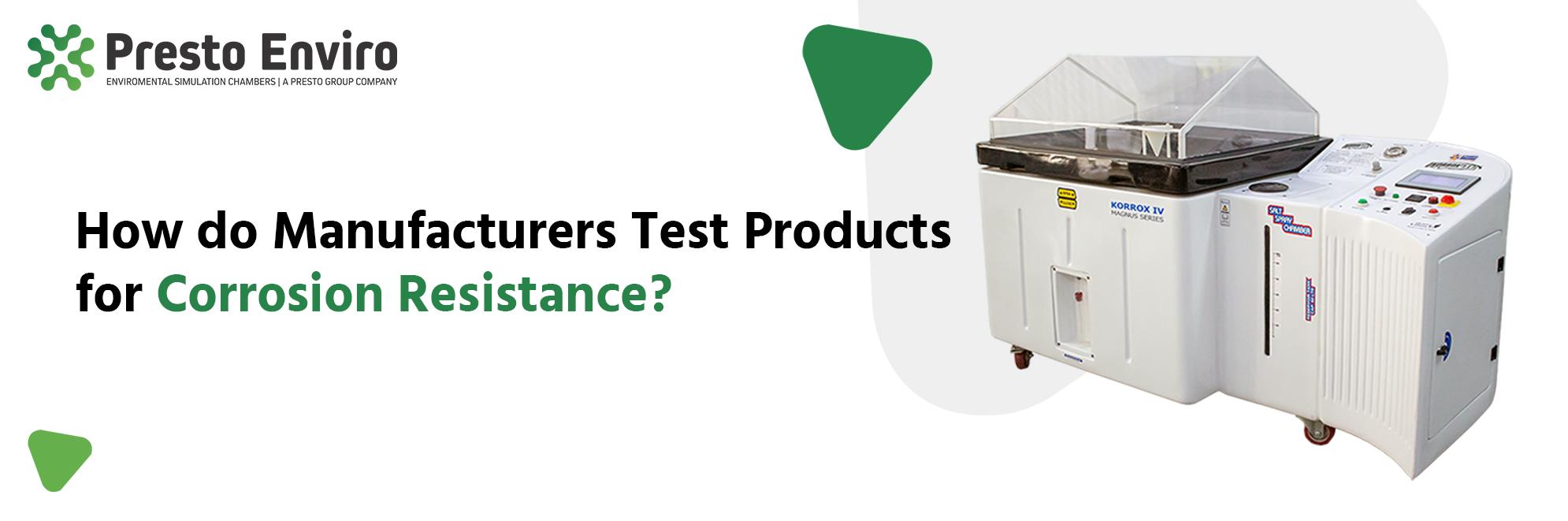
Corrosion is one of those problems that may appear mild at first and later turn costly. A metal part may leave the manufacturing facility appearing undamaged, yet suffer corrosion, stain formation or coating failure as a result of its contact with moisture, salts and changing weather conditions.
11-Sep-2026
Presto Enviro
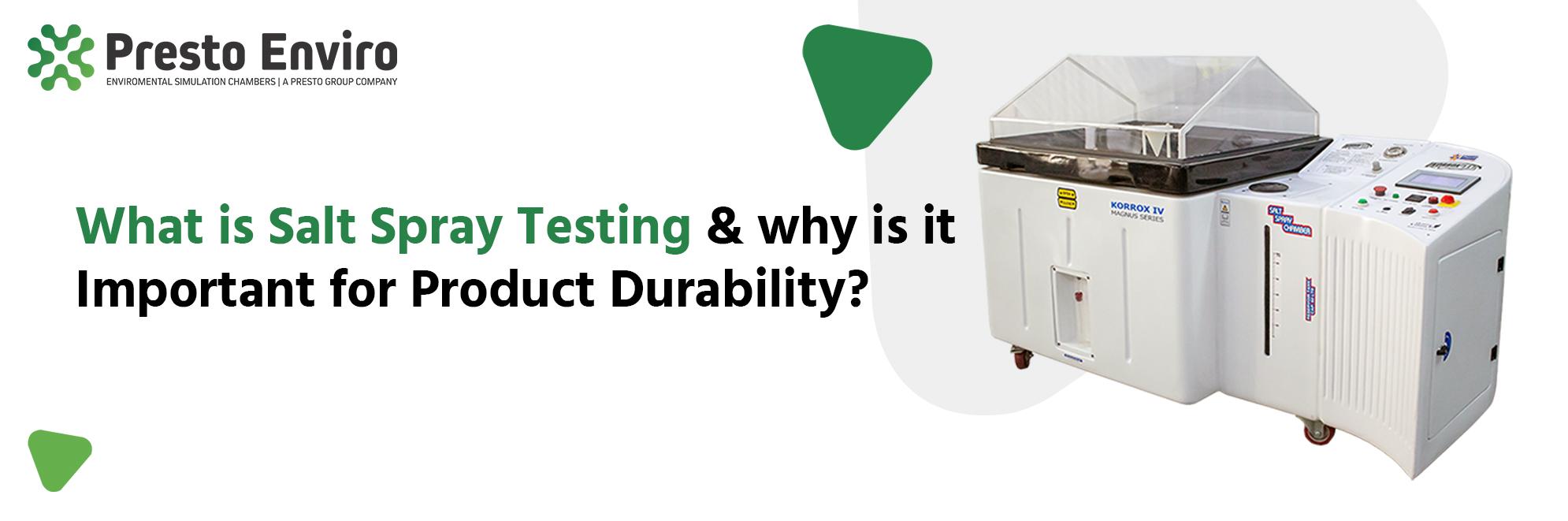
Metal parts exposed to environmental elements like rain, high humidity and saline air are subjected to quick degradation. Manufacturers don’t have years to wait to see long-term real-world durability with immediate shipping deadlines.