© Copyright 2025. All Rights Reserved by Presto Stantest Pvt. Ltd.
28-Jul-2026
Presto Enviro
Energy storage units fail frequently when severe real-world weather hits them hard in the field. Fixing a failed battery module on-site costs significantly more than running proper lab evaluations before mass deployment. This article explains how energy storage systems function, how technicians conduct environmental stress testing step by step, and why skipping this validation phase is a costly risk.
Batteries installed outdoors face harsh environmental exposure daily. A unit might handle sub-zero freezing nights in winter and intense radiant heat a few months later. Unprepared housing or raw internal components degrade quickly under these continuous fluctuations. Internal wiring stretches, usable capacity drops off sharply, and unmonitored systems can experience severe electrical shorts.
Identifying design weaknesses early on provides engineering teams with a clear development advantage. And to boot, the handling of warranty claims and recalls post-product release is a drain on resources and brand credibility. Testing prototypes under extreme simulated climates before commercial release identifies exact operational limits, making necessary design changes many times easier and cheaper to implement.
An energy storage system absorbs electrical power, holds it safely, and releases it when needed. These setups bridge the gap between energy production and user consumption.
Energy storage in everyday applications is found in many forms. A common example is the lithium-ion battery packs used in electric vehicles that store charge to drive hundreds of miles. On a larger scale, utility companies use massive containerized battery banks to store solar and wind energy generated during peak hours.
While lithium-ion technology dominates the conversation today, energy storage also includes flow batteries, flywheel setups, and thermal systems. Every single one of these options relies on physical materials that expand, contract, and react when environmental conditions change. If the surrounding temperature spikes or moisture gets inside the housing, performance drops immediately.
Environmental stress testing places an energy storage system inside a sealed, controlled space to observe how much physical and operational strain it endures. It condenses years of natural weathering into a compact testing schedule.
You simply can’t wait for five years of outdoor testing to prove a commercial battery’s durability when you’ve got deadlines to meet. Manufacturers use rapid data and specialized hardware to simulate years of seasonal change in weeks. Engineers take the test units through a regimented series of checks to root out hidden design vulnerabilities.
Before applying climate strain, technicians complete a thorough physical check and record the battery's initial electrical metrics.
Once exposure cycles are complete, baseline metrics provide engineers with a specific point of reference for comparison. Technicians examine the outer frame for small structural gaps or imperfect seal seating. The diagnostic equipment records the initial discharge capacity, internal resistance and voltage stability at room temperature. In a later stage, the resistance changes allow determining which components are degrading inside.
The test specimen goes inside a battery test chamber where temperature levels swing rapidly between extreme cold and elevated heat.
When temperature changes rapidly, various materials inside the battery pack expand and contract at different rates. Through these transitions, the internal wiring harnesses, the soldered connections, and the plastic cell holders are all under constant mechanical tension. If you lower the ambient temperature to freezing temperatures, the same components suddenly contract again, reversing the expansion. Repeated cycling quickly reveals hairline solder cracks, loose terminal contacts, and weak cell separators.
Technicians pump high moisture levels into the environment to test whether water vapor can pass through outer seals and reach sensitive electronics.
Moisture damages circuit boards and internal metal contacts through rapid oxidation. Elevated relative humidity combined with high temperatures pushes water vapor against rubber gaskets and seam enclosures. If moisture penetrates the main housing, it causes rust, degrades protective board coatings, and triggers dangerous short circuits across high-voltage terminals.
Engineers charge and discharge the energy storage unit continuously while the battery test chamber pushes surrounding climate variables to extreme setpoints.
Running heavy charge and discharge cycles generates significant heat inside the cell pack. These high ambient chamber conditions combined with the internal operational heat provide a rigorous test of integrated thermal management setups. Active current flow means that cooling loops and circulation fans, together with monitoring software, have to work hard to keep cell temperatures within safe thresholds.
After completing climate cycles, the equipment returns to room temperature so technicians can re-measure electrical output and check physical integrity.
Engineers repeat the diagnostic tests from the first step. Operational loss is evident when comparing post-test capacity numbers, voltage stability, and internal resistance to baseline logs. Big drops in capacity are a sign of wear of the internal structure. Technicians often peel away the protective outer shell to check for swollen cells, corroded circuit boards or broken insulation.
Environmental stress testing is necessary because it prevents field breakdowns, minimizes safety hazards, and shields manufacturers from heavy warranty expenses.
Executing reliable stress testing demands specialized laboratory hardware capable of maintaining tight control over thermal dynamics, moisture levels, and interior airflow.
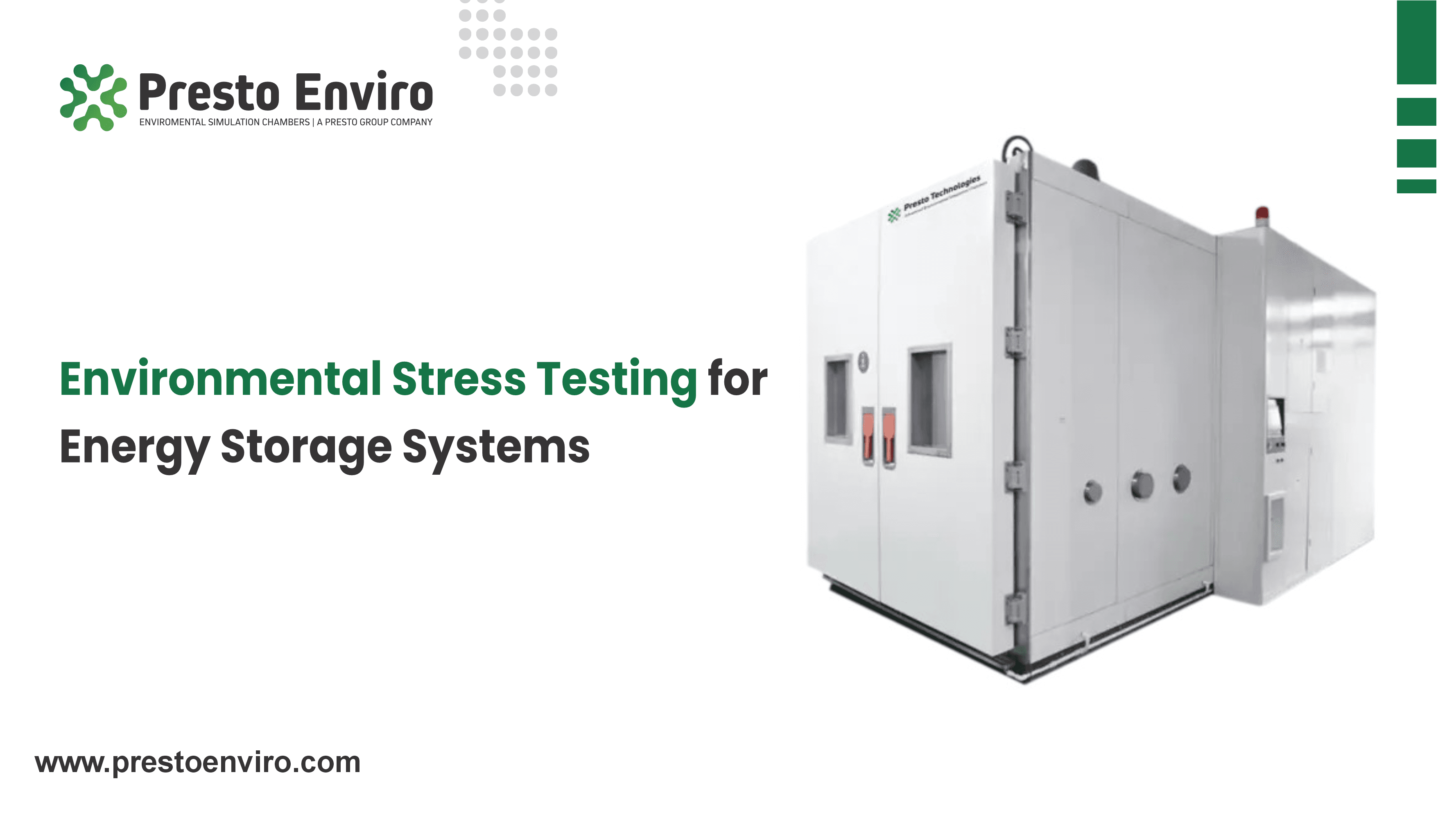
The Presto Enviro Environmental Battery Test Chamber provides testing facilities with precise controls required for repeatable climate cycles across different battery designs. It controls thermal ramp rates and humidity settings accurately, allowing technicians to reproduce challenging outdoor climates with high consistency.
Furthermore, the uniform internal workspace conditions avoid local hot spots so that each cell in a module experiences the same strain in the environment. These integrated safety systems are intended to control any sudden venting of cells or thermal events during aggressive test cycles. That makes it a practical asset for development teams evaluating prototype performance or conducting standard quality assurance routines.
Environmental stress testing is essential for manufacturing durable, safe energy storage equipment that operates consistently in demanding climates.
Short-term gains in development schedules may be realized by skipping extensive lab testing, but the long-term consequences include costly fixes in the field, safety hazards and damage to the brand’s reputation. Manufacturers can subject the storage hardware to extreme heat, cold and humidity to uncover internal flaws long before the commercial release. Add the Presto Enviro Environmental Battery Test Chamber to your laboratory to improve your internal quality assurance processes and to see how your products perform in harsh weather.
Elevate your quality assurance process to new heights
Related Blogs
15-Sep-2026
Presto Enviro
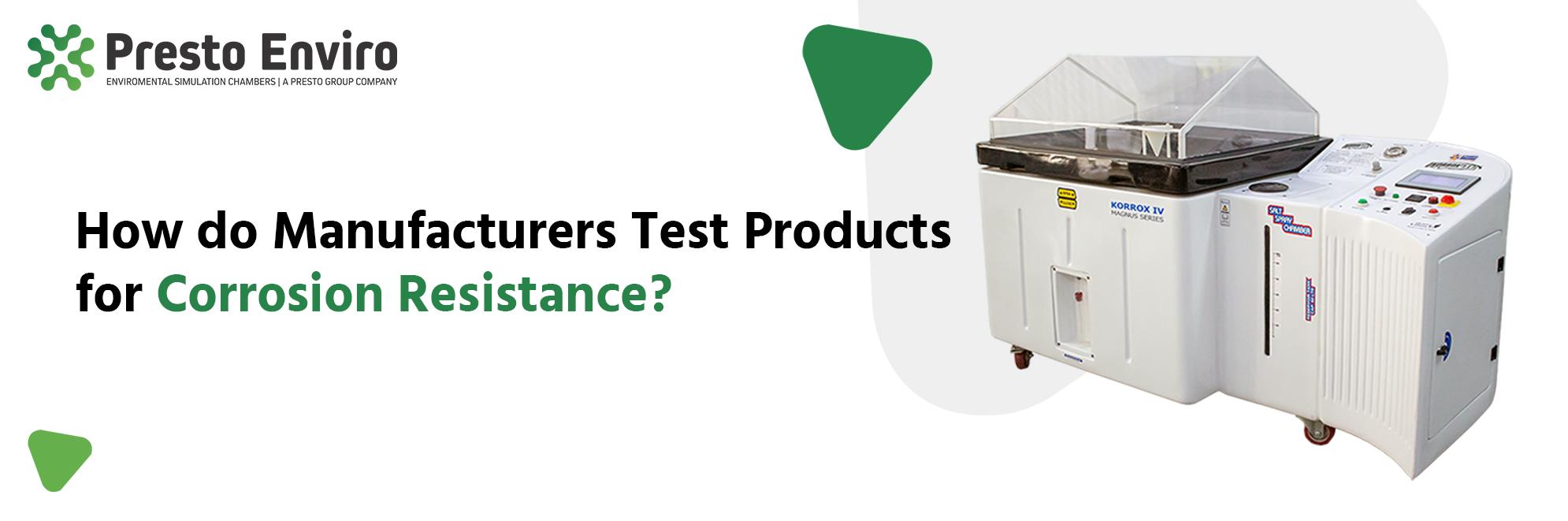
Corrosion is one of those problems that may appear mild at first and later turn costly. A metal part may leave the manufacturing facility appearing undamaged, yet suffer corrosion, stain formation or coating failure as a result of its contact with moisture, salts and changing weather conditions.
11-Sep-2026
Presto Enviro
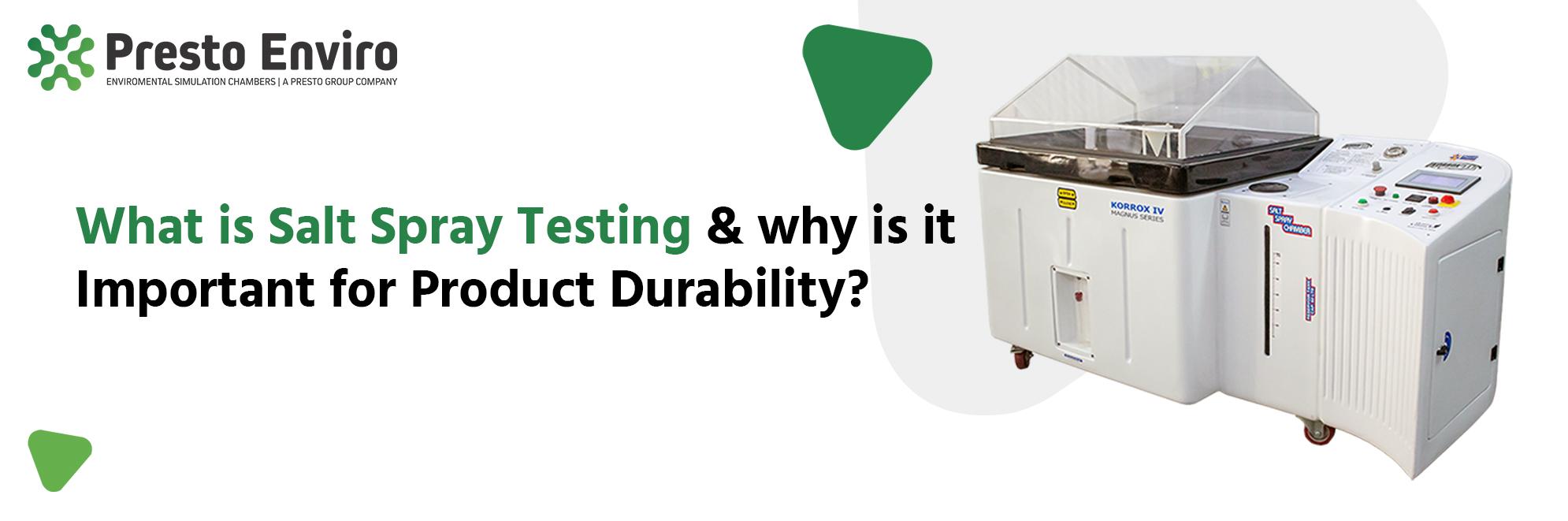
Metal parts exposed to environmental elements like rain, high humidity and saline air are subjected to quick degradation. Manufacturers don’t have years to wait to see long-term real-world durability with immediate shipping deadlines.