© Copyright 2025. All Rights Reserved by Presto Stantest Pvt. Ltd.
30-Dec-2025
Presto Enviro
Do you ever think about what happens to an aircraft part when it climbs higher, and the air starts to thin? Have you wondered how these components stay steady when temperatures fall sharply at the same time? This is where altitude temperature testing becomes important.
The defence and aerospace components are operated in extreme environmental conditions. When their altitude increases, the air pressure and temperature fall. Some parts face intense cold mixed with dynamic air loads. Others must function smoothly even when pressure and temperature shift within minutes.
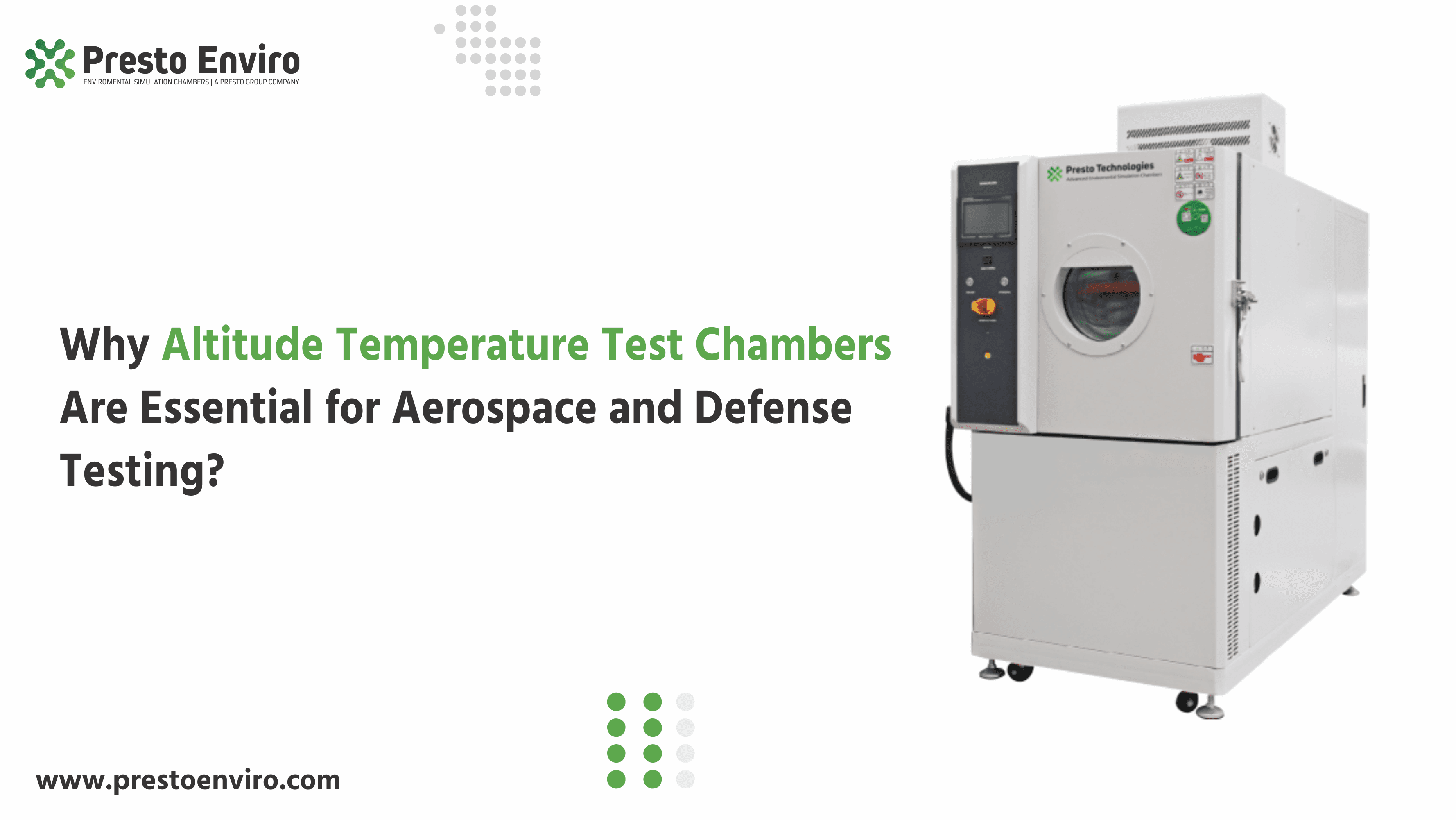
An altitude temperature test chamber lets engineers recreate these conditions inside a controlled space. This gives them a clear picture of how a product behaves when pushed beyond ordinary limits.
An altitude temperature chamber recreates high altitude conditions inside a controlled room. As the air pressure drops, it mirrors what happens when equipment moves thousands of meters above ground level. At the same time, the chamber changes the temperature to match the harsh cold found in thin air.
This mix of low pressure and harsh temperature shows how a material reacts in real flight environments. Some parts may shrink. Others may expand. A few may lose strength when exposed to quick pressure drops. The chamber helps engineers see all these changes clearly.
Aerospace teams use it to study aircraft sensors, avionics, and structural materials. Defense units test mission devices, communication systems, and field equipment to check how they behave during sharp pressure and temperature swings.
The chamber brings these real-world stresses into the lab so problems can be seen early, and designs can move ahead with more confidence.
Aerospace development relies on accurate testing. Aircraft sensors, avionics, engine components, insulation materials, and structural samples must all be checked under low-pressure conditions. Defense units test communication systems, surveillance devices, portable instruments, and mission-critical hardware face tough climate conditions. Deep testing keeps them dependable when needed most. Satellites, space equipment, and high-altitude drones also undergo altitude temperature checks. This helps to predict how they will react once their altitude is raised far above ground.
The chamber slowly removes air to mimic rising altitude. At the same time, it adjusts the temperature to match extreme cold or heat found in thin atmospheric layers. This dual action shows how materials expand, shrink, crack, or shift under stress. Steady pressure control, tight insulation, and smooth airflow keep each test accurate. Modern chambers use digital controllers so users can track temperature, pressure, and time with clarity.
High altitude work leaves no room for mistakes. Once a device goes into thin air and harsh heat or cold, it has to cope right away. This chamber gives engineers a calm and controlled space.
They can see what goes wrong before the product faces the problem. It helps them to adjust the design. It also adds confidence during quality checks. Every batch gets tested before it moves out of the industry.
Prestoenviro brings altitude temperature test chamber systems designed for aerospace, defense, and advanced research labs. Each chamber is shaped for consistent performance, clear control, and smooth daily use.
Prestoenviro guides users in selecting the right chamber size, pressure range, and temperature needs. Our support team helps the manufacturers to set up the instruments after purchasing and later during routine checks.
Every aerospace and defense project depends on clear testing. An altitude temperature test chamber helps teams see how their products behave in thin air and extreme cold. By recreating these real-world conditions inside the lab, the chamber brings accuracy, clarity, and peace of mind. As high-altitude missions rise worldwide, these chambers will continue to support safer designs and stronger performance.
How does the Altitude temperature test chamber work ?
It creates low and extreme temperatures as found at high altitudes so users can examine the materials and components of their product.
Why is altitude testing important for aerospace?
Aircraft parts face constant pressure and temperature shifts during flight. Testing keeps them stable and safe during operation.
Can defense devices be tested inside these chambers?
Yes. Communication systems, sensors, and portable equipment can be tested inside these chambers.
Do these chambers support both heating and cooling?
Yes. They can raise or lower temperatures while adjusting pressure, which helps mirror true high-altitude climates.
What kind of products are usually tested?
Avionics, sensors, composite materials, communication devices, and mission equipment are commonly tested to check stability under stress.
Elevate your quality assurance process to new heights
Related Blogs

23-Sep-2026
Presto Enviro
Products are expected to work reliably for months or years, but manufacturers cannot always wait that long to find out how they will perform. Accelerated aging testing solves this problem by exposing products to controlled environmental conditions that speed up certain aging effects.
20-Sep-2026
Presto Enviro
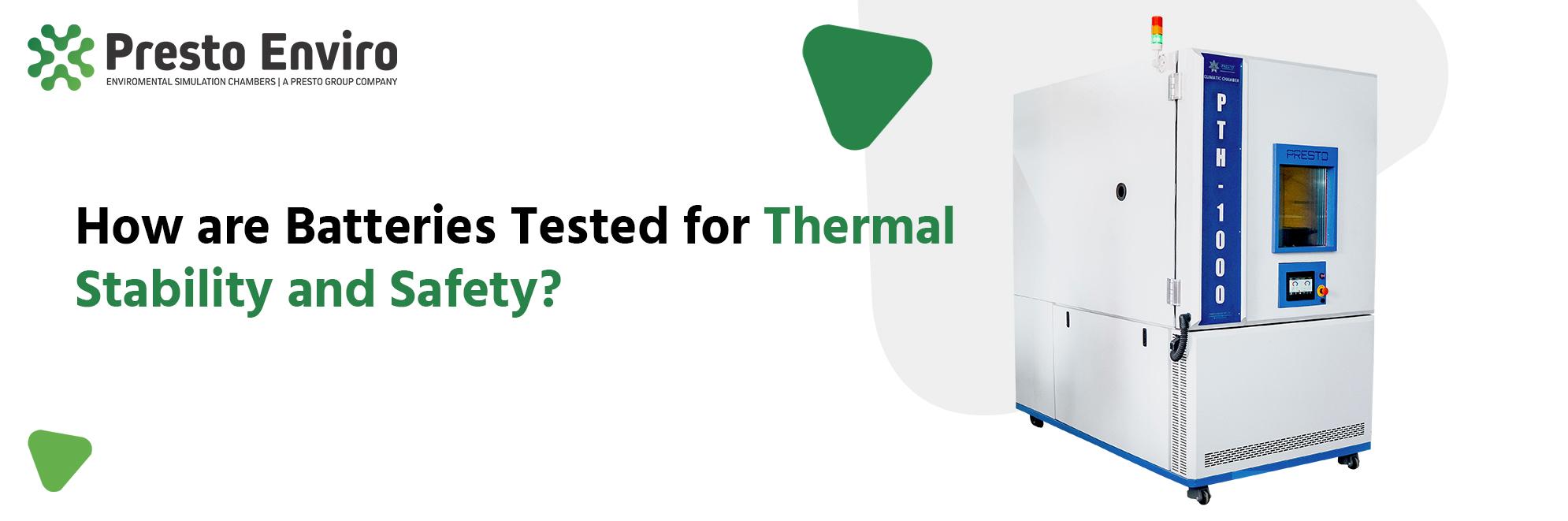
Battery safety is not something manufacturers can check only after a battery is ready for use. Temperature, charging conditions and repeated use can change the way a battery behaves. In some cases, excessive heat can cause permanent damage or create serious safety risks.