© Copyright 2025. All Rights Reserved by Presto Stantest Pvt. Ltd.
06-Jun-2026
Presto Enviro
Buying an environmental chamber is not complicated until you get it wrong. A wrong purchase means inaccurate test results, frequent breakdowns, poor after-sales support, and eventually a replacement cost that nobody budgeted for.
The market has no shortage of manufacturers. But the gap between a reliable chamber and an unreliable one is not always visible in a brochure or a product page. It shows up after installation when real testing begins.
This article focuses on what actually separates a dependable environmental chamber manufacturer from one that looks good on paper. We cover what environmental chambers are, why the manufacturer choice matters more than most buyers expect, and the specific factors worth evaluating before any purchase decision.
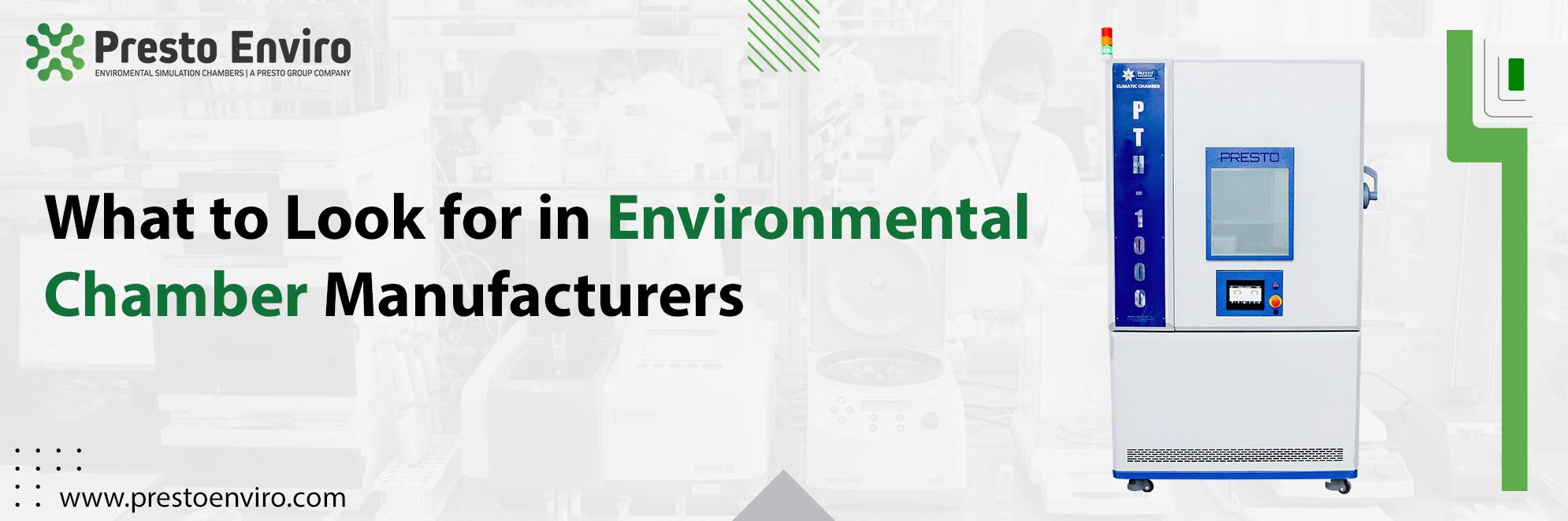
An environmental chamber is a testing equipment that simulates temperature, humidity, UV exposure and other environmental conditions to evaluate how materials, components or products respond under stress.
Almost every industry uses environmental chambers for different requisite applications. Thermal cycling testing with circuit boards occurs in an electronics manufacturing facility. Similarly, the production of pharmaceutical products requires testing for the stability of the product at specific temperatures and humidity. To anticipate how a component will behave over an extended period of time, both the automotive and aerospace industries perform accelerated aging tests on their products.
Using an environmental chamber allows for the creation of a controlled environment simulating all conditions that could occur naturally over several months or years within a defined period of time. So, this method not only saves time but also ensures accuracy throughout the testing procedure along with the sustainability of the product in the long term.
The selection of the right manufacturer makes all the difference regarding how reliable the product is. The manufacturer behind it determines calibration accuracy, long-term reliability, spare parts availability and whether you get real technical support whenever it is required.
A poorly built chamber can deviate from its set parameters without triggering any alarm that directly impacts the customer experience and company reputation.
Temperature uniformity inside the test space may not match what the display shows. Humidity control can be inconsistent across different areas of the chamber interior. These are not hypothetical issues. They are the kind of problems that produce test data nobody can trust. And by the time you identify the source, you have already made decisions based on that data. Choosing the right manufacturer is not a procurement formality. It is a quality decision.
Not every manufacturer that claims compliance actually delivers it in practice. The difference shows up in engineering decisions, component quality and how the company handles support after the sale. Here are five factors worth evaluating seriously.
This is the first technical spec to dig into. A manufacturer should be able to provide documented uniformity data across the entire test volume, not just at the sensor location. Chambers where temperature varies significantly between the center and corners of the test space produce inconsistent results, and that inconsistency is hard to detect without proper mapping. Ask for calibration certificates and chamber mapping data before committing.
The chamber controller's precision will determine how consistently it keeps the desired condition for a given period. While PID-type controllers with narrow control bands produce superior results, this does not apply to primary ON-OFF controllers. If the test requires the chambers to maintain consistent conditions for longer than expected, then the type of controller will be a significant contributing factor in the overall success of the test. Sensor accuracy can have just as much impact on test results.
A -5% humidity sensor is unacceptable in a pharmaceutical stability test. Before performing a test, you should check the specifications of the humidity sensor, how often the humidity sensor is calibrated and whether the controller will log data and provide an export for compliance records.
A manufacturer building chambers for industrial use should have equipment validated against recognized test standards. This includes IEC, ASTM or industry-specific standards depending on your application. Presto Enviro, for example, designs its environmental chambers in line with relevant Indian and international standards which matters when test results need to hold up during audits or regulatory reviews. Compliance is not something to assume based on marketing language. Ask for specific standard references and verify them.
Chamber durability over time is determined by the quality of the internal components. The compressors, heating elements, humidity generators, and insulation all have an impact on long-term stability and energy efficiency. Manufacturers that source their critical components from reputable vendors and utilize stainless steel for the test room tend to manufacture chambers that maintain performance over time. You should inquire about the compressor make and model, refrigerant type and insulation thickness.
This part matters more than most buyers factor in upfront. A chamber that goes down during a critical test cycle and has no local service support is a serious operational problem. Assessing the service network of the manufacturer, average response times, the availability of spare parts, and whether the manufacturer provides calibration services can yield very different outcomes depending on the type of company you are dealing with.
Companies that have dedicated technical support teams, service-level agreements (SLAs), and a quality system in place are usually worth paying more than those companies that provide lower-cost products but lack any means of communication for technical issues.
Presto Enviro has built a clear position in the environmental testing equipment space particularly for manufacturers and testing labs operating within Indian industry requirements.
Our chambers are engineered for tight temperature and humidity control, with uniformity specifications backed by calibration data rather than just claims. The control systems are programmable, support multi-step test profiles, and generate logs that work with quality documentation requirements. Build quality uses corrosion-resistant materials for the test interior, and critical components come from reputable sources.
What stands out in practice is the support infrastructure. Presto Enviro maintains a service network with trained technicians and offers calibration and AMC services that cover chambers through their operational life. For labs where chamber downtime directly affects production or compliance timelines, that kind of structured after-sales support is not optional.
Our range covers combined temperature, humidity chambers, and thermal shock systems. Such a wide range makes us a source of multiple chamber types from a single manufacturer without dealing with multiple service relationships.
Choosing an environmental chamber manufacturer is a decision that affects testing reliability for years. The wrong choice costs more in the long run than the savings made upfront.
Presto Enviro brings the combination of engineering precision, standard compliance, and service reliability that matters for serious testing environments. If you are evaluating environmental chamber options for your facility, reach out to Presto Enviro directly through their website to discuss specifications, get a technical consultation, or request a product demonstration.
Elevate your quality assurance process to new heights
Related Blogs
23-Oct-2026
Presto Enviro
A walk-in climatic test chamber is a room-sized chamber that an operator can enter to load, position, and instrument large products or many samples. A drive-in chamber is a type of chamber. It has a reinforced floor and wide doors. This design lets a vehicle be driven or rolled inside.
21-Oct-2026
Presto Enviro
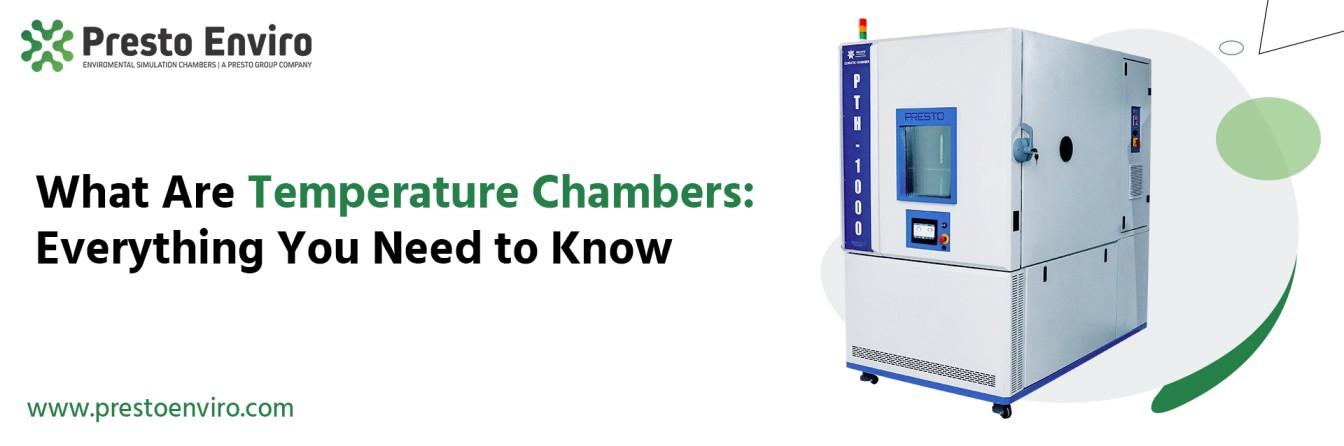
Temperature chambers are insulated boxes. They keep a product at a specific temperature. They can move it through different temperature levels in a set pattern. This lets people test how the product behaves when it's hot or cold.
15-Oct-2026
Presto Enviro
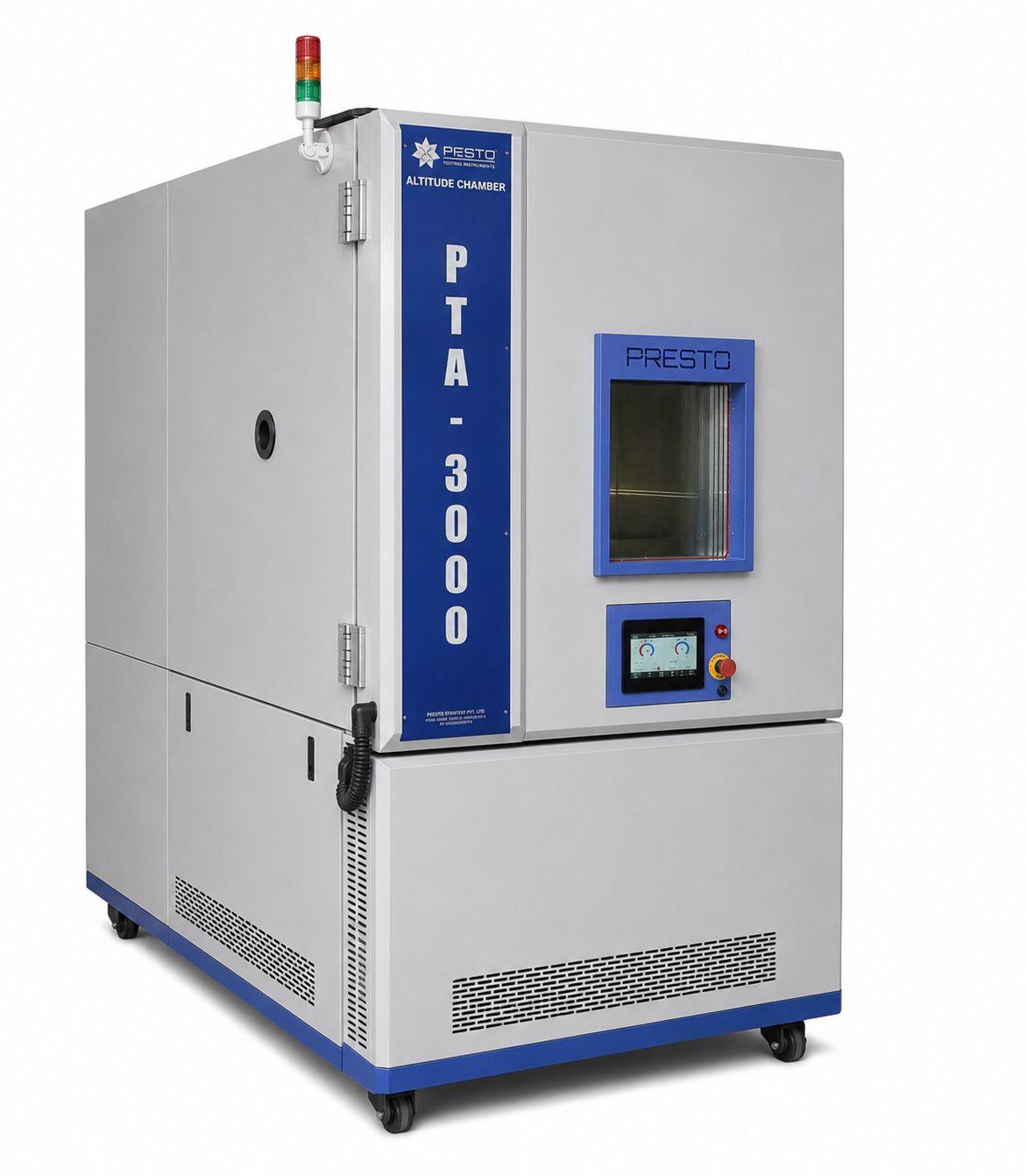
In environmental testing, vacuum chambers are also called altitude test chambers or low-pressure chambers. They lower air pressure inside a sealed chamber to simulate high altitude while controlling temperature and, in some configurations, humidity.