© Copyright 2025. All Rights Reserved by Presto Stantest Pvt. Ltd.
09-Feb-2026
Presto Enviro
In many industrial areas, problems of temperature rarely announce themselves early. A slight rise during a long shift can slowly affect output, machine behavior, or material quality. By the time the issue becomes visible, damage has often already started. Continuous operations generate heat as a byproduct, especially where machines run for hours without pause. Industrial chillers step into this gap quietly. They take away the extra heat and assist processes to remain within the safe working limits. Without reliable cooling, consistency becomes harder to manage and leads to unpredictable crashes.
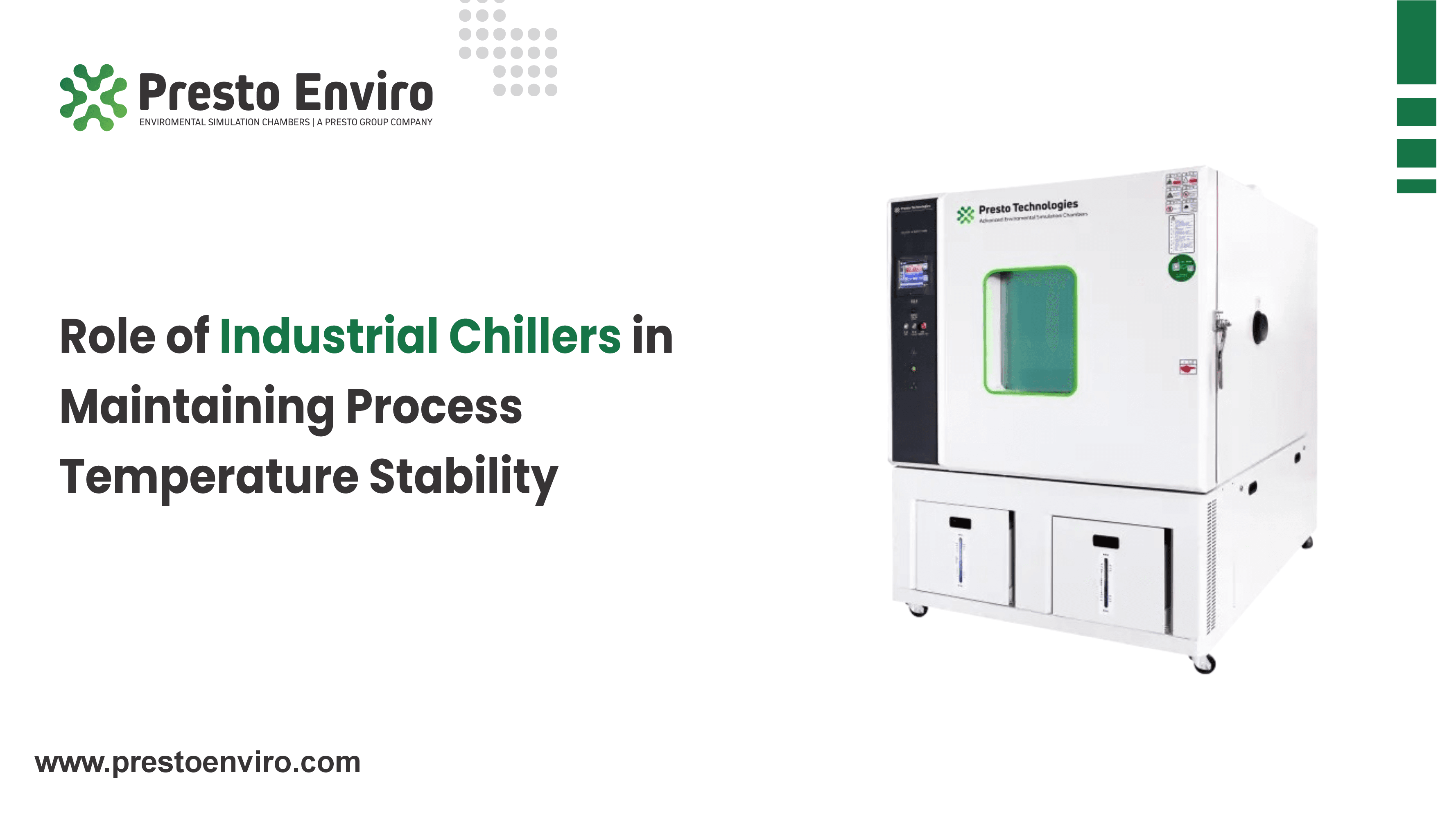
Industrial chillers refer to structures that are designed to regulate the heat during the production process. They circulate a cooling medium through machine or process lines, and absorb heat and take it off vulnerable sections. After cooling, the fluid is pumped back and the process repeated.
Such systems are found in large and small facilities. There are those that have compact production units and others that are used in large industrial floors. They do not emphasize comfort cooling like HVAC, unlike their product. They are not meant to cool people down, but rather to protect machines, materials, and continuous operations against heat stress accumulated over time.
When temperatures stay stable, processes behave as expected. When they fluctuate, problems tend to multiply. Materials react differently to changing heat. Plastics soften or distort. Chemical changes expedite unexpectedly.
Unstable temperatures cause modification, non-acceptance of batches, and time-associated delays between schedules. Components undergo increased stress periodically. Maintaining temperatures at constant levels is a way of preventing these trends and proceeding to smoother daily activities.
Industrial chillers work by matching cooling output with heat generation. As machines release more heat, the system removes more. When activity slows, cooling adjusts accordingly. This balance prevents gradual temperature drift during long production cycles.
Because this adjustment happens continuously, operators do not need to intervene manually. Coolant temperature stays within a narrow range, which helps processes remain predictable. Cycle times stay consistent. Results remain repeatable. That reliability matters during high-volume production.
Heat control matters in more places than many expect. Industrial chillers support a wide mix of sectors.
In plastics processing, chillers help cool molds and extrusion lines. Stable cooling supports uniform shape, surface finish, and dimensional accuracy. Without it, parts may warp or cool unevenly.
In chemical processing, temperature influences reaction behavior. Chillers help keep reactions under control, reducing the chance of unwanted byproducts or safety concerns.
There are pharmaceutical plants that rely on controlled conditions during production. Chillers assist reactors, storage practices, and create conducive surroundings in which the slightest rise in temperature counts.
The processes of food and beverages require the cooling process in the mixing, fermentation, and packaging operations.
Chillers can also be applied in the electronics manufacturing field, where they are used to make sure that the delicate parts are not overheated during assembly and testing.
One of the most prominent causes of equipment wear is heat. Increases in temperature in machines that are not supposed to run so hot cause the expansion of internal parts, a breakdown of lubrication, and the accumulation of stress quietly. This has the propensity of causing instant crashes as opposed to slow indications.
This is prevented with the aid of industrial chillers, which maintain operating temperatures to a safe level. Less thermal stress will prolong the equipment life and minimize the breakdowns. This, in the long run, will lead to the reduction of repairs and unplanned downtime.
Constant temperature also impacts the use of energy. Machines work more easily when the processes remain within the targeted scope. Cooling systems prevent unremitting overcorrection.
Others regulate their output through the demand, which decreases the amount of power wasted in case of a light workload. Although chillers are energy-consuming, their functions of avoiding waste, rejected products, and downtime usually balance the total operating costs.
The quality of products is based on consistency. The product characteristics tend to follow when the range of temperature changes per lot.
Industrial chillers support uniform thermal conditions during each production cycle. This helps products maintain consistent appearance, strength, and performance. Quality teams rely on this stability when approving finished goods and monitoring ongoing production.
Without effective cooling, heat-related issues become routine.
These challenges explain why industrial chillers are treated as necessities rather than optional add-ons in many facilities.
Choosing the right chiller depends on understanding the process itself. Heat load, operating hours, ambient conditions, and production patterns all matter. A system that lacks capacity struggles to keep temperatures stable. An oversized unit wastes energy.
Careful evaluation, proper installation, and regular upkeep all influence long-term performance. A chiller is a reliable element of day-to-day activity when properly matched.
Industrial chillers are the ones that hardly draw a glance, and their influence is deep. They assist in securing machines, maintaining regular production, and alleviating heat discontinuities. They continue to play a consistent role in manufacturing, chemicals, pharma, and food industries. In any place where consistency is significant, this machine has maintained stable results.
How can I know the price of this product?
You can send us an email at response@prestoenviro.com to know the price of this product.
What are the issues that arise with the temperature continuing to vary?
Fluctuating temperatures also cause non-uniform products, a high rate of stoppage, and rapid wear of equipment. In the long run, this leads to delays and increased maintenance work.
Only large factories use industrial chillers?
No. Smaller operations are also dependent on chillers, particularly where precision is important. Even small systems may encounter issues provided if heat is not properly managed.
Will there be any effect on the stability of the cooling on the quality of the product?
Yes. When temperatures remain constant, materials become predictable. This results in delays products to enjoy a stable performance and image.
Why is it important to choose an industrial chiller?
The right choice is affected by heat load, hours of operation, and the conditions around. Knowledge of these factors will prevent undercooling or wastage of energy.
Elevate your quality assurance process to new heights
Related Blogs
23-Sep-2026
Presto Enviro
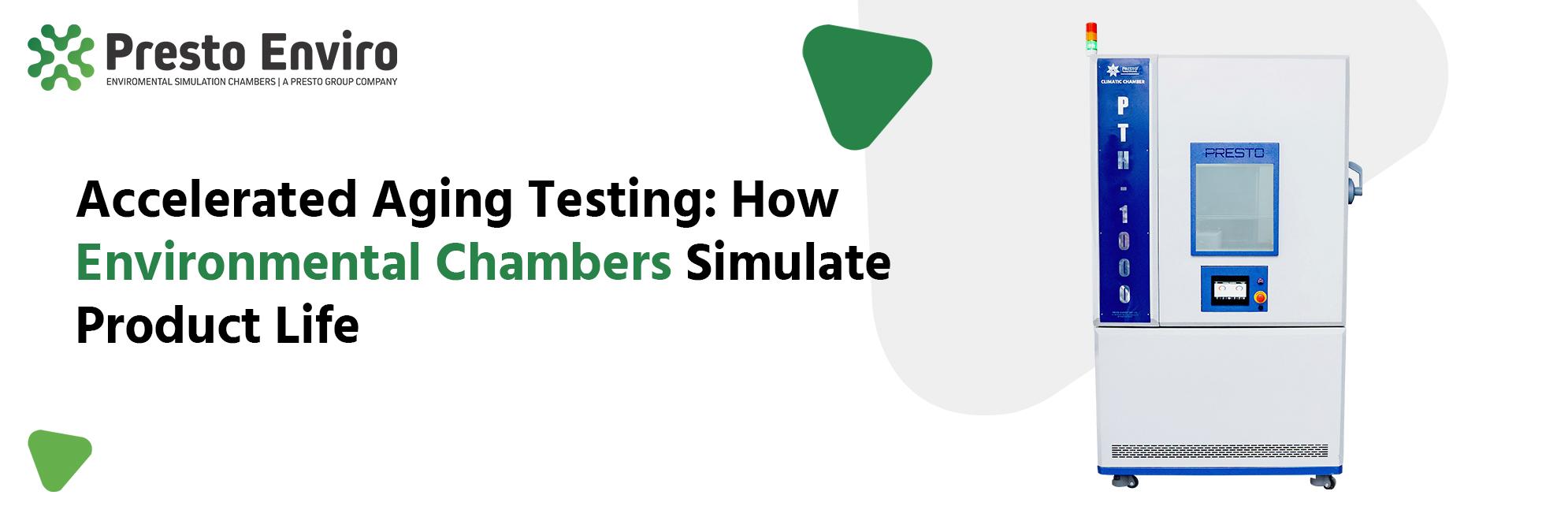
Products are expected to work reliably for months or years, but manufacturers cannot always wait that long to find out how they will perform. Accelerated aging testing solves this problem by exposing products to controlled environmental conditions that speed up certain aging effects.
20-Sep-2026
Presto Enviro
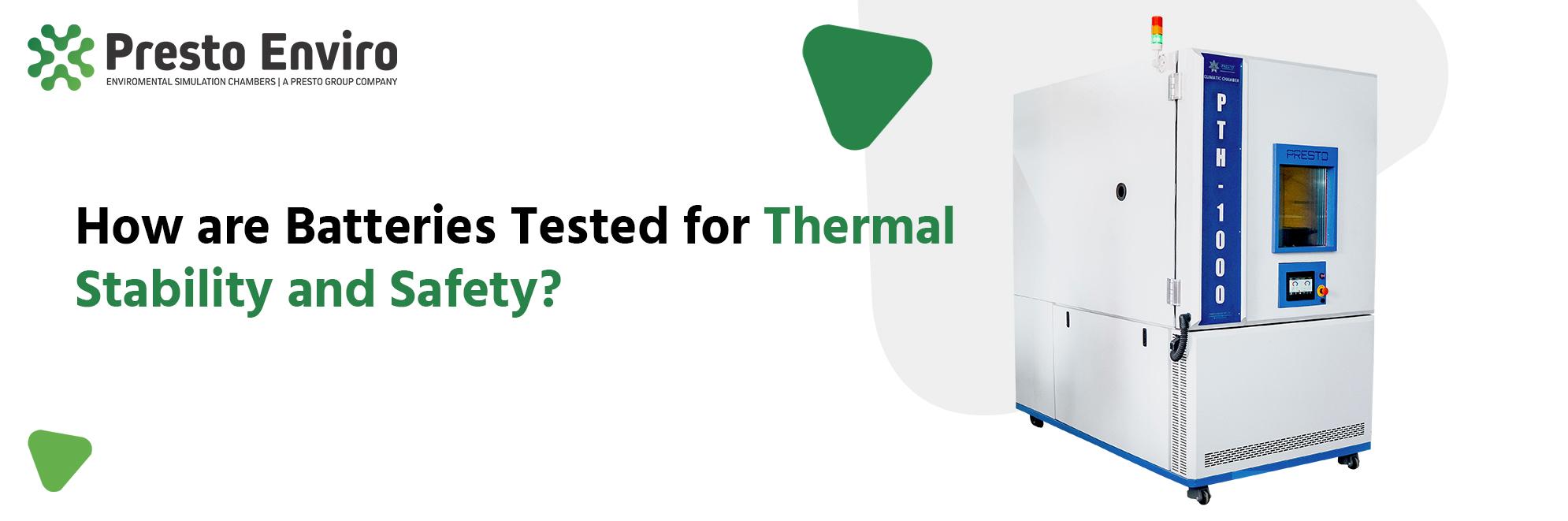
Battery safety is not something manufacturers can check only after a battery is ready for use. Temperature, charging conditions and repeated use can change the way a battery behaves. In some cases, excessive heat can cause permanent damage or create serious safety risks.