© Copyright 2025. All Rights Reserved by Presto Stantest Pvt. Ltd.
21-Apr-2026
Presto Enviro
Businesses and industries that are involved in product testing or quality assurance know that environmental conditions are not just background variables; they are deciding factors if the product will fail or survive in real world. Moisture has a way of exposing weaknesses that standard mechanical testing simply cannot reveal. A packaging material that holds up perfectly under pressure might absorb humidity and lose its structural integrity within weeks on a shelf. An electronic component that performs flawlessly at room temperature might corrode and fail in a tropical climate.
This is why humidity testing has become a must have requirement across pharmaceuticals, electronics, textiles and packaging. But the accuracy of that testing depends entirely on the manufacturer behind it. The manufacturer determines whether your test data is something you can trust and defend in every decision your team makes.
In this article, we will walk through what a humidity chamber actually is, why the manufacturer you choose matters more than most buyers initially appreciate, and what factors should be guiding your evaluation process.
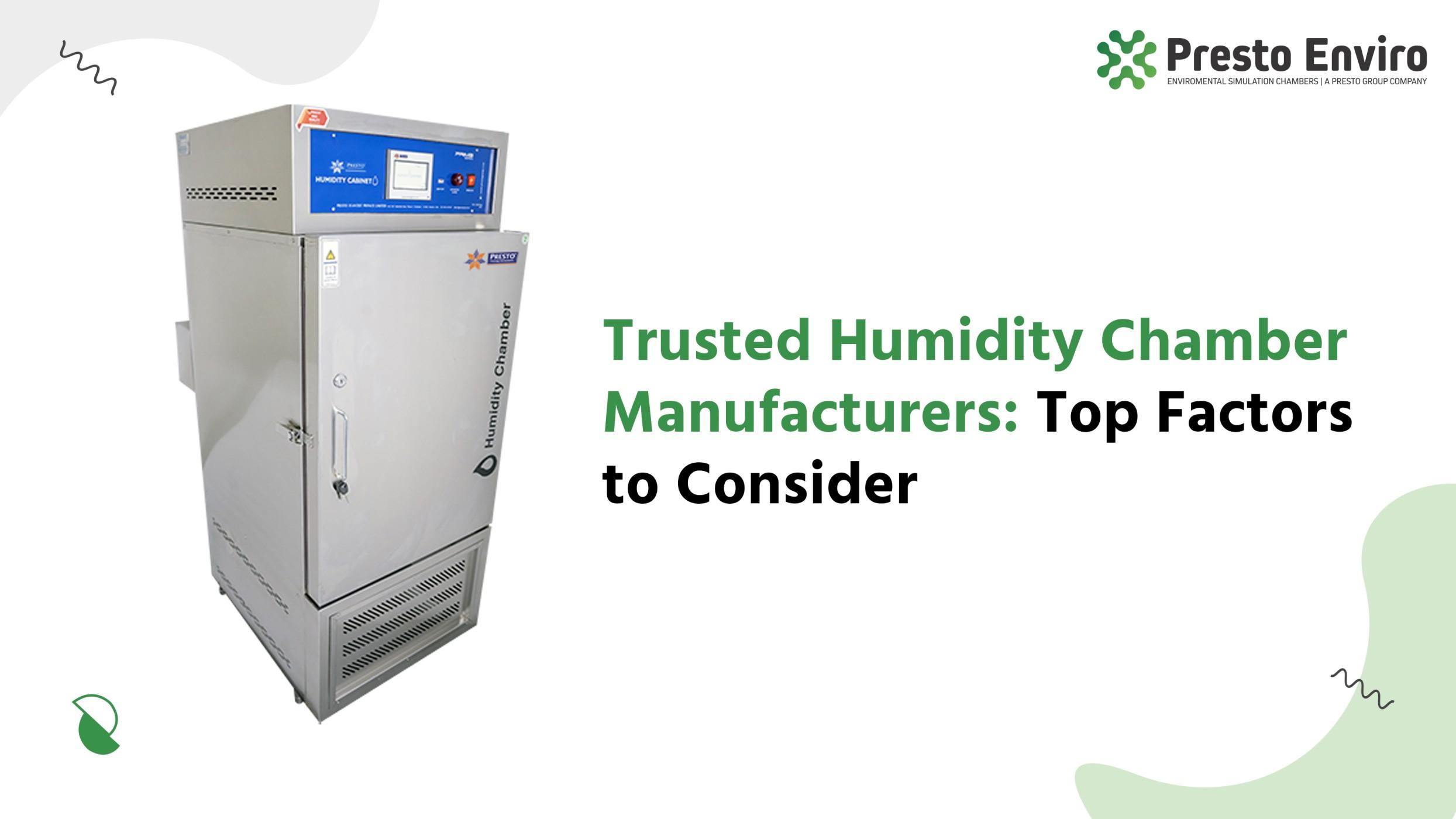
A humidity chamber is a laboratory enclosure built to replicate specific combinations of temperature and relative humidity so that products and materials can be exposed to controlled environmental stress and observed for how they respond. In practical terms, it creates a stable artificial climate inside a sealed, insulated cabinet and holds that climate steady long enough for meaningful testing to take place.
The working of a humidity chamber involves the coordination of three core systems working together. A heating and cooling system manages the internal temperature, a humidification unit introduces moisture into the chamber air either through ultrasonic atomization or steam generation, and a control system continuously monitors and adjusts both variables to maintain the programmed setpoints.
The underlying science comes from psychrometrics which deals with the thermodynamic properties of moist air. By managing both temperature and moisture content independently and simultaneously, the chamber can reproduce a wide range of real-world environments from dry to humid coastal conditions. The results of exposing a product to these conditions tell researchers and quality teams how it will actually behave once it leaves the controlled environment of a factory and enters the unpredictable conditions of storage, transport or end use.
When laboratories invest in humidity testing equipment, the assumption is that the numbers on the display represent what is actually happening inside the chamber. That assumption only holds if the manufacturer built the equipment with sufficient engineering rigor to make it true. A chamber that cannot maintain stable humidity uniformly across its interior volume or one whose sensors drift after a few months of regular use produces data that looks valid but is not. Decisions made on that data whether about product formulation, packaging design or regulatory submission, carry hidden risk.
This is why the reputation and technical capability of the manufacturer matters far beyond the initial purchase. Among manufacturers who have earned consistent credibility in this space, Presto Enviro has established itself as a trusted name in humidity chamber manufacturing. Our work spans a broad range of industries including pharmaceuticals, electronics, textiles, and packaging, all of which have distinct testing requirements and differing tolerances for error.
What sets Presto Enviro apart in this context is not a single feature but rather the consistency of their engineering approach, our attention to international testing standards, and their commitment to providing chambers that hold up in the demanding conditions of daily laboratory use. For organizations where testing accuracy directly affects compliance and product safety, that consistency is not a convenience but a necessity.
Precision and uniformity are the primary and critical factors when choosing the right humidity chamber manufacturer. A tolerance of plus or minus two percent for relative humidity and plus or minus one degree Celsius for temperature is generally considered acceptable for most testing purposes. But the more important question is whether that tolerance is maintained uniformly across different zones within the chamber or only at the sensor location.
Those manufacturers that have conducted spatial mapping of their chambers and can document their uniformity will have specifications that accurately represent performance rather than ideal conditions. Make sure to request calibration certificates and if at all possible third-party validation records prior to purchasing any products from them.
A chamber demonstrates how well it performs through a demonstration and over time via continuous daily operation for at least two years in a busy laboratory; however, there are differences in what makes this performance successful due to factors such as internal construction materials, quality of door seals, insulation system and components used in humidification circuit. Stainless steel interiors are the right choice for sustained humidity environments because they resist corrosion and do not harbor microbial growth the way coated surfaces can.
Presto Enviro uses high-grade stainless steel in the chamber interior along with robust insulation to prevent thermal and moisture exchange with the surrounding environment. This approach reflects a manufacturing philosophy focused on durability rather than minimizing production costs which ultimately matters more to a laboratory operating on a long timeline.
In regulated industries, it is not enough for a chamber to produce stable conditions. It also needs to be built and documented in a way that supports the qualification and validation requirements imposed by regulatory bodies. ICH Q1A guidelines govern stability testing in pharmaceuticals, IEC 60068 covers environmental testing for electronics and various ASTM and ISO standards apply across other sectors.
A manufacturer can save the buyer tremendous qualification effort downstream by having their chambers designed to the frameworks associated with the Design Guidelines and applicable IFR/UDR & CFR certifications rather than an add-on or afterthought. Ask specifically what standards the chamber is designed to meet and whether the manufacturer can supply the technical documentation required to support your IQ, OQ and PQ validation activities.
Standard configurations work for standard requirements but many laboratories have testing needs that fall outside what a catalog product can accommodate. Whether it is a larger chamber volume for bulky samples, specific humidity ranges for niche applications or custom programming for complex test profiles, the ability to modify and adapt is a direct reflection of how well a manufacturer understands the product.
Companies that rely entirely on fixed configurations either lack the in-house engineering depth to customize or have made a business decision to prioritize volume over versatility. Neither serves a specialized laboratory well.
A humidity chamber that goes out of calibration or develops a fault during a critical test cycle is not just an equipment problem. It is a project delay, a compliance risk, and a cost that compounds quickly if the manufacturer's service response is slow or difficult to access. The quality of after-sales support including how quickly a technician can be dispatched, how readily spare parts are available and if the manufacturer offers preventive maintenance programs.
Ask for the average service response time, find out where the nearest service center is relative to your location and speak with customers about their experience with the manufacturer.
Selecting a humidity chamber manufacturer is ultimately an exercise in risk management. The stakes are the reliability of test data and the longevity of equipment. When these factors are honestly evaluated, it becomes clear that the manufacturer's technical depth, build standards, regulatory alignment and service infrastructure matter much more than any other single specification.
In Presto Enviro, we bring together all of these qualities in a way that makes us a genuinely strong choice for organizations that take their testing responsibilities seriously. Our humidity chambers are not just built to perform on day one but to remain dependable assets over the full course of their working life. Connect with Presto Enviro and take your first practical step toward both your technical requirements and long-term quality objectives.
Elevate your quality assurance process to new heights
Related Blogs
15-Oct-2026
Presto Enviro
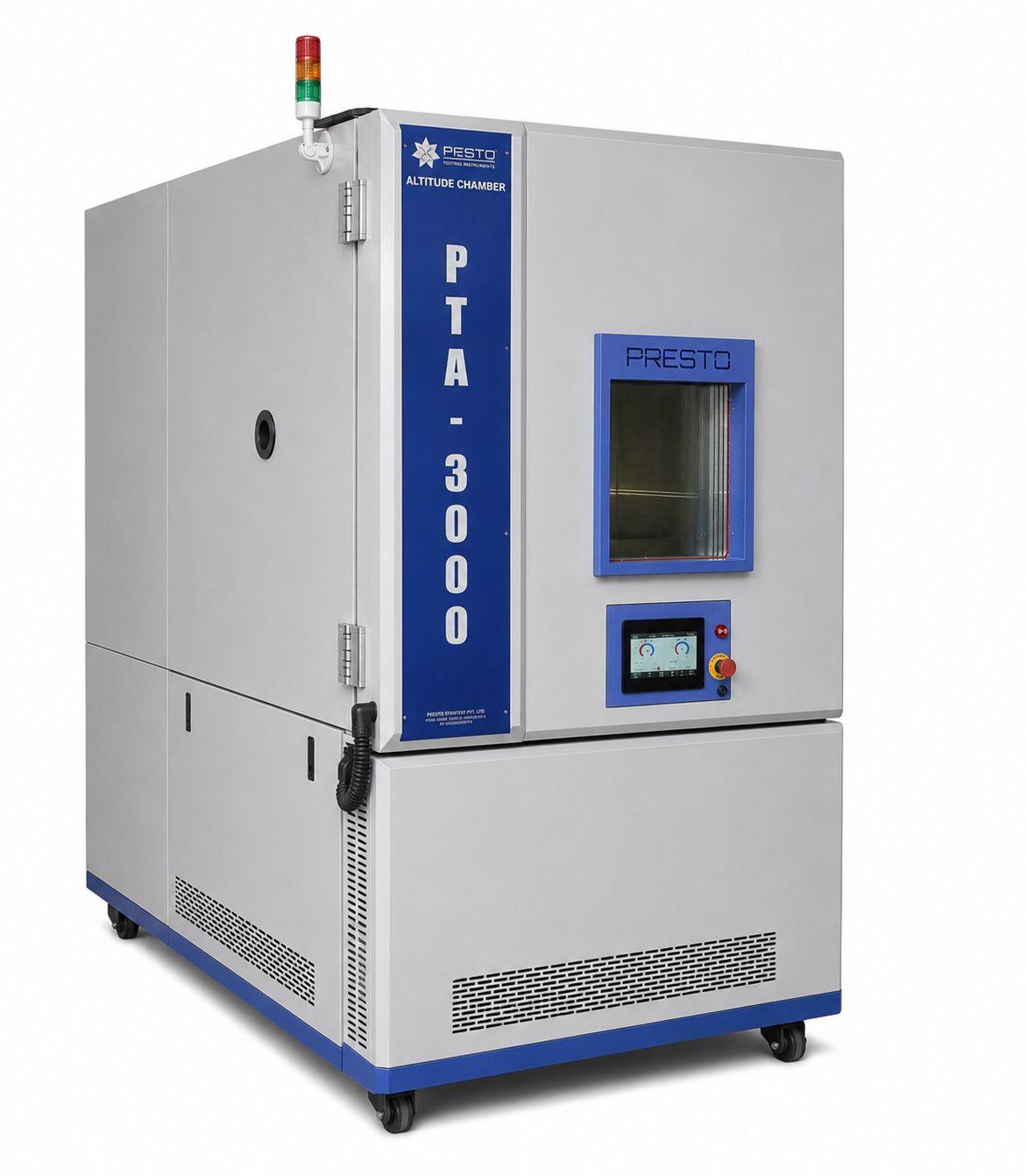
In environmental testing, vacuum chambers are also called altitude test chambers or low-pressure chambers. They lower air pressure inside a sealed chamber to simulate high altitude while controlling temperature and, in some configurations, humidity.
13-Oct-2026
Presto Enviro
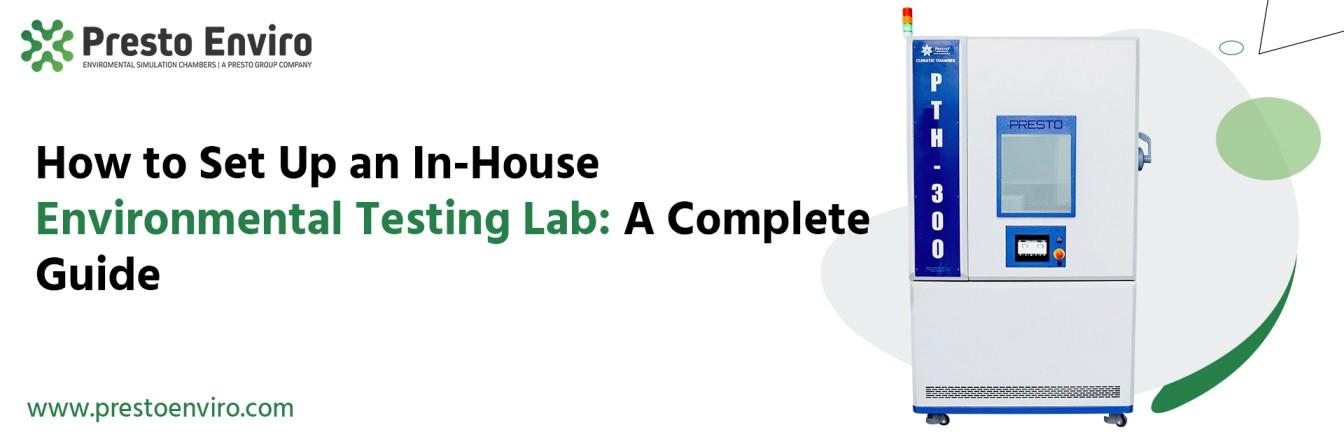
An in-house lab can deliver results, give better control over product testing, and reduce testing costs in the long run. To make it work well, the lab space, equipment, utilities, and testing methods must be planned according to your needs.