© Copyright 2025. All Rights Reserved by Presto Stantest Pvt. Ltd.
07-Jul-2026
Presto Enviro
Outer space vehicles are hard to build to survive the conditions that are entirely different from those on our planet. To survive the spacecrafts in the extreme pressure and temperature conditions in space, engineers and manufacturers always face the challenge of producing such robust and space-ready products. Getting hardware ready for outer space is one of the toughest challenges an engineer can face.
They essentially have taken fragile electronics and mechanical parts, then put them into a setting with no air and wildly swinging temperatures. This guide explains everything about thermal vacuum testing that is vital for spacecraft products, showing how it simulates orbit, why it keeps missions from failing, and what happens during the actual process.
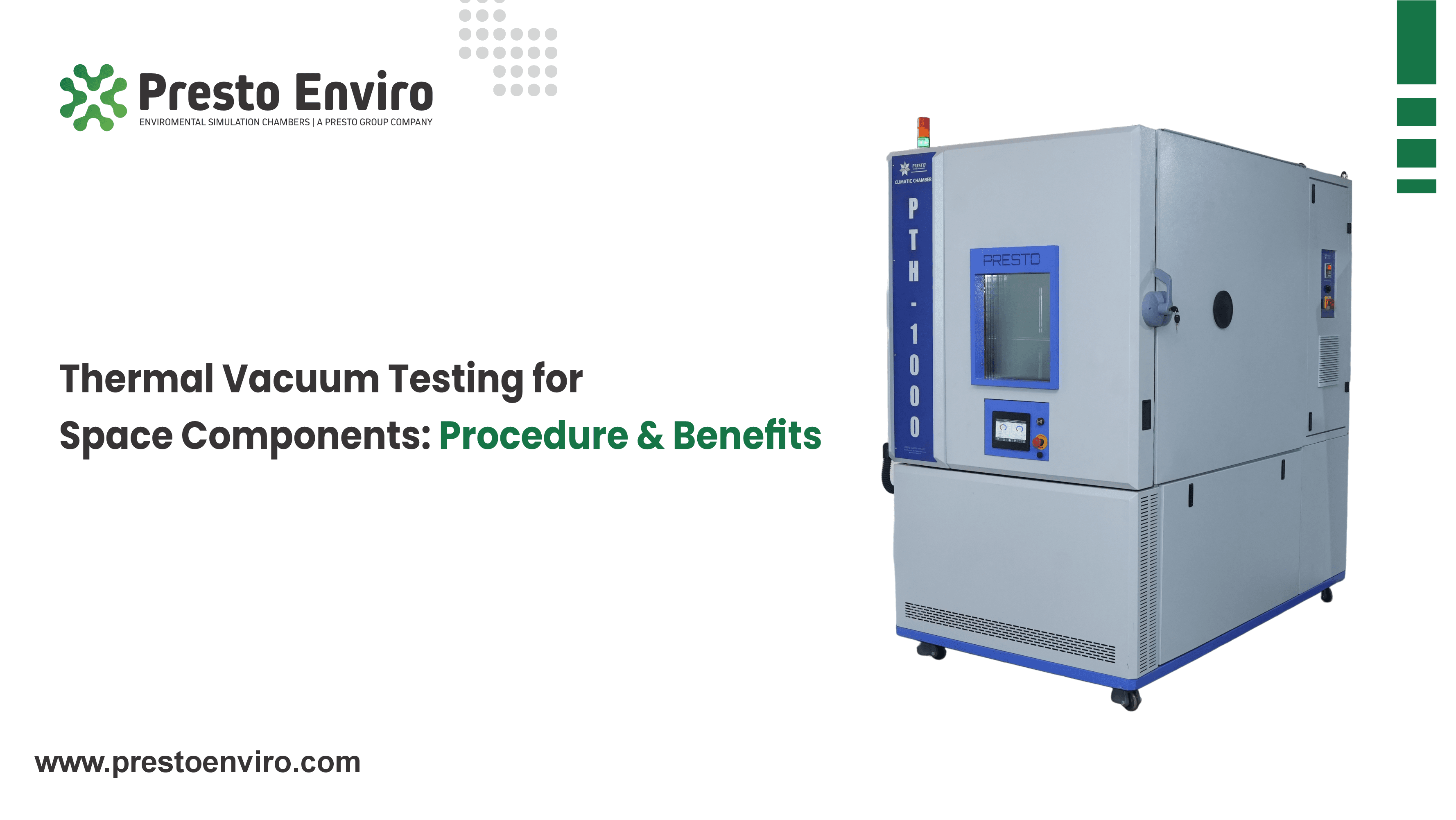
Thermal vacuum testing uses a specialized chamber that simulates the conditions of outer space to test spacecraft components. The test is conducted by pulling a deep vacuum while swinging temperatures from extreme highs to deep lows. Thermal vacuum testing lets engineers watch exactly how materials and systems perform when they are stripped of normal atmospheric pressure and thermal stability.
Thermal vacuum testing matters a lot in the aerospace industry; otherwise, space vehicles cannot survive in the severe conditions once they leave the launchpad. Without air, heat cannot just drift away from hot electronics through convection, so thermal paths change completely. Also, standard materials often start bleeding out trapped gases in a vacuum, which can easily fog up expensive optical lenses or short out close circuits. Running these simulations on the ground catches these hidden design flaws before they turn into a multi-million dollar disaster.
Thermal vacuum testing simulates the extreme cold, heat, and other conditions of outer space. The products or testing specimens are put inside the airtight chamber. Continuous heating and cooling cycles are run to mimic the extreme pressure difference in the chamber, the same as that in outer space. The following are the steps to follow to conduct the thermal vacuum testing:
Thermal vacuum testing comes with various benefits to ensure that aerospace products can stand the harsh conditions of outer space.
Putting space hardware through these intense thermal and vacuum cycles gives engineering teams real-world proof that their designs will actually survive. It takes away the guesswork by forcing structural weak spots and electrical bugs to show up while the gear is still in the lab.
The other benefit of thermal vacuum testing in space components is that it spots structural flaws early on. Different materials expand and shrink at their own specific rates when things get incredibly hot or freezing cold. This constant shifting creates massive physical stress that can easily snap solder points, crack brackets, or peel adhesives apart. Forcing these changes to happen inside a test chamber shows you exactly where the hardware might break.
Another big advantage of thermal vacuum testing is stopping guesswork before it causes trouble. Out in a vacuum, coatings, glues, and plastics tend to give off volatile vapors. These airborne chemicals float around the spacecraft and stick to colder areas which can easily ruin solar arrays or cloud up camera sensors. This chamber makes the outgassing happen ahead of time, so the teams can calculate the weight loss of the material and make sure it meets spaceflight requirements.
You also get to verify the performance of the cooling setup. Since radiation is the main way to dump heat out in the void, internal electronics can overheat in minutes if the thermal paths are flawed. The test proves that your heat pipes, insulation blankets, and radiators work as a cohesive unit to keep everything at a safe operating temperature.
Hidden leaks are the primary culprit of failing aircraft or any other aerospace vehicle. When an aerospace vehicle faces issues like leaks, it is not only risky for the components to fail but also can be hazardous to the passengers flying. The situation arises due to extreme temperature and pressure differences and weak mechanical work. The thermal vacuum test determines these weak points and manufacturers can detect the issues before the launch.
Presto Enviro builds high-capacity and reliable environmental test chambers that accurately test spacecrafts and related components. It gives test teams exact control over pressure drops and temperature cycles. Our environmental chamber pairs heavy-duty vacuum pumps with advanced thermal plates to create stable, repeatable space environments.
Having a dependable test setup changes everything when you are running long simulations. The hardware from Presto Enviro is built to handle the continuous strain of multi-day profiles, maintaining deep vacuum levels even as the temperature swings across wide ranges. The systems use direct controls and detailed data logging, making it straightforward to watch how a device behaves every second of the run. This reliability gives testing labs peace of mind, knowing the chamber won't shut down unexpectedly or drift off calibration during a critical test phase.
Spacecrafts and related products should be manufactured with extreme caution as a minor leak issue or a break can be dangerously harmful for flyers. Building things for space means choosing tools that leave absolutely zero room for guesswork or luck. Thermal vacuum testing is a vital milestone in aerospace development, ensuring every wire, sensor, and joint can take the heat and the vacuum of the void. Relying on an experienced thermal vacuum testing manufacturer like Presto Enviro ensures engineering departments have the tough, precise testing setups.
For space products, these are important parameters to run these validations, keeping the mission on track before it ever leaves the ground. And to tackle all these validations, Presto Enviro stands as the most reliable environmental test chamber manufacturer.
Elevate your quality assurance process to new heights
Related Blogs
15-Oct-2026
Presto Enviro
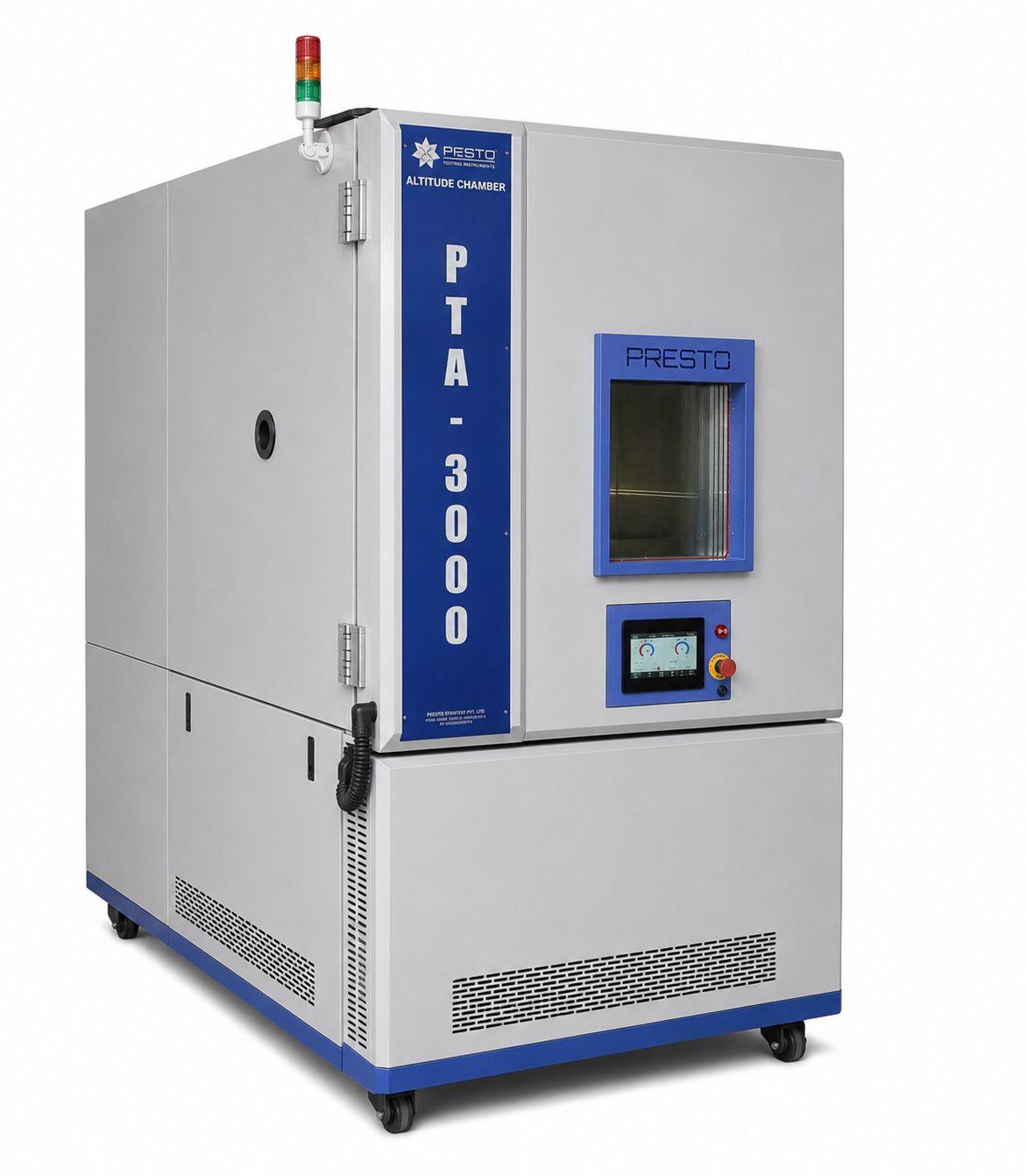
In environmental testing, vacuum chambers are also called altitude test chambers or low-pressure chambers. They lower air pressure inside a sealed chamber to simulate high altitude while controlling temperature and, in some configurations, humidity.
13-Oct-2026
Presto Enviro
An in-house lab can deliver results, give better control over product testing, and reduce testing costs in the long run. To make it work well, the lab space, equipment, utilities, and testing methods must be planned according to your needs.