© Copyright 2025. All Rights Reserved by Presto Stantest Pvt. Ltd.
25-Jun-2026
Presto Enviro
Environmental testing becomes a necessity for almost every industry to produce high-quality, sustainable and industry-compliant products. When you skip such a major test, you are likely failing your product to real-time climatic conditions.
But when you are trying to figure out exactly how your materials or components will hold up under intense heat, cold or sticky humidity, the environmental test chambers are very reliable tools. But before you invest in one or run your chamber. In this guide, you will learn the most common real-world questions engineering and QA teams run into every day. You will get straightforward answers to every question to help you dial in your testing protocols and choose the right setup for your lab.
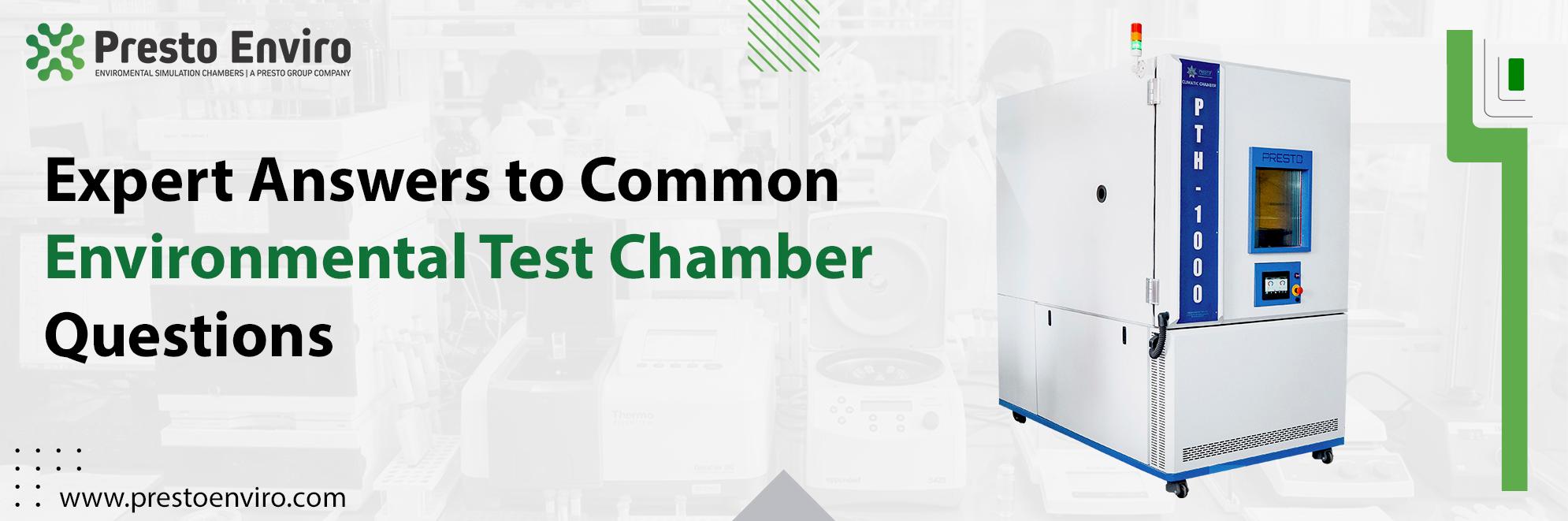
An environmental test chamber is a highly specialized, insulated room in miniature that recreates extreme weather conditions in the chamber to test products. Manufacturers in industries including automotive, electronics, aerospace and medical devices use these chambers to speed up the aging process of prototypes. By putting a product through the wringer before it goes out the door, you can spot weak points, fix design flaws, and prove to your clients that your product is actually built to last.
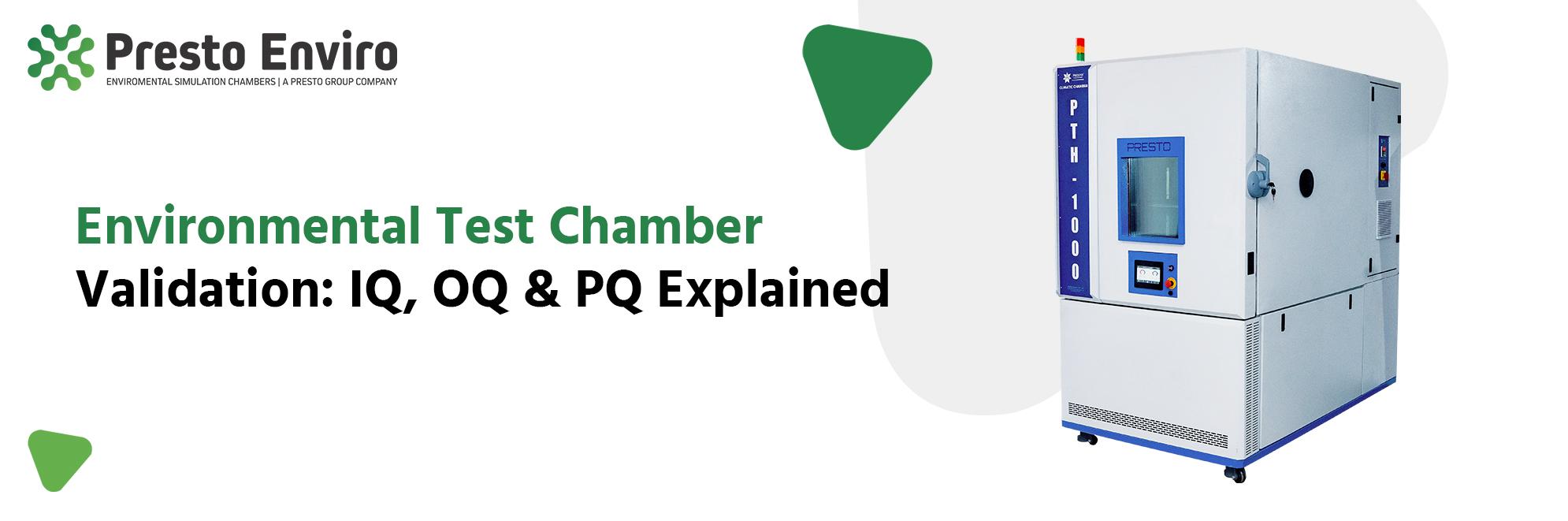
It’s pretty common for people in the industry to use temperature and climatic chambers interchangeably but they actually do two totally different jobs on the lab floor. A standard temperature chamber does exactly what it says—it controls heat and cold. You use it to cycle products between thermal extremes to see how materials expand and contract or to find out if components get brittle and crack when the temperature plummets.
A climatic chamber takes things a step further by adding moisture to the mix. It controls both temperature and relative humidity at the same time. This matters because out in the real world, products rarely fail just from heat alone. It’s the combination of high heat and dripping humidity that causes real damage like rust, mold, electrical shorts and moisture seeping into sealed components. If you need to test for corrosion or weatherproofing, a climatic chamber is what you need.
Keeping moisture levels perfectly steady inside a sealed chamber is a constant balancing act between a heating system and a cooling system. To bring the humidity up, the chamber uses a built-in steam generator or a water atomizer to pump fine moisture vapor right into the air stream.
When the test profile calls for dry conditions, the refrigeration system kicks in. It runs air across a cold cooling coil which forces the moisture in the air to condense and drain away, dropping the humidity down.
Behind the scenes, high-end systems like the ones built by Presto Enviro rely on advanced digital microprocessors that track wet-bulb and dry-bulb sensors. The controller continuously tweaks the heaters, the steam injection, and the cooling loops on the fly to keep your humidity levels sitting within a tight ±2% window.
The big difference between thermal shock testing and temperature cycling is the speed of temperature change. When you run a standard temperature cycling test, you are gradually changing the temperature. The chamber might ramp up or down at a rate of 1°C to 15°C per minute, giving the test sample plenty of time to warm up or cool down all the way through.
Thermal shock testing is a whole different beast. It forces an almost instant temperature change which is usually within just a few seconds. To do this, you use a multi-zone chamber that has a hot compartment and a cold compartment. A mechanical elevator physically drops or lifts your product from one extreme straight into the other. This sudden thermal hit is brutal on materials, making it perfect for exposing hidden defects like weak solder joints, cracked seals, and internal delamination caused by materials expanding at different rates.
Dead zones inside test chambers are going to result in noticeably hotter, colder, or drier pockets of air than the other areas, and they will occur if the air in your chamber does not circulate around evenly. This messes up your test data. If you have more than one sample on separate shelves, all the samples will experience different environments which will lead to different test results and may not be consistent and accurate.
Good chambers overcome this by implementing large duty blowers that are motorized and, by design, optimizing the plenums inside. The setup ensures that conditioned air is evenly distributed around the entire cabinet, ensuring each shelf corner and sample is subjected to the same temperature and humidity profile you set in the controller.
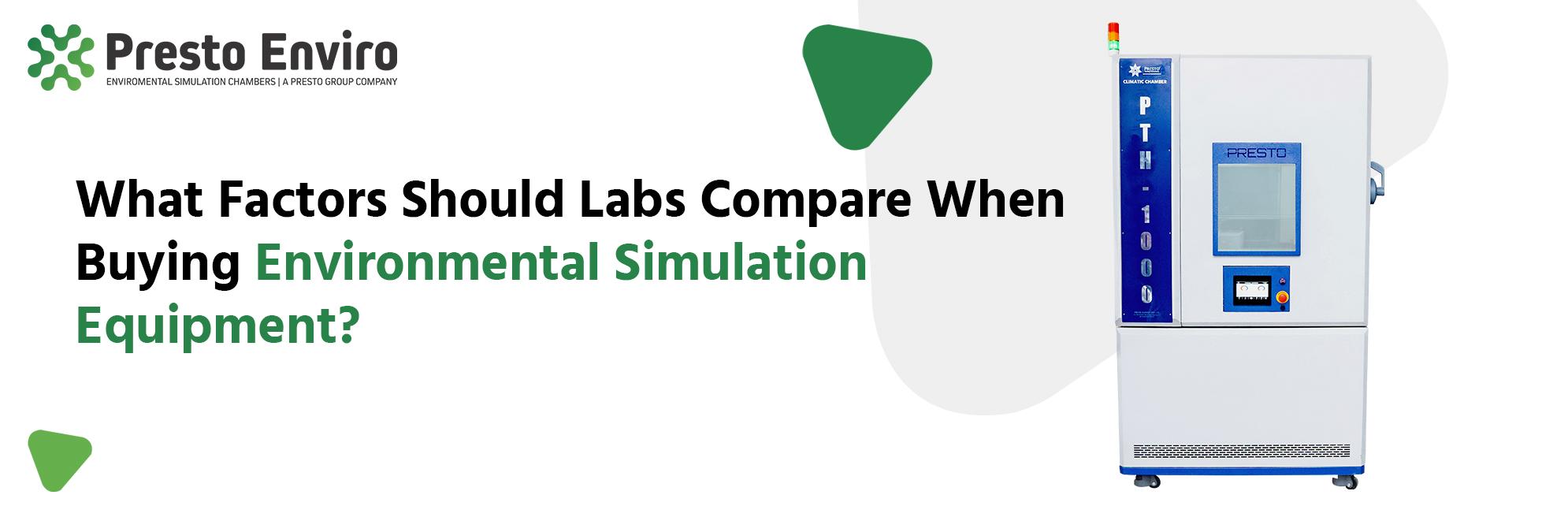
The single biggest mistake people make when buying a chamber is choosing a model that barely fits their product. If your sample takes up the whole inside space, you are going to run into issues. As a general rule of thumb, your test samples shouldn't take up more than 30% to 50% of the total internal volume of the chamber.
You need to leave plenty of empty space around your items so the air can actually circulate. If you crowd the chamber, you block the airflow which creates major temperature lag and uneven testing conditions. Plus, if you are testing "live" products that generate their own heat like a running motor or powered electronics, that extra heat will fight against the chamber's cooling system. You need that extra air volume and cooling capacity to counteract the heat your product is throwing off.
To keep your lab certified and make sure your data holds up during quality audits (especially for standards like ISO and ASTM), you should have your chamber calibrated every 6 to 12 months.
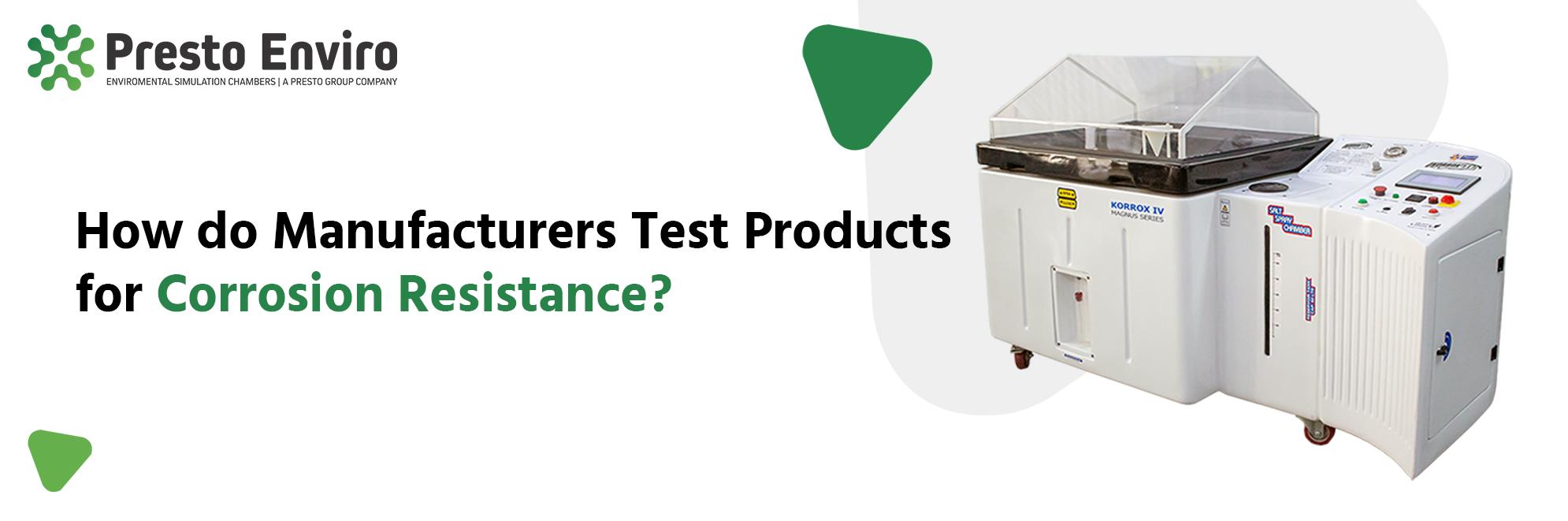
Even the best sensors out there will experience "drift" over time. Constantly bouncing between freezing cold and blistering heat or dealing with chemical outgassing from plastics and plastics under test takes a toll on the sensors. Regular calibration against certified reference tools ensures that the numbers you see on your screen match what is actually happening inside the chamber, keeping your data legally defensible and accurate.
In the end, it is one of the savviest things you can do to help maintain your brand's reputational integrity to have an environmental test chamber in your quality control process. Once you have grasped the impact of airflow, humidity balance and chamber size on practical results, you're thinking about data in a completely new way. Eliminate future warranty headaches by getting concrete, repeatable evidence of how well your products will stand up to whatever the real world has to throw at them rather than just a guess.
If you are looking for a reliable partner to upgrade your lab, Presto Enviro stands out as a leading Environmental Test Chamber manufacturer in the industry. Our experts specialize in building durable, high-accuracy testing setups designed to match strict international testing frameworks. From custom chamber sizes to routine calibration and engineering support, our team has the practical expertise to help you keep your quality assurance lab running flawlessly.
Elevate your quality assurance process to new heights
Related Blogs
23-Sep-2026
Presto Enviro
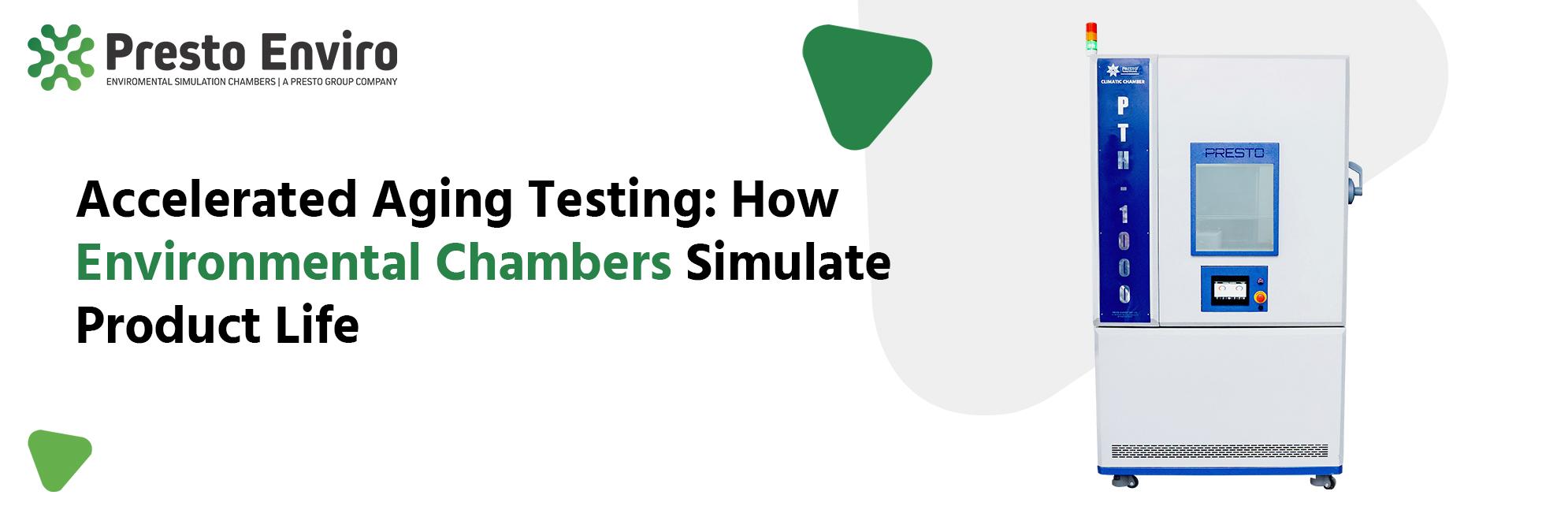
Products are expected to work reliably for months or years, but manufacturers cannot always wait that long to find out how they will perform. Accelerated aging testing solves this problem by exposing products to controlled environmental conditions that speed up certain aging effects.
20-Sep-2026
Presto Enviro
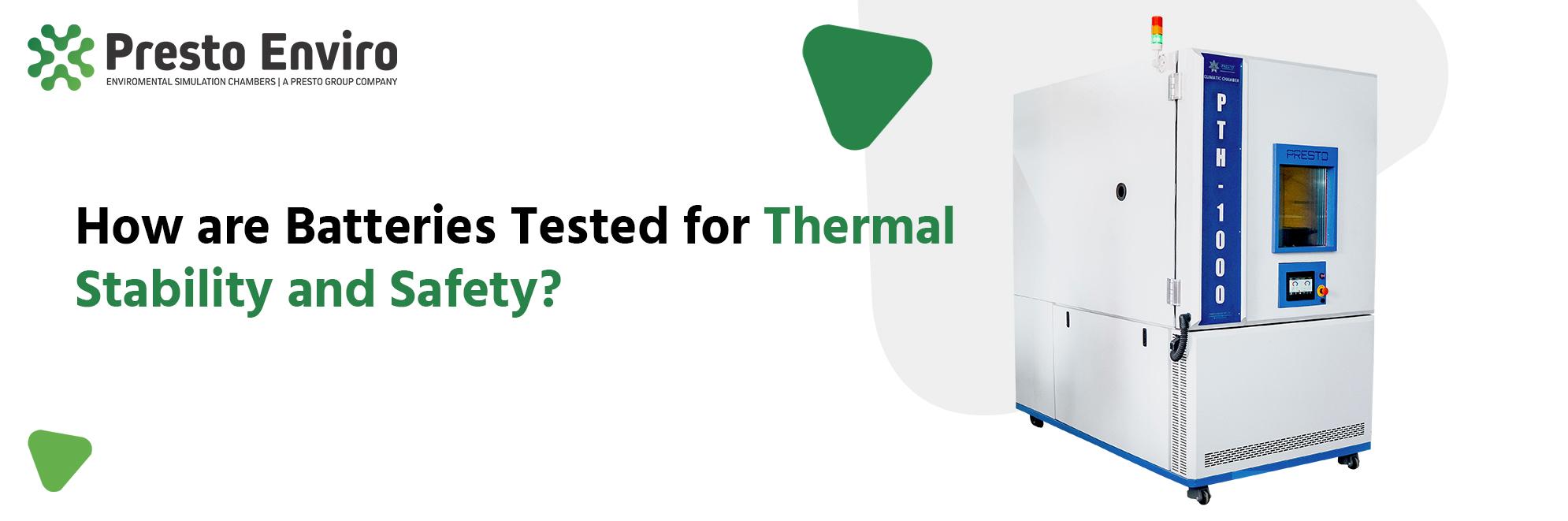
Battery safety is not something manufacturers can check only after a battery is ready for use. Temperature, charging conditions and repeated use can change the way a battery behaves. In some cases, excessive heat can cause permanent damage or create serious safety risks.