© Copyright 2025. All Rights Reserved by Presto Stantest Pvt. Ltd.
20-Jun-2026
Presto Enviro
Extreme weather changes make the products fail if they are not properly tested under real environmental conditions. We have hundreds of live examples of a smartphone battery dying in freezing cold and how a car dashboard or outer body cracked in severe heating conditions. This is not entirely a manufacturing fault, but missing the critical environmental testing in such a large temperature difference is.
This is where hot and cold chambers come into play. Whether it is extremely cold conditions or blistering heat, manufacturers can exactly analyze how their product will behave in such conditions. Also, manufacturers must know how their materials handle these harsh thermal shifts before items hit store shelves. In this article, we are going to discuss details of hot and cold chambers, how they work, their benefits and applications in the real world to produce reliable products.
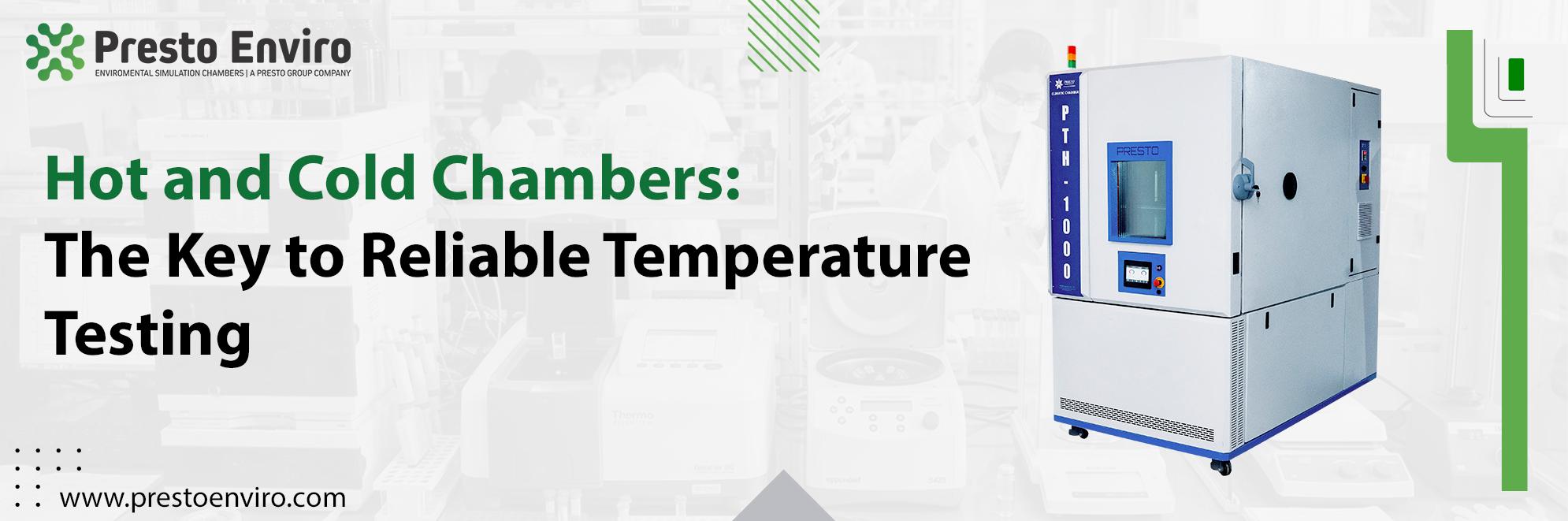
Hot and cold chambers are specialized environmental testing enclosures built to subject products to extreme thermal conditions. They simulate rapid or prolonged temperature shifts to check material durability and find hidden flaws early.
Thermal test chambers work as extreme thermal simulators, completely separating a sample from the ambient environment and subjecting that sample to an extremely hot and frustratingly cold cycle. Engineers can then utilize these test chambers to determine when a particular part will break, warp or cease to operate. Conducting these tests in a thermal testing chamber provides accuracy in results without having to wait for a season change to happen or having to deal with uncontrollable ambient environmental conditions. It is about catching mistakes in the lab rather than dealing with angry customer returns later on.
Hot and Cold Chambers work by forcing a test sample through precise thermal cycles. These chambers use a balanced combination of high-performance electric heaters and mechanical refrigeration cooling cycles. Internal fans constantly circulate this treated air across the test workspace to maintain a perfectly uniform internal climate. Here is the step-by-step process of testing:
In the very first step of testing, the operator has to position the test component in either of the chambers (hot or cold) without contact with other components or internal walls. By doing so, the system creates the path for air to flow all the way around the object for an even test. The technician then enters the desired temperature set points and desired temperature change durations directly into the digital controller wich defines the desired rate of temperature change in the chamber.
A cycle begins once it has been started and the machine controls the environment by means of automatic systems. If the profile requires heat, then the electric heating elements turn on and the internal blowers push the heated air over the work area to heat the component. However, for freezing phases, cooling compressors are used which remove heat from the air by using special refrigerants that cool the inside temperature quickly.
All of these are accomplished with heavy-duty internal fans that circulate air continuously to avoid hot or cold corners. Sensors continuously monitor conditions during the run and record the data for later review by the engineers to determine how the product reacted to the conditions.
Hot and cold chambers focus entirely on managing dry temperature transitions, but environmental chambers handle a much broader scope by adding precise humidity controls, moisture injection, and sometimes even solar simulation.
|
Feature |
Hot and Cold Chambers |
Environmental Chambers |
|
Primary Focus |
Temperature stress only (extreme heat and freezing cold) |
Comprehensive climate simulation (including temperature and moisture) |
|
Humidity Control |
None. It manages dry thermal transitions without regulating water vapor |
Precise humidity regulation using moisture injection and sensors |
|
Internal Components |
Contains electric heaters, refrigeration compressors, and circulation fans |
Includes heaters, cooling loops, water reservoirs, and steam generators |
|
Complexity and Cost |
Less complex and more cost-effective if you only require thermal testing |
Highly complex and more expensive due to advanced climate hardware |
|
Common Use Case |
Checking if plastics warp, solder joints crack, or materials turn brittle |
Testing long-term corrosion, tropical dampness, or shelf-life stability |
Many industries use hot or cold thermal chambers as part of their quality control processes when doing stress testing on a wide range of products such as microelectronics, which are often fragile due to their size, and heavy automobiles. Using thermal chambers will provide us with an opportunity to promote the safety of our products, verify that they meet the required standards for use in various industries, and maximize their longevity.
Electronics and Semiconductors: Microchips and circuit boards generate a lot of their own heat when they run. Running them through intense thermal cycles catches loose solder points and fragile connections before the component burns out on a customer.
Automotive Industry: The parts of the vehicle must resist freezing during winter while also withstanding the sun's heat during summer without cracking the dashboard. Testing rubber seals, sensors on the engine and more guarantees that parts will last for many years on the road.
Aerospace and Defense: flight hardware has to cope with a massive drop in temperature during a steep climb. Teams will test these sudden changes in a safe environment to ensure that essential navigation systems will not "freeze up" during a flight.
Pharmaceutical Industry: Since the nature of pharmaceuticals and medical devices, it's important to understand the impact of temperature spikes on their safe shipment. Testing packaging means the product contained within it is stable even if a cargo shipment rests on a hot tarmac for hours.
Plastics and Packaging: Extreme temperatures completely change how polymers behave. Testing reveals exactly when a plastic container will turn too soft under heat or snap like glass in the deep cold.
Presto Enviro designs and builds highly accurate hot and cold chambers built for rugged industrial testing environments. Their systems deliver tight temperature stability along with simple, user-friendly controls for everyday laboratory operations.
When you look at the options on the market, Presto Enviro stands out because they focus heavily on structural build quality and long-term reliability. Testing chambers face immense internal strain from constantly fighting intense heat and deep freezes day after day. We solve this by using heavy-gauge stainless steel interiors and high-grade insulation layers that prevent thermal leakage. Since our control systems are easy to use, lab techs can set up sophisticated ramp cycles with minimal training required. The combination of reliability and usability makes our machines a wise choice for QC labs concerned with obtaining repeatable, reliable data.
Reliable temperature testing is the only way to ensure products survive real-world conditions without unexpected failures. Investing in a high-quality system saves thousands in warranty claims and protects your brand reputation.
Cutting corners on thermal testing usually ends up costing a company far more down the line. A single product recall can destroy consumer trust overnight and wipe out years of hard work. Using a dependable hot and cold chamber gives engineering teams the hard data they need to launch new products with total confidence.
Always choose a trusted manufacturer like Presto Enviro to ensure you get the accuracy, durability, and support required to run these rigorous test cycles year after year.
Elevate your quality assurance process to new heights
Related Blogs
20-Sep-2026
Presto Enviro
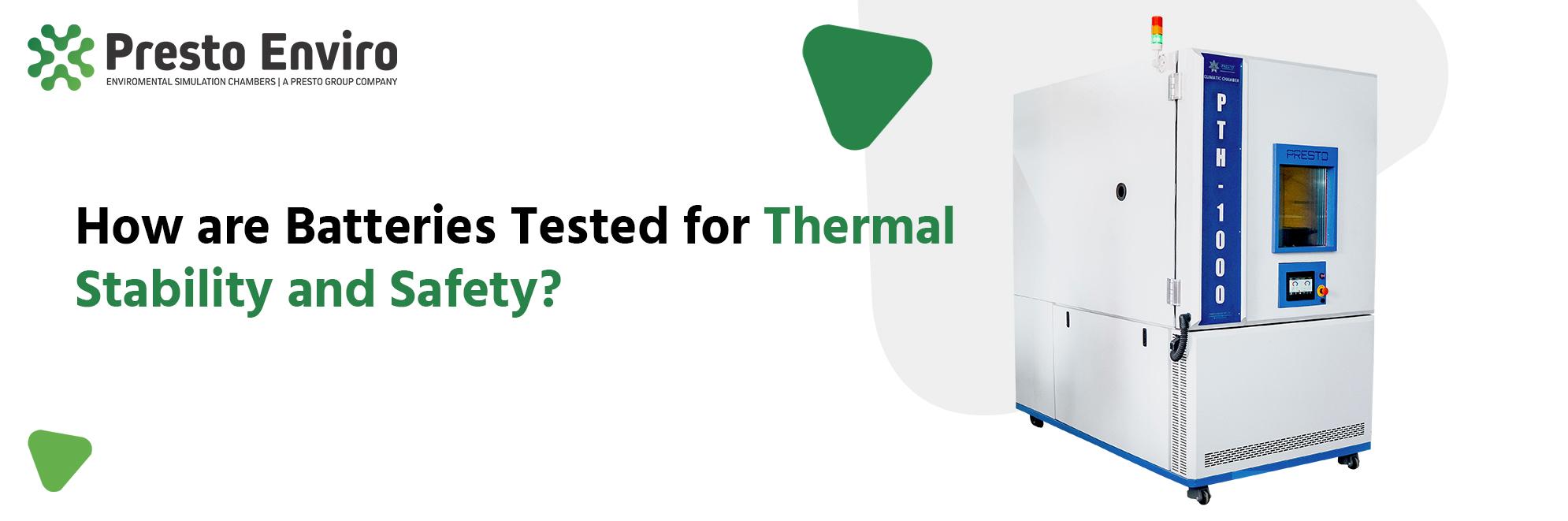
Battery safety is not something manufacturers can check only after a battery is ready for use. Temperature, charging conditions and repeated use can change the way a battery behaves. In some cases, excessive heat can cause permanent damage or create serious safety risks.
15-Sep-2026
Presto Enviro
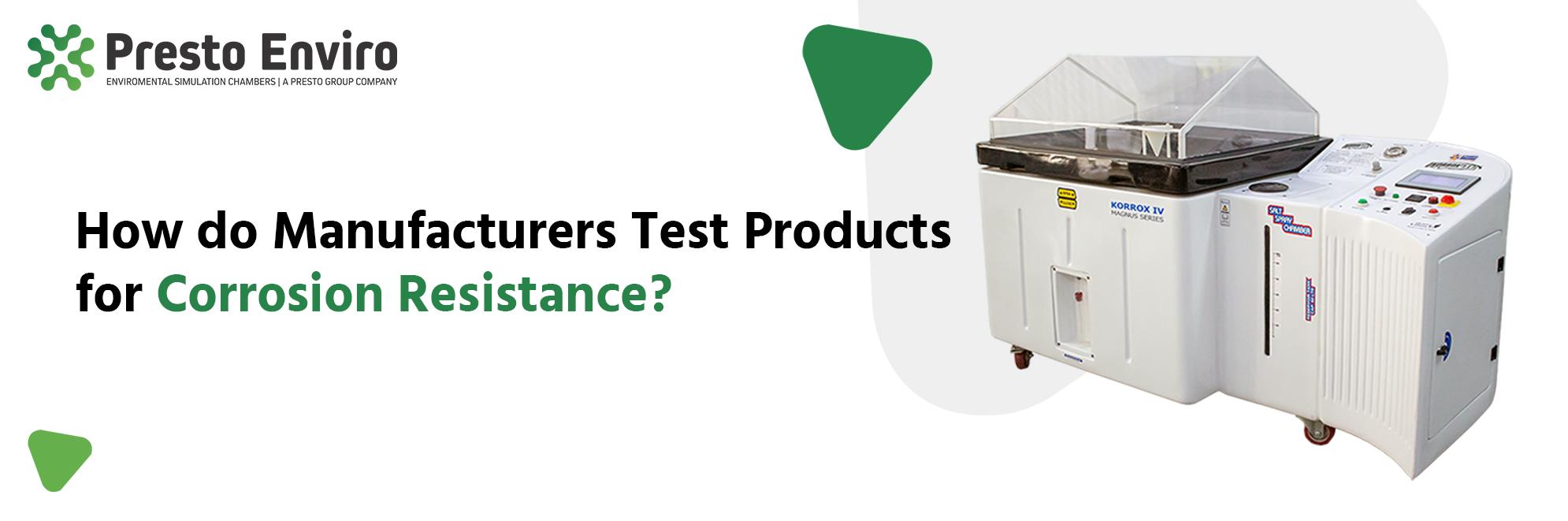
Corrosion is one of those problems that may appear mild at first and later turn costly. A metal part may leave the manufacturing facility appearing undamaged, yet suffer corrosion, stain formation or coating failure as a result of its contact with moisture, salts and changing weather conditions.
11-Sep-2026
Presto Enviro
Metal parts exposed to environmental elements like rain, high humidity and saline air are subjected to quick degradation. Manufacturers don’t have years to wait to see long-term real-world durability with immediate shipping deadlines.