© Copyright 2025. All Rights Reserved by Presto Stantest Pvt. Ltd.
15-Dec-2025
Presto Enviro
Do you ever wonder what happens to a product when it jumps from freezing air to blazing heat in seconds? Many things we use every day go through these sudden shifts. A phone left in a cold car, a laptop kept near a heater, or a car parked under the hot sun and then splashed with cold rain. These shifts can crack parts, weaken joints, or disturb delicate circuits. This is why many factories depend on a thermal shock test chamber.
A chamber of this kind pushes a product through fast temperature jumps. One moment, the air blasts icy winds. The next moment, the dry heat rises like a desert afternoon. This jump puts the sample under stress that soon reveals weak spots. Many new designs take shape after going through these trials. The goal is simple. Spot trouble early, fix it, and send a stronger product into the world.
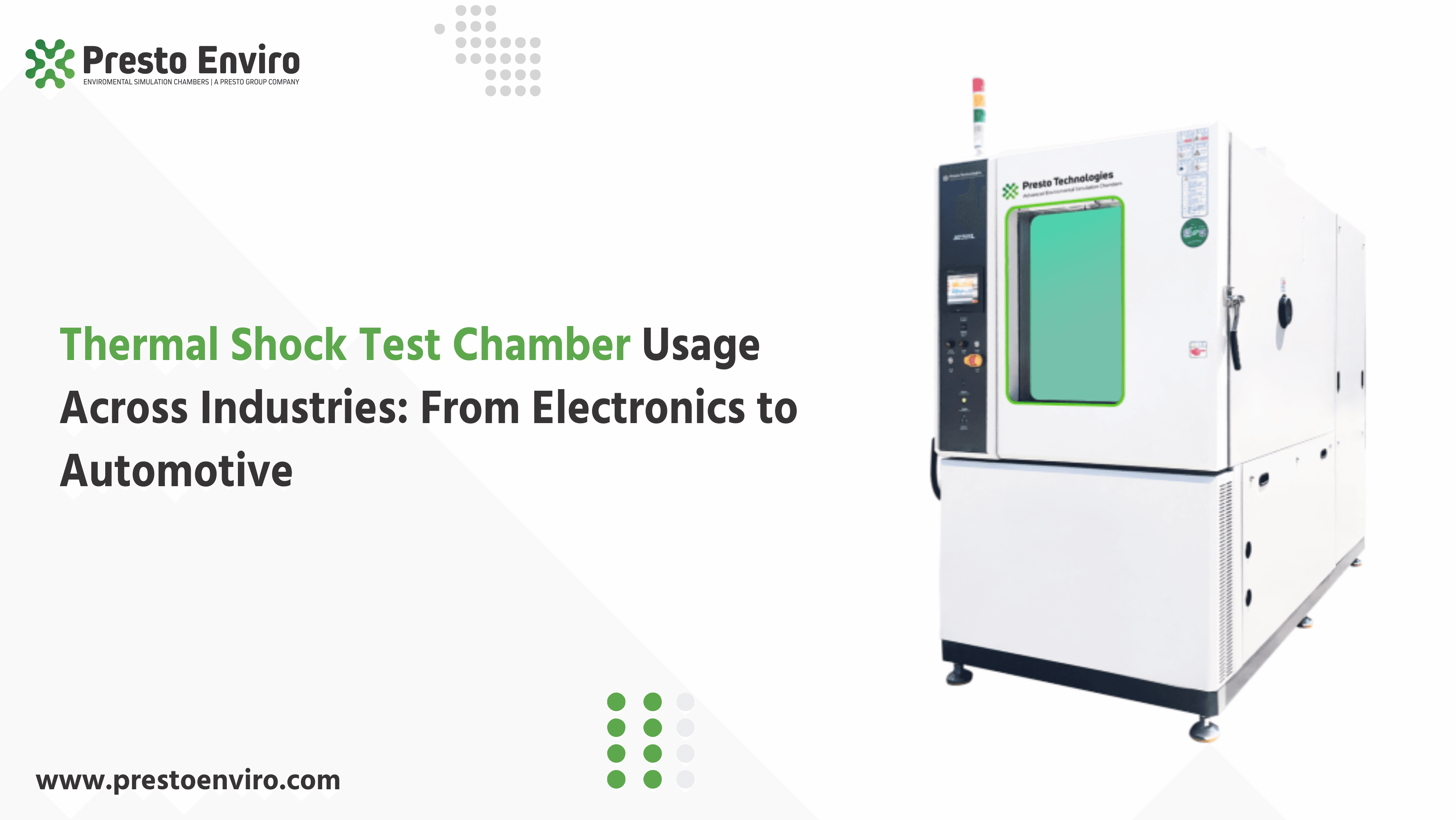
A thermal shock test chamber from Prestoenviro uses two deep zones. One zone pushes cold air. The second pushes hot air. A lift basket moves the item back and forth at high speed. Cold and hot blasts hit the item one after another. These sharp waves act like long years of stress packed into a short time. The design of the chamber aims to help factories detect early faults, such as broken seals, cracked parts, faded coating film, and shifts in material shape.
Industries now focus more on product life and user trust. So, these chambers turn into steady partners for many production units. The setup is compact and easy to run for daily checks. It suits plastic parts, metal parts, circuits, batteries, and many more items. The need for these tests keeps rising as technology gets lighter and more complex.
Electronics face short hot bursts and short cold dips in real life. A phone near a stove. A laptop in an air-conditioned room after sitting in warm sunlight. A small circuit in a factory can react badly when hit by sudden hot air. Tiny cracks or hidden stress marks may appear during that jump in temperature.
Electronics makers place boards, chips, sensors, and wires inside thermal shock chambers to see how they behave under these quick changes. These jumps expose early trouble like solder cracks or chip failure. A chamber helps them shape stronger products that last longer, even when users handle them roughly.
2. Thermal Shock Test Chamber in Automotive
A car faces wild shifts. A sudden heavy shower hits hot metal. Cold winds strike a warm dashboard. Hot engine parts cool too fast when the car hits cold water. Every part of the vehicle deals with these waves. This makes thermal shock testing vital for automotive manufacturing.
Plastic parts in the interior cabin often lose shape or crack in sudden heat. Rubber seals on doors, lights, and glass expand and contract. Metal parts near the engine face sharp jumps in temperature. These swings can affect how long the parts last.
3. Thermal Shock Test Chamber in Aerospace
Aerospace parts face some of the harshest conditions. A plane climbs high where the air is cold. Then it comes down to where the air warms. At times, heat rises from strong engine parts. Aerospace firms test metal sheets, composite parts, flight sensors, and wiring systems in thermal shock chambers. These tests show how well the parts perform under strong temperature jumps.
3. Thermal Shock Test Chamber in Medical Devices
Medical devices require long-term use in many temperature settings. Many devices go from warm rooms to cool storage units. Some face quick cold dips during transport. Makers test plastic casings, small sensors, and tool parts in thermal shock chambers. The aim is simple. They want devices that stay steady in shape and function even when used in tough settings.
4. Thermal Shock Test Chamber in Plastic and Packaging
Plastic parts often lose shape when the temperature jumps. Bottles shrink or expand, caps crack, trays bend, and packaging films wrinkle or weaken. A thermal shock chamber helps makers to find trouble points. They test different grade plastics, films, and containers under sudden shifts. This test shows whether the pack can survive long journeys, hot warehouses, and cold storage.
5. Thermal Shock Test Chamber in Metal and Coating Units
Metal parts expand when hot and tighten when cold. A chamber helps show how these cycles affect the shape and strength of metal parts. Many coating units also test paint layers, powder coating, and plating layers. Abrupt drops and rises in temperature show how well the surface holds.
A thermal shock test chamber from Prestoenviro uses a direct two-zone setup. One zone blasts hot-dry air. The second zone offers icy air. A lifting basket moves samples from one zone to another. The chamber runs with proper sealing, testing lamps, safety switches, and a window made of multi-layer vacuum glass. The chamber body uses high-grade steel. It is sturdy, corrosion-free, and built for long use.
The test space uses strong insulation to keep the hot and cold zones steady. A color touch panel helps users pick time settings, cycle counts, and range settings. The chamber switches between hot and cold in seconds. This sharp jump is key for a true test.
How Prestoenviro Helps?
Presto Enviro has a number of factories that rely on thermal shock tests. The team works on the reaction of every product between hot and cold temperatures. They consider the content, texture, density, usage requirements, and any queries of the customer, and then recommend the appropriate chamber. They are constructed in their chambers using robust steel, good insulations and quick switching systems that transfer samples between hot and cold within a few seconds. This velocity creates a sharp stress wave, which reveals weak points at an early stage. Presto Enviro also provides the users with guidance on how to plan the cycle, assemble, and handle the samples, thus making every test appear close to practical usage.
A thermal shock testing chamber is placed at the centre of numerous industries. These trials are beneficial to electronics, automotive, aerospace, medical devices, plastics, and many other areas. Goods go through extreme heat and cold conditions, and these conditions demonstrate their real power. Problem spots are then repaired by the makers. This maintains the quality level and rescues the brand in the future.
These Prestoenviro chambers have strong parts, a well-formed structure and smooth control. They assist several manufacturing companies in shaping products that are durable to tough usage. As the need and demand for tough and long designs increase, these chambers remain in consistent use.
1. What is a thermal shock test chamber used for?
A chamber of this kind pushes a sample through sudden hot and cold jumps. This helps to spot the cracks, shape loss, weak joints, and coating trouble at early stages.
2. Which industries use thermal shock chambers the most?
Electronics, automotive, aerospace, plastic units, metal parts makers, and medical device factories use them often.
3. Why do electronics need thermal shock tests?
Circuit boards, chips, and sensors face sudden heat and cold in day-to-day use. A chamber helps reveal weak solder points, cracked chips, and wiring trouble.
4. How does a two-zone design help the test?
One zone keeps hot air, and the second keeps cold air. A lift basket shifts the sample between the two. The fast move gives a sharp temperature jump that shows hidden faults.
5. What problems can a thermal shock chamber detect?
Cracks, bends, breaks in joints, coating issues, surface peel, sudden shape loss, and weak material behavior show up during these tests.
Elevate your quality assurance process to new heights
Related Blogs

23-Sep-2026
Presto Enviro
Products are expected to work reliably for months or years, but manufacturers cannot always wait that long to find out how they will perform. Accelerated aging testing solves this problem by exposing products to controlled environmental conditions that speed up certain aging effects.