© Copyright 2025. All Rights Reserved by Presto Stantest Pvt. Ltd.
09-Sep-2024
Presto Enviro
Suppose you are responsible for a manufacturing process. One day, you get a shipment of sensitive electronic components. These are used to work under very freezing and scalding hot temperatures. However, something weird is happening with them, they start malfunctioning if the humidity goes high. Now, here you are in a dilemma. How do you ensure that your products can sustain these diverse environmental conditions? Should you test them under variable temperatures, fluctuating humidity, or both? That's where the Temperature Test Chamber and the Humidity Chamber come in handy.
Now let’s look closer at each of these, two very important test devices, and also at their usage comparison, to help you make the right choice.
The most common dilemma always among the manufacturers about their products in the field of product testing is whether their products should be tested with extremely high temperatures, or they have to be tested under high humidity conditions, or a combination of both.
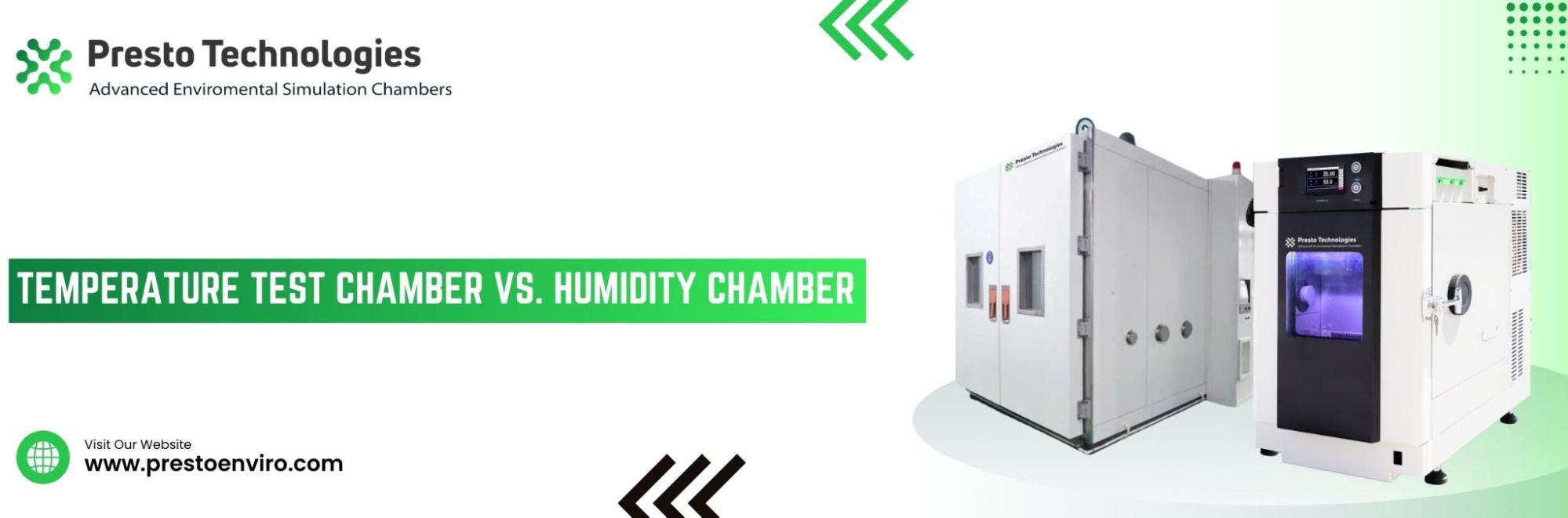
Extremes of Temperature: For instance, interior parts in a car would undergo extreme heat in a desert or extreme cold in the Arctic. Will it expand, shrink, or even break in those conditions? Having a Temperature Test Chamber will help you in re-creating these extreme conditions, and assess how your product is going to perform in them.
Humidity Variations: Now, suppose your product is out under high humidity-for instance, in a tropical climate. That's where a humidity chamber is very useful; it allows a tester to control the levels of humidity when they test the effect of moisture on your products.
Combined Conditions: But what happens if your product requires resistance to both high temperature and high humidity? Think about a smartphone while out in the tropical rainforest. It's not just the heat or humidity, but instead, it is the combination of both together that may be destructive. In such a condition, you may want both chambers or one chamber that is designed to specially handle both features.
What is it?
The Temperature Test Chamber is utilized for extreme variable conditions, from freezing cold to blistering heat. This will be very helpful during durability and performance tests on various products, from electronics, car parts, and materials to items that include foodstuffs, under conditions of variable temperature.
How Does It Work?
Well, it does so by regulating the temperature within a closed environment. You dial up the temperature setting you want, and the chamber will maintain that temperature for as long as you want. This is so you can view how your product behaves over time in those specifications of temperature conditions. Such as will the plastic casing on your electronic device crack in extreme cold? Or, will battery performance degrade in high heat? The Temperature Test Chamber provides the answers to these questions.
What is it?
A humidity chamber is intended to simulate an environment that changes in humidity from end to end. These chambers play quite an important role in the testing of products that will engage in moisture, starting from arid and dry conditions to saturated and humid climates. Accordingly, they can control humidity levels as low as 10% or as high as 98%, providing a really wide range of testing possibilities.
How does it work?
Working Principle: The working principle of a humidity chamber relies on the controlled moisture that is in the air inside the chamber due to regulated temperature and humidity conditions for maintaining an environment similar to real-field conditions. For example, will your electronic circuit board corrode after months of exposure to high humidity?
Still confused as to what you need? Don’t worry, we got your back! Let's compare the two:
GOT MORE QUESTIONS?
The fact is, there might be different standards and different certifications such as ISO 17025 is for calibration and testing labs.
Yes, you can use both kinds of chambers for a more detailed analysis, or use just one combined chamber integrating both temperature and humidity control. Thus, you will be in a position to test your products under sophisticated environmental conditions combining both factors.
Yes, most of today's Temperature and Humidity Chambers allow you to program the temperature and humidity settings in relation to various scenarios that you may need. This way, simulating various environmental conditions is tailored to what your test requires.
HOPE WE ARE OF HELP TO YOU. CONNECT WITH US TO MORE.
Contact us at +91 9773666011 or email us at response@prestoenviro.com.
Elevate your quality assurance process to new heights
Related Blogs
23-Sep-2026
Presto Enviro
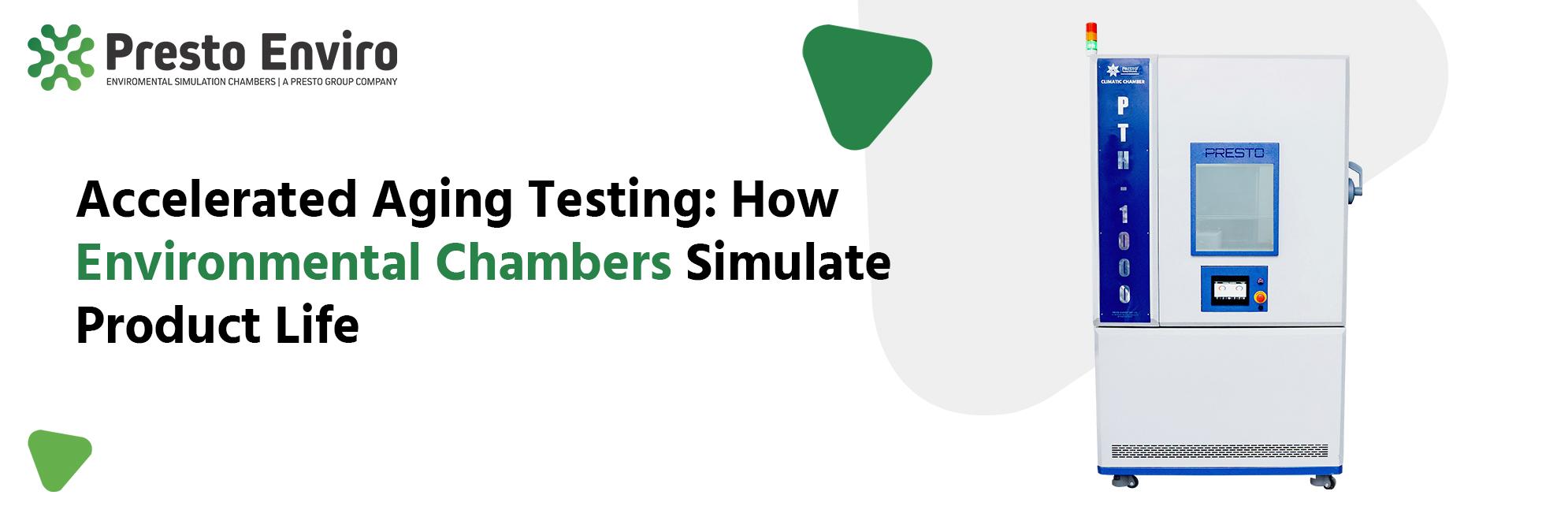
Products are expected to work reliably for months or years, but manufacturers cannot always wait that long to find out how they will perform. Accelerated aging testing solves this problem by exposing products to controlled environmental conditions that speed up certain aging effects.
20-Sep-2026
Presto Enviro
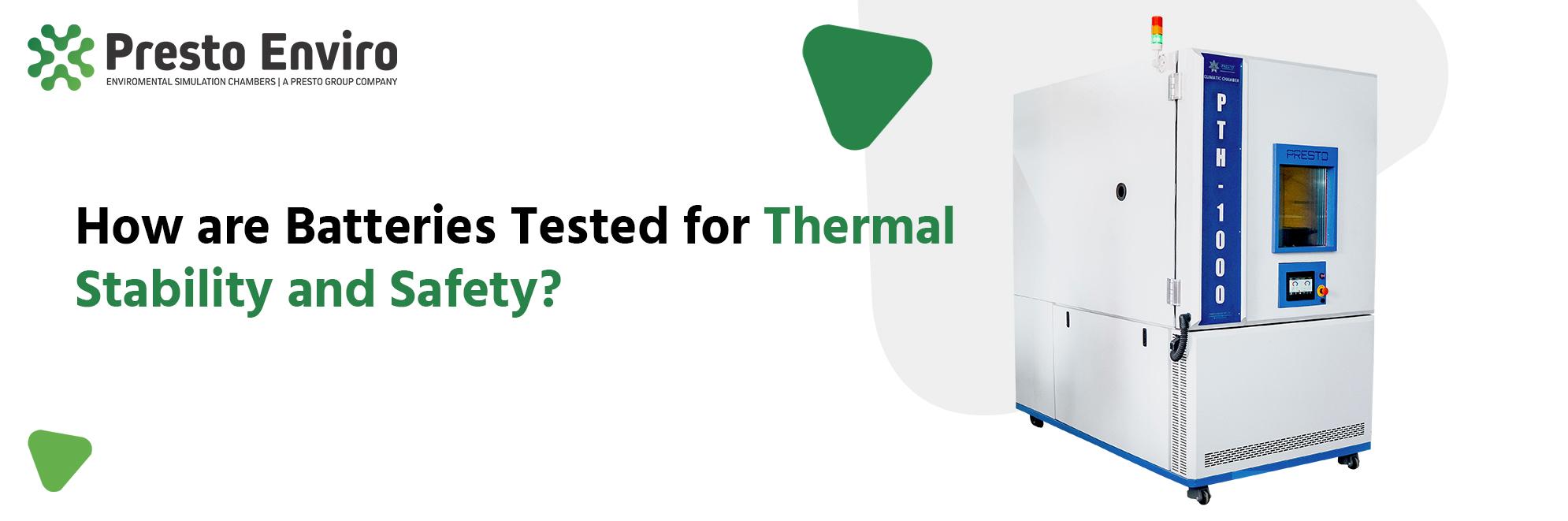
Battery safety is not something manufacturers can check only after a battery is ready for use. Temperature, charging conditions and repeated use can change the way a battery behaves. In some cases, excessive heat can cause permanent damage or create serious safety risks.