© Copyright 2025. All Rights Reserved by Presto Stantest Pvt. Ltd.
17-Apr-2026
Presto Enviro
Most product failures do not happen in the lab. They happen six months after launch when an equipment stops working in summer heat, or when the coating starts peeling after a rainy season. Recalls are expensive. Reputation takes longer to fix than the product itself. And the frustrating part is that most of these failures were entirely predictable.
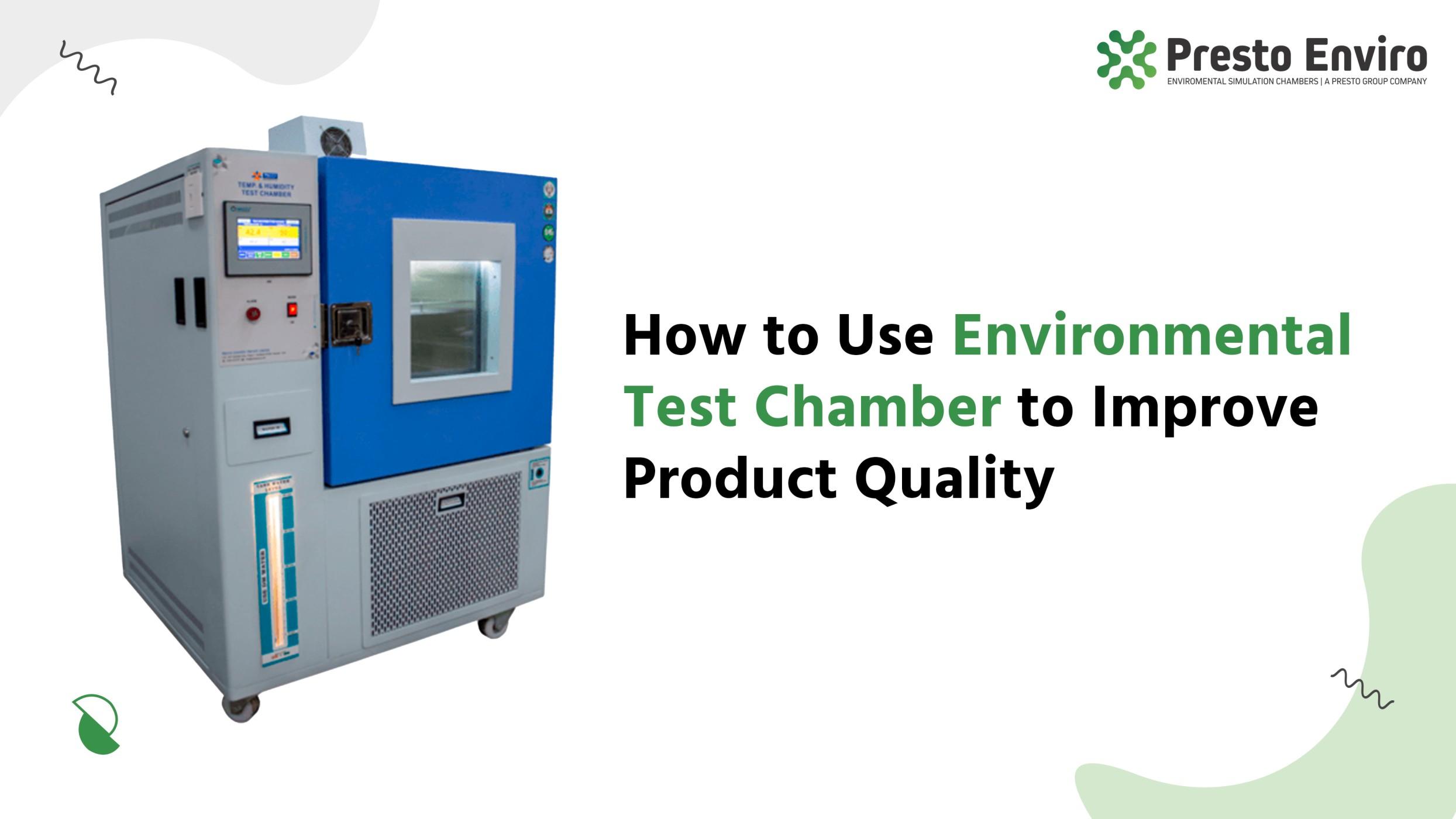
Environmental test chambers exist to catch those problems before they leave the facility. They let manufacturers recreate real-world conditions whether extreme heat, freezing cold, high humidity or corrosive salt air inside a controlled enclosure. The idea is simple to stress the product in extreme and real-world conditions.
This article covers what environmental test chambers are, the main types used across industries and how to actually use them as a practical tool to improve product quality at every stage of development.
An environmental test chamber is a sealed and programmable enclosure that replicates specific environmental conditions such as temperature extremes, humidity, pressure changes or corrosive atmospheres. A product or component is placed inside subjected to a defined test program and monitored for how it performs or degrades over time.
The purpose is not simply to break things. It is to understand where the limits of a design sit that confirms that a product meets relevant safety and performance standards and generates real data that engineers can act on. In sectors like electronics, automotive, aerospace, pharmaceuticals and consumer goods, environmental testing is a standard part of product development. It closes the gap between what a product is assumed to handle and what it can actually survive.
There is no single chamber that does everything. Different products face different conditions and the type of chamber selected should match the conditions most relevant to how and where that product is to be used. Here are the key types manufacturers rely on.
Temperature Test Chambers
Temperature test chambers are the most common type and for good reason. They test how products behave at high and low temperature extremes whether plastics warp, electronic components malfunction in the cold or whether adhesives hold up under sustained heat. Almost every industry uses them at some point.
Temperature and Humidity Test Chambers
Temperature and humidity test chambers are used to simulate tropical, arid or monsoon-like conditions. They are especially important for electronics, pharmaceuticals and packaging where moisture can cause corrosion, mold or active ingredient breakdown long before a product reaches its expiry date.
Thermal Shock Chambers
Chambers transfer products between hot and cold zones quickly and this temperature transition creates extreme stress on solder joints and composite materials and mechanical seals compared to slower cycling. These applications (automotive and aerospace) rely on chambers like this to test components under extreme transient (rapid) temperature changes for the purpose of validating performance.
UV Weathering Chambers
Using ultraviolet light (UV) chambers is a way of mimicking extended exposure to the sun on an outdoor product while also being subjected to cycling of rain, fluctuations in temperature etc. Manufacturers can gain insight from weeks of elapsed time in a UV Chamber as to what will happen naturally over a period of years. In this way, a manufacturer will use a UV chamber to give them a realistic understanding of how their products will behave or deteriorate over time due to surface degradation.
Salt Spray (Corrosion) Chambers
Metal and other coated surfaces can be fitted together in an enclosure called a salt spray chamber where a fine mist of saline (saltwater) will be used to speed up the process of corrosion as part of the testing of how well the surface treatment will protect against corrosion. Salt spray chambers are most widely used in the automotive, marine and industrial manufacturing industries because rust is a major concern for these industries as well as the quality of coatings that will ultimately determine the life of a product.
Running a product through an environmental chamber and recording a pass or fail tells you something. But using that chamber intelligently, at the right stages and with clear intent, is what actually moves the needle on quality.
Testing during the early stages of product development often leads to the most significant returns on investment. Engineering teams can identify issues with prototypes when they pass through the temperature/humidity cycles as part of the design process at the least possible cost. For example, if a capacitor can't withstand 70 degrees Celsius or a seal loses abative characteristics after going through temperature/humidity cycles or if a coating blisters when exposed to UV light. These all represent significant findings to discover in the laboratory environment.
Chambers also makes it possible to run accelerated life testing where products are stressed beyond their normal operating conditions to predict how they will age. Using established degradation models, engineers can estimate product lifespan without waiting years for real-world data to accumulate. For medical devices, defense equipment or anything where reliability has regulatory or safety implications, this kind of predictive validation is not just useful but necessary.
One area in which test chambers provide clarity is in material and component selection. When two materials are compared or any component of another supplier compared against another, the side by side evaluation of both materials and suppliers will result in objective data versus subjective reliance. This data leads to making better sourcing decisions and mitigating the risk of a supplier change slowly creating a quality problem downstream.
Standards compliance is another area where environmental chambers do heavy lifting. International standards like IEC 60068, MIL-STD-810, ISO 9227, and ASTM B117 all specify environmental test procedures that products must satisfy to enter certain markets or gain regulatory approval.
Having access to a test chamber means manufacturers can validate compliance throughout development, not just at the final certification stage. When a design change comes through, the impact can be tested right away rather than waiting and hoping it does not cause a compliance failure.
Incoming quality control is one more practical use that often gets overlooked. Instead of accepting supplier materials purely on certification documentation, manufacturers can use environmental chambers to periodically verify that incoming components genuinely meet their specified tolerances. Given how much supply chain pressure there is to cut costs, having a verification step that does not rely solely on paperwork is a smart layer of protection.
Getting value from environmental testing depends a great deal on the quality of the equipment being used. A chamber that drifts in temperature, struggles to maintain consistent humidity or lacks proper calibration traceability introduces noise into your test data and ultimately undermines the decisions being made from it. That is why the choice of manufacturer matters as much as the choice of test protocol.
Presto Enviro has established itself as a leading Environmental Test Chamber manufacturer with a strong track record across industries including electronics, automotive, packaging and pharmaceuticals. Our range of environmental test chambers, covering temperature and humidity testing, UV weathering, thermal shock, salt spray, and more, is built to deliver accurate, repeatable results that hold up against international testing standards.
What set us apart in practice is not just the hardware but the application support we offer. Teams working with Presto Enviro get access to equipment that is reliable and technically backed which makes a real difference when designing test programs that need to generate data worth acting on.
Manufacturers can enhance product quality through intentionality rather than serendipity. This can be accomplished by equipping engineers with the proper tools to identify design deficiencies and providing engineers with the data needed to validate any modifications made to designs. One important tool that is often overlooked is environmental testing chambers.
By utilizing environmental test chambers consistently throughout the engineering design process, product manufacturers can gain an accurate depiction of how their products will perform once they are released to the marketplace.
The companies that get the most out of environmental testing are not necessarily the ones with the biggest labs. They are the ones that test early, test deliberately and treat the results as an input into better engineering rather than a box to check. As reliability expectations continue to rise across markets, that discipline is increasingly what separates good products from great ones.
Elevate your quality assurance process to new heights
Related Blogs
15-Oct-2026
Presto Enviro
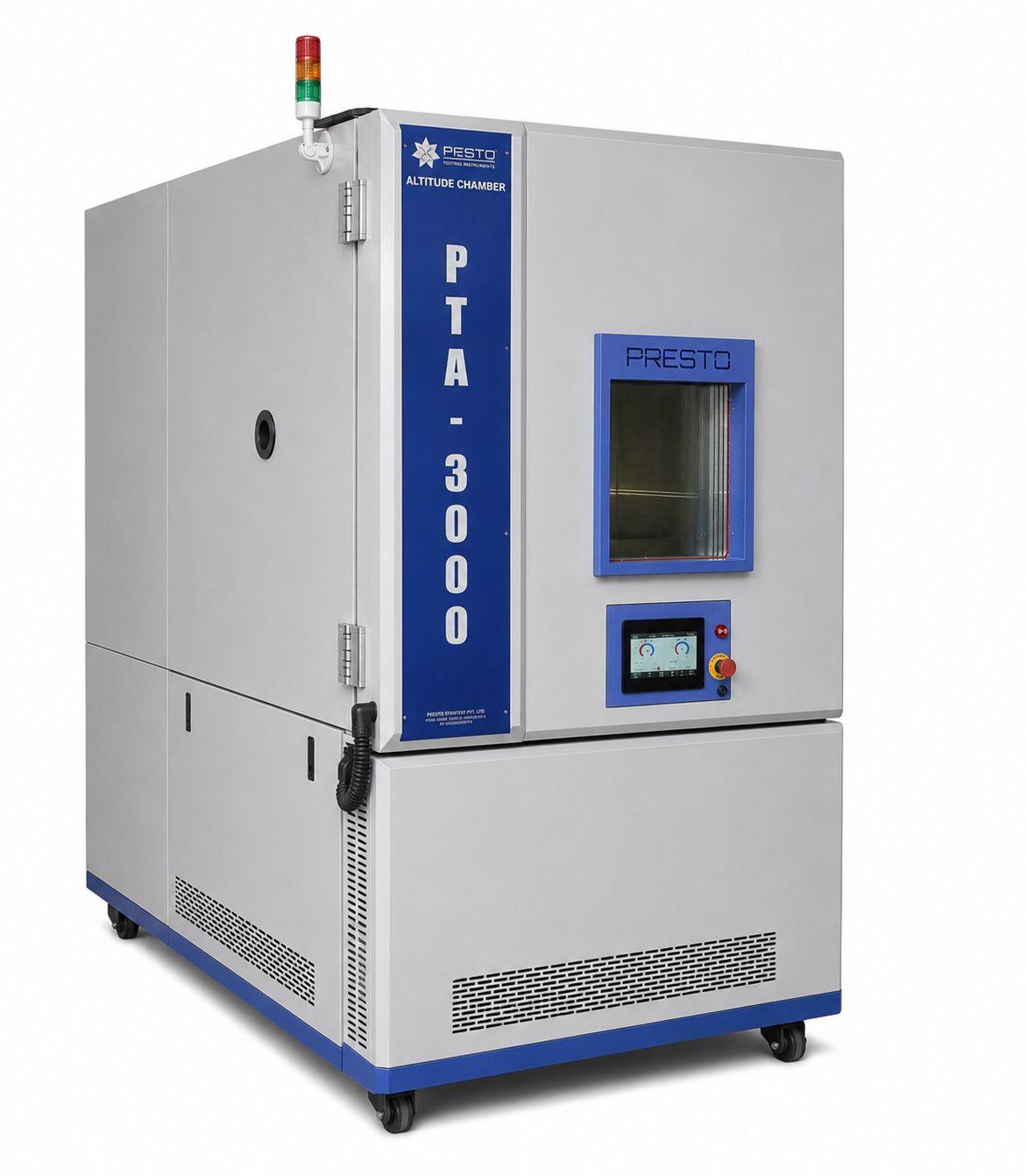
In environmental testing, vacuum chambers are also called altitude test chambers or low-pressure chambers. They lower air pressure inside a sealed chamber to simulate high altitude while controlling temperature and, in some configurations, humidity.
13-Oct-2026
Presto Enviro
An in-house lab can deliver results, give better control over product testing, and reduce testing costs in the long run. To make it work well, the lab space, equipment, utilities, and testing methods must be planned according to your needs.