© Copyright 2025. All Rights Reserved by Presto Stantest Pvt. Ltd.
14-May-2026
Presto Enviro
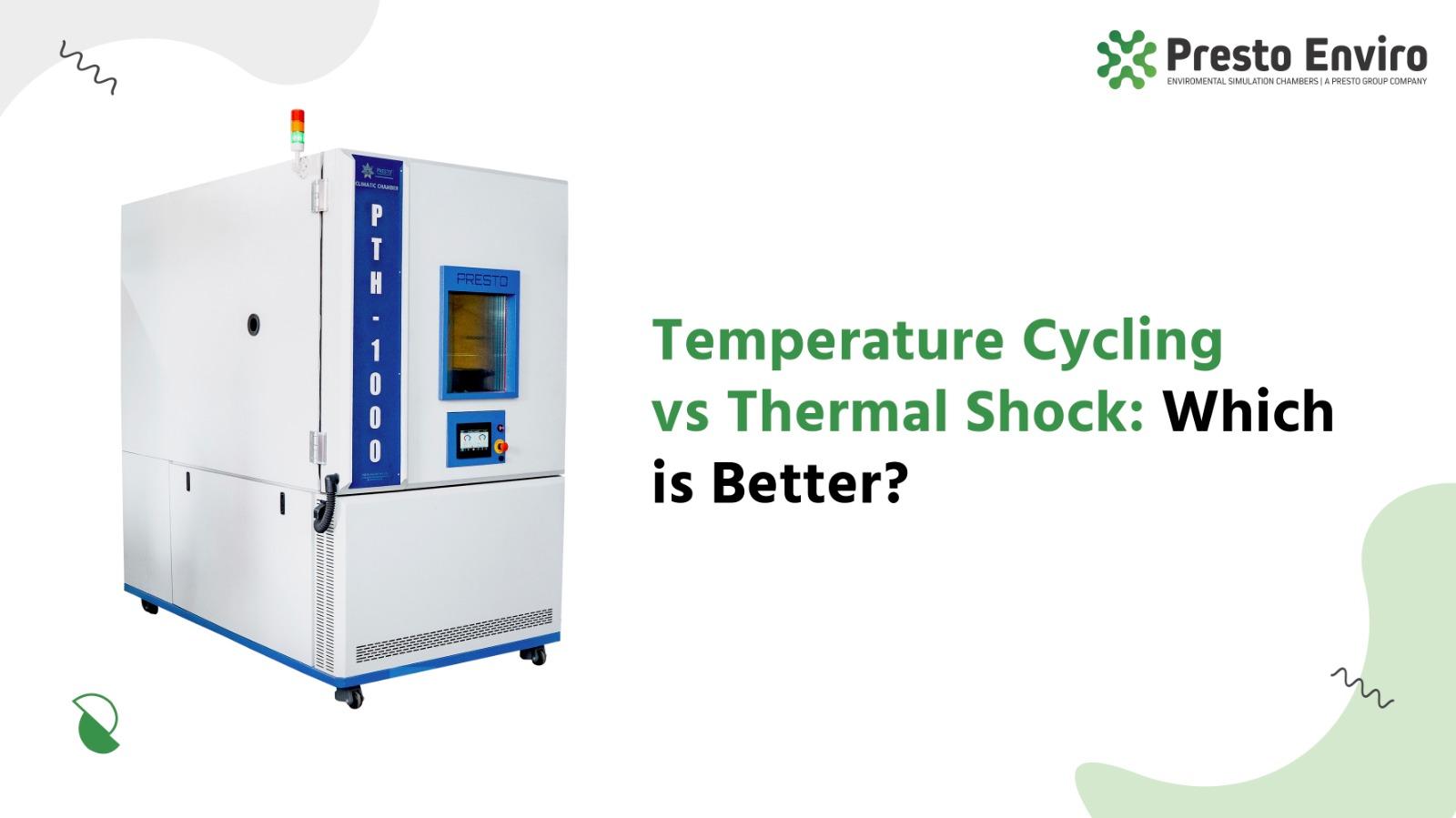
Components today are expected to survive changing environmental conditions without losing performance or structural stability. This is exactly why tests like temperature cycling and thermal shock are performed before products reach actual use.
At first, both tests may look quite similar because they involve exposure to high and low temperatures. But the testing method, speed of temperature change, stress level, and failure pattern are entirely different in both cases. A product tested under gradual temperature variation may behave very differently under sudden thermal exposure.
In this article, we will compare temperature cycling and thermal shock testing in a practical way. We will understand their testing methods, procedures, commonly followed standards, and the major differences between them. So it becomes easier to choose the right test for a specific application.
Temperature cycling testing measures how a product behaves under repeated heating and cooling over a longer period. The temperature changes happen gradually, not suddenly. The idea is to create expansion and contraction stress again and again until weak points start showing up.
This test is mostly used for long term reliability studies. Industries use it for solder joints, PCB assemblies, connectors, sensors, plastic components and electronic modules. In layman's terms, it simulates the true operating conditions products experience during everyday use.
After subjecting any material to many hundreds or likely thousands of thermal cycles, the continued thermal expansion leads to internal movement within the material’s structure. It often results in the appearance of cracks, fatigue, damaged seals and solder failures early in the continued thermal cycling process.
Thermal shock testing is a reliability test used to check how a material or product reacts when exposed to sudden temperature changes. The transition from hot to cold happens very quickly, creating extreme thermal stress on the material.
This test is commonly used when products are subject to sudden changes in the environment during actual use. It is a common method used to test aerospace components, military electronics, automotive sensors and semiconductor devices.
In most setups, the sample moves between separate hot and cold chambers. Some systems use two zones while others use three zones. The temperature jump is fast enough to create immediate stress inside the product before it can stabilize naturally.
Temperature Cycling and Thermal Shock both tests look similar as both involve high and low temperature fluctuations. But the actual testing purpose, stress level, chamber setup and failure mechanisms are quite different.
|
Parameter |
Temperature Cycling |
Thermal Shock |
|
Temperature Change |
Gradual and controlled |
Very rapid and sudden |
|
Ramp Rate |
Usually 2°C to 15°C/min |
Often above 30°C/min |
|
Test Purpose |
Long term fatigue testing |
Sudden stress resistance |
|
Chamber Type |
Single chamber |
Two or three chamber system |
|
Main Failure Type |
Fatigue and expansion mismatch |
Cracks and delamination |
|
Cycle Duration |
Longer cycles |
Shorter cycles |
|
Stress Level |
Moderate repeated stress |
Extreme instantaneous stress |
|
Common Industries |
Electronics, automotive, batteries |
Aerospace, military, semiconductors |
|
Common Standards |
JESD22 A104, IEC 60068 |
JESD22 A106, MIL STD 883 |
The actual temperature cycling test procedure depends on the product type and testing standard but the overall process remains fairly similar in most labs.
1. Sample Preparation. The product or component is cleaned and examined prior to testing. Any visible physical damage is usually noted in advance.
2. Chamber Configuration: The operator inputs the upper and lower temperature limits into the chamber software. The ramp rate and dwell time are also specified by the test standard.
3. Specimen Loading: The specimens must be placed into the chamber properly so there is room for air to circulate around them. If the specimens are too close together in the chamber, the temperature of each specimen will not be the same.
4. Temperature Cycles: The chamber will cycle through hot and cold temperatures slowly and then the specimen will remain at each of the two extremes for a set amount of time prior to cycling again.
5. Repeating the Cycles: Depending on what standard is being followed, hundreds or thousands of cycles can be run through the same type of testing and this will take anywhere from several days up to several weeks to complete.
6. Final Inspection: The product is tested and then inspected for cracks, solder damage, deformation, electrical failure or performance problems.
Thermal shock testing follows a faster and harsher process compared to cycling tests. The focus here is sudden temperature exposure.
1. Pre Test Inspection: The sample is visually examined prior to the start of the test. The electrical readings can also be used for later comparisons.
2. Setting up Hot and Cold Zones: The system is used to set the hot and cold chamber temperatures. In this test very high or very low temperatures are often used.
3. Loading the Sample: The sample is held in the transfer basket or holder as per the chamber's design.
4. Fast temperature transfer: The sample is rapidly moved between hot and cold regions. In many systems this transfer occurs in seconds.
5. Repeating Shock Cycles: This does not happen just once. The chamber keeps repeating the hot to cold cycle as many times as the selected testing standard requires.
6. After Test Completion: The sample is checked once all cycles are done. Inspectors look for damage, cracks, broken seals and electrical faults. Any material separation is also recorded.
Testing standards are important because they keep procedures consistent across industries and laboratories. Without standards, test results from different facilities would not match properly.
Some of the most used standards for temperature cycling are JESD22 A104, IEC 60068 and ISO 16750 that are used extensively in the electronics, automotive and industrial component testing environments.
For thermal shock testing, standards like JESD22 A106, MIL STD 883, and IEC 60068 2 14 are widely used. These standards define transfer times, dwell conditions, and temperature ranges for reliable testing procedures.
Whether temperature cycling or thermal shock is important for you depends on what you want to analyze in the product. Temperature cycling is usually the preferred option for long term durability during repeated heating and cooling. It is very effective for fatigue analysis and lifecycle testing. Thermal shock testing is more suitable for products that may be subject to rapid environmental changes during field use. This method exposes hidden structural weaknesses much faster.
In many industries, both tests are performed together because each one reveals different failure mechanisms. Engineers normally select the testing method based on application conditions rather than simply choosing the harsher test.
Temperature cycling and thermal shock testing may sound similar but their purpose and stress behavior are very different in actual reliability testing. One focuses on gradual fatigue over time while the other checks resistance against sudden temperature extremes.
By understanding the distinction between methods, manufacturers will be able to select the appropriate method of validating their product. The right thermal test method for testing and qualifying products in various industries (e.g., PCB Assembly, automotive electronics, aerospace component assembly and semiconductor device manufacturing). They may have an impact on preventing high-cost failures from occurring during the field test phase as well as during the end-use period of the product in the customer’s possession.
Today, the accuracy and control of these tests have been improved by modern environmental test chambers. Industries are shifting to programmable systems that allow for repeatable testing conditions and product validations.
Elevate your quality assurance process to new heights
Related Blogs
23-Sep-2026
Presto Enviro
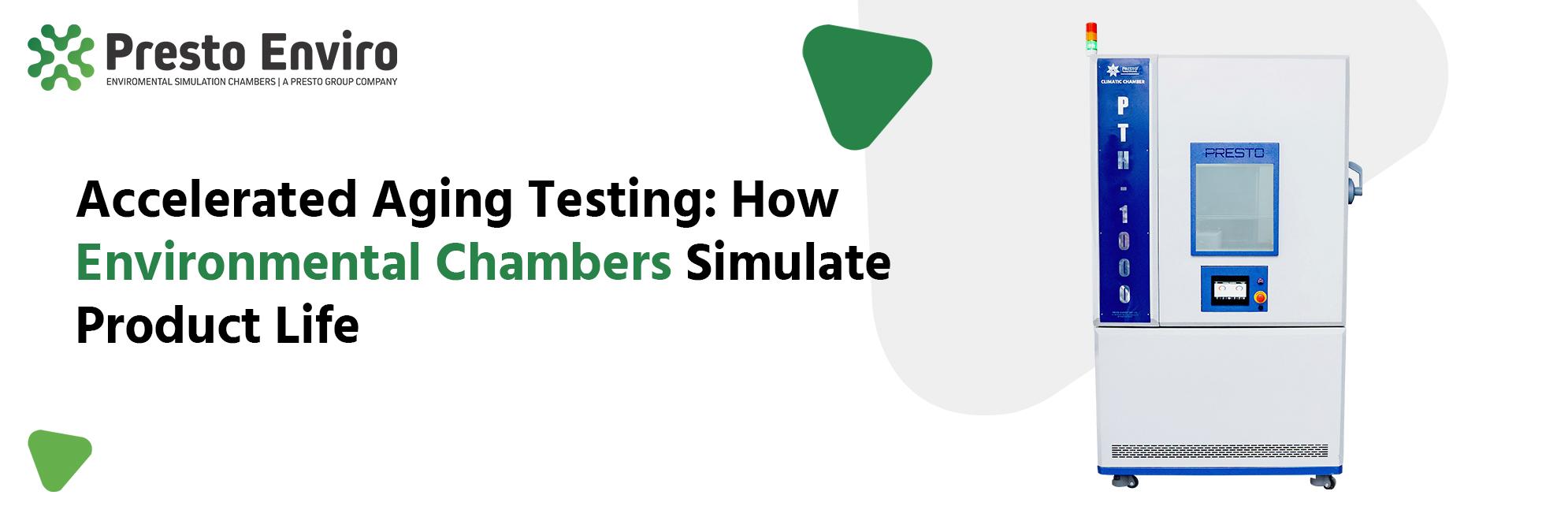
Products are expected to work reliably for months or years, but manufacturers cannot always wait that long to find out how they will perform. Accelerated aging testing solves this problem by exposing products to controlled environmental conditions that speed up certain aging effects.
20-Sep-2026
Presto Enviro
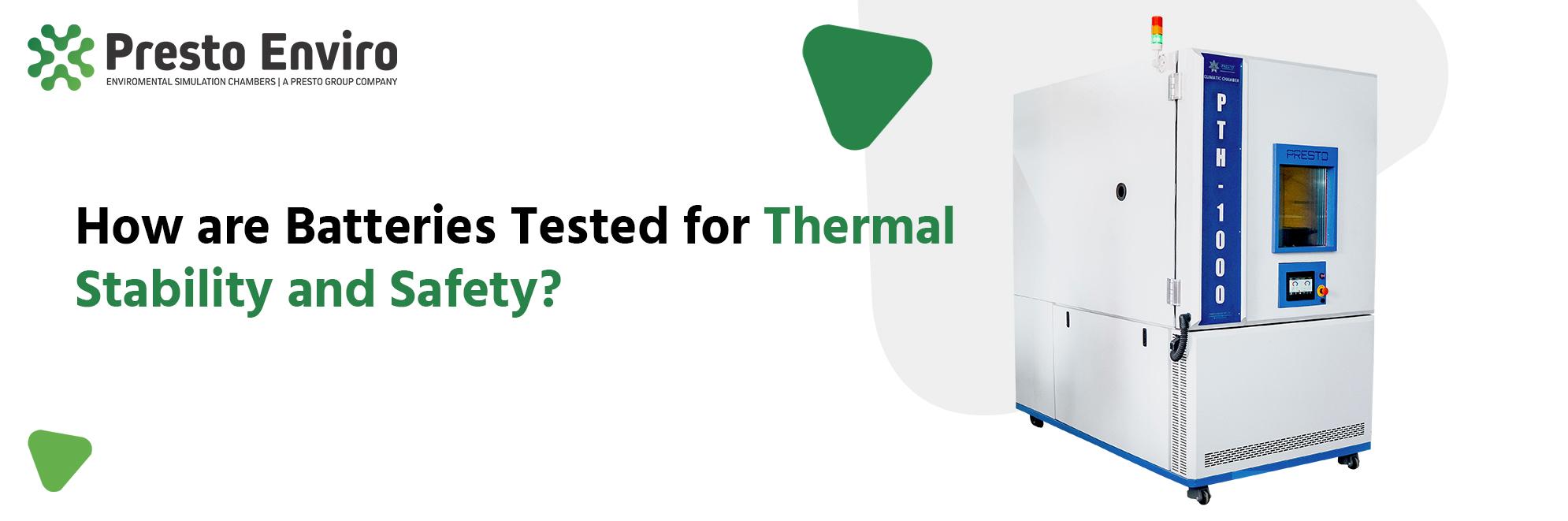
Battery safety is not something manufacturers can check only after a battery is ready for use. Temperature, charging conditions and repeated use can change the way a battery behaves. In some cases, excessive heat can cause permanent damage or create serious safety risks.